Opens in a new tab
Get Quote

Nutraceutical
blister machines

Configure a nutraceutical blister packaging machine around your supplement portfolio: product handling, cavity layout, packaging materials and production demand.

HIJ Machinery can review your samples and pack drawings to develop a product-specific configuration and quotation.

DPP-250 blister packaging platform reference for a supplement configuration review
DPP-250 platform reference. Feeding and pack formats are selected for the project.

Build around your
product mix

A vitamin tablet, a hard capsule and an oil-filled softgel create different handling questions. Dimensions alone do not describe how a product behaves in a feeder or settles into a cavity.

Example blister-card layouts with different cavity shapes and product arrangements
Example blister-card layouts; not proof of compatibility with a particular supplement.

Each SKU needs a format

Record product dimensions, mass, shape, surface condition and count per finished blister. Identify fragile coatings, variable capsule lengths, tacky surfaces or products that soften during handling. Include the production environment and how products reach the machine.

Start with representative samples, including the most difficult format in the proposed range. The assessment connects presentation, feeding, cavity geometry, sealing and cutting layout. It establishes which settings can be shared and which parts need to change.

Tablets and hard capsules
Review orientation, breakage or scuffing, cavity seating and the required pack count.
Softgels and liquid-filled capsules
Review the supplied shell, fill, surface behaviour and handling conditions through the dedicated softgel blister route.
Unusual or sensitive products
Gummies, soft chews, effervescent products and sensitive formulations need a separate product-and-pack assessment; suitability is not inferred from a similar-looking blister.
Reference blister machine station showing the packaging web and tooling
Web and tooling reference. The material pair and pack drawing define the setup.

Specify both webs

A supplement blister specification needs the forming material and the lidding material. Supply the grade, thickness, construction, supplier and intended opening method alongside the pack drawing.

Thermoforming route
Connect heating and forming behaviour with product loading and the matching sealing surface. “PVC” or “PVC/PVDC” alone is not a complete seal specification.
Cold-form route
Review the forming laminate and matched lid against cavity geometry, sealing area, pack footprint, product loading and accepted output.

Where moisture, oxygen, light or temperature matters to stability, use the product owner’s packaging specification and stability evidence to define protection targets. A camera presence check does not demonstrate package integrity or shelf life.

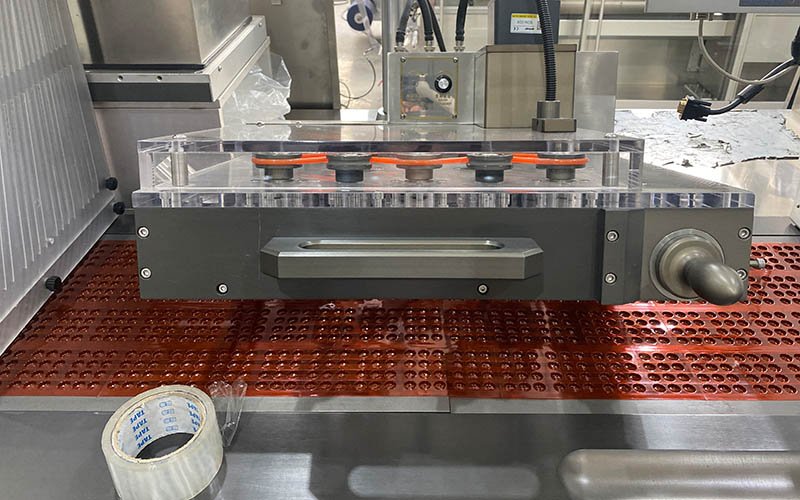
Separate blister packaging equipment reference photographed in a workshop
Separate workshop equipment reference, not a documented nutraceutical production run.

Make changeovers clear

For a multi-SKU project, ask for a format schedule linking each product to its feeder arrangement, tooling set, material pair and acceptance target.

Identify feeder and guide changes, forming and sealing tools, cutting parts, recipes and verification runs. Agree whether the changeover includes cleaning, line clearance, adjustment and the first accepted production on the next format.

Compare a shared-platform scope with separate equipment through the tablet-and-capsule changeover page. A useful comparison uses your actual format combinations, not a universal changeover-time promise.

Choose your route

Start with the published equipment platform, then connect its proposed configuration to your supplement, pack and production schedule.

DPP-250 platform

Review the published platform with your samples, blister layout and material pair. Confirm feeding, tooling, inspection and discharge in the equipment scope rather than treating the model name as a compatibility approval.

Alu-Alu route

Use the existing cold-form route when that construction is part of the pack specification. Review cavity geometry, material handling, pack footprint and accepted production output together.

For capsule-specific feeding and cavity loading, see the capsule blister equipment page. These routes support the supplement configuration review; they do not replace the product trial.

Plan in finished packs

Convert annual demand before comparing proposals. Keep individual supplement units, accepted finished blisters and machine cycles separate.

Your planning scenario

Good blisters/min41.67
Planning rate/min55.56

The planning fraction is your allowance for scheduling, stops, changeovers and rejects. The default 75% is an illustration, not a recommended efficiency or equipment rating.

The starting example uses 10 million units/year, two units/blister, 250 days and eight hours/day. That is five million accepted blisters, or 41.67 good blisters/min across scheduled time. Dividing by the explicit 75% planning assumption gives 55.56 blisters/min.

For several SKUs, calculate the time required by each product. Account for changeover time either within the planning fraction or separately in the schedule, not both. Compare the result with a trial using the same product, materials, layout and acceptance target.

Good blisters/min = annual units ÷ units per blister ÷ days ÷ hours ÷ 60.
Planning rate = good blisters/min ÷ planning fraction.

Agree what is delivered

A useful factory acceptance test connects named products, material lots and pack formats to a defined run. Agree the duration, sampling method, accepted-output target and reject criteria before the trial.

Product and pack record
Identify samples, material references, drawing revisions and the configuration used. Keep the format schedule with the trial record.
Machine-function checks
Include normal running, missing-product challenges, reject handling, sealing and cutting behaviour, stop/restart and the specified changeovers. Record good output, rejects, stops and settings.
Finished-pack evidence
Define the required test methods, sampling and acceptance criteria. Assign which checks occur during the machine trial and which need separate laboratory work, and who reviews the results.
Document deliverables
Itemise drawings, operating and maintenance instructions, parts lists, material records, calibration information and any agreed qualification support. A general “GMP documentation” label is not a complete deliverables list.

One scope, clear responsibilities

Separate equipment supply from site procedures, product approval and regulatory responsibilities. Name the supplier, customer or appointed specialist responsible for each open item in the proposal.


Buyer questions

Practical decisions for a changing supplement portfolio.

Can every SKU use the same cavity count?

Not necessarily. Product geometry, cavity spacing, sealing area, cutting layout and required pack size influence the format. Standardise the count only when the resulting layout and process remain suitable across the portfolio.

What if a supplement becomes tacky during production?

Record when it occurs, the handling temperature and humidity, residence time and any accumulation before feeding. Assess the difficult condition, not only freshly unpacked samples that flow freely at the start of a short demonstration.

What happens when the film supplier changes?

Compare the complete replacement construction, not just the material family or nominal thickness. Forming behaviour, seal coating, printing or web-handling changes can require reviewed settings and acceptance evidence. Link approved material references to the pack specification and format record.

Must every format be final before requesting a quotation?

No. Start with representative products, a draft blister layout and production requirements. Identify open decisions clearly. The proposal can separate the initial configuration from items that still depend on samples, drawings or trials.

Get a configured
proposal

Send your product and pack list, proposed material pair, production schedule, priority formats and destination. Add existing upstream or downstream equipment where an interface is needed.

Drawings or material specifications not ready? Mark them as open items. We can use the review to define the next technical steps, itemised quotation and acceptance plan. Pricing is by configuration.

Let's Design Your Production Line

Share your requirements and I'll personally craft a solution that maximizes your efficiency and profitability.