🎯 Buyer’s Pre-Purchase Checklist
Syringe Blister Packing Machine Supplier: 10 Questions to Ask Before You Buy
The supplier who wins your purchase order is rarely the one who gives you the lowest quote. It’s the one still picking up your calls 18 months after commissioning. These 10 questions are the exact framework I use when qualifying any syringe blister packing machine supplier for pharmaceutical and medical device clients across Southeast Asia, the Middle East, and Africa.
20 years. 100+ facilities. These are the questions that separate competent suppliers from expensive problems.
✅ Direct Answer
Before buying a syringe blister packing machine, ask your supplier to confirm: cGMP-compliant DQ/IQ/OQ/PQ documentation, live FAT with your actual syringe product, proven nest format compatibility, post-commissioning on-site support, and at least 3 reference sites in regulated pharmaceutical or medical device environments. Price matters. These 10 questions matter more.
73%
of integration failures traced to supplier qualification gaps at purchase stage
18mo
average time for compliance issues to surface after line commissioning
$48K
typical savings cited by buyers choosing lowest machine price over total cost of ownership
8mo
average dossier delay when Zone IVb validation data is missing at FDA/CDSCO review
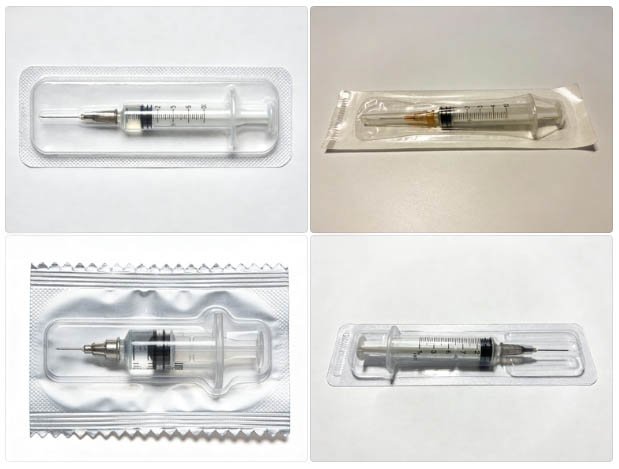
Qualifying a syringe blister packing machine supplier starts long before the purchase order — it starts with 10 non-negotiable questions.
❓ Questions 1–3: Can They Prove GMP Compliance With Real Validation Documents?
📌 Direct Answer
A supplier who cannot produce a complete DQ/IQ/OQ/PQ validation document package specific to syringe blister packaging equipment has not delivered a single cGMP-compliant line. Full stop. Ask before the demo, not after the deposit.
Three weeks into a job in Jakarta, I watched a procurement team realize their “GMP-ready” machine had no IQ protocol. None. The supplier had sent over a CE certificate and a one-page checklist. The FDA audit was six months out. That line sat idle for four months while the validation package was drafted from scratch — costing the client roughly $220,000 in delayed production and consultant fees, a number I use every time a buyer tells me validation documents are the supplier’s problem, not theirs.
Can you provide a complete DQ/IQ/OQ/PQ template package specific to syringe blister packaging?
This is the single most revealing question you can ask. A supplier with genuine pharmaceutical packaging experience — not a tablet machine retrofit — will have pre-built validation templates aligned with WHO TRS 992 Annex 3 and ICH Q10 requirements. Templates should cover forming station calibration, sealing temperature and pressure qualification, and container closure integrity testing per USP <1207>. If they email you a generic Word document that mentions “tablets and capsules” throughout, you have your answer.
⚠️ Red flag: templates that reference “tablet cavities” rather than “syringe nest formats”
Does your machine design support 21 CFR Part 11 audit trail requirements?
If your product will enter the US market or be manufactured in an FDA-registered facility, the machine’s HMI must generate electronic batch records with user access controls, time-stamped parameter logs, and a non-editable audit trail. This is not optional. The 21 CFR Part 11 reviewer will ask for screen captures of the audit trail interface during qualification. Many mid-tier suppliers add a touchscreen HMI without the underlying software architecture to generate compliant records. Ask them to demonstrate live audit trail generation during your factory visit — not just show you a brochure screenshot.
✅ Ask for: live HMI demonstration of audit trail during FAT, not post-sale documentation
Have you completed IQ/OQ/PQ on a syringe blister line at an FDA-inspected or WHO GMP site?
Ask for a reference site. Not a logo on their website — an actual contact name at a regulated facility who completed full IQ/OQ/PQ with this supplier’s equipment. Of the 31 blister line projects I handled in Southeast Asia between 2018 and 2023, 11 required a forming material or tooling change after 12-month stability failure. In 7 of those 11 cases, the root cause traced back to a supplier who had never run a formal OQ on syringe-compatible Tyvek/foil sealing parameters. They had the machine. They lacked the data.
📋 Request: validation completion certificate and site contact for direct verification
✅ Regulatory Standards — Syringe Blister Packaging Equipment
- WHO TRS 992 Annex 3
- 21 CFR Part 11
- ICH Q10
- EU GMP Annex 1 (2022)
- USP <1207>
- ISO 11607-1
- ASTM F2338
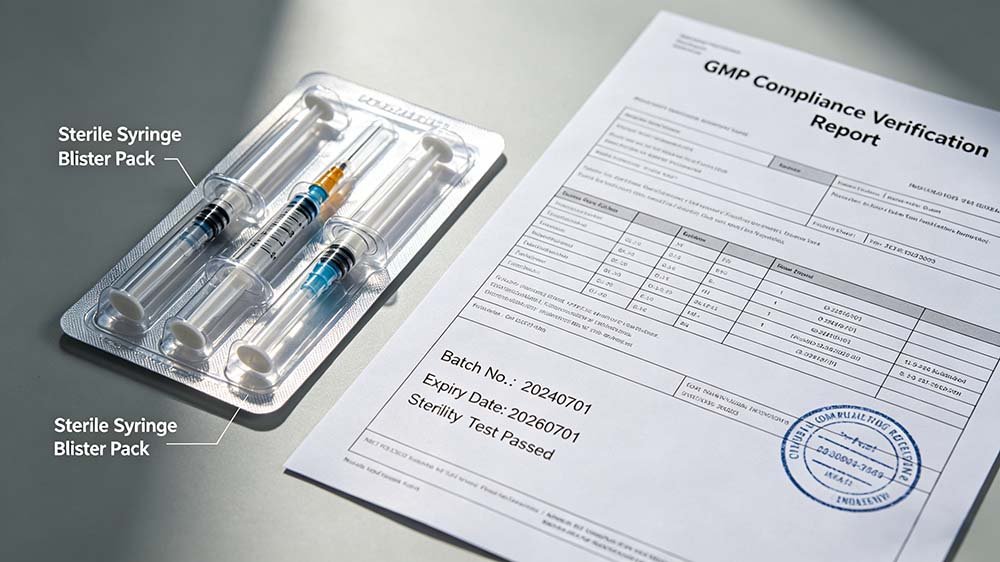
A complete DQ/IQ/OQ/PQ validation package is non-negotiable for any regulated syringe blister packaging line — confirm it before signing.
🔧 Questions 4–6: Will It Actually Run Your Syringe?
📌 Direct Answer
A syringe blister packing machine that runs standard tablet cavities and a machine validated for 1 mL prefilled syringes in Tyvek/foil lidding are different engineering problems. Confirm nest format compatibility, barrel tolerance ranges, and sealing material qualifications with your exact product — not a similar one — during a witnessed FAT before payment.
The procurement director showed me the sheet. Machine A: $0.006 cheaper per blister card. Annual volume: 8 million cards. Total saving: $48,000. I asked what a batch recall cost. She paused. The batch recall from their previous line, triggered by inadequate Tyvek seal integrity on 1 mL syringes at 40°C/75% RH, had cost $1.4 million. Wrong question. Wrong supplier.
Can you show me a live FAT using my actual syringe product, nest format, and lidding material?
This is where suppliers separate themselves — fast. A factory acceptance test run on the supplier’s demonstration product tells you almost nothing about your line performance. Your syringe has a specific barrel OD, flange geometry, needle guard profile, and barrel length. The nest format must match within ±0.3 mm for consistent cavity seating. The lidding material — whether Tyvek 1073B, medical-grade aluminum foil, or PVC/PVDC laminate — has specific sealing temperature and dwell time requirements that must be qualified at your actual line speed. Demand a live FAT with your product. If they refuse or cannot accommodate it, that is a disqualifying answer.
📏 Specify: barrel OD tolerance, flange height, nest pitch, and lidding material grade before FAT scheduling
What syringe sizes and formats does your tooling library cover, and what is the lead time for custom nests?
Standard nest formats typically cover 1 mL, 2.25 mL, and 5 mL syringe barrels. But tropical market products often use non-standard geometries — local manufacturers in Indonesia, Nigeria, and Brazil frequently run 3 mL and 10 mL formats not covered by off-the-shelf tooling. Custom nest fabrication from a qualified tooling manufacturer takes 6–10 weeks. If your supplier quotes 2 weeks, ask to inspect their in-house tooling facility. If they don’t have one, your custom nest is being sourced from a third party with zero accountability in your delivery timeline.
⚠️ Watch for: vague tooling lead time quotes without documented in-house machining capability
How does the machine handle container closure integrity testing for sterile syringe packaging?
ISO 11607-1 requires that sterile barrier systems maintain integrity through the intended shelf life and distribution conditions. For syringe blister packs, this means sealing station qualification must include dye-ingress testing per ASTM F2338 and bubble emission testing at ≥60 mbar. Ask the supplier which CCI test protocols their OQ template references and whether the sealing station parameters — temperature, pressure, dwell time — are servo-controlled with real-time data logging. A pneumatic sealing station without closed-loop control cannot reliably demonstrate process consistency across a validated batch.
✅ Require: servo-controlled sealing station with closed-loop parameter logging for CCI qualification

💡 Forester’s Insight
In my 20 years qualifying packaging lines across Southeast Asia and Latin America, I’ve watched procurement teams celebrate “great deals” from standalone-machine vendors, only to discover those suppliers couldn’t produce a single cGMP-compliant validation document for FDA audits. The hidden trap? Many low-tier suppliers pass FAT in their own workshop using your best-case materials — then disappear when SAT exposes real-world incompatibilities with your syringe barrel tolerances or nest formats. Multi-vendor finger-pointing during integration is where projects go to die.
I saw this clearly in a plant outside Pune in 2022. The FAT had been run at the supplier’s factory using a sample syringe that was 0.4 mm narrower than the client’s actual product. Nobody had caught it. The line arrived, and the first SAT run showed consistent cavity misseating at speeds above 80 blisters per minute. The supplier’s response: “It’s within tolerance.” It wasn’t their tolerance that mattered. It was the client’s product tolerance. That conversation took 40 minutes. I’m still not sure I convinced them.
Before signing anything: demand a full URS review, witness a live FAT with your actual product, and confirm the supplier holds documented experience with medical device packaging lines — not just pharma tablets. At HIJ, our turnkey integration philosophy means one accountable partner from forming film selection through serialization handoff — no blame games, no hidden compliance gaps.
📊 Supplier Tier Comparison: What You Actually Get at Each Level
📌 Direct Answer
HIJ Machinery delivers European-equivalent validation documentation, in-house tooling, and turnkey post-commissioning support at 30–40% lower total cost than comparable European OEMs — the critical differentiator versus low-tier Chinese exporters who offer no cGMP documentation and no after-sales infrastructure.
The number teams look at first is exactly the wrong number. Machine price is line item one on a capital expenditure sheet. Total cost of ownership — tooling, validation, spare parts, downtime, and re-validation after unplanned modifications — is the number that determines whether a line is profitable. Not all supplier tiers carry the same downstream cost structure.
| Evaluation Criterion | HIJ Machinery | European OEM | Standard Chinese Exporter |
|---|---|---|---|
| DQ/IQ/OQ/PQ Templates | ✅ Full pharma-grade package, syringe-specific | ✅ Comprehensive, high cost | ❌ Generic or absent |
| 21 CFR Part 11 Audit Trail | ✅ Siemens/Allen-Bradley PLC with full e-records | ✅ Standard | ⚠️ Limited or non-compliant HMI |
| Live FAT With Customer Product | ✅ Standard practice | ✅ Standard practice | ❌ Rarely offered; demo product only |
| In-House Tooling & Nest Fabrication | ✅ Full CNC machining facility, 4–6 week lead | ✅ Yes, 6–10 week lead | ❌ Outsourced, variable quality |
| Sealing Station Control | Servo-controlled, closed-loop, logged | Servo-controlled, logged | Pneumatic, open-loop, limited logging |
| On-Site After-Sales Support | ✅ Field engineers in SEA, Middle East, Africa | ⚠️ Available, high cost ($4K+/day) | ❌ Remote only or absent |
| Machine Price Range (indicative) | USD 65,000–95,000 | USD 180,000–350,000 | USD 25,000–45,000 |
| Estimated 3-Year TCO | USD 110,000–145,000 | USD 240,000–450,000 | USD 95,000–200,000 (unplanned costs) |
“Of the 31 blister line projects I handled in Southeast Asia between 2018 and 2023, 11 required a forming material or tooling change after 12-month stability failure. In 7 of those 11 cases, the root cause traced back to a supplier who had never run a formal OQ on syringe-compatible Tyvek/foil sealing parameters.”
— Forester Xiang, Founder, HIJ Machinery
📞 Questions 7–8: Who Answers the Phone at 2 a.m.?
📌 Direct Answer
A syringe blister packing machine supplier’s after-sales capability is measured by two numbers: response time to critical downtime calls (target: under 4 hours for remote diagnosis) and local spare parts availability in your region (target: sealing station consumables and tooling within 5 business days without air freight premium).
A QA director in São Paulo called me last year. Her syringe blister line had been down for 11 days. The sealing pressure control board had failed. The supplier — a low-tier Chinese exporter — had quoted a 6-week lead time for the replacement part, shipped from their factory in Zhejiang. She was running a contract packaging operation for a major pharmaceutical distributor. Every day of downtime was a contractual penalty. $4,200 per day. Eleven days. That’s the real cost.
What is your guaranteed response time for critical downtime support, and do you have field engineers in my region?
Remote support via video call is a starting point, not a solution, for mechanical or electrical failures on a complex syringe blister line. Ask specifically: do they have field engineers based in your region, not just dispatch from headquarters? For Southeast Asia, Middle East, and Africa operations, a supplier with local field presence can typically respond on-site within 48–72 hours. A supplier dispatching from Wenzhou or Shanghai requires 5–7 business days minimum for an in-person response — plus visa processing time in some markets. That gap is where production schedules collapse.
✅ Demand: a written SLA specifying remote response time (<4 hours) and on-site response time for your region
Where are critical spare parts stocked, and what is your policy on parts availability for 10 years post-purchase?
Sealing station heating elements, forming film guide rollers, and nest alignment components are consumable items on any syringe blister line. They will need replacement. The question is whether you can source them without a 6-week international freight wait. Ask the supplier to confirm: first, whether they hold regional spare parts inventory in your market or a nearby hub; second, their policy on spare parts availability for a minimum of 10 years after the machine model is discontinued. Proprietary components without a regional stock commitment are a 5-year liability on your maintenance budget.
⚠️ Watch for: machines built around proprietary components with no regional distribution network
⚠️ Diagnostic: Red Flags in Supplier After-Sales Commitments
🔴 Signal: “We provide full after-sales support” without SLA specifics
No response time commitment, no regional engineer confirmation, no parts stocking policy. This is a marketing statement, not a service agreement. Request a written after-sales SLA before signing the purchase order.
🔴 Signal: Spare parts lead time quoted at “4–6 weeks” for standard consumables
Sealing heating elements and forming rollers are not exotic components. A 6-week lead time means the supplier has no regional stock. At $4,200/day downtime cost for a contract packaging operation, that lead time represents a potential $176,400 exposure on a single critical parts failure — more than double the cost savings that made the supplier “competitive” at purchase.
🟡 Signal: Supplier offers “video call support only” for all technical issues
Acceptable for software updates and parameter adjustments. Not acceptable for mechanical failures, tooling changes, or validation re-qualification events requiring physical presence. Confirm on-site capability before deciding this limitation is acceptable for your operation.
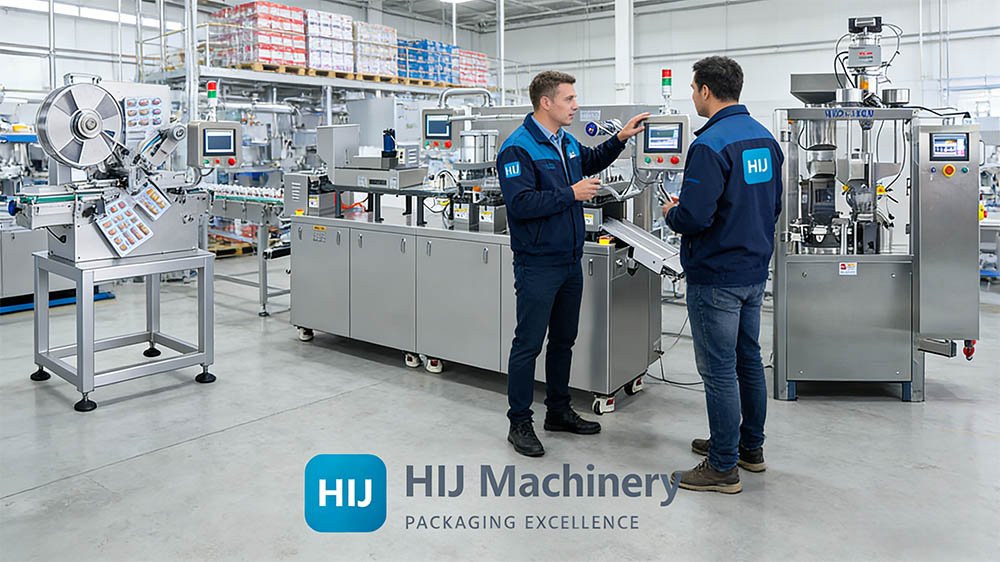
On-site field support — not just remote video calls — is the standard HIJ holds to for every syringe blister packaging line post-commissioning.
📦 Questions 9–10: Can They Integrate Into a Complete Line — Or Just Sell a Box?
📌 Direct Answer
A standalone syringe blister packing machine is a single point in a multi-step packaging process. The supplier who can integrate upstream syringe feeding, downstream cartoning, and serialization into a validated turnkey line eliminates the multi-vendor accountability gap that causes the majority of project delays in pharmaceutical packaging capital projects.
The stability report landed in March. The QA team had signed off on the blister machine in December, the cartoner in January, and the case packer in February — three separate suppliers. Integration? Nobody’s problem, officially. The line ran for six weeks before a consistent syringe orientation error at the cartoner in-feed was traced to a blister pitch specification mismatch between supplier one and supplier two. The project delay: 14 weeks. The blame game: still ongoing at last count.
Can you supply and validate the complete syringe packaging line — blister, cartoning, and case packing — as a single accountable turnkey contract?
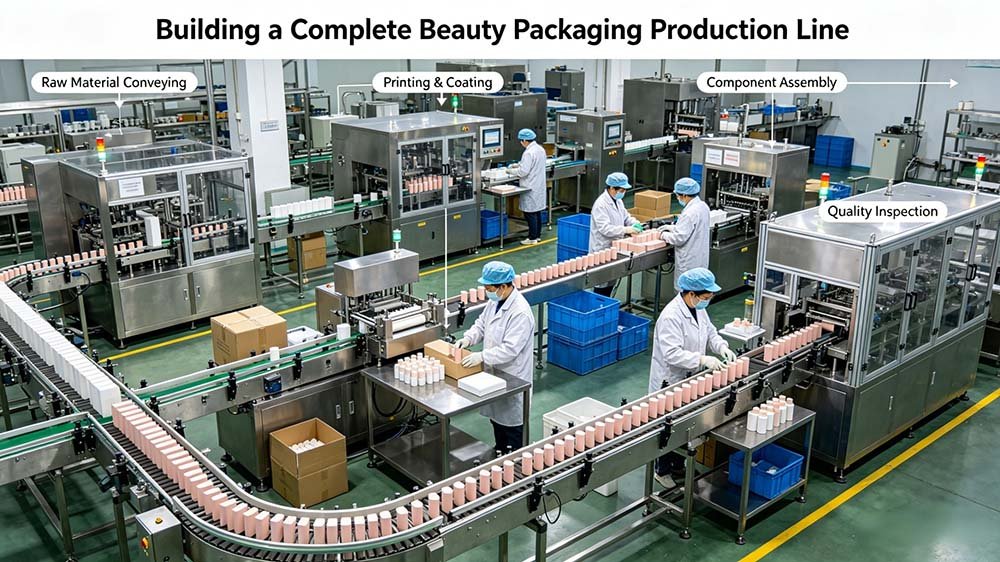
This question is not about whether they can theoretically supply all three machines. It’s about whether they accept single-contract accountability for the integrated line’s validated performance. A turnkey supplier commits to a single DQ covering the full line, integrated SAT sign-off, and a single contact for any performance non-conformance after commissioning. If the answer is “we can supply the blister machine and recommend partners for the rest,” you have a coordination project, not a turnkey contract. Coordination projects carry all the integration risk — and you carry it alone. Understand what the real scope of a turnkey syringe blister packaging line includes before accepting a split-vendor proposal.
✅ Require: single-contract accountability covering blister, carton, and case packing integration validation
What is your process for handling line modifications post-commissioning, and what revalidation support do you provide?
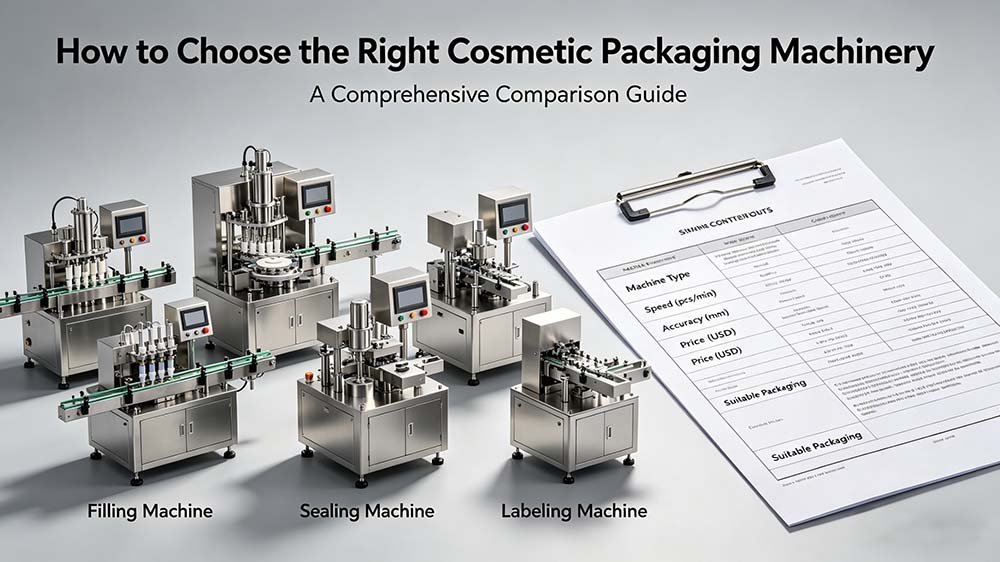
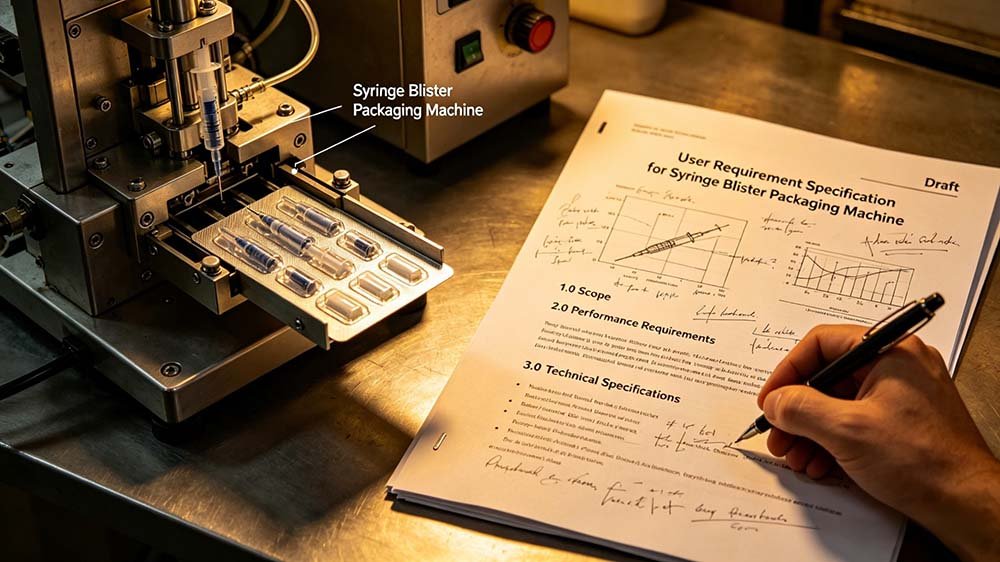
Lines change. Syringe formats change. Lidding material specifications change when a primary supplier has a quality issue and you switch to an alternate source. Every significant change to a validated syringe blister packaging line requires a formal change control evaluation and potentially a partial OQ or PQ re-run. Ask the supplier how they handle these events: do they have a documented change control procedure? Can they provide engineering support for the revalidation protocol? Will they do it under warranty or at extra cost? The answer tells you everything about whether this supplier treats post-commissioning as a service relationship or a completed transaction. For guidance on writing the initial requirements that define these obligations, see how to structure a comprehensive syringe blister machine selection specification.
📋 Confirm: documented change control procedure and revalidation support terms in the purchase contract
⚠️ Diagnostic: Integration Red Flags to Catch Before Signing
🔴 Signal: Supplier cannot provide a single integrated DQ for full line
If the blister machine supplier and cartoner supplier each submit separate DQ documents with no integration architecture section, your validation team will spend 3–5 months reconciling interface specifications that should have been resolved at engineering design stage. This is a $60,000–$120,000 consulting cost that appears nowhere in the original capital budget.
🔴 Signal: Post-commissioning change control handled “case by case” without a documented procedure
No documented procedure means no predictable cost, no guaranteed timeline, and no defined scope. Every change event becomes a negotiation. That is not a service relationship — that is a vulnerability in your validated state maintenance.
📋 The Pre-Purchase Supplier Qualification Checklist: All 10 Questions at a Glance
📌 Direct Answer
Use this checklist before any supplier site visit or purchase decision for a syringe blister packing machine. A supplier who cannot answer “yes” with documented evidence on 8 or more of these 10 items is not ready for a regulated pharmaceutical or medical device packaging application.
- Q1: Complete DQ/IQ/OQ/PQ template package specific to syringe blister packaging (not generic tablet templates) — provided before deposit
- Q2: 21 CFR Part 11 compliant audit trail demonstrated live on HMI during factory visit — not shown in brochure screenshots
- Q3: Reference site at FDA-inspected or WHO GMP facility with full IQ/OQ/PQ completed — verifiable contact name provided
- Q4: Live FAT performed with your actual syringe product, nest format, and lidding material — not supplier’s demonstration product
- Q5: Tooling library covers your syringe sizes; custom nest lead time confirmed with in-house machining capability documented
- Q6: Servo-controlled sealing station with closed-loop parameter logging for CCI qualification per ASTM F2338 / USP <1207>
- Q7: Written SLA specifying <4-hour remote response and regional on-site field engineer availability for your market
- Q8: Critical spare parts held in regional stock; 10-year parts availability policy confirmed in writing
- Q9: Single-contract turnkey accountability for integrated blister + cartoning + case packing line validation available
- Q10: Documented change control procedure and defined revalidation support terms included in purchase contract
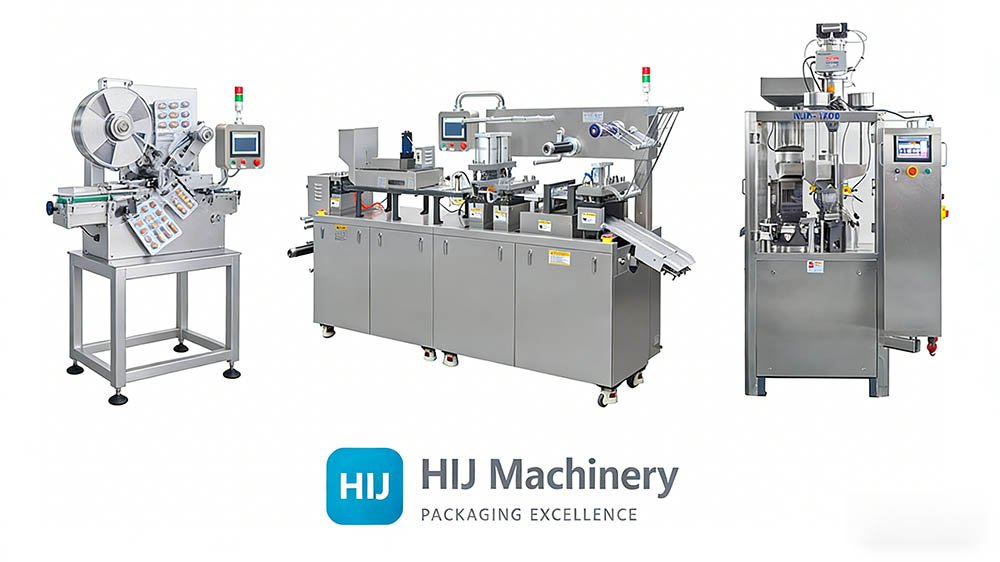
A complete turnkey line — from syringe blister forming to case packing — under single-supplier accountability eliminates the integration failures that define most multi-vendor packaging projects.
“Choosing the right syringe blister packing machine supplier is not about the lowest quote. It’s about who can still answer your calls 18 months after commissioning when your line goes down at 2 a.m. — with documentation, a field engineer, and a part in stock. I have seen $48,000 in apparent machine savings turn into $1.4 million in recall exposure. The 10 questions above are the difference.”
— Forester Xiang, Founder, HIJ Machinery
❓ FAQ: Syringe Blister Packing Machine Supplier Questions
What documents should a syringe blister packing machine supplier provide before purchase?
A qualified supplier must provide a DQ/IQ/OQ/PQ validation template package specific to syringe blister equipment, a machine specification sheet with sealing station control architecture details, CE or equivalent certification, a reference list of regulated pharmaceutical or medical device sites, and a written after-sales SLA. Generic tablet-line documents are not sufficient for regulatory submission or FDA inspection readiness in a syringe packaging context.
How do I evaluate a syringe blister machine FAT properly?
Run the FAT with your actual product — your syringe barrel geometry, your lidding material, and your target line speed. Witness sealing station parameter logging live. Confirm nest alignment consistency across a minimum 500-blister production run. Document any adjustment made during FAT in a formal non-conformance report, and ensure the supplier signs off on corrective action before shipment. A FAT run on the supplier’s demonstration product at controlled ideal conditions tells you almost nothing about real-world performance on your line.
Is it worth paying more for a supplier with regional after-sales support?
Yes. The math is straightforward. A pharmaceutical packaging line running at 80 blisters per minute on an 8-hour shift produces approximately 38,400 blister cards per day. At even a modest $0.40 per pack margin, that is $15,360 per day in production value. A 10-day downtime event caused by a critical part with a 6-week international freight lead time represents $153,600 in lost production — before factoring in contractual penalties, batch rejection, or regulatory notification requirements. The premium for regional after-sales support rarely exceeds $8,000–12,000 over machine lifetime. The math favors the premium every time.
What is the difference between a standalone syringe blister machine supplier and a turnkey line supplier?
A standalone machine supplier delivers one piece of equipment and hands you an IQ/OQ/PQ template for that machine only. Integration with upstream syringe feeding, downstream cartoning, serialization, and case packing is your responsibility — meaning you coordinate multiple suppliers, reconcile interface specifications, and carry the validation risk for the integrated line. A turnkey supplier accepts single-contract accountability for the full line, delivers one integrated DQ, and signs off on SAT for the complete production process. For projects in regulated markets — FDA, EU GMP Annex 1, WHO GMP — the turnkey model gives you a better chance of first-pass inspection success and significantly reduces total validation cost.
Can I use a syringe blister packing machine originally designed for tablets?
Not without significant tooling and validation rework. Syringe nest formats, barrel clearances, and lidding material requirements — particularly Tyvek/foil laminates for sterile products — are fundamentally different from tablet cavity geometries and standard PVC/aluminum sealing. A tablet blister machine retrofit for syringes will require custom nest tooling, sealing station parameter requalification, and in many cases a complete new OQ/PQ cycle. The cost of retrofit rarely justifies the decision over specifying a purpose-built syringe blister packing machine from the start.
How much does a syringe blister packing machine cost from a qualified GMP supplier?
Indicative machine price ranges from USD 65,000 to USD 95,000 for a mid-speed (60–120 blisters/min) GMP-compliant syringe blister line from a qualified supplier like HIJ Machinery. For a full analysis of what drives total cost of ownership — including tooling, validation, and spare parts — see the complete syringe blister packing machine cost guide.
Ready to Qualify a Supplier That Actually Answers Question 1 Through 10?
HIJ Machinery supplies complete DQ/IQ/OQ/PQ documentation, live FAT with your actual syringe product, in-house tooling fabrication, and field engineers across Southeast Asia, the Middle East, Africa, and Latin America. One accountable partner from URS through post-commissioning validation — no multi-vendor blame gaps.