Engineering guide · User requirements specification
How to Write a URS for a Syringe Blister Packing Machine
A useful user requirements specification connects the syringe, finished blister and production conditions to clear supplier responses and acceptance evidence. This guide explains what to record, how to write verifiable clauses and how to keep unresolved decisions visible.
Includes product and pack inputs, clause examples, a responsibility matrix and a worked URS example.

What should a syringe blister machine URS contain?
Define intended use, complete product/kit, package role, materials, formats, accepted output, handling, inspection/rejection, site interfaces, controls/records, documents and test responsibilities. State how each important requirement will be verified.
Specify the result
Describe what arrives at the loader and what leaves the agreed output exit. Include the full assembly and kit, finished blister drawing, material identities and the attributes that determine an acceptable pack.
Make the scope visible
Identify the machine functions, format parts, utilities, upstream/downstream tasks and document services included in the proposal. Require suppliers to answer open requirements and state deviations or assumptions.
Plan the evidence
Name the acceptance method, test inputs, stage and reviewer. Link each requirement to the proposed design and results so the buyer can see what has been demonstrated and what remains open.
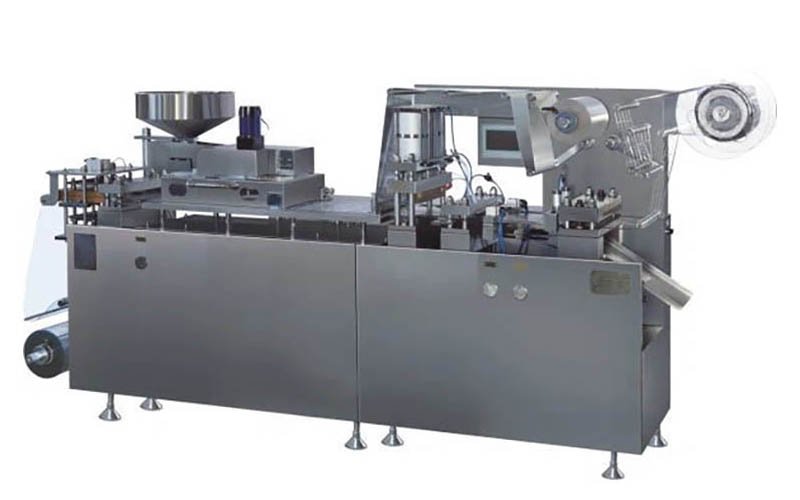
The syringe blister packing machine overview introduces the equipment scope. This URS guide organizes the buyer inputs without assigning universal tolerances, speeds, sealing recipes or validation durations.
Build a URS with IDs, revisions and a response matrix
Use the customer’s approved document format where available. Keep the current revision, authors/reviewers, project scope, references and open decisions visible. Length follows the project complexity; a fixed page count does not establish completeness.
| URS section | What to record | Supplier response to request |
|---|---|---|
| Purpose and boundaries | Product route, package role, intended markets and line start/end. | Proposed configuration, inclusions and exclusions. |
| Product and packaging | Approved drawings, samples, materials, formats and pack criteria. | Compatibility review, tooling and trial questions. |
| Functional requirements | Loading, forming, sealing, coding, inspection, rejects and recovery. | Function, implementation and relevant limits. |
| Performance and site | Accepted-output method, staffing, changeover, utilities and interfaces. | Conditions to demonstrate and site responsibilities. |
| Quality, records and support | Applicable framework, data use, documents and training. | Included features/deliverables and customer tasks. |
| Verification and approvals | Requirement IDs, criteria, test stage, deviations and reviewers. | Requirement-to-design/test evidence and open-item status. |
Give an unresolved item an owner, required input and decision stage. Separate a genuine requirement from a preference or optional feature. Confirm how the approved URS, vendor response and contract incorporate agreed scope and deviations.
Specify the full assembly rather than nominal syringe volume
Provide a drawing and format table for every proposed product. Identify tolerances from the approved product specification, representative samples and permitted assembly variation. Do not substitute an arbitrary diameter tolerance for the real product data.
| Input group | Details to provide | Why it matters |
|---|---|---|
| Barrel and flange | Material, diameters, lengths, flange outline/step and relevant tolerances. | Product support, guide clearance, pickup and cavity design. |
| Tip and closure | Tip geometry, cap/needle shield, dimensions and permitted contacts. | Assembly clearance and preservation through handling. |
| Plunger and safety features | Rod state, overall assembly length, safety device and allowed movement. | Placement, pocket fit and permitted product condition. |
| Labels and appearance | Label position, surfaces, artwork and variation relevant to checks. | Contact restrictions, clearance and inspection presentation. |
| Product state and supply | Empty or filled/closed; individual, tray, nest/carrier or upstream handoff. | Incoming orientation, availability, separation and transfer. |
| Kit contents | Needles, swabs or other nominated accessories and positions. | Supply method, complete-pack layout and completeness checks. |
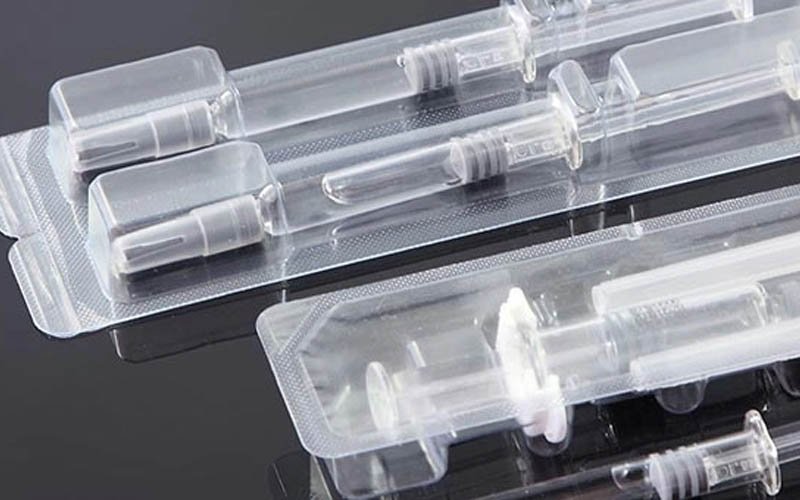
Use the assembled product state that the line will receive. Identify mass and heat/contact sensitivities where relevant. If only a photo is available initially, use it to open the review and list the dimensioned data and samples still needed before tooling approval.
Define the finished blister and the protection it must provide
Show units per blister, accessory positions, cavity/retention features, flange/seal area, opening method, cutting outline and printed information. Identify the layer responsible for each claimed function and the owner of its study.
Package role
Distinguish the syringe container closure, protective outer blister, any sterile barrier and the outer carton. A sealed blister does not automatically establish sterility or syringe closure integrity. State the actual role and relevant process route.
Material identities
List forming web and lidding supplier/grade, thickness, coating, roll requirements, storage and lot traceability. Confirm material compatibility and the evidence needed for forming/sealing. A polymer name alone is not an approved material specification.
Pack acceptance attributes
Define relevant appearance, dimensions, retention, opening, code and integrity attributes. Assign suitable methods and lifecycle stages where relevant. Keep outer-package tests distinct from product/closure studies and agree the customer study responsibilities.
Use the PVC vs PVDC syringe blister guide for material-selection questions. Review package classification and quality evidence in the GMP syringe blister requirements guide.
Specify the complete loading route and permitted handling
Describe supply, separation, pickup, movement, insertion and release. Identify permitted contact areas, orientation, seating reference and assembly-condition checks. The actuation technology follows the loading task and trial evidence.
Supply and replenishment
Define trays/carriers or individual infeed, manual tasks and upstream availability. State how supply gaps, doubled items or presentation changes are treated. Include staffing and replenishment in the performance boundary.
Contacts and placement
Identify the full assembly and accessories at each handoff. Define what must remain unchanged, what placement result will be measured and where. A drive-position specification does not establish complete syringe placement or absence of product damage.
Interruptions and recovery
Define missing pickups, unseated products, held assemblies, downstream stops and jam clearance. Specify the affected product/pack disposition and authorized restart checks. Require demonstrations for the nominated conditions.
The servo vs pneumatic syringe feeding review distinguishes web traction from loading and supports complete-task comparison. Name the actual proposed loading functions instead of assuming a servo label proves the whole design.
Define accepted output with a counting and time boundary
Write the required output as accepted complete packs at a named exit over an agreed elapsed run. Record product, format, material, loading method, staff, replenishment, rejects, held units and interruptions with the result.
| Performance input | Decision to specify | Evidence boundary |
|---|---|---|
| Unit and exit | Syringes, complete blister cards or accepted cartons; exact exit. | Do not equate axis cycles or incomplete kits with accepted finished output. |
| Layout conversion | Syringes per blister and blisters per carton where relevant. | Conversion depends on the approved complete-pack layout. |
| Run conditions | Duration, nominated materials/tools, staff and utilities. | State how starts, stops and replenishment enter elapsed time. |
| Rejects and holds | Definitions, denominator, sample method and disposition. | Separate detection misses, false rejects and physical reject failures. |
| Changeover | Start/end events, personnel, clearance and first-pack verification. | Recipe retrieval or tool exchange alone is not a full production changeover. |
| Reliability metrics | Event definitions and observation period if required. | Do not infer long-term reliability or OEE from a short demonstration. |
Choose the target and evidence plan from the actual project. If OEE is requested, agree its availability, performance and quality definitions plus data sources separately. Do not use one default OEE, defect rate or test duration as a universal acceptance rule.
Connect each station to a finished-pack requirement
Specify the relevant controlled conditions, measuring locations and process evidence. Separate display/set values from the conditions experienced by the package. Identify tooling and recipes for each nominated format.
Forming and retention
Review cavity dimensions, product seating, relevant forming conditions and material variation. Name the positions and attributes to inspect. Confirm the sample coverage for tool/layout limits and any change in syringe or accessory arrangement.
Sealing and opening
Identify the material pair, implemented settings, relevant measurements and package tests. Develop the approved window with process evidence. Define warm-up, stop/restart and excursion handling instead of copying a generic temperature or peel-strength value.
Code, cut and transfer
Specify content, location, readability, registration and card dimensions. Define how output is oriented and passed downstream. Name the response to damaged or uncertain packs and the checks required after setup or recovery.
The syringe blister process guide follows the station sequence. Use it to locate the requirement and test point without turning catalogue cycle rates into guaranteed accepted output.
Write inspection requirements as observable conditions and outcomes
For every nominated defect, identify the product feature, inspection point, challenge sample, decision and affected output unit. Specify the action as reject, hold, stop or an approved operator procedure.
| Requirement topic | What to state | What the test should follow |
|---|---|---|
| Presence and completeness | Syringe/accessory set for each format and pocket. | Challenge nominated missing items and verify the complete-pack outcome. |
| Position and appearance | Observable seating, orientation or assembly-condition limits. | Use representative normal/defect samples and record the configured setup. |
| Code and identity | Required code/artwork content and verification method. | Check nominated incorrect, missing or unreadable conditions. |
| Tracking and rejection | Decision-to-pack mapping, actual reject point and segregation. | Follow the failed pack to physical removal/hold and reconcile its disposition. |
| Fault and restart | Reject-system faults, interrupted movement and uncertain products. | Demonstrate the approved recovery and affected-pack accounting. |
Use the inspection and rejection guide to develop the defect matrix. A camera checks defined visible features; hidden leakage, closure integrity and sterility need separate suitable methods.
Make site readiness and line interfaces part of the scope
Provide the planned footprint, installation route, access clearances, conveyor geometry and utility availability. Agree which supplier or site team designs, supplies, connects and tests each interface.
Utilities and environment
State site electrical supply, air/vacuum needs and any other implemented utility. Agree supply conditions and relevant monitoring. Define area, cleaning and contamination-control expectations for the actual production route without assigning universal room grades or air dew points.
Physical and control handoffs
Define infeed/outfeed orientation, pitch, height, buffers, availability, stop and restart signals. Assign ownership of rejected/held product across interfaces. A connected cartoner needs a defined final-output and recovery boundary.
Data integration
If a site system is required, name its intended function, data objects, protocol, versions, access and test environment. Define both ends of the interface and interruption/recovery behaviour. Do not assume a preferred protocol or PLC brand is included as standard.
Show upstream labeling or supply, blister operations, transfers and downstream cartoning on one agreed layout. Record dependencies on customer equipment, utilities, samples and IT access in the proposal and acceptance plan.
Define controls from intended use and actual record reliance
Identify recipes, users, permissions, relevant changes, batch identifiers, alarms and records used for regulated decisions. Determine required retention, retrieval, export, backup and recovery with the site system owner.
Write testable system requirements
Name the authorized action and expected result. For applicable change history or audit trails, specify the events and review needs. Define time basis and batch association where required. Test the nominated permissions, changes and record retrieval against the agreed workflow.
Assign system responsibilities
Separate machine configuration and software delivery from site administration, backups, interfaces and procedures. Identify versions, licenses, restore scope and support access where supplied. Ask for a functional response and demonstrated tests.
Assess applicability first
FDA Part 11 scope depends on underlying record requirements and actual reliance on electronic records/signatures. A PLC, HMI or destination country alone does not settle applicability. Applicable EU GMP computerised-system requirements also need intended-use and risk assessment.
Consult the GMP requirements page and the official FDA Part 11 scope guidance. Agree implemented functions and tests by item rather than declaring every machine record feature compliant by default.
Turn descriptive wishes into requirements with evidence
Compare vague wishes with written clauses and evidence. Product-specific values are controlled by the referenced project specifications, rather than inferred from a model name.
| Descriptive wording | Illustrative requirement pattern | Verification to define |
|---|---|---|
| Suitable for syringes | PRD-01: Transfer the approved syringe assemblies from the agreed incoming presentation using identified contact points; preserve cap, plunger and label condition according to the product specification. | Named samples, contact review and observed placement/product-state method. |
| High output | PER-01: Demonstrate the accepted complete-pack output stated in the signed performance agreement at the named discharge, using the documented product, material, tooling, staffing and elapsed-run conditions. | Count method, conversions, interruptions and reject/hold accounting. |
| Good seals | PKG-01: Produce the package defined by the approved drawing and material specifications; demonstrate its nominated attributes using agreed methods, criteria and recorded process settings. | Suitable methods, sample positions/stages and approved criteria. |
| Reject bad packs | INS-01: Demonstrate each agreed observable defect, track the affected pack and confirm the specified physical reject or hold response, including the agreed interruption recovery. | Normal/defect challenges, physical outcome and recovery tests. |
| Fast changeover | FMT-01: Demonstrate the nominated format change using the listed personnel, parts and complete setup procedure; record its defined start/end and the approved first-pack checks. | Witness the nominated complete procedure and record duration/criteria. |
| Documents included | DOC-01: Deliver the records and files in the agreed document schedule with their required revisions, delivery stages and template or executed status identified. | Check the itemized document schedule and approved review outcome. |
Keep the ID in the vendor response, design review and test report. A requirement may need several checks. Record partial coverage and deviations instead of marking an item complete merely because it appears in a manual.
Assign customer and supplier responsibilities explicitly
The URS gathers customer requirements; the supplier responds with the proposed design and included deliverables. The approved project plan assigns qualification, package-study and production-release responsibilities. Clarify who drafts, executes, witnesses, reviews and approves each activity.
| Activity | Supplier contribution to agree | Customer responsibility to assign |
|---|---|---|
| Product and pack definition | Sample/design review and compatibility questions. | Approve drawings, materials, package role and criteria. |
| Design and configuration | Function response, layout, tooling and controls documents. | Review intended use, deviations and site interfaces. |
| Acceptance tests | Agreed protocols, representative operation and results. | Approve inputs/criteria, witness and resolve open decisions. |
| Site qualification and studies | Itemized documents, execution/support and sample manufacture. | Own approved plan, site evidence and study conclusions. |
| Routine production | Included manuals, training and maintenance information. | Own procedures, monitoring, change control and release. |
EU GMP Annex 15 uses the URS as a reference through the qualification lifecycle. Use the applicable framework with the customer quality team; the official EudraLex index identifies the relevant annexes. Neither the document title nor a supplier template establishes completed validation.
Agree FAT and SAT coverage before building the machine
Freeze representative test inputs, criteria, procedures and evidence needs at the relevant approval stage. Map requirements to vendor tests, installation/site checks and remaining qualification or package studies.
FAT inputs and observations
Identify syringe/kit samples, material grades/lots, formats, tools, recipes and utilities. Demonstrate the nominated handling, pack quality, codes, inspection/rejection, output and interruptions. Record substitutions, limitations and deviations against requirement IDs.
SAT and installed interfaces
Define transport/installation checks, site utilities, layout, connected systems, versions and recovery. Determine which earlier evidence remains suitable and which functions need site testing. Record the rationale and approval rather than automatically repeating or waiving every test.
Acceptance and unresolved items
Agree result records, reviewers, correction responsibilities and conditions for next-stage release. Keep contractual acceptance separate from authorization for regulated routine production. Qualification scope and batch/sample quantities follow the approved project plan.
Choose run duration, sample coverage and limits from the evidence needed for the actual project. There is no universal four-hour run, fixed defect percentage, three-batch requirement or schedule in this guide.
Develop the verification plan with the syringe blister qualification and validation guide. Its evidence matrix, record questions and handover checklist help connect each URS requirement to the appropriate review and test owner.
Include the work needed to operate and maintain the supplied formats
Define the complete format list and which parts/settings change. Review physical access, cleaning compatibility, safe maintenance and training with the site staff who will perform the tasks.
Change parts and setup
Name shared and dedicated grips, guides, tools and inspection settings. Specify part identification, setup references and first-pack checks. A software recipe cannot substitute for all physical changes or demonstrate every product format.
Cleaning and maintenance
Identify relevant contact/near-product surfaces, removable components, permitted methods and reassembly. Request agreed material and maintenance information. Surface material/finish and enclosure requirements follow the assessed task rather than one universal stainless grade or finish.
Support deliverables
Discuss manuals, operator/maintenance training, backups, critical spares and technical support tasks. Define language, attendance, included formats and current service/parts terms in the quotation. Do not infer on-site validation or fixed delivery from a model name.
Witness the nominated setup or access task, record personnel and included steps, and identify the site-specific training or cleaning evidence still required. Use the findings to update the operating documents and approved scope.
Review quotations against the same approved requirements
Request a clause-by-clause response: proposed solution, included/optional/excluded status, evidence plan, deviation and open input. Price the same assembly, materials, formats, line boundary and acceptance/document work.
Close assumptions before approval
Review loading, formats, package tests, interfaces and document execution with engineering, quality and procurement. Identify who supplies samples, tools, utilities, site work and laboratories. Define contractual deliverables and how changes are approved.
The price and scope guide supports itemized quotation inputs. Compare current proposals rather than inserting unsupported average rework costs, savings or return on investment.
Maintain a controlled baseline
Record the agreed revision and response. Assess later changes to product, material, tooling, controls or interfaces against the affected requirements and evidence. Update approved documents and the test matrix before accepting changed scope.
A useful bid comparison shows what is demonstrated, what is proposed and what remains dependent on samples or site information. The vendor response should make those differences reviewable without silently changing the customer’s acceptance criteria.
A worked URS example for a syringe blister packing machine
The example connects written requirements to supplier responses and acceptance evidence for one defined product and packaging route.
1. Define the example project before writing clauses
This example concerns a blister machine receiving capped, assembled syringes in oriented trays and producing a blister containing one syringe. The equipment boundary begins at the tray handoff and ends at the blister discharge conveyor. A downstream cartoner is a separately agreed interface. The blister in this example provides mechanical protection; the example does not assume a sterile-barrier function.
These are illustrative project choices used to show complete wording, rather than a report of an installed customer line. Actual syringe dimensions, material grades, performance values and package-test limits come from the approved project documents. A model name or nominal syringe volume cannot supply those values.
2. Write requirements together with their evidence
The following clauses show the requirement and the associated verification in full. They reference controlled project specifications where the value is product-specific, so the reader can see which evidence establishes a result instead of relying on generic limits.
| Requirement ID | Written requirement example | Verification and evidence |
|---|---|---|
| PRD-01 · Product handling | The machine shall transfer the capped, assembled syringe from oriented trays into the blister without using the plunger as a gripping surface. Product-contact points shall be identified in the supplier design response. | Review the transfer arrangement and run representative approved assemblies. Observe cap position, plunger condition, label condition and seating after transfer. |
| PKG-01 · Finished blister | Each completed blister shall contain one syringe in the orientation shown on the approved pack drawing. The cavity shall accommodate the assembly and allow removal without a handling step that conflicts with the approved product-use instructions. | Compare tooling and finished packs with the drawing. Inspect seating and perform the agreed removal procedure using representative assemblies. |
| MAT-01 · Materials and sealing | The equipment shall process the forming and lidding materials identified in the approved material specifications. The supplier shall identify the proposed forming route, sealing arrangement, controlled settings and evidence needed to support the operating window. | Check material identification and trial records. Assess the nominated package attributes using the approved methods and criteria; retain the settings and sample identification. |
| PER-01 · Accepted output | The performance agreement shall state the required accepted blister output at the blister discharge conveyor. The test shall record elapsed time, accepted packs, rejects, held packs, interruptions, staffing and replenishment under the agreed product and material conditions. | Reconcile the discharge count with rejects and held packs. Calculate accepted packs per elapsed minute and compare with the signed project performance agreement. |
| INS-01 · Product presence and position | The system shall inspect the agreed observable conditions for syringe presence and seating before completion of the pack. Each defect category shall have an agreed detection point, affected-pack boundary and reject or hold response. | Introduce agreed known-condition samples, including an empty pocket and an observable placement error. Confirm the result for each category and its associated physical pack. |
| REJ-01 · Reject control | A pack designated for rejection shall be prevented from entering the accepted-product stream. The proposal shall define reject confirmation, segregation, counting and the response when removal cannot be confirmed. | Follow challenged packs through inspection and discharge. Check the reject destination, counter association and the agreed response to an unavailable or failed reject path. |
| REC-01 · Stop and recovery | The equipment shall provide an agreed recovery procedure for a controlled stop, loss of supply and restart. The procedure shall identify product and web remaining in the machine and prevent uncertain pack status from being treated as accepted. | Demonstrate the agreed stop and restart cases. Record the disposition of in-process packs, counter status, inspection tracking and release of the accepted stream. |
| COD-01 · Coding and identification | Where batch or date coding is included, the supplier shall define the coding surface, data entry or interface, verification functions and mismatch response. Coding scope and pack identity shall remain traceable through the agreed reject handling. | Use the agreed coding data and challenge conditions. Check legibility by the specified method and demonstrate the included verification and mismatch response. |
| FMT-01 · Format setup | Included formats, shared parts and dedicated change parts shall be listed in the quotation. Setup instructions shall identify the tooling, guides, settings and first-pack checks needed for each supplied format. | Witness the agreed setup procedure and first-pack checks. Compare delivered parts and instructions with the signed format schedule. |
| CLN-01 · Cleaning and access | The supplier shall identify accessible product-handling and near-product areas, removable parts, supported cleaning methods and reassembly checks. Site cleaning procedures shall address the actual operation and approved materials. | Review access, component information and the nominated removal/reassembly tasks with site operators. Record any remaining site cleaning-study responsibilities. |
| CTL-01 · Controls and records | The functional response shall identify operator actions, settings, permissions, alarms and records included in the supplied controls. Records relied on by the site shall have agreed association, retrieval and system responsibilities. | Test the nominated roles and settings. Demonstrate required record retrieval and relevant change history where included and applicable to the assessed record use. |
| INT-01 · Line interfaces | The blister discharge is the end of the example equipment boundary. Any downstream cartoner connection shall be separately listed, with product handoff, stop signals, accumulation and restart responsibilities defined for both machines. | Review the interface schedule and connected-machine conditions. Test included handshakes, blocked-discharge response and coordinated restart at the agreed stage. |
| DOC-01 · Documents and training | The supplier deliverable schedule shall identify drawings, manuals, format information, relevant component information, controls backups, training and agreed test records. It shall distinguish draft templates from executed and reviewed records. | Check delivery against the itemized schedule and revision status. Confirm included training tasks and identify documents still requiring site execution or approval. |
| ACC-01 · Acceptance and deviations | Every critical requirement shall be linked to a defined verification activity and responsible reviewer. Deviations shall record the affected requirement, observed result, agreed action, owner and conditions for closure or next-stage acceptance. | Review the traceability matrix and deviation log. Approve the agreed equipment acceptance decision with unresolved conditions explicitly recorded. |
3. Check a supplier response against one requirement
Consider INS-01, product presence and position. An adequate response describes what the proposed inspection can observe, where the inspection occurs, how the pack is tracked and which physical packs are rejected or held. It also lists the included challenges and the evidence that will be recorded. A reply stating only “camera included” does not answer the requirement.
For example, a proposal may include empty-pocket detection while leaving the assessment of a particular cap or label condition dependent on a sample trial. Record the included function and the unresolved trial separately. If the proposal cannot demonstrate a nominated condition, agree a deviation or another method before treating the clause as covered.
4. Describe a FAT sequence that supports the clauses
Begin by checking the sample, drawing and material revisions against the approved test inputs. Confirm the tooling and recipe, then observe normal transfer and completed packs. Run the agreed output assessment with the accepted-product exit and counting rules already defined. Challenge the nominated observable defects and follow the affected packs to their physical destination.
Next, demonstrate the agreed stop/restart cases and included coding or format tasks. For each activity, record the requirement IDs, conditions, observations, count or measurement method, result and reviewer. An incomplete run, substituted material or unavailable interface needs a recorded limitation and an assigned follow-up; it should not disappear into a general “FAT passed” statement.
5. Separate site checks from factory checks
At the site, confirm installation, utilities, configuration and any connected machines within the agreed SAT scope. Review which factory evidence remains suitable and which results depend on installed conditions. A factory test of the blister discharge does not establish the operation of a downstream cartoner that was absent from the test.
Site qualification, package studies and authorization for routine production retain their assigned owners and approved plans. The equipment acceptance record should show what was demonstrated at the factory, what was checked after installation and what still requires a separate site activity.
6. Keep the approval record usable after purchase
The reviewed project set should contain a controlled URS revision, the clause-by-clause supplier response, referenced product and package documents, the verification matrix and the deviation log. Each open item needs an owner, a decision stage and an agreed resolution route. A later change to the syringe assembly, packaging material or line interface should identify the affected clauses before the revised design or test scope is accepted.
A complete URS is therefore more than a list of headings. It connects a defined product and pack to written requirements, supplier commitments and reviewable evidence. The example above shows that connection without presenting arbitrary machine speeds, tolerances or seal limits as universal requirements.
Syringe blister packing machine URS FAQ
Answers about product data, measurable requirements, scope, acceptance, records and comparable supplier responses.
What does URS mean for a syringe blister machine?
Can I contact HIJ before the URS is complete?
Is nominal syringe volume enough for a format specification?
Should the URS use standard diameter and seal-strength limits?
How should required output be written?
Does servo traction specify the syringe loader?
Which inspection requirements belong in the URS?
Does every project require Part 11 and the same cleanroom class?
What should the URS say about FAT and SAT?
Are IQ/OQ/PQ documents automatically included?
How long should the URS be?
How do I compare supplier responses?
Use the draft URS to guide the supplier review
Check that the product and packaging inputs are clear, important requirements have verification methods, and each unresolved item has an owner. Compare supplier responses against the same approved revision before agreeing the machine configuration and acceptance scope.
If you need help reviewing the equipment scope, share your drawings, draft URS and open questions with HIJ.
Discuss your URS with HIJ →