
Intended use and products
Name dosage forms, dimensions, fragility, dust or static behavior, product families, batch conditions and representative challenge products.
Define the DQ, FAT, SAT, IQ, OQ and PQ support boundary for a configured cold-form blister project—before documentation, test responsibilities and site activities become assumptions.
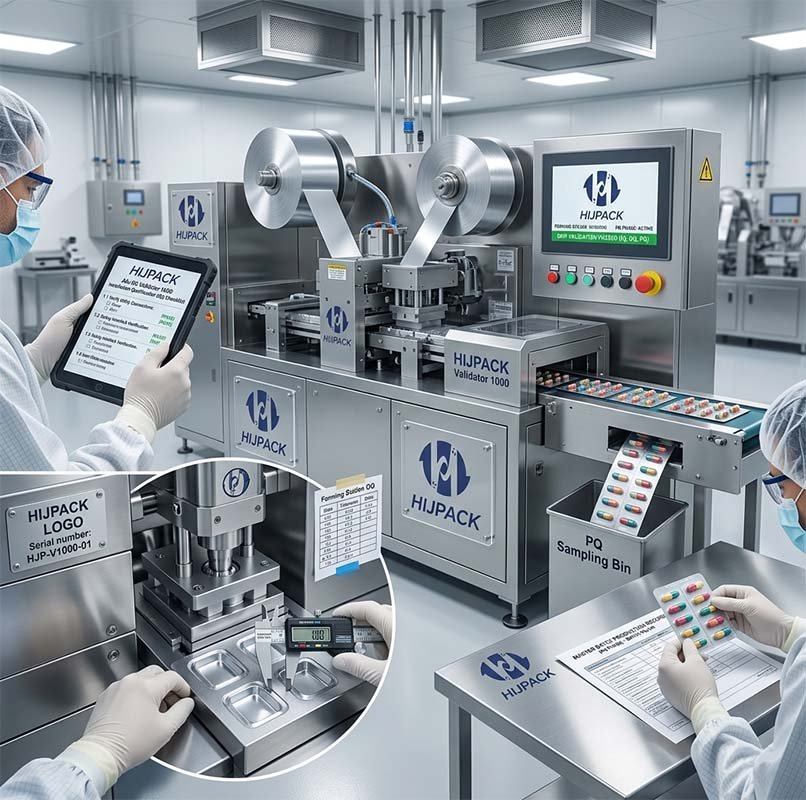
A useful qualification package connects the buyer’s approved requirements to the actual Alu‑Alu machine configuration, test methods, acceptance criteria and retained evidence. It also separates equipment-supplier support from the buyer’s quality-system responsibilities.

These inputs determine the real document index, test effort, samples, instruments, site work and acceptance boundary. If they remain open, two suppliers can quote very different scopes under the same “IQ/OQ/PQ included” label.
Name dosage forms, dimensions, fragility, dust or static behavior, product families, batch conditions and representative challenge products.
Confirm forming and lidding grades, cavity drawing, web widths, artwork, registration, seal criteria and finished-card limits.
Identify machine model, tooling revision, feeder, inspection, rejection, coding, controls, recipes, utilities and line interfaces.
Define good cards at discharge and how start-up waste, rejects, stops, splices, interventions and restarts will be counted.
Agree prerequisites, materials and lot identity, sampling, instruments, challenge cases, run duration and deviation workflow.
Name who authors, reviews, approves, executes and retains each protocol, raw result, certificate, deviation and report.
The labels below are useful only when their deliverables and approval points are defined. The exact sequence can vary with the buyer’s validation plan, project risk and contracted division of responsibilities.
Trace URS requirements to the proposed configuration, options, documents and declared gaps.
Execute an approved factory protocol using agreed materials, challenge cases and acceptance limits.
Verify delivered scope, condition, utilities, installation readiness and open-item disposition at site.
Identify installed equipment, components, drawings, utilities, calibration status and controlled documents.
Test functions, alarms, interlocks, recipes and operating ranges defined by the approved protocol.
Demonstrate repeatable performance under the buyer’s approved production and quality conditions.
Important: FAT and supplier qualification documents can support the buyer’s qualification work, but they do not replace the facility quality system, process validation, product release or regulatory assessment.
Availability, format, language, revision, approval status, customization, execution and site support can change the project scope. Put each deliverable and exclusion in the quotation and contract.
Define: URS response, scope and exclusion list, preliminary configuration, document index, responsibility matrix and proposed acceptance strategy.
Define: approved drawings and specifications, component and option list, control description, software boundary, risk-review inputs and change control.
Define: approved FAT protocol, prerequisites, samples, instruments, results, deviations, configuration baseline, manuals, certificates and open items.
Define: installation records, IQ/OQ support or templates, training, SAT, handover, service access, backups, calibration and software-support boundaries.
Use this matrix to expose missing assumptions before execution. Final tests and limits must be approved for the configured project; the examples below are planning prompts, not universal acceptance criteria.
| Decision | Method to approve | Evidence to retain | Question answered |
|---|---|---|---|
| Web handling | Exact reels, setup, splice, tension and tracking observations. | Material identity, settings, observations, events and deviations. | Can the approved web feed consistently? |
| Forming repeatability | Approved drawing, cavity measurements, samples and defect classification. | Tooling revision, settings, measurements, samples and defect log. | Does the web form the approved geometry? |
| Seal process | Named material pair, settings and agreed seal or package-integrity method. | Recorded settings, identified samples and test results. | Is there a usable operating window for this pack? |
| Registration and cutting | Artwork controls, print mark, code, perforation and cut-position limits. | Printed samples, measurements, code results and disposition. | Does the finished card match approved controls? |
| Inspection and rejection | Defined challenge defects, detection logic, reject confirmation and segregation. | Challenge set, detection results, reject record and reconciliation. | Are specified defects detected and controlled? |
| Sustained run | Agreed duration, product, materials, staffing and accepted-output definition. | Total output, accepted cards, rejects, waste, stops and interventions. | Can the process meet the agreed accepted-output target? |
A report without identifiable inputs is difficult to reuse. Retain the context needed to understand what was tested, whether a deviation occurred and which approved decision followed.

The cleanest projects state who supplies information, who approves it and who owns the final decision. The exact split below must be confirmed in the URS response and contract.
| Workstream | Potential supplier contribution | Buyer responsibility |
|---|---|---|
| URS and design | Respond to requirements, declare configuration, options, assumptions, exclusions and supporting documents. | Approve intended use, quality requirements, risk strategy, acceptance intent and change controls. |
| FAT | Prepare the agreed machine, tooling, protocol inputs, test environment, raw results and deviation records. | Approve the protocol and samples, witness as contracted, review evidence and accept or disposition open items. |
| Installation and IQ | Provide installation instructions, drawings, component data and contracted installation or execution support. | Provide qualified utilities and facility conditions, approve site records and control local procedures. |
| OQ | Support machine-function challenges, operating-range tests and troubleshooting within the agreed boundary. | Approve risk-based tests, limits, instruments, deviations and release to the next stage. |
| PQ and product release | Provide machine knowledge and contracted technical support during buyer-approved runs. | Own product, batches, sampling, laboratory testing, process validation, quality approval and commercial release. |
| Lifecycle | Provide change notifications, service records and revision-controlled technical updates when contracted. | Own periodic review, requalification decisions, calibration and maintenance program, data governance and regulatory assessment. |
Contract checkpoint: mark every document and activity as included, optional, buyer-supplied, third-party or excluded. Avoid assuming that “support” means authorship, execution, approval and site attendance are all included.
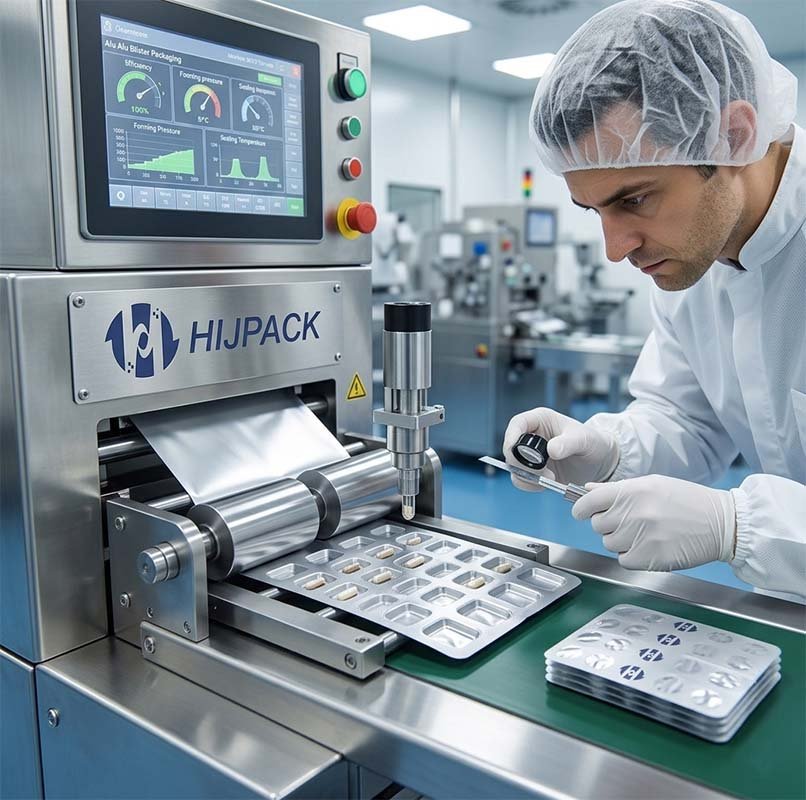

A qualified inquiry is easier to answer and compare. Send the files and decisions below; HIJ can then respond with the proposed machine boundary, open questions and documentation or test options.
Product dimensions and samples, cavity or card drawing, forming and lidding grades, artwork, seal criteria and proposed quality tests.
URS or requirement list, intended markets, user roles, recipes, electronic-record expectations, reports, backups and interface requirements.
Accepted-output target, FAT duration, challenge defects, retained evidence, site utilities, installation, training and qualification-support expectations.
Send the product and pack definition, machine boundary, accepted-output target, documentation expectations and proposed test conditions. HIJ can review the requested supplier support and identify the information still needed for a quotation.