CAPACITY PLANNING · TABLET & CAPSULE BLISTER PACKS
Pill blister packaging machine speed becomes useful when the output unit, card layout and production-time boundary are clear. Plan the accepted cards your product needs, then verify the feeder, materials, tooling and downstream line against that requirement.
Nominal cards/min = cycles/min × finished cards/cycle. Planning accepted cards = nominal cards/min × planned production minutes × a documented operating factor. Confirm what that factor includes, then test accepted output with the actual product, materials and approved pack drawing.
For procurement and production teams comparing pill blister machine capacity. Examples below are calculations, not HIJ test results or guaranteed output.
Cycles, cards, pills and cartons are different output units
A blister card contains individual pockets. A forming or punching cycle may produce more than one finished card. A carton can contain one or several cards. A speed statement needs all relevant quantities; the word “blisters” alone can mean pockets or cards and should be clarified.
| Output unit | Definition for the project | Evidence to request |
|---|---|---|
| Machine cycles/min | The stated motion or punching cycles under the quoted conditions. | Station/rate definition, material route and offered configuration. |
| Finished cards/cycle | Separate, cut blister cards produced from one cycle. | Approved web-direction, pitch, pocket and cutting drawing. |
| Nominal cards/min | Cycles/min multiplied by finished cards/cycle, before the named losses. | Both numbers and their supported operating conditions. |
| Accepted cards/min | Cards meeting agreed criteria over a stated elapsed period. | Good/reject counts, timing boundary, inspection and stop log. |
| Product units/min | Accepted cards/min multiplied by the accepted tablets or capsules per card. | Approved market pack and filled-card acceptance. |
| Accepted cartons/min | Accepted carton output with its specified cards, leaflets and other contents. | Count recipe, cartoner/transfer evidence and final inspection boundary. |
At 40 cycles/min, a drawing with two finished cards/cycle gives 80 nominal cards/min. If each card holds 10 tablets, that corresponds to 800 tablets/min before losses. Twenty pockets in one larger finished card would instead give 40 nominal cards/min. Count finished cards after cutting, not just pockets in the forming area.
The “260” in DPP-260 is a model designation, not evidence of 260 cycles/min. Read the actual model document and configuration. A rate quoted for one material and drawing cannot automatically be transferred to a different card or cold-form route.
Engineering insight: work backward from accepted-card demand
Set the demand in one finished-pack unit. State the calendar, the time intended for production and the loss assumptions. If the demand starts in tablets or capsules, divide by accepted product units per card before calculating the required card rate.
Accepted cards in the planning period, approved formats and any separate growth or inventory allowance.
Production days, shifts and planned production minutes per shift. Record what is already excluded.
A documented planning or trial factor for the named losses and output boundary. Do not assume an industry average.
Use these relationships with consistent units:
Required accepted cards/min = accepted-card demand ÷ planned production minutes.
Required nominal cards/min = required accepted cards/min ÷ operating factor.
Required cycles/min = required nominal cards/min ÷ finished cards/cycle.
Consider a hypothetical monthly requirement of 1,200,000 accepted cards, 20 production days, one shift/day, 420 planned production minutes/shift, four finished cards/cycle and a combined operating factor of 0.70. Assume that the factor includes the stops, rate losses and rejects within those planned minutes; any already-excluded non-production time is not charged again.
| Calculation | Arithmetic | Result |
|---|---|---|
| Planned minutes/month | 20 × 1 × 420 | 8,400 min |
| Required accepted card rate | 1,200,000 ÷ 8,400 | ≈142.86 accepted cards/min |
| Required nominal card rate | 142.8571429 ÷ 0.70 | ≈204.08 nominal cards/min |
| Required cycle rate | 204.0816327 ÷ 4 | ≈51.02 cycles/min |
| Check a proposed 40-cycle rate | 40 × 4 × 0.70 × 8,400 | 940,800 accepted cards/month under these assumptions |
The proposed 40-cycle rate does not meet that example’s demand on the stated schedule. Review more scheduled time, a different approved layout, a proven higher-rate configuration or additional capacity. A calculated requirement of 51.02 cycles/min is not proof that any particular machine can produce your pack at that rate.
With two identical shifts/day and the same assumptions, the proposed rate would plan 1,881,600 accepted cards/month. That is a scenario calculation, not a staffing recommendation or measured production result. Reassess the factor and material supply for the actual shift pattern.
For a broader demand-to-cycle planning worksheet, use the blister machine speed and capacity planning guide. Keep your inputs and evidence separate from illustrative values in this article.
Record losses once and distinguish planning from measured OEE
A planning factor combines the losses you choose to model. It is useful only when another reviewer can identify the time window, output boundary and included events. A lower-speed feeder, material replenishment, rejected cards and a blocked discharge can affect output in different ways.
Define whether planned breaks, cleaning and changeovers are already outside the production minutes or remain inside the modeled window. Record each event once. If an accepted-output measurement already includes stops and rejects, applying another factor for those same losses understates that measured result.
Vorne’s OEE calculation reference expresses OEE as availability × performance × quality. Availability uses run time versus planned production time; performance compares total running output with an ideal rate; quality uses good count versus total count. The inputs need consistent units and a stated ideal-rate basis.
A chosen factor of 0.70 is a planning assumption until supported by evidence. It is not a measured OEE result merely because it is a percentage. OEE is also not a universal FAT passing limit. Agree the metric, period, pack and required result in the buyer’s protocol.
Use loss categories that your records can distinguish: feeding-related stops, material changes, forming/sealing/cutting defects, inspection rejects, downstream holds and recovery. Review the first observable cause rather than assigning every lost minute to several stations.
Read the real HIJ model reference and its conditions

DPP-260 / DPP-360K combined document
The supplied document describes flat-plate equipment with positive-pressure thermoforming, flat sealing and configuration alternatives. Its table lists an Alu/PVC reference punching frequency of 40 cycles/min alongside a 57 × 80 mm × 4 reference format. Confirm the exact model and the meaning of the layout on the offered tooling drawing.
The document also contains different frequency and stroke descriptions in its narrative and table. Resolve those differences for the quotation; do not present the largest number as a proven material-specific rate for every model.
Review the DPP-260 configuration and specification page and request an output boundary tied to your product and pack.
DPH380B document
The supplied DPH380B table lists Alu/Plastic blanking frequency of 40–180 cycles/min. It describes roller heat sealing and servo-controlled motion. That cycle range is not automatically a finished-card range: the actual layout, material route, feeding, inspection and sustained run still need review.
Use the HIJ blister machine range and DPP vs. DPH configuration comparison to discuss the relevant architecture. Model letters alone do not define a universal process or output.
Convert accepted blister cards into the downstream requirement
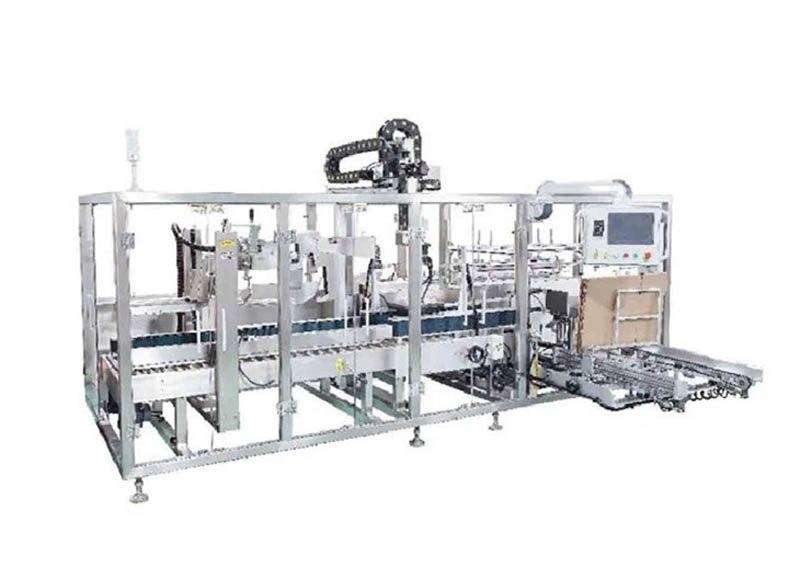
A cartoner operates in cartons, while an upstream blister machine may be quoted in cycles or cards. Specify cards/carton and any leaflet or accessory before comparing the units. Buffers can accommodate some interruptions; they do not create additional accepted blister cards.
If 120 accepted blister cards/min reach the defined transfer point and each carton requires three cards, the material can supply at most 40 cartons/min before downstream losses. A cartoner advertised at 80 cartons/min does not increase that upstream supply.
If a downstream factor of 0.95 is separately justified for carton losses after that transfer point, the planning result would be 40 × 0.95 = 38 accepted cartons/min. Do not apply it if those same losses are already included in the upstream line-wide result. Define where each count is taken.
For the monthly example, 1,200,000 accepted cards correspond to 400,000 three-card cartons before downstream losses. Confirm transfer, grouping, count verification, reject disposition and shared stop/restart behavior with the integrator. A standalone blister trial cannot establish complete-line accepted-carton output.
Use the cartoning machine FAT checklist to connect the downstream acceptance scope to the upstream card-rate requirement.
Ask suppliers for a reproducible accepted-output test
Before accepting a speed claim, agree the pack, method, test clock and passing result. The blister machine FAT checklist provides detailed test areas; the following records establish the output calculation.
| Evidence | What the record should identify |
|---|---|
| Product and materials | Product identity, representative samples, forming/lidding specifications and material lots. |
| Pack and machine setup | Tooling drawing, finished cards/cycle, product units/card, selected functions and recipe/settings. |
| Timing boundary | Start/end time, ramp-up treatment, planned/excluded periods and every recorded stop. |
| Count reconciliation | Finished cards, accepted cards, rejects, trial samples and any incomplete work, with counting locations. |
| Process and inspection results | Agreed acceptance criteria, defects challenged, detected/removed units and retained pack samples. |
| Interfaces and recovery | Upstream/downstream equipment, simulated conditions, hold signals, restart sequence and remaining site tests. |
Compare quotations against the same requirements and evidence. Read the supplier evidence checklist and blister machine price and quote-scope guide when deciding which trials, tooling, inspection and documents the offer must include.
Send HIJ a useful capacity review request
Provide the information you have and mark unresolved items. A product-specific review can identify the likely configuration, trial questions and evidence needed before an output commitment.
Inputs for the first review
- Tablet or capsule dimensions, handling needs and representative samples.
- Blister drawing, finished cards/cycle where known, and product units/card.
- Forming/lidding material grades, thicknesses and available samples.
- Accepted demand, production calendar, format mix and documented loss assumptions.
- Inspection/rejection requirements, cards/carton and connected equipment.
- Destination, utilities, available space, FAT and document needs.
Review the output definition with your team. An open cavity drawing or untested factor should remain an open decision rather than become an unsupported guaranteed rate.
Pill blister machine speed and output questions
Does DPP-260 mean 260 cycles per minute?
No. The model designation does not establish the cycle rate. Review the actual document, configuration and material-specific offer. The supplied combined document includes a 40-cycle/min Alu/PVC reference row and differing narrative ranges that need project clarification.
How do I convert cycles per minute into blister cards per minute?
Multiply the specified cycle rate by finished cards per cycle from the approved cutting/layout drawing. Do not multiply by pocket count unless the output target itself uses individual pockets. State whether the result is nominal or accepted output.
How do I convert tablet demand into card demand?
Divide accepted tablet demand by tablets per accepted finished card, using the approved market pack. Then apply the production-time and loss boundaries to determine the required card and cycle rates. Cartons need a separate cards-per-carton conversion.
Which OEE percentage should I assume for a new line?
This guide does not prescribe an industry average. Use a documented planning assumption for the defined product, schedule and loss boundary, then replace it with suitable trial or production evidence. Keep a planning factor separate from a measured OEE result.
Will the same blister machine run every material at the same speed?
Do not assume that. Forming, feeding, sealing, registration and cutting depend on the material pair and approved format. Confirm the route, feasible operating conditions and accepted-output trial for the quoted setup.
Does a faster cartoner increase blister output?
It cannot create more accepted upstream cards. Convert the available cards to cartons using the count recipe, then assess transfer and downstream losses. A connected test should examine holds, rejection, recovery and the complete acceptance boundary.
Is a short maximum-speed demonstration enough?
It does not establish sustained accepted output for an untested format or period. Agree duration, representative product/material conditions, counts, stops, inspection criteria and retained evidence. Define any conditions simulated or left for site testing.
What should I send for a HIJ output proposal?
Send product and pack drawings, materials, accepted demand, schedule, initial formats, inspection tasks and downstream count/interface requirements. HIJ can review the configuration and open trial items before quoting a project-specific machine or line scope.
Technical basis and calculation boundary
Prepared by HIJ Machinery from the supplied DPP-260/360K and DPH380B technical documents. Model data is a configuration reference; the final offer and approved trial records govern the project.
The OEE link is a practical measurement reference from Vorne, not a pharmaceutical acceptance standard. All numerical demand, schedule, factor and downstream examples in this article are hypothetical. They are not HIJ test results, production promises or independently verified customer outcomes.