DPP versus DPH is not a complete purchasing specification. The model prefix may help identify a supplier’s product family, but it does not by itself prove the forming route, sealing architecture, output, material range or validation scope.
Compare the exact machine configuration against the approved product, blister drawing, forming and lidding materials, accepted output, changeover plan, inspection boundary and FAT protocol. This guide shows which evidence to request before selecting a platform.
DPP vs DPH: what is the short answer?
There is no reliable industry-wide rule that every DPP is a low-speed flat-plate machine or that every DPH is a faster, more expensive cold-form machine. Suppliers use model letters differently, and even one supplier may apply the same family label to configurations with different materials, station designs or output ranges.
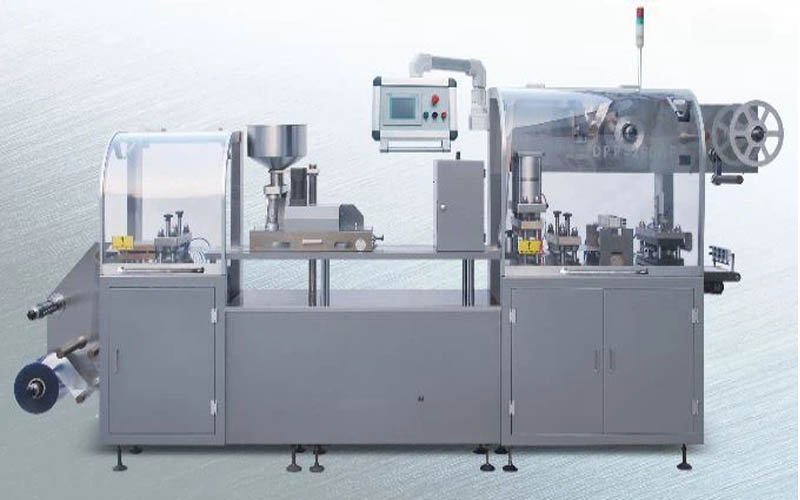
For HIJ’s current published platforms, the DPP-250 project page identifies a documented forming area of 250 × 112 mm, an adjustable 30–120 mm stroke and a published 20–50 cycles/min operating range that remains material- and format-dependent. The DPH-380B page describes a specific high-speed roller-plate thermoforming platform. HIJ also publishes a separate DPH-300 cold-form platform. These are three distinct configurations—not proof that the letters alone define the technology.
Selection rule: choose the documented machine architecture that can make the approved pack and demonstrate the required accepted output. Compare model, forming method, sealing method, web width, forming area and depth, index or stroke, feeder, tooling, inspection, downstream interfaces and test evidence line by line.
What the DPP and DPH labels do—and do not—tell you
A model prefix is useful for finding the supplier’s drawings, manuals and parts list. It can also help distinguish families within that supplier’s range. It should not be treated as an international equipment standard. Before quoting or approving a machine, replace the shorthand with a written configuration statement.
Forming route
Thermoforming softens a polymer web before forming. Cold forming presses an aluminium laminate between matched tools. Ask which materials and thicknesses were actually reviewed.
Sealing architecture
Flat-plate and roller sealing create different motion, contact and tooling conditions. The quoted drawing should name the station, web path and operating window.
Motion and output
Intermittent, continuous and hybrid arrangements cannot be compared through a single maximum-speed number. Define accepted packs, duration, rejects and stops.
Project boundary
Feeding, inspection, coding, cartoning, utilities, data and qualification support may be standard, optional or excluded. Record every responsibility in the proposal.
If two suppliers use DPP or DPH differently, compare their signed technical schedules rather than trying to force both machines into a generic online definition.
Compare the actual machine architecture
The comparison below is deliberately evidence-led. It avoids assuming that one family always wins. The final answer can change with the product, material, blister layout, tooling, feeder and acceptance test.
| Decision area | What to compare | Evidence to request |
|---|---|---|
| Forming | Thermoform or cold form; heating, pressure or vacuum arrangement; forming area, depth and web width. | Approved material structure, cavity drawing, forming trial and measured samples. |
| Sealing | Flat plate or roller; temperature, pressure and dwell controls; cooling and web guidance. | Recorded settings, sealed samples and agreed integrity-test results. |
| Indexing | Intermittent or continuous movement, stroke range, registration method and cut synchronization. | Machine sequence, timing diagram, registration limits and cut-position samples. |
| Product feeding | Tablet, capsule or product geometry; fragility, orientation, dust, static, replenishment and manual touchpoints. | Representative product trial, misfeed record and operator-work instruction. |
| Output | Cycles or punches, cavities per index, mechanical rate, accepted packs and complete-line constraints. | Calculation basis plus a sustained FAT record showing good packs, rejects, waste and stops. |
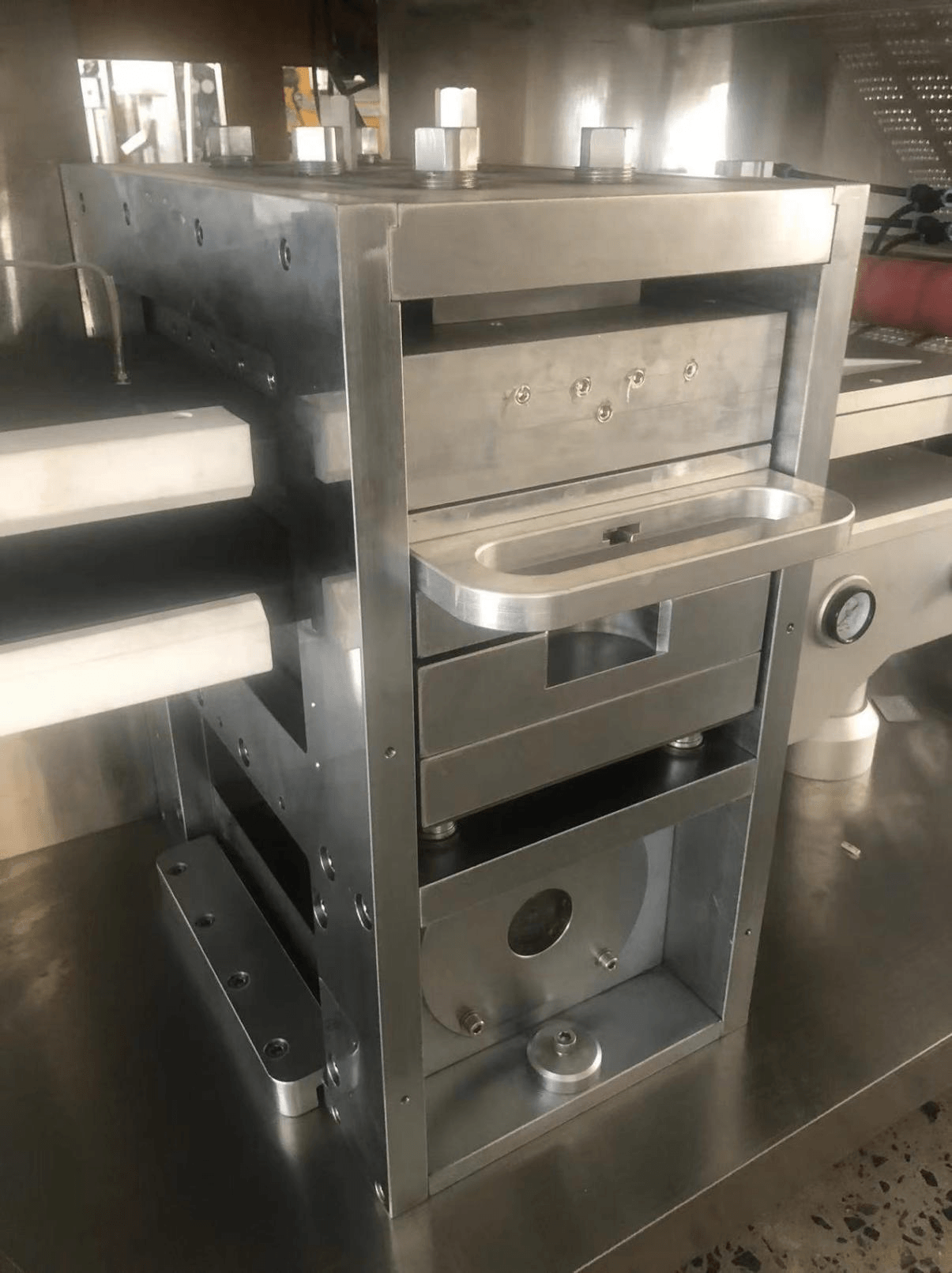
| Tooling | Format-part scope, cavity arrangement, forming/sealing/cutting tools, storage, lifting and adjustment. | Revision-controlled tooling list, drawings, sample set and changeover procedure. |
| Inspection | Product presence, count, visual defects, code, registration, seal checks and reject confirmation. | Challenge set, detection results, reject disposition and retained data. |
| Integration | Printer, vision, cartoner, conveyors, buffering, I/O, line stops and data exchange. | Approved layout, interface matrix, I/O list and responsibility matrix. |
Forming material comes before machine family
Start with the product’s protection requirement and approved package system. A transparent polymer web can support product visibility and familiar thermoforming processes. A cold-form aluminium laminate uses pressure rather than heat to create the cavity and blocks light, but it also changes the cavity geometry, web use, forming force and visual inspection approach. Coated and multilayer polymer structures introduce their own forming and sealing windows.
The packaging system must be justified for the drug product; the machine does not create that justification. FDA guidance treats the container-closure system as part of the product’s quality evaluation, while stability and compatibility work remain with the product owner. Select the material structure through development and stability evidence, then specify a machine capable of processing that approved structure.
Cold forming and heat sealing are different process steps
“Alu-Alu” describes a common cold-form blister construction, not a promise that any DPH—or any DPP—can run it. The base laminate is formed under pressure without heating it into a softened state; after product loading, a lidding material is still sealed to the formed web under a controlled sealing process. Your specification should therefore separate forming capability from lidding and sealing capability.
Ask the supplier to record laminate grade and thickness, cavity geometry, draw direction, corner radii, lidding grade, seal-coating side, sealing window, registration and cut criteria. If the quoted platform offers both thermoform and cold-form configurations, request the exact conversion scope and test both routes that you intend to buy.
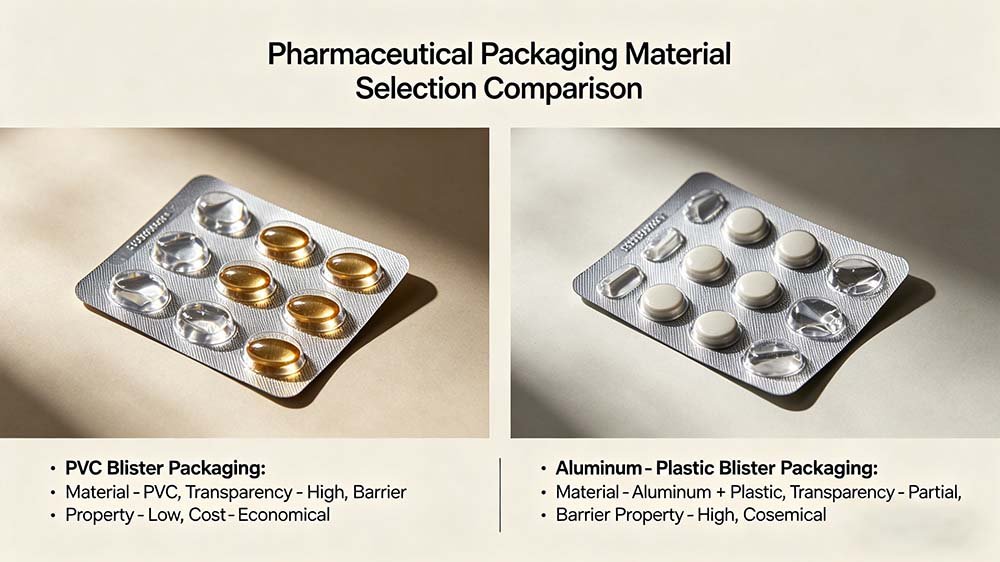
Flat-plate versus roller-plate sealing
Flat-plate sealing brings opposing tools together during a controlled dwell. Roller sealing passes the web through a nip between rotating surfaces. Either architecture can be engineered successfully, but each has different tooling, heat-transfer, pressure, web-tracking and maintenance considerations. A claim that one is automatically “better” is incomplete without the specific pack and operating target.
For each candidate, ask how temperature, pressure and dwell or contact time are set and recorded; how the tooling accommodates the approved web; how registration is maintained; how the sealing surface is cleaned; and which defect challenges will be run. The acceptable operating window matters more than a single nominal setting.
Rated speed is not accepted output
A blister machine may publish cycles per minute, punches per minute or finished packs per minute. Those units are not interchangeable. Finished output depends on cavities per index, card layout, product feeding, print and inspection actions, reject logic, downstream capacity and the chosen operating condition. A high mechanical rate that creates unfilled cavities, cut defects or frequent stops is not the buyer’s required result.
Write the target as accepted finished packs over a stated run. Define the products and material lots, test duration, allowable planned stops, treatment of unplanned stops, rejects, waste and deviation handling. If the cartoner or upstream feeder is part of the purchase, test the integrated line rather than extrapolating from the blister machine alone.
Accepted output = total finished packs − rejected or nonconforming packs. Record run time, planned and unplanned stops, material waste and operator interventions alongside the result.
Tooling and changeover can reverse the apparent choice
The right architecture for one long-running SKU may be inefficient for a site with many products, small campaigns or frequent artwork changes. Conversely, a project with stable materials and long campaigns may prioritize sustained output and line balance. Neither conclusion follows from DPP or DPH alone.
Map every SKU to product geometry, cavity drawing, forming web, lidding, print, cut pattern, feeder parts and downstream carton. Then distinguish parts that are shared, adjusted or replaced. A quoted changeover time is meaningful only when the start and finish states are defined and the work is demonstrated by trained operators.
- Approved product and pack drawings for every format in scope.
- Complete forming, sealing, feeding, coding and cutting tool list.
- Tool identification, revision control, storage and lifting method.
- Cleaning, line-clearance and first-good-pack requirements.
- Recipe changes, sensor checks and inspection challenges.
- Measured changeover from the agreed last-good state to the next accepted pack.
Feeding, inspection and rejection define real performance
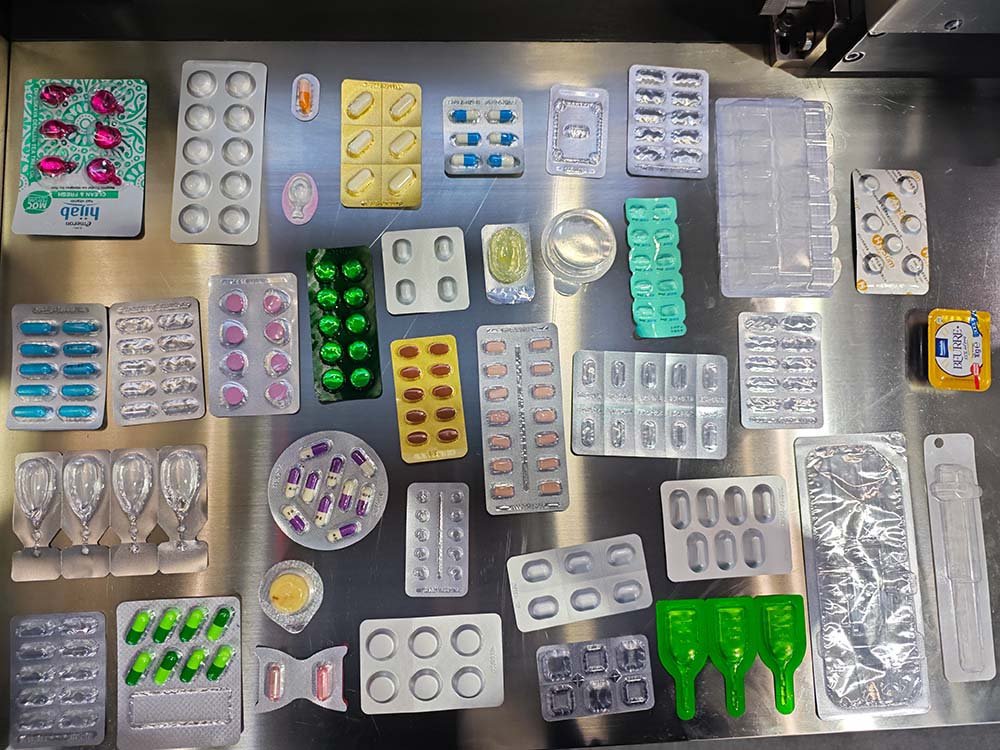
Tablets and capsules vary in size, shape, coating, friability, dust, static and orientation. The feeder must present the approved product without unacceptable damage or empty cavities. Product-contact parts, cleaning access and containment expectations also need definition. If manual assistance is allowed during the test, record where and how often it occurs.
Inspection must be specified by defect. “Vision system included” does not state whether the system detects missing product, wrong color, broken product, print defects or registration errors. Likewise, “automatic reject” does not confirm that the defective card reached a controlled reject location. Define the challenge set, sensor response, reject confirmation, alarm, bin access and retained record.
Use FAT to prove the decision
WHO guidance separates equipment qualification from process validation and expects qualification or validation work to follow predetermined protocols with documented results. A supplier FAT can provide important equipment evidence, but it does not replace the buyer’s site qualification, product-process validation or release system.
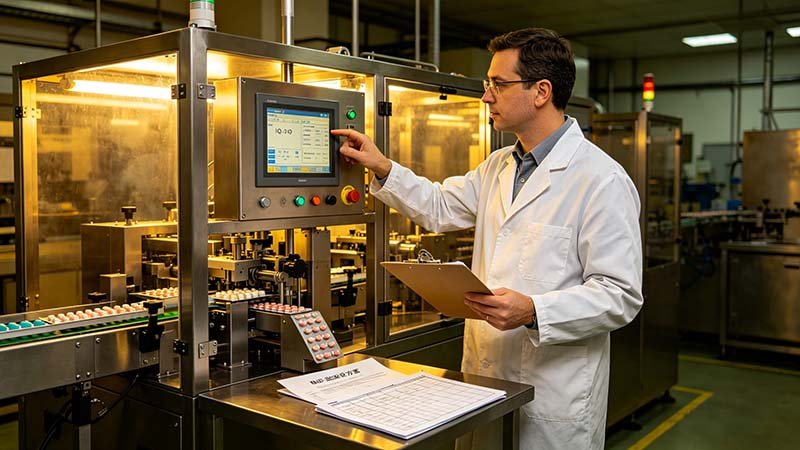
The FAT protocol should be approved before execution. It should identify the machine and tooling revisions, products and material lots, prerequisites, instruments, sampling plan, run duration, acceptance criteria, raw data, deviations and approvals. Test the requirements that drove the DPP-versus-DPH decision rather than running a generic demonstration.
| FAT question | Suggested evidence | Decision answered |
|---|---|---|
| Can the web form repeatably? | Approved samples, cavity measurements, settings and defect log. | Does the selected forming route make the approved geometry? |
| Is sealing controlled? | Recorded settings, operating-window trials and agreed integrity results. | Can the material pair be sealed within an acceptable window? |
| Can the feeder fill correctly? | Product-lot identity, fill record, damage/misfeed observations and interventions. | Does the product behave acceptably at the test condition? |
| Are defects handled? | Challenge set, detection response, rejected samples and disposition record. | Are defined defects detected and segregated? |
| Is output accepted? | Run duration, total and accepted packs, rejects, waste, stops and causes. | Does the complete configuration meet the agreed target? |
| Is changeover reproducible? | Named start/end states, steps, tools, time, checks and first accepted sample. | Does the format strategy suit the site’s production plan? |
A practical DPP vs DPH decision sequence
- Approve the product-pack requirement. Define product characteristics, protection need, shelf-life evidence and intended markets.
- Freeze the blister concept. Issue cavity, card and artwork drawings plus forming and lidding material specifications.
- Calculate accepted output. Work from annual good-pack demand, shifts, available run time, cavities per pack and realistic operating conditions.
- Review actual architectures. Compare the named DPP and DPH models by station design, material path, tooling and interfaces.
- Trial representative inputs. Use production-representative product, material and print whenever possible; record substitutes and open risks.
- Define the evidence. Link each critical URS requirement to a test method, objective acceptance criterion and retained record.
- Normalize the commercial boundary. Compare tooling, feeder, inspection, coding, downstream equipment, documents, spares, delivery and site work.
- Approve the configuration—not the acronym. The final decision should point to a revision-controlled technical proposal and FAT protocol.
Information to send with your RFQ
- Product name or controlled identifier, dimensions, shape, weight, fragility, coating, dust and orientation constraints.
- Representative product samples and required batch or campaign sizes.
- Blister cavity and finished-card drawings with tolerances.
- Forming web and lidding specifications, suppliers and available material lots.
- Required accepted packs per minute and annual demand calculation.
- SKU matrix, changeover frequency and future formats that are genuinely in scope.
- Coding, printing, vision, reject, data and electronic-record requirements.
- Upstream and downstream interfaces, layout, utilities and environmental constraints.
- FAT duration, sampling, tests, acceptance criteria and documentation boundary.
- Delivery term, installation, commissioning, training, spares and site-support responsibility.
Compare the exact blister configurations
Send HIJ your product, blister drawing, forming and lidding grades, accepted-output target, SKU plan, inspection scope and FAT requirements. The engineering review can then compare the relevant DPP or DPH platform against the same project boundary.
Request a DPP vs DPH ReviewFrequently asked questions
What is the main difference between a DPP and a DPH blister machine?
There is no single industry-wide difference defined by those letters. Within a supplier’s range they may identify different machine families, but the buyer must compare the exact forming route, sealing architecture, web limits, tooling, feeder, output and test scope of the quoted models.
Is every DPH blister machine faster than every DPP machine?
No. A specific DPH high-speed platform may have a higher published range than a specific DPP platform, but output depends on the model, material, format, cavities per index, feeder, inspection and downstream line. Compare accepted packs under an agreed test, not the prefix.
Can both DPP and DPH machines produce Alu-Alu blisters?
Do not assume capability from the family name. Confirm that the quoted configuration includes the correct cold-form station, forming force, web path, tooling, laminate limits, lidding and sealing scope. Require trials using the approved material construction and cavity drawing.
Is cold forming the same as cold sealing?
No. Cold forming uses pressure to shape an aluminium laminate without thermoforming it. After filling, the lidding material is still sealed to the formed web under a specified sealing process. Forming and sealing capabilities should be documented separately.
Which architecture is better for frequent product changeovers?
The answer depends on the SKU matrix, tooling design, cleaning and line-clearance requirements, recipe control and operator method. Define the start and finish states, then demonstrate a representative changeover rather than accepting a generic time claim.
How should blister machine output be compared?
Use accepted finished packs during a stated run with identified products and materials. Record total output, good packs, rejects, waste, planned and unplanned stops and operator interventions. Mechanical cycles or punches alone are not a complete production result.
What should a DPP or DPH FAT include?
The approved protocol should identify machine and tooling revisions, prerequisites, product and material lots, forming, feeding, sealing, registration, cutting, inspection and reject challenges, run duration, sampling, acceptance criteria, raw data, deviations and approvals.
What should I send before requesting a quotation?
Send product details and samples, blister and card drawings, forming and lidding specifications, target accepted output, SKU and changeover plan, inspection and coding scope, line interfaces, utilities, layout and the required FAT and documentation boundary.
Continue your blister machine research
Sources and scope
- HIJ DPP-250 Pharma Blister Packaging Machine — current platform and project-configuration boundary.
- HIJ DPH-380B High-Speed Tablet Blister Packing Machine — specific roller-plate platform details.
- HIJ Cold Form Blister Packing Machine — DPH-300 cold-form process and published platform information.
- FDA, Container Closure Systems for Human Drugs and Biological Products — current guidance page for packaging-system quality evaluation.
- WHO Technical Report Series 1019, Annex 3 — qualification and validation principles, protocols and documented results.
This article is a procurement and engineering guide, not a product-stability conclusion or regulatory approval. Final material, machine, tooling, output and qualification decisions require the buyer’s approved specifications, representative trials and quality system.