
Disposable Syringe Blister Packing Machine
Plan blister packaging for assembled empty single-use syringes, needles, caps and the nominated accessory combination. Match the complete product, loading route and material system to the pack drawing, then agree how accepted output and packaging quality will be demonstrated.
Start with a photo or drawing, assembled dimensions and target accepted output. Mark any material or loading details that still need review.
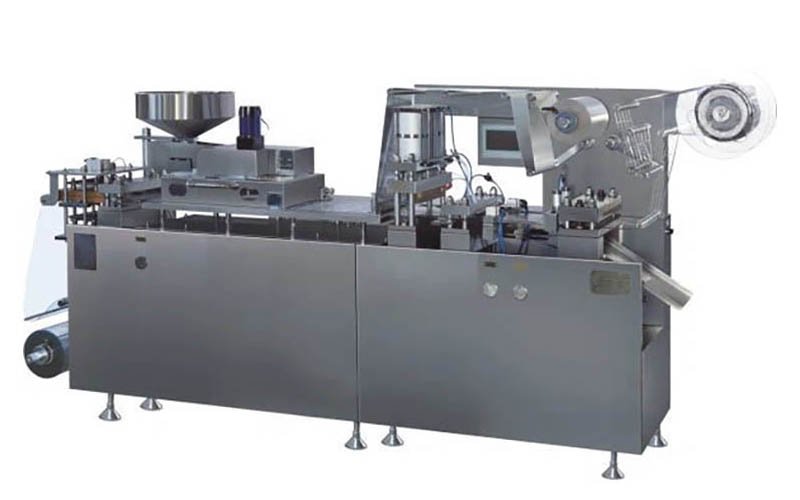

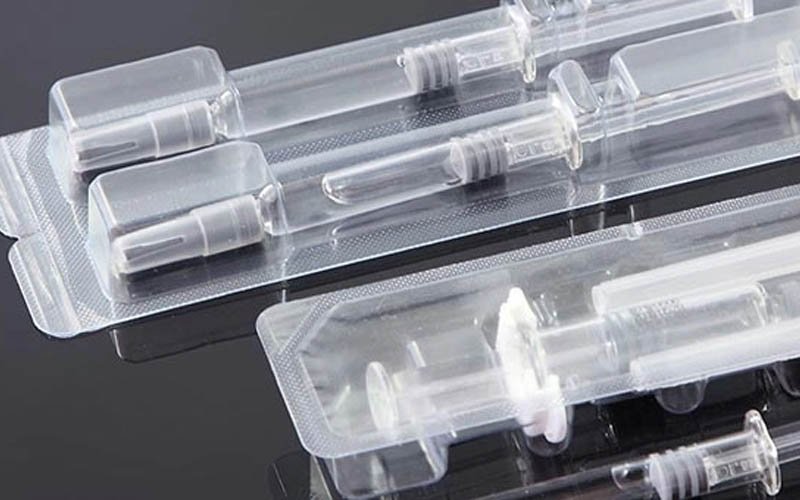
What is a disposable syringe blister packing machine?
It forms a cavity, places the nominated empty syringe and accessories inside, applies the selected lidding, and seals and cuts the finished pack. The proposed configuration must match the actual product set and intended packaging process.
Define the incoming product
Specify an assembled empty syringe, its cap or needle arrangement and any separate accessories. Syringe assembly, filling and sterilization have their own equipment and acceptance responsibilities; identify the state delivered to the blister line.
Define the complete pack
Agree component count, orientation, cavity retention, seal area, opening method and coding. A syringe-only pack and a syringe-plus-needle kit can require different tools, loaders and inspection even when their nominal syringe volume is identical.
Define the delivered equipment
Review the platform, format tools, loading, inspection and discharge as one configuration. Evaluate output and quality using representative products and materials rather than a generic catalog speed or a machine photograph.
Use the general syringe blister packing machine page for broader platform selection. For an already filled and closed assembly, review the prefilled syringe blister packaging route and its handling requirements.
Specify the empty syringe and every accessory
Nominal syringe volume helps identify a product, but does not define its full length, flange, tip, needle shield or safety mechanism. Send the assembled drawing and a component list for each intended pack.
| Product input | Provide for review | Decision supported |
|---|---|---|
| Assembled syringe | Full length, maximum diameter, flange, plunger position, tip/cap and proposed orientation. | Cavity envelope, retention and loading access. |
| Needle and accessories | Attached or separate needle, shield, cap and other nominated parts; quantity and dimensions. | Separate pockets, feeders, placement order and completeness checks. |
| Safety mechanism | Dimensions and allowed state of any safety feature during feeding, packing and removal. | Clearances, contact surfaces and trial criteria. |
| Pack drawing | Units per blister, seal land, opening feature, print area and cutting outline. | Tool layout, registration and downstream presentation. |
| Format family | Drawings for all proposed sizes and accessory combinations; anticipated batch mix. | Shared tooling, dedicated parts and changeover scope. |
Include difficult geometry and accessory combinations, not only the easiest syringe. Identify permitted contact points, unacceptable assembly movement and handling defects. Confirm the proposed platform can accommodate the complete cavity and seal layout before committing to a model.
Use DPP data as a starting point for the configuration
The supplied DPP-260/360K document provides the following platform references. Confirm the model suffix and final configuration in the quotation; the source describes tablet/capsule feeding, so syringe and accessory loading needs separate engineering review.
| Documented item | Source reference | Project confirmation |
|---|---|---|
| Blanking speed | Alu/PVC: 40 times/min for the standard 57 × 80 mm × 4 reference format. | A cycle reference, not confirmed accepted syringe packs/min. |
| Forming area and feed stroke | 245 × 112 mm maximum forming area; parameter-table feed stroke 40–120 mm. | Fit the product, seal land, pitch and cutting layout within the actual tooling. |
| Forming depth | The source lists Alu/aluminium depth 12 mm, or 25 mm for a special machine. | Confirm the depth for your material and cavity; do not treat this as a universal medical-tray specification. |
| Electrical supply | Three-phase four-wire 380 V / 50 Hz; 220 V / 60 Hz also listed; total power 11 kW. | Agree the destination electrical standard and supplied configuration. |
| Compressed air | Approximately 0.25 m³/min volume flow stated. | Confirm pressure, air quality, cooling and any auxiliary utility requirements. |
| Dimensions and weight | 4470 × 1100 × 1740 mm; 3000 kg. | Confirm the layout including loader, discharge, maintenance space and transport access. |
The engineering response should identify the proposed cavity layout, feed method, materials, inspection and output assumptions. If the complete syringe or kit does not fit the reference tool envelope, request a separately specified platform/configuration instead of forcing the drawing into the catalog format.
Choose forming web and lidding for the intended pack
Define protection, opening and any separately specified sterile-barrier role before comparing materials. An empty syringe does not establish that any PVC blister is suitable, or that a machine can run every porous lidding material.
Forming web and tool geometry
The DPP source describes PVC/PVDC/PE forming materials and Alu/PVC and Alu/Alu functions. Review the actual supplier grade, thickness, cavity draw and seal land. Its nominal PVC reference is 0.25 mm; final material selection needs the agreed trial.
Lidding and opening behaviour
The source lists coated PTP aluminium lidding. Medical paper, Tyvek or other lidding requires separate material and machine review; paper and Tyvek should not be treated as the same specification. Confirm supplier grade, coating, seal window and intended opening method.
Pack tests and intended use
Agree how to assess retention, seal quality, opening and finished-pack integrity. If a sterile-barrier system or sterilization route is required, name it and assign the relevant compatibility and package-validation responsibilities in the customer quality plan.
Test the proposed forming web and lidding together with the production tool, component arrangement and sealing recipe. A successful short sealing demonstration does not by itself establish shelf life, sterilization compatibility or validated production packaging. Record which tests the supplier performs and which remain with the customer.
Include roll dimensions, winding direction, artwork and supply tolerances in the material schedule. Obtain written confirmation before ordering material for a configuration that has not yet been trialled.
Match syringe and accessory loading to the incoming presentation
The best loading discussion starts with how each component arrives and how much supply is available. Separate syringe placement from needle/cap placement so that the quotation identifies all operator tasks and automated functions.
Manual or fixture-assisted loading
Evaluate component trays, operator reach, orientation fixtures and staffing. State whether the operator loads only the syringe or completes the entire kit. Witness the agreed rate and recovery method with the nominated product combination.
Tray or carrier presentation
Specify pocket pitch, orientation, release method and return flow. Confirm how empty pockets or mixed parts are detected and how the loader responds. Allocate incoming trays, change parts and replenishment responsibilities.
Project-specific automatic placement
Request the syringe and accessory feed concepts, permitted contact points and sample-trial plan. Confirm separation, orientation, placement and restart behaviour. Automatic web movement does not imply that automatic syringe or accessory loading is included.
Use missing-needle, missing-cap, wrong-orientation and misplaced-component samples where relevant. Agree which conditions trigger a stop, rejection or operator response, and how rejected packs are segregated. Define the actual sensing and tracking capability in the purchase scope.
How the disposable syringe blister packaging process works
Configure the station sequence around the pack drawing, selected web and lidding, and the agreed incoming components. Preserve the product orientation and inspection boundary through the complete process.
1. Form the nominated cavity
Unwind and advance the web, form the cavity and present the pockets for loading. Confirm forming consistency, component clearances and seal-land geometry using the intended material and tooling.
2. Place and check the kit
Load the syringe and nominated accessories in the defined order. Inspect the required presence and position conditions before sealing; a fixture, sensor or camera is specified according to the actual defect criteria.
3. Seal, code, cut and discharge
Apply the agreed sealing settings, add the included coding and cut the pack. Confirm the finished orientation, count and reject handling at discharge, including the transfer to any downstream cartoning equipment.
The syringe blister machine process guide covers station options. For this project, request a layout showing where components enter, where checks occur and how accepted and rejected packs leave the line.
Make the inspection requirements testable
List the defects that matter for the actual pack and specify the evidence required to accept each check. Inspection capability, finished-pack tests and product/package validation have different responsibilities.
| Check | Agree before purchase | Trial evidence |
|---|---|---|
| Kit completeness | Required syringe, needle, cap and other component counts per pack. | Nominated missing-component challenges and confirmed rejection. |
| Orientation and placement | Acceptable positions and clear seal area for each component. | Misplaced/oriented samples within the agreed detection scope. |
| Assembly condition | Unacceptable plunger, cap, shield or safety-feature movement and visible damage. | Before/after handling observations using agreed criteria. |
| Seal, code and cutting | Nominated seal defects, code content/registration and cutting tolerances. | Inspection challenges and separately agreed finished-pack tests. |
| Reject tracking and recovery | Count boundary, segregation and response after stops. | Count reconciliation and documented restart/reject demonstrations. |
Ask what the proposed inspection can reliably detect for your product, artwork and material. Define challenge samples, settings, records and acceptance criteria. Do not replace this with a universal reject percentage or a claim that every defect is detected.
Compare accepted disposable syringe packs per hour
State the counting unit before comparing machines: syringes, complete kits, blisters and cartons may have different counts. Define the test format, loading method, staffing and elapsed time in the quotation.
Count at the agreed discharge and record rejects, stops and replenishment. Multiply accepted blisters by the specified syringes per blister only when converting to syringe units. Keep the same counting boundary when evaluating another quotation.
Start with the actual layout
The source’s 40 cycles/min refers to a standard Alu/PVC reference format. Syringe cavities, seal lands and accessory pockets change the layout. Agree packs per cycle and demonstrate the sustained accepted rate for that format.
Identify the limiting operation
Compare forming, component supply, syringe loading, accessory placement, sealing, inspection and discharge. A fast platform can still be constrained by manual kit completion or an upstream supply that cannot sustain the requested rate.
Use representative run conditions
Agree the run length, product/material lots, staffing and treatment of replenishment, planned breaks and reject challenges. Record normal stops and recoveries so the result explains what production conditions it represents.
Evaluate cost per accepted pack with your own production data
Compare the same product set, material, staffing and acceptance conditions. A fixed labor-saving percentage or payback period cannot describe every disposable syringe project.
| Cost input | Collect from your operation or proposal | Comparison use |
|---|---|---|
| Material consumption | Web/lidding cost, layout utilization, setup scrap and production rejects. | Material spend divided by accepted packs. |
| Staffing and supply | Loading, accessory replenishment, inspection, packing and format-change tasks. | Actual staffed hours for the measured production period. |
| Operating and upkeep | Utilities, consumables, wear parts and planned maintenance assumptions. | Comparable recurring cost over the same period. |
| Format and batch mix | Batch sizes, tool changes, setup material and first-accepted-pack time. | Effect of short runs and the intended format family. |
| Purchase scope | Machine, tooling, loader, inspection, utilities, installation and agreed support. | Comparable capital scope and any separately quoted items. |
State which costs are included. For an investment comparison, use the customer’s baseline, output demand and the proposed operating assumptions. Keep quoted capital cost separate from measured operating results, and identify any assumptions that still require a trial.
Use the syringe blister machine price guide to frame the purchase discussion. Ask for an itemized project quotation rather than applying an old price range to a different loader, pack or format set.
Plan format changes, maintenance and downstream transfer
Include routine production work in the acceptance discussion. The format family and accessory combinations determine which tools, guides and recipes must change and what the operator must verify.
Change to the next nominated pack
List forming, sealing and cutting tools, component fixtures, guides and inspection recipes. Define the start and finish of a changeover and witness the process through the first accepted pack; avoid a universal timing claim.
Maintain and replenish the line
Review access to web rolls, component supply, contact fixtures, heaters and wear parts. Agree cleaning and maintenance procedures, operator training and the initial spare-part list for the supplied configuration.
Transfer finished blisters
Define pack orientation, accumulation, accepted/reject segregation and downstream capacity. If a cartoner is included, agree stop signals, restart tracking and the final carton count rather than assuming every connected line shares one output rate.
Review the blister-cartoning machine scope when cartons, leaflets or downstream coding are part of the requirement. Put interface ownership and included equipment on the layout and quotation.
Request a comparable disposable syringe machine proposal
A useful proposal identifies the product/pack inputs, supplied configuration, exclusions and test assumptions. These details let purchasing and production teams compare the offers without inferring scope from a model name.
| Quotation item | Include or clarify | Comparison boundary |
|---|---|---|
| Platform and tooling | Model suffix; pack drawing; forming, sealing and cutting tools; included formats. | The same syringe and accessory combinations. |
| Loading and supply | Manual tasks, fixtures, trays or custom loader; component replenishment. | The same complete-pack loading responsibility. |
| Inspection and rejects | Checks, challenge samples, reject handling and count reconciliation. | The same nominated defects and evidence. |
| Materials and site needs | Approved trial materials, utilities, footprint, guarding and interfaces. | The same installed configuration and site assumptions. |
| Delivery and support | Trial scope, documentation, training, spares, commercial terms and project schedule. | Named deliverables, responsibilities and exclusions. |
A product photo or drawing, approximate assembled dimensions, kit contents and target accepted output are enough to start a technical discussion. If material, loading or sterilization-route details are unresolved, mark them for review instead of postponing the inquiry until every question is answered.
Agree the trial and acceptance plan before purchase
Define the supplier demonstration and the customer’s site and packaging responsibilities. Include the actual disposable syringe kit, production format and nominated material system in the test scope.
Product and package trial
Identify representative components, drawings, web/lidding and any agreed substitutes. Check fit, orientation, retention, permitted contact points, assembly condition, seal land, opening and the nominated pack tests.
Run and challenge trial
Measure accepted output with the agreed staffing, elapsed time and count boundary. Challenge missing accessories, misplaced parts, material shortage and nominated stop/restart conditions. Record rejects and confirm segregation and counts.
Documentation and handover
Agree the layout, utilities, configuration list, manuals, tool/format list, test results and open items. Where qualification support or record functions are needed, specify the exact deliverables and who owns the protocols and site work.
The syringe blister machine URS guide provides a starting structure. Add the disposable-kit component list, material/opening decisions and packaging-validation responsibilities so the supplier response addresses your actual project.
Discuss samples and acceptance scopeDisposable syringe blister packing machine FAQ
Answers for empty syringe packs, accessory kits, loading, material selection and project purchasing.
Is this machine for empty or prefilled syringes?
Does the blister machine assemble or sterilize the syringe?
Can a syringe and a separate needle be packed together?
What disposable syringe size range is confirmed?
Is automatic syringe loading standard?
Does the documented 40 cycles/min mean 40 accepted syringe packs/min?
Can every disposable syringe use PVC and aluminium lidding?
Is medical paper or Tyvek lidding already included?
Will packing create a validated sterile product?
How should labor savings and payback be compared?
What determines changeover time and delivery schedule?
What information should I send for an initial quotation?
Send a short disposable syringe packaging brief
Begin with the product and complete kit. The material, loading and test scope can be developed from that first review.
Make the first review specific
Identify the incoming syringe as empty and assembled, and list separate accessories. Send one representative pack drawing or photo and explain which additional formats are planned.
Copy the outline and fill in the details you have. Mark unknown items for discussion. Copying the text does not send an inquiry or replace the approved drawing, quotation and acceptance plan.
Configure the blister line around your syringe kit
Send the product, accessories and target output to discuss platform fit, loading, materials, inspection and acceptance. Request a configuration with clear assumptions and the next sample-trial steps.
Start my disposable syringe project