
Technical Process Explained
How Does a Syringe Blister Packing Machine Work?
A complete engineer's walkthrough of the 4-stage automated process — forming, feeding, sealing, and cutting — that turns sterile syringes and PVC film into finished pharmaceutical blister packs.
4 Stages
Process
15 sec
Per Cycle
6,000/hr
Output
±0.2mm
Accuracy
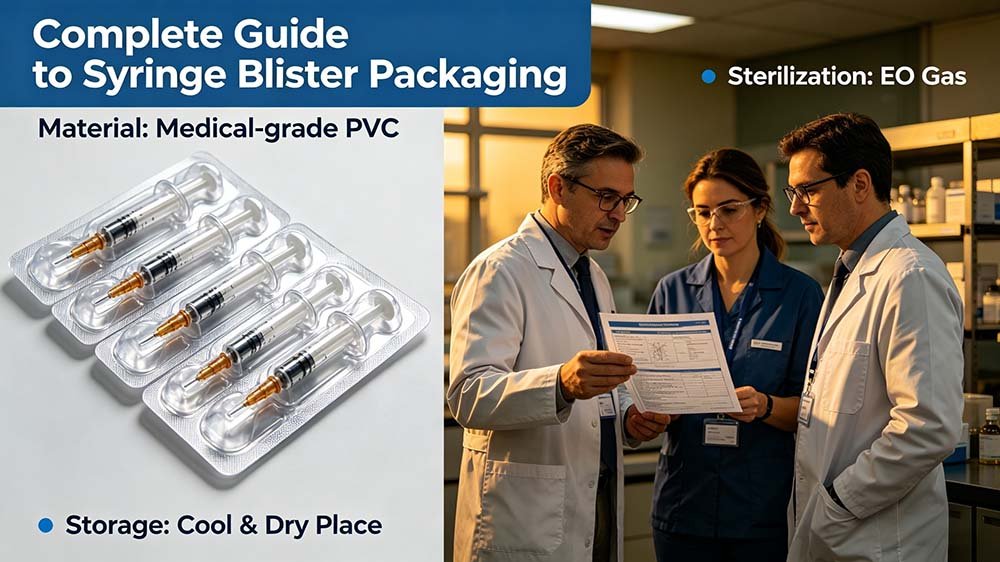
Quick Answer: How a Syringe Blister Packing Machine Works
A syringe blister packing machine works through four automated stages running continuously in sequence: it (1) heats and forms PVC or PVDC film into syringe-shaped pockets, (2) feeds pre-sterilized syringes into those pockets using servo-driven multi-track feeders, (3) heat-seals aluminum foil over the top at 180–210°C to create a sterile barrier, and (4) cuts the sealed strip into finished blister packs ready for cartoning.
The complete cycle takes approximately 15 seconds from raw film entry to finished pack output. A modern machine like the HIJ-260S processes up to 6,000 packs per hour with positioning accuracy of ±0.2mm, fully compliant with cGMP, FDA 21 CFR Part 11, CE, and ISO 15378 pharmaceutical packaging standards.
Process Overview
The 4-Stage Automated Process
Each stage runs simultaneously on different parts of the film web, creating a continuous flow from raw materials to finished blister packs.
1
Forming
Heat PVC/PVDC film at 120–145°C and press into syringe-shaped pockets
~4 sec2
Feeding
Servo-driven tracks place sterile syringes into formed pockets ±0.2mm
~3 sec3
Sealing
Heat-seal aluminum foil over pockets at 180–210°C with controlled pressure
~5 sec4
Cutting
Precision-cut sealed strips into final pack dimensions, batch-coded & output
~3 sec
1 Stage 1 — Forming
Heating & Thermoforming the Blister Pockets
The process starts with a roll of PVC, PVDC-coated PVC, or Alu-Alu film fed continuously into the heating station. Heated plates raise the film temperature to its forming window (120–145°C for PVC/PVDC), making it pliable without melting.
The softened film then passes into the forming station where a positive forming mold — machined to the exact shape of your syringe — uses compressed air or mechanical pressure to push the film into precisely shaped pockets. Cooling channels solidify the new shape before the film advances to the next stage.
Technical Parameters
- Film thickness: 0.15–0.5 mm (PVC), 0.02–0.05 mm (Alu)
- Forming temperature: 120–145°C (thermoforming) or cold-form for Alu-Alu
- Forming method: Pneumatic stretch or positive mold pressing
- Pocket depth: Up to 26 mm for large syringes
- Cycle time: ~4 seconds per forming stroke
Engineer's tip: Forming temperature too low causes incomplete pocket formation; too high makes the film brittle. The HIJ-260S uses PID-controlled heating with ±1°C accuracy to keep this window tight.
2 Stage 2 — Feeding
Servo-Driven Syringe Placement
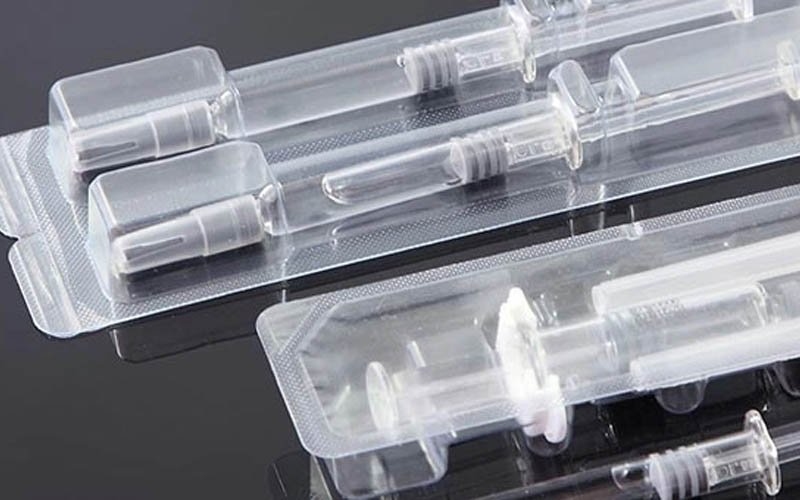
This is where automation precision matters most. Pre-sterilized syringes arrive from upstream sterilization or from clean bulk hoppers, then a servo-driven multi-track feeder picks up syringes by their flanges and places them into the formed pockets — typically 4 to 6 syringes per cycle.
Unlike older pneumatic systems that suffer from air pressure variability, servo motors give repeatable ±0.2 mm placement accuracy. This is critical because misaligned syringes get crushed at the next sealing stage, wasting sterile product and stopping the line.
Technical Parameters
- Feeder type: Servo-driven multi-track (preferred) or pneumatic
- Placement accuracy: ±0.2 mm with servo systems
- Tracks per cycle: 4–6 syringes (configurable)
- Compatible sizes: 1ml, 3ml, 5ml, 10ml, 20ml — changeover <5 min
- Damage rate: <0.05% (vs ~0.8% for pneumatic)
Why servo wins: A pneumatic feeder placing 6,000 syringes/hour with 0.8% damage loses 48 syringes per hour. Servo-driven cuts that to 3 — about $45,000/year in saved sterile syringes for a typical production line.
3 Stage 3 — Sealing
Heat-Sealing the Sterile Barrier
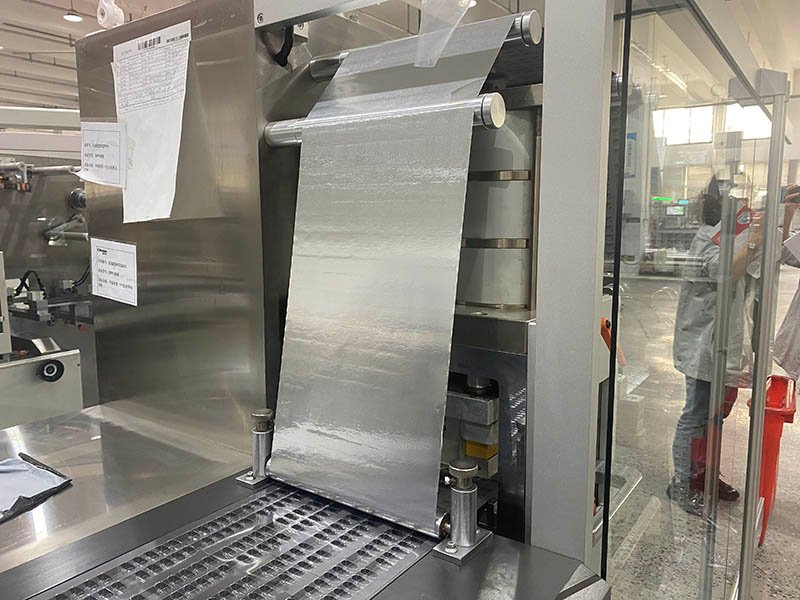
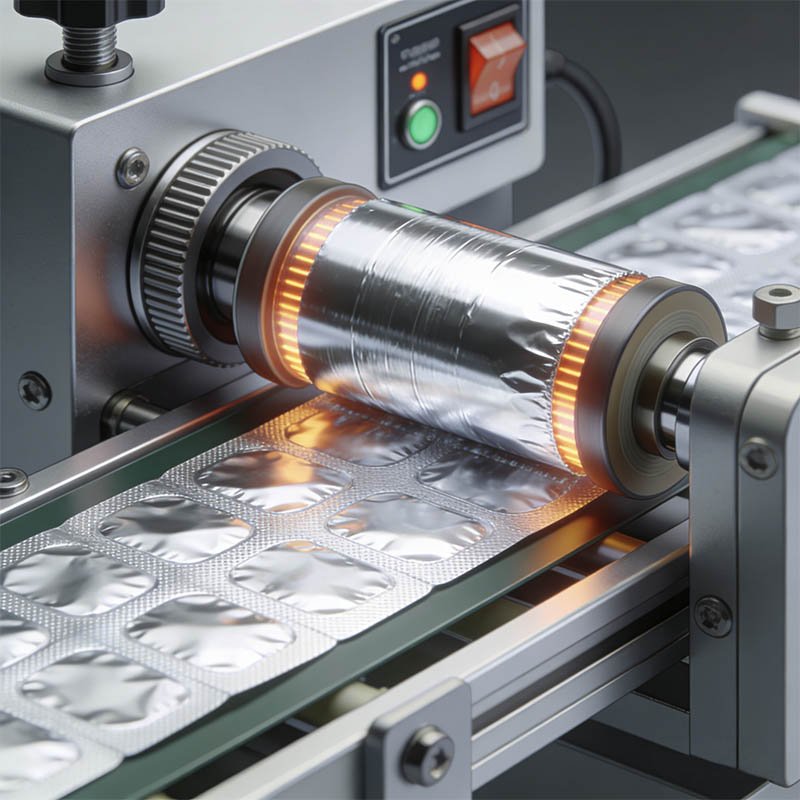
A second film roll — typically PTP aluminum foil 0.02–0.035 mm thick — is fed over the loaded pockets. The combined web enters the sealing station where a heated platen presses the aluminum onto the PVC at 180–210°C for a controlled dwell time of 0.8–1.2 seconds.
Three parameters must be controlled simultaneously: temperature, pressure, and dwell time. Get any one wrong and the seal either fails ASTM F88 peel-strength testing or scorches the foil. The HIJ-260S uses a PID-controlled heated platen with ±1°C accuracy and validated pressure regulation.
Technical Parameters
- Sealing temperature: 180–210°C (PID-controlled, ±1°C)
- Dwell time: 0.8–1.2 seconds
- Seal pressure: Uniform across the seal area
- Foil thickness: 0.02–0.035 mm PTP aluminum
- Validation: ASTM F88 peel-strength, ISO 11607 sterile barrier
Sterile barrier standard: A proper seal must withstand burst pressure exceeding ISO 11607 requirements while peeling cleanly when the user opens the pack. This is the most regulated step in the entire process.
4 Stage 4 — Cutting & Output
Precision Cutting and Batch Coding
The sealed continuous strip enters the cutting station where a precision die-cutter trims it into individual blister packs at exact pack dimensions. An integrated batch coding station then prints batch numbers, manufacturing dates, and expiration dates via hot-foil stamping or inkjet — these positions are configurable through the HMI to match your regulatory requirements.
Finished packs travel down an output conveyor where optional vision inspection cameras verify pack integrity, batch code legibility, and absence of contamination. Defective packs are auto-rejected without stopping the line. The remaining packs queue for cartoning.
Technical Parameters
- ▸ Cutting method: Precision die or punching cutter
- ▸ Cutting accuracy: ±0.1 mm
- ▸ Coding: Hot-foil stamping or inkjet printing
- ▸ Inspection: Optional vision system with auto-rejection
- ▸ Output: Conveyor delivery to cartoning station
All 4 Stages, One Machine
See the Full Process in Action
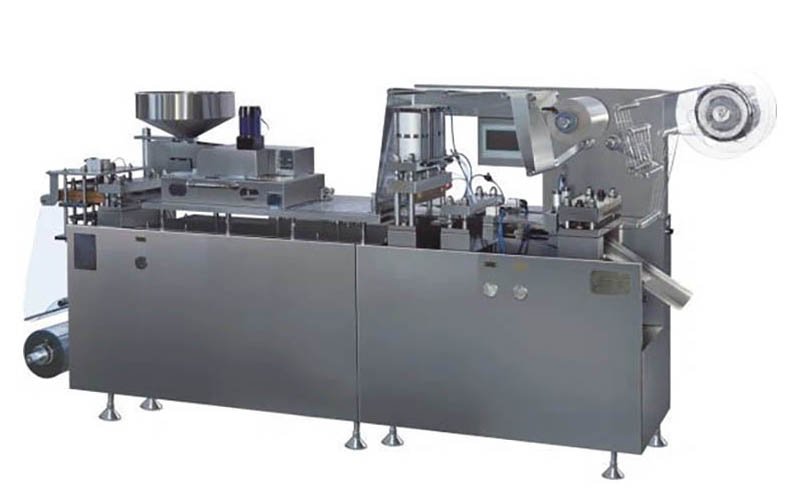
The HIJ-260S syringe blister packing machine integrates all four stages into a single continuous line. Request a live video demonstration and we'll show you the complete forming-to-output cycle running on your exact syringe specification.
- 4 integrated stages in one machine footprint
- Siemens PLC synchronizes all stage timing
- 15-second total cycle, 6,000 packs/hour
- GMP-validated with IQ/OQ/PQ documentation
Process FAQ
Common Questions About Syringe Blister Packing Operation
How long is one complete syringe blister packing cycle?
A complete cycle from raw film entry to finished pack output takes approximately 15 seconds, but the four stages run in parallel on different parts of the film web. This means while one section is being cut, another is being sealed, another fed, and another formed — resulting in continuous output of up to 6,000 packs per hour.
What's the difference between forming and sealing temperature?
Forming heats PVC/PVDC film to 120–145°C to make it pliable enough to stretch into pocket shapes. Sealing heats aluminum foil onto the pocket flange at 180–210°C — much hotter — to create a hermetic bond. These are independent PID-controlled heating zones on the machine.
What if a syringe gets misaligned during feeding?
Modern machines like the HIJ-260S use vision inspection at the sealing stage and immediately after cutting. If a syringe is misaligned or missing from a pocket, the affected pack is auto-rejected without stopping the line. Some configurations include sensors at the feeding stage itself to prevent crushing during sealing.
How does the machine handle different syringe sizes?
Each syringe size requires matched forming molds and feeder tracks. Changeover between sizes (e.g., 3ml to 5ml) takes about 5–10 minutes with recipe-based parameter loading from the Siemens HMI. Forming molds are typically the only custom tooling needed per syringe size.
Is syringe sterilization done before or on the machine?
Sterilization is done before the blister packing machine — typically by ethylene oxide (EtO), gamma irradiation, or autoclave depending on the syringe type. The blister packing machine itself operates in a controlled cleanroom environment and seals already-sterilized syringes into protective barrier packs.
What materials can the machine seal besides aluminum foil?
Besides standard PTP aluminum foil (0.02–0.035 mm), the HIJ-260S can seal paper-aluminum laminates and Tyvek/dialysis paper for sterilization-permeable seals. Material choice depends on your sterilization method and regulatory requirements — Tyvek allows post-pack EtO sterilization through the pack.
How is the sealing integrity validated?
Sealing is validated per ASTM F88 (peel strength) and ISO 11607 (sterile barrier requirements). Standard tests include burst testing, dye penetration, and microbial barrier testing. The HIJ-260S delivery includes IQ/OQ/PQ documentation supporting these validation protocols.
See the Complete Process Live
Watch the HIJ-260S run your exact syringe specification in our factory or via live video link. Get answers to your specific process questions from our packaging engineers.