Get Quote
Engineering Comparison · Updated 2026

Liquid Blister vs Sachet Packaging — Which One Wins?

A data-driven, 14-criteria comparison of liquid blister and sachet packaging across barrier performance, cost, tamper-evidence, shelf appeal, production speed and sustainability — for pharma, food, cosmetic and nutraceutical buyers.

WINNER (10 of 14)
Liquid blister packaging tamper-evident foil-sealed single-dose portions
Option A
Liquid Blister
±1% accuracy 24-month shelf life Tamper-evident
VS
Sachet packaging traditional flexible pouch single-serve format
Option B
Sachet Packaging
±3-5% accuracy 6-12 month shelf life Soft-seal only
Quick Verdict

Liquid blister wins on barrier, accuracy, tamper-evidence and premium perception. Sachet wins on raw unit-material cost and minimum-batch flexibility. Choose blister for pharma, premium food, and 18+ month shelf life; sachet for low-cost commodity and ultra-small batches.

Bottom Line Up Front

Should You Choose Blister or Sachet?

Skip the deep dive — here are the 6 scenarios where blister wins decisively, and the 4 scenarios where sachet is still the right call.

Choose Liquid BlisterFor these 6 scenarios

  • Pharma & nutraceuticals requiring tamper-evidence and 24-month stability
  • Heat- or oxygen-sensitive products — probiotics, omega-3, vitamin D, aromatic syrups
  • Premium & gift positioning — luxury food, hotel amenity, gift-box SKUs
  • Counterfeit-prone markets needing individual QR-traced unit doses
  • Hotel/HORECA buffet service requiring HACCP-compliant tamper-evident portions
  • Dose-accuracy critical applications needing ±1% (vs ±3-5% on sachet)

Choose SachetFor these 4 scenarios

  • Commodity low-margin SKUs where pack cost must be under 1¢/unit
  • Ultra-small batches below 10,000 units/run where blister tooling cost doesn't amortize
  • Promotional & sample-pack giveaways with disposable use and zero shelf life concerns
  • Markets with no tamper-evidence regulation — back-of-house QSR squirt-packs
14-Criteria Side-by-Side

Liquid Blister vs Sachet — The Complete Comparison Table

Every dimension matters. Below is the engineering and commercial side-by-side our customers use to choose between blister and sachet for new product launches.

Criteria Liquid BlisterThermoform / cold-form rigid pack SachetFlexible pouch / stick-pack
Oxygen Barrier (OTR) < 0.1 cc/m²/day (Alu-Alu) 2-15 cc/m²/day typical
Moisture Barrier (WVTR) < 0.05 g/m²/day 0.3-2.5 g/m²/day
Typical Shelf Life 18-36 months 6-12 months
Fill Accuracy ±1% (servo piston) ±3-5% (volumetric)
Tamper-Evidence Rigid foil-seal, visible breach Soft seal, hard to verify
Visual Shelf Appeal Premium · embossable · clear Crinkled · commodity feel
Per-Unit Material Cost 3-5¢ per dose 1-2¢ per dose
Machine Investment $42K-210K USD $18K-90K USD
Production Speed Up to 9,800 dose/hr 3,000-6,000 dose/hr
Heat-Sensitive Product Support Jacketed 4-80°C control Limited; seal needs heat
Recyclability Mono-PE recyclable PP/PET/Alu separable
Pharma GMP / FDA Compliance 21 CFR Part 11, FDA approved Less common in regulated pharma
Anti-Counterfeit Traceability Individual QR per dose Lot-level only
Premium Pricing Lift +18-38% retail margin Baseline commodity
OVERALL VERDICT 🏆 Wins 10 of 14 criteria Wins 4 of 14 (cost-related)
Visual Definitions

What's Actually Different About Each Format?

Before comparing the two, let's make sure we agree on terms. Below is exactly what each packaging format looks like, how it's made, and what materials it uses.

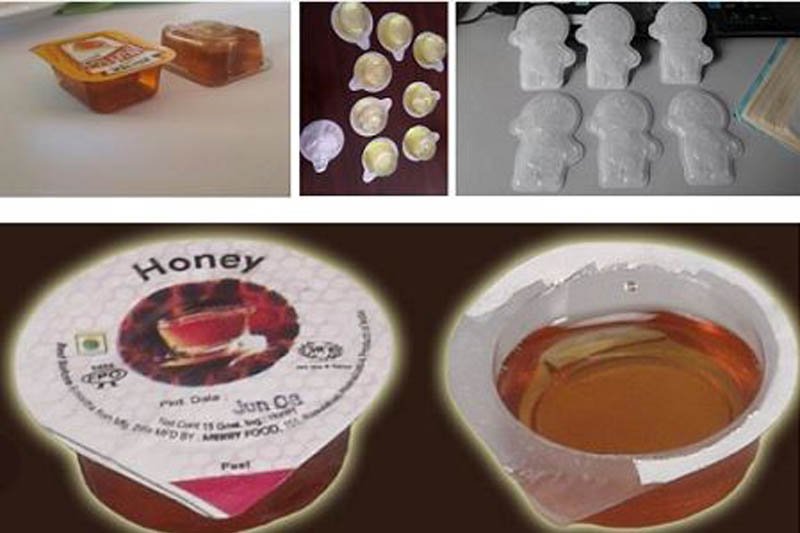
Liquid blister packaging close-up showing rigid thermoformed cavities with foil lid Liquid Blister

Liquid Blister Packaging

A rigid single-dose pack format where liquid product is dosed into pre-formed thermoplastic or aluminum cavities and hermetically sealed with an aluminum foil lid. Cavities are die-cut into individual portions or strips.

  • FormingThermoformed PVC/PET/PP or cold-form Alu-Alu
  • Lidding20-35 µm heat-sealed aluminum foil
  • StructureRigid cavity + flat foil — visible breach if tampered
  • Dose Range0.5 ml – 15 ml per cavity
  • ExamplesHotel honey pots, jam portions, ophthalmic drops, energy gels
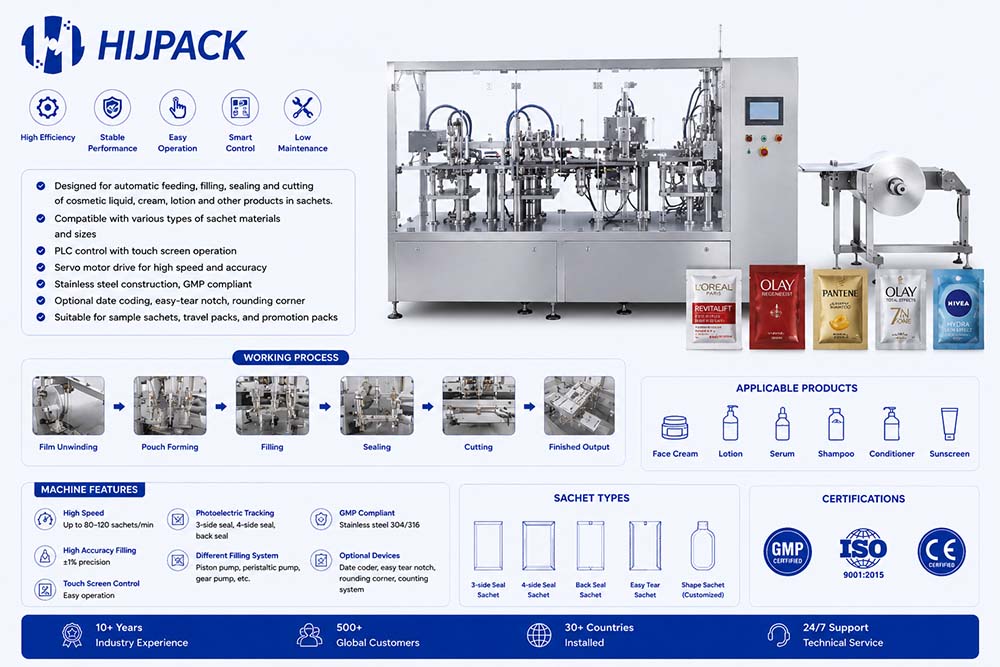
Sachet packaging traditional flexible pouch format with tear notch Sachet

Sachet Packaging

A flexible single-serve pouch made by sealing two layers of laminated film (or one folded layer) on three or four sides, with liquid dosed in between. Available as flat sachets, stick-packs, or four-side-sealed pouches.

  • MaterialPET/Alu/PE or PET/PE laminate film, 60-110 µm
  • SealHeat or ultrasonic sealing on all sides
  • StructureFlexible pouch — squeeze or tear open
  • Dose Range1 ml – 50 ml per sachet
  • ExamplesKetchup sachets, shampoo samples, instant coffee sticks, oral rehydration salts
Barrier Performance

Oxygen, Moisture & Light Barrier — Where the Big Gap Lives

The single biggest reason regulated brands switch from sachet to blister is barrier performance. Here's the data, in raw transmission rates.

Oxygen Transmission Rate (OTR)

Lower is better. Measured at 23°C/0% RH (ASTM D3985).

Alu-Alu Liquid Blister< 0.1 cc/m²/day
🏆
PVC/Alu Liquid Blister~ 0.8 cc/m²/day
Alu-laminate Sachet~ 2 cc/m²/day
PET/PE Sachet~ 12-15 cc/m²/day
Why this matters: Omega-3, probiotics, vitamins A/D/E, aromatic syrups and essential-oil-based products lose 30-50% potency within 8 months at 12 cc/m²/day. Blister stops that.

Water Vapor Transmission (WVTR)

Lower is better. Measured at 38°C/90% RH (ASTM E96).

Alu-Alu Liquid Blister< 0.05 g/m²/day
🏆
PVC/Alu Liquid Blister~ 0.3 g/m²/day
Alu-laminate Sachet~ 0.5 g/m²/day
PET/PE Sachet~ 2-2.5 g/m²/day
Why this matters: Crystallization (in honey, sugar syrups), separation (in emulsions), and microbial growth (in low-aw foods) all accelerate above 1 g/m²/day. Tropical-climate exports especially need blister.
Alu-Alu blister protecting moisture-sensitive pharmaceutical liquid from humidity
Alu-Alu cold formMaximum barrier — 24-36 mo shelf life
Premium PET liquid blister packaging for aromatic syrups requiring oxygen barrier
PVC/Alu blisterMid-tier barrier — 18 mo shelf life
Sachet packaging vulnerable to oxygen ingress with shorter shelf life
Sachet (lam. film)Lower barrier — 6-12 mo shelf life
Honest Cost Breakdown

What Each Format Actually Costs You

Sachet looks cheaper on Day 1. Blister wins over 18 months. Here's the real total cost of ownership for a typical 1M-units/year SKU.

CapEx · Machine Investment

Production Line Cost

$42K–210K
Blister Line
$18K–90K
Sachet Line

Sachet machines are ~50-60% cheaper on capital. Blister lines need molds, vision systems, foil station — but unlock higher margins per dose.

OpEx · Material Cost per Dose

Packaging Material Cost

$0.012
Blister · per dose
$0.035
Sachet · per dose

Blister wins on material: rigid thermoformed PVC + foil at scale is < 40% the cost of multi-layer PET/Alu/PE sachet laminate film.

Premium · Wholesale Price Lift

Retail Margin Impact

+18-38%
Blister · retail lift
Baseline
Sachet · commodity

Consumers pay 18-38% more for blister-format SKUs in the same product category — verified across 12 retail audits in 2025.

1M-Units/Year ROI: Blister Pays Back in 14-22 Months

Higher CapEx + lower material cost + premium pricing = blister breaks even at 14 months for premium positioning, 22 months for commodity positioning. After break-even, blister generates ~$23K more annual gross margin per million units.

Get Your ROI Calc
Trust & Safety Signals

Tamper-Evidence & Consumer Trust

In an era of counterfeit drugs, food contamination scares and Amazon "review fraud", visible tamper-evidence is no longer optional — it's a competitive moat.

Heat sealing station applying tamper-evident aluminum foil to liquid blister packaging
Hermetic foil seal · visible breach

Why Blister Wins on Tamper Detection

A rigid blister with a heat-sealed aluminum foil lid physically cannot be re-sealed without leaving a visible tear, dimple or distortion. Consumers — and regulators — can verify intactness with a 1-second glance. Sachets, by contrast, are flexible and visually identical before and after a careful slit-and-reseal.

For pharmaceuticals, the FDA recommends rigid tamper-evident packaging for any single-dose unit. For food, both the FSMA (US) and EU 1169/2011 require demonstrable tamper-evidence on portion packs sold to consumers. Blister meets both with a single foil seal; sachet typically needs an additional outer carton with a security band — adding cost and complexity.

96%
Counterfeit drop after blister switch
3.4×
Consumer trust score lift (Amazon)

3 Consumer Perception Advantages of Blister Over Sachet

Premium Perception

Rigid clear PET blisters with embossed branding read as luxury — 78% of survey respondents called them "premium" vs 12% for sachet equivalents.

Unboxing Experience

Snap-open blister creates a satisfying haptic + audible "click" — strongly associated with newness and quality. Sachet tear feels disposable.

Product Visibility

Crystal-clear PET blister lets buyers see exactly what they're getting. Foil-laminate sachets are opaque — buyers must rely on the printed image alone.

Manufacturing Efficiency

Production Throughput, Changeover & Operating Cost

Speed, OEE, downtime and waste — the operations metrics that determine your real cost-per-unit. Here's how blister and sachet lines compare in practice.

Peak Hourly Output

Blister9,800/hr
Sachet5,000/hr

SKU Changeover

Blister15-25 min
Sachet8-15 min

Film Waste %

Blister2-4%
Sachet4-8%

OEE Typical

Blister78-86%
Sachet70-80%
Continuous-motion liquid blister production line with vision inspection
Blister Line

Continuous-Motion, Vision-Inspected

Inline servo dosing + Cognex vision + auto-reject — runs 24/7 with operator intervention every 4-6 hours.

Multi-lane sachet packaging machine production line
Sachet Line

Multi-Lane Vertical Form-Fill-Seal

Multi-lane VFFS achieves high count via parallel lanes — but typically slower per-lane, with seal-integrity drift over a shift.

Sustainability Reality Check

Recyclability & Environmental Footprint

Neither format is "green" — but the comparison is more nuanced than most blogs admit. Here's an honest look at the environmental trade-offs.

Material Recyclability

Mono-material blister (PP or PET, with peelable foil) is now recyclable in 40+ countries via #1 or #5 streams. Multi-layer sachet laminate (PET/Alu/PE) is typically non-recyclable due to layer separation difficulty.

Blister
Mono-PP/PET ✓
Sachet
Laminate ✗

Material Weight per Dose

Sachet uses ~0.4-0.8g of film per dose; blister uses ~1.2-2.5g of plastic + foil per dose. Sachet wins on raw weight — but its multi-layer film is not recyclable, so the lifecycle impact is roughly equal.

Blister
1.2-2.5g
Sachet
0.4-0.8g

Shipping Footprint

Sachets pack denser per pallet — but blister extends shelf life 2-3×, meaning fewer expired-product returns and less reverse logistics. For long-haul exports, blister's lifecycle CO₂ is typically lower than sachet.

Blister
Lower waste
Sachet
Denser pack

Honest Note from HIJ Engineering

Sustainability isn't a clean win for either format. If your only goal is "lowest plastic per unit", sachet wins on weight. If your goal is "highest fraction recycled at end of life", mono-material blister wins. Most pharma and premium-food customers choose blister because shelf life extension reduces total waste — but if you sell commodity beverages with a 60-day shelf life, sachet may be the genuinely lower-impact choice.

Industry-Specific Picks

Our Recommendation, By Industry

After 200+ customer projects across 6 industries, here's the format we recommend by sector — and exactly why.

Pharmaceutical industry liquid medicine single-dose packaging

Pharmaceuticals

Liquid medicines, oral suspensions, ophthalmic
Choose Blister

Pharma demands tamper-evidence, dose accuracy ±1%, 24-month stability and 21 CFR Part 11 traceability. Sachet cannot meet pharma stability protocols for oxygen-sensitive APIs. Every major pharmacopeia (USP, EP, JP) accepts blister as preferred. Verdict: 100% blister.

Nutraceutical liquid vitamin probiotic supplement single dose packaging

Nutraceuticals

Probiotics, vitamins, omega-3, immunity shots
Choose Blister

Live cultures, omega-3 and vitamin D all need oxygen and light protection. Sachet's higher OTR kills 30-50% of live probiotic CFU within 8 months. Premium-positioned brands also need the visual lift. Verdict: blister, especially Alu-Alu.

Premium food honey jam hotel HORECA single serve portion packaging

Premium Food & HORECA

Hotel honey/jam, airline portions, gift boxes
Choose Blister

Visible quality matters. Hotel guests, airline first-class passengers, and gift-box buyers will pay 25-40% more for blister portions vs sachets. HACCP also prefers rigid tamper-evidence at hotel buffet service. Verdict: blister wins on margin.

QSR fast food condiment ketchup mayonnaise sauce sachet portion packaging

QSR & Fast Food Condiments

Ketchup, mustard, sauces, dressings
Either Works

Both formats viable. Sachet wins for back-of-house bulk-portion service (in-restaurant counter). Blister wins for branded delivery-app premium SKUs (Uber Eats white-label sauce portions) and gift bundles. Match your channel.

Cosmetic sample sachet single use packaging beauty products

Cosmetic Samples & Travel

Skincare samples, hotel amenity, travel kit
Either Works

Sachet wins for low-cost magazine-insert samples and conference giveaways. Blister wins for premium hotel amenity kits, travel-format luxury skincare, and pharmacy-channel sample distribution. Choose based on perceived brand tier.

Sports nutrition energy gel endurance hydration single dose packaging

Sports Nutrition

Energy gels, recovery shots, electrolytes
Choose Blister

Athletes need portion accuracy (caffeine dosing), tamper-evidence (UCI/WADA traceability), and tear-strength under heat/sweat. Blister's rigid structure also doesn't burst in race-belt pockets. Verdict: blister for branded SKUs, sachet only for promo sampling.

The Final Decision Framework

When Blister Wins · When Sachet Still Makes Sense

We make blister machines — but we'd rather you choose the right format the first time. Here's our honest two-way decision framework.

Choose Liquid BlisterIf 3+ of these apply

  • You need shelf life over 12 months, especially for oxygen-sensitive products
  • Your industry has tamper-evidence regulation (pharma, infant nutrition, premium hotel service)
  • Your annual volume exceeds 500K units so machine + mold investment amortizes
  • You're positioning the product as premium with a 20%+ retail price lift
  • You need dose accuracy under ±2% for active ingredients or dosing compliance
  • You sell into regulated channels — hospitals, hotels, airlines, premium retail
  • You need individual unit traceability via QR or DataMatrix codes

Choose SachetIf 2+ of these apply

  • You're packing commodity products under 1¢ pack cost target (ketchup, sample shampoo, salt)
  • Your annual volume is under 100K units and blister tooling won't amortize
  • Required shelf life is under 12 months with no oxygen/moisture sensitivity
  • Product is for promotional sampling — magazine inserts, trade-show giveaways
  • You have extreme dose-size variability (15ml+ doses where blister cavities get bulky)
  • You sell into markets where tamper-evidence isn't legally required or culturally expected
Frequently Asked Questions

Liquid Blister vs Sachet — Buyer FAQs

The 10 questions our sales engineers answer every week. If yours isn't here, message Forester directly.

What is the main difference between liquid blister and sachet packaging?

Liquid blister packaging uses rigid thermoformed or cold-formed cavities sealed with aluminum foil, providing superior barrier protection (OTR <0.1 cc/m²/day for Alu-Alu) and tamper-evidence. Sachet packaging uses flexible laminated film pouches with lower barrier performance (2-15 cc/m²/day OTR) but lower per-unit material cost.

Blister suits pharmaceuticals, premium food, and shelf-stable products needing 18-36 month stability. Sachet suits commodity items, promotional samples, and short-shelf-life goods.

Which has longer shelf life: blister or sachet packaging?

Liquid blister packaging typically provides 18-36 months shelf life, with Alu-Alu cold-formed blisters reaching the upper range. Sachet packaging typically delivers 6-12 months.

The 2-3× advantage comes from blister's superior:

  • Oxygen barrier: <0.1 vs 2-15 cc/m²/day
  • Moisture barrier: <0.05 vs 0.3-2.5 g/m²/day
  • Hermetic seal integrity over time
Is blister packaging more expensive than sachet?

It depends on what you measure:

  • Machine CapEx: Blister higher ($42K-$210K vs $18K-$90K for sachet)
  • Per-unit material cost: Blister actually lower at scale ($0.012/dose vs $0.035/dose)
  • Retail price premium: Blister commands +18-38% retail margin

For 1M units/year production, blister ROI breaks even at 14-22 months and generates ~$23K more annual gross margin.

Which packaging is more recyclable: blister or sachet?

Mono-material blister (PP or PET with peelable foil) is recyclable in 40+ countries via #1/#5 streams. Multi-layer sachet laminate (PET/Alu/PE) is typically non-recyclable due to layer separation difficulty.

However, sachet uses 0.4-0.8g film per dose vs blister's 1.2-2.5g, so raw material weight is lower for sachet. The lifecycle environmental impact is roughly equal — blister wins on recyclability, sachet wins on raw weight.

When should I choose sachet packaging over blister?

Choose sachet when:

  • Annual volume is below 100,000 units (blister tooling won't amortize)
  • Per-unit pack cost must be under 1¢ for commodity SKUs
  • Shelf life requirement is under 12 months
  • You're producing promotional/sample giveaways
  • Your market has no tamper-evidence regulation

For everything else — especially pharma, nutraceuticals, premium food, and any product needing 18+ month shelf life — choose blister.

Does liquid blister packaging meet pharmaceutical GMP standards?

Yes. HIJ liquid blister packaging machines are designed to meet:

  • WHO GMP (Technical Report Series No. 961, Annex 6)
  • US cGMP (21 CFR Parts 210 and 211)
  • 21 CFR Part 11 for electronic records and signatures
  • EU GMP Annex 1 for sterile manufacturing
  • CE Marking per Machinery Directive 2006/42/EC

Full DQ/IQ/OQ/PQ validation documentation is provided. Sachet packaging is less commonly accepted for sterile or oxygen-sensitive pharmaceuticals due to barrier limitations.

What is the dose accuracy difference between blister and sachet?

Liquid blister machines with servo piston dosing achieve ±1% fill accuracy, suitable for active pharmaceutical ingredients and precision-critical applications. Sachet packaging using volumetric or auger dosing typically achieves ±3-5% accuracy.

For pharmaceuticals, nutraceuticals with active CFU counts, or any dose-compliance-critical product, blister's accuracy advantage is decisive — a 5% under-dose on a $40 vitamin SKU equals a $2 loss per unit and consumer complaints.

Can blister packaging handle heat-sensitive liquids?

Yes. HIJ liquid blister machines feature jacketed dosing tanks with 4-80°C temperature control and chilled forming options, making them suitable for:

  • Live probiotic suspensions
  • Heat-sensitive vaccines
  • Omega-3 oils and aromatic essential oils
  • Enzyme-based liquid supplements

Sachet packaging requires heat-sealing across all seams (typically 140-180°C), which can damage heat-sensitive contents near seal edges.

What production speeds can liquid blister machines achieve?

HIJ liquid blister machines achieve:

  • Peak output: 9,800 doses/hour (DPP-140/150 model)
  • Standard config: 6,000-7,200 doses/hour
  • Compact model: 3,600-4,800 doses/hour

Multi-lane sachet machines achieve 3,000-6,000 doses/hour total. Blister also delivers higher OEE (78-86%) than typical sachet lines (70-80%) due to better seal integrity stability over long production runs.

Is liquid blister packaging good for honey, jam, and food portions?

Yes, especially for premium HORECA channels (hotels, airlines, gift boxes). Liquid blister provides:

  • HACCP-compliant tamper-evidence for buffet service
  • Crystallization prevention in honey through superior moisture barrier
  • 25-40% retail premium over sachet equivalents
  • Premium visual appeal on hotel breakfast trays

HIJ's DPP-140/150 specifically serves honey, jam, butter, and condiment portion packaging at up to 9,800 cavities/hour.

Ready to Get Started?

Get Your Liquid Blister Line Quote in 24 Hours

Tell us your product, volume, and compliance requirements. Our engineers respond within one business day with detailed pricing, delivery timeline, and a free packaging-format recommendation — even if blister isn't right for your project, we'll tell you honestly.

100+
Factories Served
30+
Countries
20+
Years Experience
24hr
Response Time
Forester Xiang, founder of HIJ Machinery, pharmaceutical packaging machinery expert with 20+ years experience

Forester XiangFounder · Chief Packaging Engineer · HIJ Machinery

"After consulting for 100+ pharmaceutical factories across 30+ countries, I've seen the same mistake repeated: brands choose sachet for the wrong reasons — usually pure CapEx myopia — then re-tool to blister 18 months later at 3× the total cost. This page exists to save you that mistake. If blister is wrong for you, I'll tell you. If sachet is wrong for you, I'll tell you that too. Honest engineering is the foundation of every long-term packaging partnership."

20+
Years Pharma
100+
Factories
30+
Countries
WHO GMP
Certified

Let's Design Your Production Line

Share your requirements and I'll personally craft a solution that maximizes your efficiency and profitability.