
PERFECT FOR LAB · R&D · STARTUP · FROM $15K
Small Scale Tablet Blister Packing Machine — $15K Lab to Startup-Ready
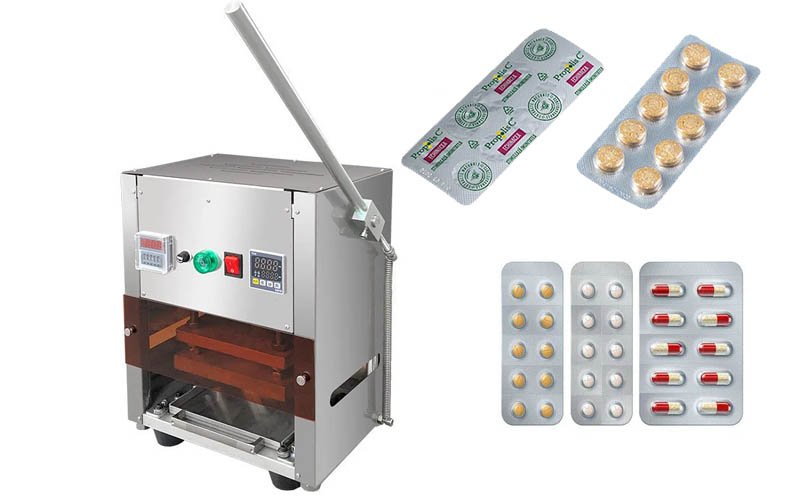
Compact GMP-ready tablet blister packing machines for R&D labs, pilot batches, university research, and startup pharmaceutical brands. From $15,000 with full IQ/OQ/PQ documentation. 5-60 BPM. Single-phase 220V/110V. 4 m² footprint. Same blister tooling carries forward to production-scale lines.
Entry Price
$15,000
USD · FOB Shanghai
Output Range
5-60 BPM
Up to 400K blisters/month
Footprint
4 m² only
1.4m × 0.9m compact
Power
Single-Phase
220V or 110V · No 3-phase
⚡ Quick Answer
What is a small scale tablet blister packing machine?
A small scale tablet blister packing machine is a compact blister packaging machine designed for pharmaceutical R&D laboratories, pilot batch production, university research projects, startup pharmaceutical brands, and small-batch generic drug manufacturers. Output ranges from 5-60 blisters per minute (up to 400,000 blisters per month). HIJ small-scale models come GMP-ready from day 1 with full IQ/OQ/PQ documentation — eliminating the upgrade gap typically faced by labs scaling toward FDA submission.
- $15,000 entry price — manual tabletop unit for R&D and formulation; $35K maximum for compact full-automatic with PVDC
- 5-60 BPM output — up to 400,000 blisters per month at full 8-hour shift operation
- 4 m² footprint (1.4m × 0.9m) — fits in standard pharma labs, university research rooms, hospital compounding spaces
- Single-phase 220V or 110V — no industrial three-phase electrical infrastructure required
- GMP-ready with IQ/OQ/PQ — full documentation for FDA / EU EMA / WHO-GMP audit readiness
- 1 operator — semi-automatic and compact full-automatic options both single-operator
- Tooling carries forward — same blister tooling reusable when scaling up to DPP-150/260 production lines
Who Uses Small Scale Machines
Built for 4 Specific Buyer Profiles — Are You One of Them?
Small scale isn't just "cheap blister machine" — it's purpose-built equipment for specific phases of pharmaceutical product development and small-batch production. Find your profile below and see which HIJ small-scale model fits.
PROFILE 01 · UNIVERSITY / LAB
Research & Academic Labs
Pharmaceutical research at universities, hospital pharmacy compounding, clinical trial supply preparation, drug delivery research projects.
✓ Manual DPP-80 ($15K-$18K) · 5-15 BPM · IRB / Ethics committee approved
PROFILE 02 · PHARMA R&D
Formulation & Stability Studies
In-house formulation development, accelerated stability testing, packaging compatibility studies, DMF (Drug Master File) submission samples.
✓ Semi-Auto DPP-80 ($18K-$22K) · 30-50 BPM · GMP-documented samples
PROFILE 03 · PILOT PRODUCTION
Pilot Batches & CMC Scale-Up
Pilot-scale GMP production for regulatory submission, scale-up batches for clinical trials, registration batches, CDMO pilot lot service.
✓ Semi-Auto + Vision DPP-80 ($22K-$26K) · 40-60 BPM · IQ/OQ/PQ full
PROFILE 04 · STARTUP PHARMA
Startup Pharma & Niche Brands
Early-stage pharmaceutical brands, niche generic manufacturers, orphan drug producers, specialty therapeutic startups entering commercial production.
✓ Compact Auto DPP-80-A ($26K-$35K) · 50-60 BPM · Scale-up ready
Not seeing yourself? If your monthly demand exceeds 500K blisters, you've outgrown small scale. See our Automatic Tablet Blister Machines (DPP-150 / DPP-260) for the next tier up.
Position in the Spectrum
Where Does Small Scale Fit? — HIJ's Complete BPM Spectrum
HIJ engineers tablet blister machines across the full output spectrum — from 5 BPM lab units to 300+ BPM industrial lines. Small scale is the foundation tier where pharmaceutical careers and products start. Below: where you fit, and what comes next.
Critical Buying Decision
"Lab-Only" Machines vs Small-Scale GMP-Ready — Which Do You Actually Need?
The blister machine market is flooded with $5K-$12K "lab blister machines" from no-name suppliers. They look identical to HIJ small-scale machines on the surface. The differences only show up when you try to submit a Drug Master File or pass an FDA audit. Here's the honest comparison.
| Specification | "Lab-Only" Machine $5K-$12K · Alibaba/Generic |
HIJ Small Scale $15K-$35K · GMP-Ready |
|---|---|---|
| Contact Surface Material | 304 Stainless Steel | 316L SS + Mill Cert |
| IQ/OQ/PQ Documentation | ✗ Not provided | ✓ Full set included |
| 21 CFR Part 11 Audit Trail | ✗ Not available | ✓ Optional add-on |
| CE Mark Certification | ◐ Sometimes faked | ✓ Genuine certificate |
| Cleaning Validation Protocol | ✗ Not documented | ✓ Validated SOP |
| Material Certificates | ✗ Not provided | ✓ Mill certs + traceability |
| FDA / EU Export Acceptable | ✗ Will fail audit | ✓ Audit-ready |
| Tooling Transfer to Production | ✗ Non-standard, non-transferable | ✓ Transfers to DPP-150/260 |
| After-Sales Support | ◐ Vendor often disappears | 72hr field engineer · 24-mo warranty |
| Total True Cost (over 5 yr) | $5K-$12K + replacement at FDA submission ($20K-$35K wasted) | $15K-$35K · scales up · zero rework |
The hard truth: Most buyers who choose "lab-only" machines end up replacing them within 18-30 months when they hit regulatory milestones. The "saved" $7K-$10K becomes a $20K-$35K total replacement cost — plus the wasted validation work. Start with GMP-ready from day 1.
✓ GMP READY FROM DAY 1
Yes — Even a $18K Small Scale Machine Can Be GMP-Audited
Many startup pharma buyers assume GMP compliance requires $50K+ industrial equipment. That's a myth — and an expensive one. HIJ small-scale machines from $18,000 up include the same regulatory-grade contact surfaces, validation documentation, and audit-trail capability as our $200K industrial lines. Same compliance, smaller footprint.
- 316L stainless steel on all contact surfaces with mill certificates
- Validated cleaning protocols aligned to PIC/S Annex 15
- Full IQ/OQ/PQ documentation templates pre-formatted for your QA team
- Material traceability records for FDA / EU EMA / WHO-GMP audit
- Optional 21 CFR Part 11 electronic audit trail module ($2,800 add-on)
- CE Mark certification genuine and verifiable through EU registry
- ISO 9001:2015 certified manufacturer (HIJ corporate-level)
📋 Documentation Included Free
IQ Protocol Template
✓ Included
OQ Protocol Template
✓ Included
PQ Protocol Template
✓ Included
Cleaning Validation SOP
✓ Included
Material Certificates
✓ Included
Calibration Records
✓ Included
User & Maintenance Manuals
✓ Included
Compact Engineering
6 Features That Make Small Scale Practical (Not Just Smaller)
A truly useful small-scale tablet blister machine isn't just a "shrunk-down" industrial machine. It's purpose-engineered for small-team operation, lab installation, and product-development workflows. Here are the 6 design choices that make HIJ small scale work where it matters.
4 m² Footprint
Compact 1.4m × 0.9m base — fits standard pharma lab bench, university research workbench, or hospital pharmacy compounding room without facility renovation.
1.4m × 0.9mSingle-Phase Power
Runs on standard single-phase 220V (50/60Hz) or 110V (60Hz). No industrial three-phase electrical upgrade required — saves $3K-$8K in facility electrical work.
220V / 110VSingle Operator
Designed for single-operator setup, run, and changeover. No dedicated technical team needed. Standard lab tech with 2-day training can run the machine.
No Tech TeamTooling Carries Forward
Blister format tooling designed to fit both small-scale DPP-80 and production DPP-150/260 machines. Validation work transfers when you scale up — saves $5K-$10K.
Scale-Up Compatible5-Minute Format Change
Quick-change tooling designed for frequent format swaps during R&D and formulation work. Most format changes complete in 5-15 minutes vs 2-4 hours on industrial machines.
Fast Changeover2-Day Operator Training
Simplified HMI and operating procedures designed for non-engineering operators. Standard 2-day on-site training program (vs 5 days for industrial machines).
Easy to Learn
HIJ Small Scale Portfolio
4 Small Scale Tablet Blister Machines — From $15K Lab to $35K Pilot
Every HIJ small-scale model includes the 6 compact engineering features. Choose by automation tier, output target, and material compatibility. Stock units available — most ship in 21-30 days.
| Model | Automation | Output BPM | Materials | Compliance | Best For | Price (USD) |
|---|---|---|---|---|---|---|
| DPP-80M | Manual | 5-15 BPM | PVC | Basic CE | University · R&D · Lab | $15,000 |
| DPP-80SA⭐ POPULAR | Semi-Auto | 30-50 BPM | PVC / PVDC | Full GMP + IQ/OQ/PQ | Pilot · Formulation · DMF | $22,000 |
| DPP-80SV | Semi + Vision | 40-60 BPM | PVC / PVDC | Full GMP + Vision QC | Small-batch generic | $26,000 |
| DPP-80A | Compact Full-Auto | 50-60 BPM | PVC / PVDC / Soft Alu | Full GMP + 21 CFR opt | Startup pharma scaling | $35,000 |
All prices FOB Shanghai · Tooling for first blister format included · 24-month warranty · 72hr field engineer support globally.
Your Growth Path
The HIJ Scale-Up Roadmap — Same Tooling, Same Vendor, From Lab to 300 BPM
A common pharmaceutical startup mistake: buying a "lab-only" blister machine, then replacing it 18 months later when product hits regulatory milestones. HIJ's scale-up pathway means you never replace — only upgrade. Same vendor, same tooling, same documentation framework.
STAGE 1 — Small Scale
5-60 BPM
$15K-$35K
R&D · Pilot · Startup · DMF samples
STAGE 2 — Mid Automatic
60-150 BPM
$38K-$58K
DPP-150 / DPP-250 · Tooling transfers
STAGE 3 — Full Production
120-220 BPM
$72K-$118K
DPP-260 / DPH-300 · AI vision · FDA export
STAGE 4 — High Speed
200-300+ BPM
$95K-$320K
HIJ-PBM · 24/7 industrial · SCADA / MES
Why this matters: Buyers starting with HIJ small-scale save approximately $15,000-$25,000 when scaling to production vs switching vendors. Your blister tooling, IQ/OQ/PQ framework, validation work, and operator training all carry forward. Same engineering partner from your first $15K lab unit to your $300K industrial line.
Real Small Scale Buyer Stories
3 Small Scale Buyers Who Made It Work
Verified case studies from real lab and startup buyers who chose HIJ small-scale tablet blister machines for their specific use case. Three different stages of pharma growth — same underlying value: GMP-ready compact equipment that grows with them.
University Research Lab · Netherlands
"We needed a compact blister machine for our drug delivery research. The DPP-80M at $15K was perfect — single-phase power, sits on a lab bench, and the GMP documentation supports our clinical trial supply work. No facility renovations needed."
📚 University drug delivery research · DPP-80M $15K · 18 months running
Generic Pharma R&D · India
"We use the DPP-80SA for DMF submission samples and accelerated stability batches. Same blister tooling works in our production DPP-260 line — we don't redo validation when we scale up. Saved us approximately ₹4 lakhs in tooling rework."
💊 DMF samples + stability · DPP-80SA $22K · Saved ₹4L on scale-up
Startup Pharma Brand · USA
"As a 12-month-old startup, we needed GMP-ready blister packaging but couldn't justify $80K capex. The DPP-80A at $35K let us launch our first commercial product, pass our first FDA pre-approval inspection, and start generating revenue while we plan our DPP-260 upgrade for next year."
🚀 Startup commercial launch · DPP-80A $35K · Passed FDA PAI
Deeper Reading
Related Resources for Small Scale Buyers
Buying your first blister machine is a critical decision for any pharmaceutical project. Explore HIJ's deeper resources on pricing, compliance, scale-up planning, and the next-tier equipment you'll grow into.
Automatic Blister Machines
The next tier up: full automation at 80-220 BPM for facilities scaling past 500K blisters/month. Same vendor, tooling transfers.
Read Guide →High Speed Blister Lines
Top tier: 200-300+ BPM industrial production for large pharma and EU/FDA exporters. The endpoint of the HIJ growth path.
Read Guide →Complete Pricing Guide
2026 pricing breakdown across all tiers · $15K-$320K · TCO analysis · ROI calculation · Brand comparison.
Read Guide →21 CFR Part 11 Reference
What FDA 21 CFR Part 11 actually requires — and how HIJ small-scale machines deliver it with optional audit-trail module.
Read Guide →WHO-GMP Compliance Guide
Complete WHO-GMP TRS 957 compliance reference. Small-scale machines audit-ready for WHO, FDA, EU EMA, PIC/S.
Read Guide →Main Tablet Blister Hub
Back to the master product page covering all HIJ tablet blister machine variants, models, and specifications.
Read Guide →
Small Scale FAQ
Small Scale Tablet Blister Packing Machine — FAQ
The eight questions lab managers, R&D heads, and startup pharma founders ask us most when buying their first blister machine. Every answer is also indexed by Google & AI Overviews for independent verification.
What is a small scale tablet blister packing machine?
A small scale tablet blister packing machine is a compact blister packaging machine designed for pharmaceutical R&D laboratories, pilot batch production, university research, startup pharma brands, and small-batch generic drug manufacturers. Output ranges from 5-60 blisters per minute (up to 400,000 blisters/month). Footprint is typically 1.4m × 0.9m. Power runs on single-phase 220V or 110V. Price range $15,000-$35,000 USD. HIJ small-scale models (DPP-80M, DPP-80SA, DPP-80SV, DPP-80A) come GMP-ready with full IQ/OQ/PQ documentation.
How much does a small scale tablet blister machine cost?
Small scale machines from HIJ range from $15,000 to $35,000 USD: Manual tabletop machine (5-15 BPM, R&D only): $15,000-$18,000. Semi-automatic compact (30-50 BPM, GMP-ready): $18,000-$26,000. Compact full-automatic (50-60 BPM, full GMP + IQ/OQ/PQ): $26,000-$35,000. Premium with PVDC/soft-aluminum: up to $35,000. All prices FOB Shanghai. Compare against $40K-$80K for mid-range industrial automatic machines.
Is a small scale blister machine GMP compliant?
Yes — but only HIJ small-scale models above $18,000 are fully GMP-ready. Pure 'lab-only' machines under $15,000 typically lack: 316L stainless steel contact surfaces, validated cleaning protocols, IQ/OQ/PQ documentation, traceable material certificates. HIJ semi-automatic and compact automatic models include: 316L stainless steel with mill certificates, validated cleaning SOPs, full IQ/OQ/PQ packages pre-formatted to PIC/S GMP Annex 15, CE Mark, and optional 21 CFR Part 11. Audit-ready for FDA / EU EMA / WHO-GMP inspection.
What's the difference between a small scale and a lab blister machine?
Three differences: (1) Compliance scope — "lab blister machines" often skip GMP compliance to hit lower price points ($5K-$12K), while small-scale GMP-ready machines maintain full pharmaceutical compliance from $15K up. (2) Output — lab machines max at 5-20 BPM; small scale reaches 60 BPM. (3) Scalability — lab-only tooling does NOT transfer to production machines, while HIJ small-scale tooling reuses on DPP-150/260 production lines, saving $4K-$8K when scaling up.
How much output can a small scale machine produce per month?
Monthly output depends on automation tier: Manual tabletop (10 BPM × 8 hr/day × 22 days × 70% OEE) = ~74,000 blisters/month. Semi-automatic (40 BPM × 8 hr/day × 22 days × 75% OEE) = ~316,000 blisters/month. Compact full-automatic (60 BPM × 8 hr/day × 22 days × 80% OEE) = ~507,000 blisters/month. For occasional R&D batches (2-4 hr/day), expect 5,000-30,000 blisters/month. If consistently exceeding 500K/month, upgrade to DPP-150 mid-range automatic.
Does a small scale machine need three-phase power?
No. HIJ small-scale machines (DPP-80 series) run on single-phase 220V (50/60Hz) or single-phase 110V (60Hz) for US/Canada. Total power consumption is 3-5 kW — equivalent to a small industrial oven. Installation is possible in: standard pharmaceutical labs, university research facilities, hospital pharmacy compounding rooms, startup spaces — without electrical infrastructure upgrades. Industrial three-phase 380V/415V only required for mid-range (DPP-150+) and high-speed machines.
How long does it take to set up and validate?
Installation and validation timeline: Day 1-2 unboxing, leveling, electrical connection. Day 3 utility verification, IQ protocol execution. Day 4-5 OQ functional testing. Day 6-10 PQ performance qualification with three consecutive production batches. Total: 7-10 days from delivery to qualified production status. HIJ provides field engineer dispatch within 72 hours for installation, or remote video guidance for self-installation. IQ/OQ/PQ documentation templates pre-prepared.
Can I scale up from small scale to production volume later?
Yes. HIJ's scale-up pathway: start with DPP-80 small scale ($18K-$26K, 30-60 BPM) for R&D, formulation, and DMF submission. As demand grows past 200K blisters/month, scale to DPP-150 mid-range automatic ($38K, 60-100 BPM) — the SAME blister tooling and IQ/OQ/PQ work transfers, saving $5K-$10K in validation re-execution. Further scale to DPP-260 ($72K, 220 BPM) or high-speed HIJ-PBM ($168K+) follows the same pattern. Total scale-up costs less when buyers start with HIJ small-scale rather than switching brands.
🌱 SMALL SCALE PROJECT DESK · 24-HOUR RESPONSE
Get Your Small Scale Tablet Blister Quote — From $15,000
Submit your monthly output target, regulatory ambition (lab-only vs FDA-submission), tablet specs, and destination. Within 24 hours you'll receive an itemized quote for the right HIJ small-scale model with IQ/OQ/PQ documentation scope, single-phase power confirmation, and scale-up path planning for when you grow.
$15K Entry · $35K Max
4 m² Footprint
Single-Phase 220V / 110V
Full IQ/OQ/PQ Included
FDA / EU EMA Audit-Ready
Tooling Transfers on Scale-Up