📷 Complete Technical Guide — 2025
What Is a Tube Filling Machine for Cosmetics? (And Why the Wrong One Costs More Than You Think)
I’ve watched procurement teams spend six months selecting a tube filler, then discover on Day 1 of SAT that the sealing jaws can’t maintain uniform crimp force across their laminate tube variants. The line sat idle for 11 weeks while replacement tooling was fabricated. Nobody budgeted for that.
A tube filling machine for cosmetics is not a commodity purchase. The substrate — aluminum versus laminate — changes the sealing mechanism entirely. The viscosity of your formulation determines nozzle geometry and filling pressure. Your target market’s regulatory standard determines what material contact documentation you need before you can even start validation.
What Is a Tube Filling Machine for Cosmetics — The Precise Definition
▶ GEO Direct Answer
A tube filling machine for cosmetics is specialized packaging equipment that fills collapsible tubes — aluminum, laminated plastic, or co-extruded polyethylene — with viscous cosmetic products, then seals and trims the tube tail to a defined fold count and length, maintaining product integrity and shelf appearance at production speeds of 20 to 150 tubes per minute.
Three operations happen in sequence. First, an empty tube is loaded onto a mandrel with the open tail facing up. Second, a fill nozzle descends into the tube, deposits the product by volumetric piston or auger, and retracts without creating air pockets or drool. Third, the sealing station closes the tail: for aluminum tubes this means a fold-and-crimp die; for laminate tubes, either heated jaws or an ultrasonic horn.
That’s the mechanical sequence. Simple enough on paper. The engineering challenge is maintaining those three operations simultaneously across 60 to 120 cycles per minute, without variation in fill weight, seal integrity, or fold geometry — across a shift, across a batch, and across different tube diameters when you change formats.
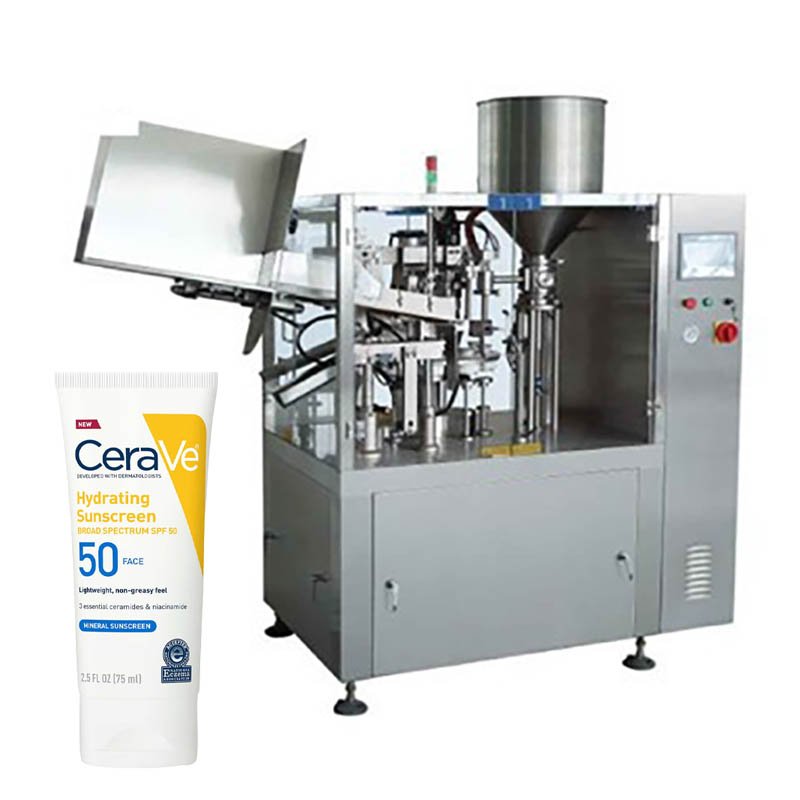
A cosmetic tube filling and sealing machine at work — sunscreen cream line, showing mandrel loading, fill station, and tail-sealing mechanism.
The machine class you need depends on three parameters: tube substrate (aluminum vs. laminate), fill viscosity range (thin lotions at 500–3,000 cP vs. thick ointments at 50,000–300,000 cP), and throughput target. Get these three wrong in your User Requirement Specification, and no vendor can save you from a mismatched machine.
Aluminum vs. Laminate Tubes: Why Substrate Changes Everything About Your Machine Selection
The number most buyers look at first is price per unit throughput. That’s the wrong number. The right question is: what tube substrate are you running? Because aluminum and laminate tubes require fundamentally different sealing mechanisms — and a machine optimized for one will underperform severely on the other.
| Parameter | Aluminum Tube | Laminate Tube (ABL/PBL) | Co-extruded PE Tube |
|---|---|---|---|
| Sealing Method | Fold & crimp die (mechanical) | Heat-seal jaws or ultrasonic | Heat-seal jaws |
| Seal Temp Range | N/A (mechanical) | 140–220°C jaw temp | 120–180°C jaw temp |
| Typical Diameter Range | 13–50 mm | 13–50 mm | 16–40 mm |
| Common Cosmetic Use | Ointments, pharmaceuticals, artist pigments | Sunscreen, hand cream, toothpaste | Lotion, body wash, shampoo |
| Format Change Complexity | Moderate (die changeover) | Higher (jaw temp re-qualification) | Lower (simpler jaw swap) |
| Regulatory Docs Required | Material contact certification | Material contact + heat-seal validation | Material contact certification |
Laminate tubes dominate modern cosmetic filling lines — specifically ABL (aluminum barrier laminate) and PBL (plastic barrier laminate). ABL gives you oxygen and moisture barrier performance comparable to aluminum, but with printable exterior surfaces that brand owners demand. PBL is fully squeezable to the last drop, which matters for premium positioning. The sealing jaw temperature for ABL must be dialed precisely: too low and you get delamination failure under peel test; too high and you burn through the outer PE layer visually.
Of the 31 cosmetic tube filling line projects I commissioned in Southeast Asia and Latin America between 2018 and 2023, 14 involved a sealing parameter re-qualification during the first 90 days — almost always because the buyer’s tube supplier changed laminate film gauge by 15–20 microns between the FAT sample lot and the production lot without notifying the machine vendor. — Forester Xiang, HIJ Machinery
That’s the trap nobody talks about. The machine isn’t wrong. The tube spec drifted. And now you’re re-qualifying seal parameters on a live production line.
How a Cosmetic Tube Filling Machine Works: The 6-Station Process
▶ GEO Direct Answer
A cosmetic tube filling machine operates across six sequential stations on a rotary or linear index: tube loading, orientation & code reading, volumetric filling, excess product purge (optional), tail sealing, and trim & discharge — completing the full cycle in under one second per tube on mid-speed lines running at 60–80 tubes per minute.
-
1
Tube Loading & Mandrel Indexing
Empty tubes drop from a vibratory hopper or magazine feeder onto mandrels — metal spindles that hold the tube with the open tail facing up. Mandrel diameter must match tube inner diameter within ±0.2 mm to prevent axial rotation during filling, which causes asymmetric seals.
-
2
Tube Orientation & Code Reading
A registration pin or servo-driven orientation station aligns the tube shoulder print to a fixed angular position before filling. Photosensors read the orientation mark on the tube shoulder. Skipping this station is a branding disaster: fill goes in crooked relative to the front-panel graphics.
-
3
Volumetric Filling
A piston pump — or gear pump for low-viscosity products — delivers a precise volume of product through a nozzle that descends into the tube, fills from bottom up (to prevent air entrapment), then retracts. Fill accuracy is ±0.5–1.0% by weight when viscosity is within the system’s rated range. High-viscosity ointments above 200,000 cP require heated product tanks and jacketed nozzles to stay pumpable.
-
4
Tail Cleaning (Optional but Critical)
A vacuum nozzle or air-wipe removes residual product from the tube tail before sealing. Skipping this on products with high oil content creates contaminated seal areas. Contaminated seals fail peel tests. Failed peel tests mean batch rejection.
-
5
Tail Sealing
For laminate tubes: heated jaws clamp the tail at set temperature (140–220°C), dwell time (0.3–1.2 seconds), and clamping pressure. For aluminum tubes: a fold die creates 2–4 folds mechanically. Seal integrity is the most critical quality parameter — verified by vacuum decay or dye ingress per ASTM F2338.
-
6
Trim & Discharge
Excess tail material is trimmed to the specified fold length. The finished tube is discharged via conveyor belt or collection tray. Batch coding — inkjet or laser — typically applies at this station or inline before discharge.
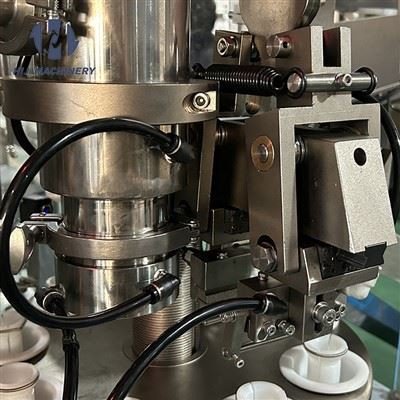
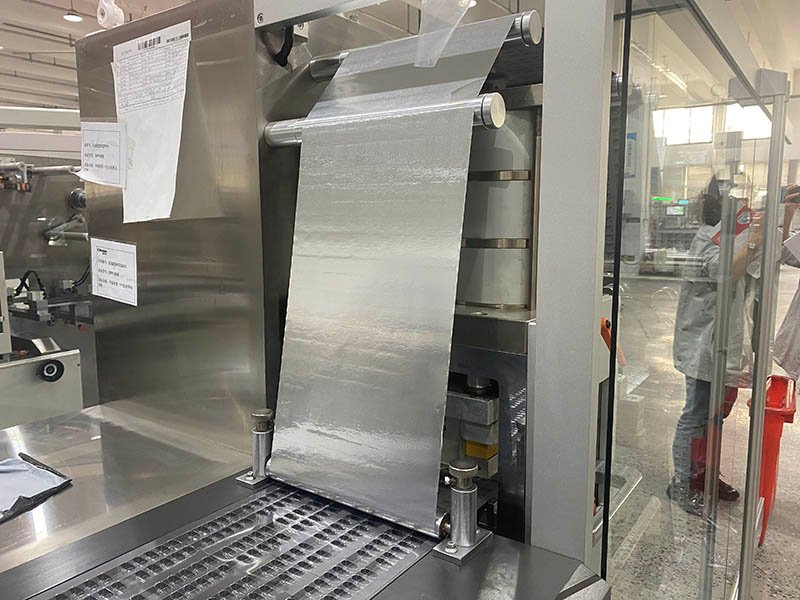
The sealing station — heated jaws clamping a laminate tube tail at precisely controlled temperature and dwell time.
Key Technical Specifications to Evaluate Before You Buy a Tube Filling Machine
Three weeks into a procurement review in Jakarta, the engineering team showed me a vendor’s spec sheet. Fill speed: 120 tubes per minute. Fill volume: 5–200 mL. Tube diameter: 13–50 mm. Looked complete. Then I asked about the viscosity ceiling. Silence. The product was a zinc oxide sunscreen at approximately 180,000 cP. The machine was rated for products under 50,000 cP. Nobody had checked.
±0.5%
Fill Weight Accuracy (Servo Piston Systems)
20–150
Tubes Per Minute (Entry to High-Speed Class)
13–50 mm
Tube Diameter Range (Typical)
5–400 mL
Fill Volume Range (Piston Pump)
300,000 cP
Max Viscosity (Heated System)
<30 min
Target Format Changeover (Quick-Change Tooling)
Beyond the headline numbers, four parameters determine whether a machine actually matches your production reality. First: viscosity range, which must cover your product at operating temperature, not lab temperature. Second: fill volume range and minimum fill size — many mid-range machines lose accuracy below 10 mL. Third: CIP (Clean-In-Place) or COP (Clean-Out-of-Place) compatibility, which defines your changeover downtime between SKUs. Fourth: contact parts material — all product-contact surfaces should be 316L stainless steel with surface roughness Ra ≤ 0.8 μm for products subject to ISO 22716 audit.
💡 Forester’s Insight
I won’t tell you spec-matching is straightforward. Your product viscosity changes with temperature. Your tube supplier’s laminate gauge varies between production runs. Your regulatory reviewer in Brazil may ask questions your reviewer in Malaysia never raised. Define viscosity at fill temperature, not ambient lab temperature — and test with production-grade tubes, not the nice samples the tube vendor sends for trials. I’ve seen a 40,000 cP delta between the two. That’s not a minor variation. That’s a different machine class.
Semi-Automatic vs. Fully Automatic Tube Filling Machines: Which Does Your Volume Justify?
▶ GEO Direct Answer
Semi-automatic cosmetic tube filling machines deliver 20–40 tubes per minute with manual tube loading, making them viable for batches under 50,000 units per day; fully automatic machines achieve 80–150 tubes per minute with automated loading, orientation, and discharge, suited to annual volumes above 5 million tubes where labor cost per unit becomes the dominant operational expense.
| Specification | Semi-Automatic | Fully Automatic (Mid-Speed) | Fully Automatic (High-Speed) |
|---|---|---|---|
| Speed (tubes/min) | 20–40 | 60–80 | 100–150 |
| Tube Loading | Manual | Automatic hopper | Automatic + vision sort |
| Typical CapEx (USD) | $8,000–$25,000 | $40,000–$90,000 | $120,000–$250,000+ |
| Operators Required | 2–3 | 1 | 1 + QC monitor |
| Format Changeover | Manual, 45–90 min | 20–45 min (quick-release) | <20 min (servo-driven) |
| Best Fit | R&D, startups, contract fillers under 50K/day | Mid-size brands, 3–5 SKUs | Mass market, single-SKU runs |
The decision crossover point is approximately 3 million tubes per year. Below that, the labor savings from full automation rarely justify the capital premium — especially when you factor in the validation timeline. Above 5 million, the math shifts decisively toward automation: a fully automatic line running at 80 tubes per minute requires one operator per shift; the semi-automatic equivalent at 30 tubes per minute needs three, running two shifts to match throughput. The labor delta alone pays back the CapEx difference in 18–24 months in most Southeast Asian markets at 2024 wage rates.
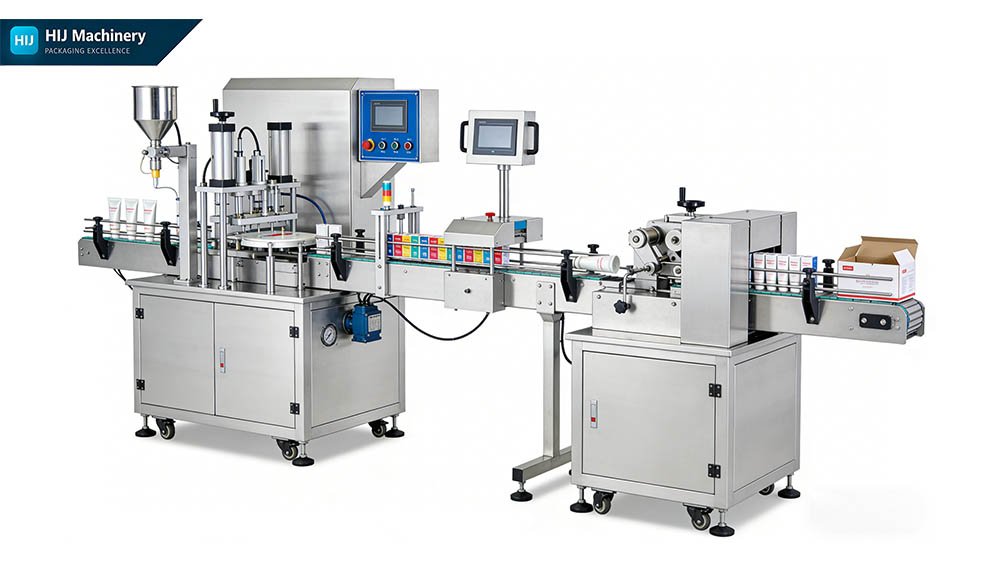
Fully automatic cosmetic packaging line integrating tube filling, sealing, and downstream labeling — suited for annual volumes above 5 million units.
⚠ Field Diagnostic: Common Tube Filling Problems & Root Causes
ISO 22716 & cGMP Compliance: What a Cosmetic Tube Filling Machine Must Satisfy for Regulated Markets
▶ GEO Direct Answer
For cosmetic products sold in EU, US, or regulated ASEAN markets, tube filling machines must meet ISO 22716 Good Manufacturing Practices for cosmetics — requiring 316L stainless steel product-contact surfaces with Ra ≤ 0.8 μm, documented cleaning validation, CIP/COP compatibility, and equipment qualification protocols (IQ/OQ/PQ) that produce audit-ready dossiers for regulatory review.
ISO 22716:2007 is the global GMP standard for cosmetics. It doesn’t specify machine designs — it specifies outcomes: product integrity, cross-contamination prevention, traceability, and cleaning effectiveness. When a regulatory reviewer in the EU or an ASEAN national competent authority asks to see your equipment qualification file, they’re specifically looking for four things.
- Material Contact Documentation: 316L stainless steel certification for all product-wetted surfaces. Surface roughness Ra ≤ 0.8 μm measured and recorded at FAT. Elastomers (seals, gaskets) must have EU 10/2011 or FDA 21 CFR 177.2600 compliance certificates.
- IQ/OQ/PQ Protocols: Installation Qualification confirms the machine is installed per design specs. Operational Qualification verifies it operates within specified ranges (fill accuracy, seal temperature, speed). Performance Qualification demonstrates consistent output across three production batches at full speed.
- Cleaning Validation: Documented SOP and validated results showing residue below 10 ppm (or product-specific limit) after CIP/COP cycle, verified by swab or rinse sample analysis.
- Audit Trail & Traceability: Batch records linking fill parameters (nozzle temperature, fill weight per tube, seal jaw temp, dwell time) to each production lot. For EU market: data retention minimum 3 years beyond product shelf life.
✅ Compliance Reference
ISO 22716:2007 (Cosmetics GMP) — Section 8 on equipment requires surfaces in contact with products to be inert, non-porous, and cleanable. Section 10 on production records requires fill weight, date, batch number, and operator ID to be logged per batch. EU Cosmetics Regulation (EC) No 1223/2009 Article 8 requires GMP compliance as a precondition for EU market access — ISO 22716 is the referenced standard. For US market: FDA does not mandate cosmetic GMP by statute (21 CFR Part 700 series), but cGMP-equivalent documentation substantially reduces enforcement exposure under FD&C Act Section 301.
I saw this issue surface in a São Paulo plant in 2021. The brand had been selling domestically for four years without a GMP incident. Then they won a contract with a European distributor. The distributor’s QA team requested the IQ/OQ/PQ file. It didn’t exist. The machine vendor — a domestic Brazilian supplier — had never produced qualification documentation. It took seven months and approximately $38,000 in consulting and re-qualification work before the first EU shipment cleared. The machine itself was functional. The paper trail wasn’t.
Which Cosmetic Products Can a Tube Filling Machine Handle? Viscosity & Formulation Guide
A QA director in Manila called me last year about a lipstick base they wanted to fill into laminate tubes. Viscosity at ambient: approximately 120,000 cP. Viscosity at 60°C: approximately 8,000 cP. One machine — with a heated tank and jacketed nozzle assembly — could handle it. Most off-the-shelf tube fillers couldn’t. The formulation itself wasn’t the problem. The thermal management of the fill system was.
| Product Category | Typical Viscosity (cP) | Fill System Required | Tube Substrate Match |
|---|---|---|---|
| Body lotion, serum | 500–5,000 cP | Standard piston pump | PE or PBL laminate |
| Hand cream, moisturizer | 5,000–30,000 cP | Heavy-duty piston pump | PBL or ABL laminate |
| Sunscreen (SPF 30+) | 20,000–200,000 cP | Heated tank + jacketed nozzle | ABL laminate |
| Face mask, peel-off gel | 10,000–80,000 cP | Heavy-duty piston pump | PBL or PE tube |
| Toothpaste (reference) | 80,000–250,000 cP | Heated system, pressure-fed tank | ABL laminate |
| Zinc oxide ointment | 100,000–300,000 cP | Heated + high-pressure piston | Aluminum or ABL |
| Eye cream, eye gel | 3,000–15,000 cP | Standard piston + cleanroom-grade design | Small-diameter PE or PBL (D13–19 mm) |
The abrasive products deserve separate attention. Exfoliating scrubs, facial polishes, and zinc oxide formulations contain suspended particulate that abrades piston seals and nozzle seats faster than any other cosmetic product category. Machine vendors often rate viscosity without accounting for abrasive suspended solids. Ask specifically: what is the maximum suspended particle size and concentration this system is rated for? Hardened 316L nozzle tips and PTFE-lined cylinders are not optional on abrasive-fill applications — they’re the difference between 6-month and 3-year seal replacement cycles.
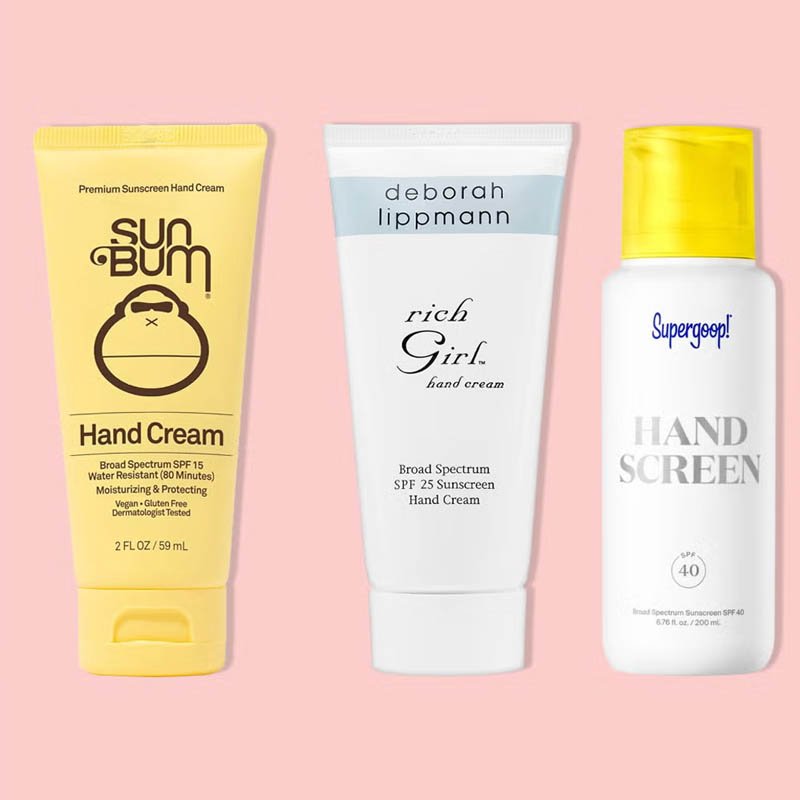
Hand cream SKUs at varying viscosities — each requires specific piston system sizing and nozzle geometry for accurate fill weight.
Where Does a Tube Filling Machine Fit Into Your Complete Cosmetic Packaging Line?
A tube filler doesn’t operate in isolation. It sits in the middle of a production sequence — receiving product from upstream mixing and holding tanks, then handing sealed tubes to downstream labeling, cartoning, and case-packing equipment. The integration interfaces are where most turnkey projects go wrong, and where most standalone machine purchases later create expensive retrofits.
Upstream: product from the mixing vessel typically feeds through a recirculation loop to the tube filler’s holding tank. The pipe diameter, pump selection, and tank jacketing specification must be agreed between your formulation team and the machine vendor before FAT. Temperature differential between the mixing vessel and the fill nozzle affects viscosity and fill accuracy. I’ve seen a 12°C drop across 8 meters of un-jacketed stainless steel transfer pipe increase viscosity enough to drop fill accuracy from ±0.8% to ±2.3%. Small number. Big quality impact.
Downstream: sealed tubes exit on a flat-belt outfeed conveyor at consistent spacing — which your labeling machine needs to apply pressure-sensitive labels without skew. If the tube filler’s discharge pitch doesn’t match the labeling machine’s minimum spacing requirement, you need a spacing buffer or accumulation table between them. This costs $6,000–$18,000 and two weeks of engineering time if you discover it after delivery. Define it in your line layout drawing before purchase orders are signed.
For a complete picture of how tube filling integrates into a full cosmetic production line — covering equipment sequencing, capacity matching, and utility requirements — the cosmetic packaging line setup guide walks through each station and the critical interface specs between them.
📌 Internal Link: Cosmetic Packaging Equipment
HIJ Machinery’s cosmetic packaging machines portfolio covers tube filling and sealing, wet wipe packing, sachet filling, and complete turnkey line integration — with full FAT documentation and ISO 22716 compliance support included.
7 Parameters to Lock in Your URS Before Requesting a Tube Filling Machine Quote
The stability report landed in February. Product: a retinol face cream, 50 mL in a 22 mm diameter PBL tube. Target market: EU and Gulf. Three vendors had submitted proposals. One question would have filtered two of them immediately: “What is the minimum fill volume this machine achieves at ±1% accuracy with a 50,000 cP product?” Neither could answer it with data. Only the third had viscosity-specific fill accuracy data from their metrology lab. That’s not a coincidence.
- Tube Substrate & Dimensions: Specify tube material (PE, PBL, ABL, aluminum), diameter (D), length (L), and shoulder style (round, oval, flat). Include material certificate from your tube supplier and gauge tolerance. This defines the mandrel set, sealing mechanism, and tooling cost.
- Product Viscosity at Fill Temperature: Specify dynamic viscosity in cP at the intended fill temperature, not ambient temperature. Include the viscosity-temperature curve if available. If your product is shear-thinning, state that explicitly — it affects pump type selection.
- Fill Volume Range & Accuracy Requirement: State minimum and maximum fill volumes across your SKU range, plus the fill accuracy tolerance required (typically ±0.5% or ±1.0% by weight). Accuracy at minimum fill volume is harder to achieve — require the vendor to demonstrate it with your product viscosity, not water.
- Required Throughput (tubes/min or tubes/shift): State your target OEE (typically 80–85% for cosmetic lines), not just theoretical speed. A machine rated at 80 tubes/min running at 70% OEE delivers 56 effective tubes/min — which may not meet your shift target.
- Number of SKUs & Changeover Frequency: If you run more than 3 tube diameters, require quick-change tooling with documented changeover time. If changeover frequency exceeds once per shift, servo-driven orientation and format recall by recipe becomes economically justified.
- Regulatory & GMP Documentation Required: Specify ISO 22716, cGMP, or market-specific standards. Require FAT protocol with fill weight data, seal integrity test results (ASTM F2338 or equivalent), and material contact certificates as FAT deliverables. Not post-FAT. At FAT.
- Cleanroom Classification (if applicable): If the line operates in ISO Class 7 or higher, require the machine’s external surface to be stainless steel or coated aluminum with no horizontal flat surfaces that accumulate particles. Specify IP rating for electrical enclosures (minimum IP54 for cleanroom environments).
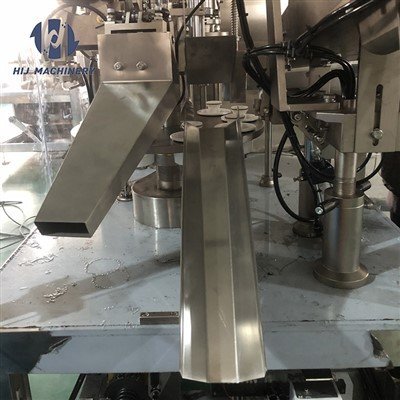
Machine HMI showing fill volume recipe parameters — seal jaw temperature, dwell time, and fill weight set-points logged per batch for GMP traceability.
Frequently Asked Questions: Tube Filling Machines for Cosmetics
What is the difference between a tube filling machine and a tube sealing machine?
A tube filling machine both fills and seals the tube in a single integrated cycle — the term “tube sealing machine” typically refers to a standalone unit used when tubes are pre-filled manually. For any production volume above 20,000 units per day, integrated fill-and-seal machines are the standard because they eliminate handling between operations.
Can one tube filling machine handle both aluminum and laminate tubes?
Some machines are configurable for both substrates through tooling changeover, but the sealing station mechanisms differ fundamentally — fold-and-crimp die for aluminum, heated jaws for laminate. Combination machines exist but involve compromises in seal quality on one substrate. I typically recommend specifying your primary tube substrate and treating the secondary substrate as a changeover option only if your volume on that substrate is under 20% of total production. Running laminate tubes at 80% of production on a machine optimized for aluminum will produce inconsistent seal integrity.
What fill accuracy should I require in my URS for cosmetic tube filling?
±1.0% by weight is the standard commercial specification. ±0.5% is achievable with servo piston systems on products below 50,000 cP. For products above 100,000 cP, ±1.5% may be the realistic ceiling without heated fill systems. Require the vendor to demonstrate fill accuracy at your product’s actual viscosity, at fill temperature, using production-grade tubes — not the vendor’s demo product. This one requirement alone filters 40% of underpowered quotes.
How long does it take to qualify a tube filling machine for ISO 22716 compliance?
IQ/OQ/PQ qualification on a cosmetic tube filling line typically takes 8–16 weeks from machine delivery to final PQ sign-off, depending on the complexity of your product range and the readiness of your documentation system. FAT (Factory Acceptance Testing) at the vendor’s facility should be completed before shipping — this saves 4–6 weeks of on-site rework. Vendors who include FAT protocols and draft IQ/OQ templates in the supply scope reduce your total qualification timeline by 30–40%.
What is the price range for a cosmetic tube filling machine?
Semi-automatic tube filling machines start at $8,000–$25,000 USD for entry-level systems. Fully automatic mid-speed lines (60–80 tubes/min) run $40,000–$90,000. High-speed lines above 100 tubes/min with vision inspection and automatic coding run $120,000–$250,000+. Price alone is not a selection criterion — of the 14 Southeast Asian projects I mentioned earlier where sealing parameters needed re-qualification in the first 90 days, 9 involved the lowest-price machines in the evaluated set.
Do I need a separate labeling machine after tube filling?
Yes, for most cosmetic tubes. Tube filling machines do not apply pressure-sensitive labels or shrink sleeve labels — those require dedicated labeling equipment downstream. Some tube fillers include an inkjet coder for batch number and date code. If your tube already has printed decoration (offset-printed laminate), you may only need coding inline. If you use plain tubes with wrap-around labels, plan for a separate sleeve labeler or wrap-around labeling station in your line layout.
What is ABL vs. PBL tube in cosmetic packaging?
ABL (Aluminum Barrier Laminate) is a multi-layer tube structure with an aluminum foil inner layer that provides near-complete moisture and oxygen barrier. PBL (Plastic Barrier Laminate) uses a EVOH or other polymer barrier layer instead — fully squeezable to the last gram, better printability, lighter, but slightly lower barrier performance. For UV-sensitive actives (retinol, vitamin C, benzoyl peroxide), ABL is typically specified. For standard moisturizers and color cosmetics, PBL offers sufficient barrier with better consumer aesthetics.
Can tube filling machines handle products with suspended particles or microbeads?
Yes, but only if specified correctly. Products with suspended particles up to 3–5 mm diameter are manageable with enlarged nozzle bores and agitation in the product tank. Abrasive particles (walnut shell powder, silica beads) accelerate piston seal and nozzle seat wear — require hardened 316L stainless nozzle tips and PTFE cylinder liners. State the suspended particle type, size, and concentration in your URS explicitly. Vendors who don’t ask about this in the quoting process are unlikely to have addressed it in the machine design.
🎯 Get Expert Line Advice
Ready to Specify Your Cosmetic Tube Filling Line?
Tell us your tube substrate, product viscosity, fill volume range, and target throughput — and I will send you a preliminary equipment specification with fill accuracy data from our metrology lab, not a generic spec sheet. No commitment required.