Opens in a new tab
Get Quote
Food packaging, engineered

Food Cartoning Machine for Sachets, Snacks & Coffee Capsules

Carton your sealed sachets, wrapped snacks or coffee capsules in the required quantity. Start with your product photo, pieces per box and target output; HIJ can review the feeding concept, loading route and quotation scope.

Compare models & specifications

HIJ offers horizontal and vertical cartoning platforms with project-specific product feeding, carton closing and line interfaces. Your proposal should identify the base machine, format parts, inspection scope, utilities and sample-test conditions before you commit capital.

Start with a carton drawing, product photo or a short packing-line video. Include your count per box and output target; if your URS is still being prepared, identify the open requirements in your enquiry.

Sealed food packs • Counted multipacks • Standalone or integrated cartoning

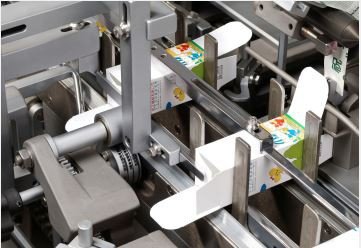
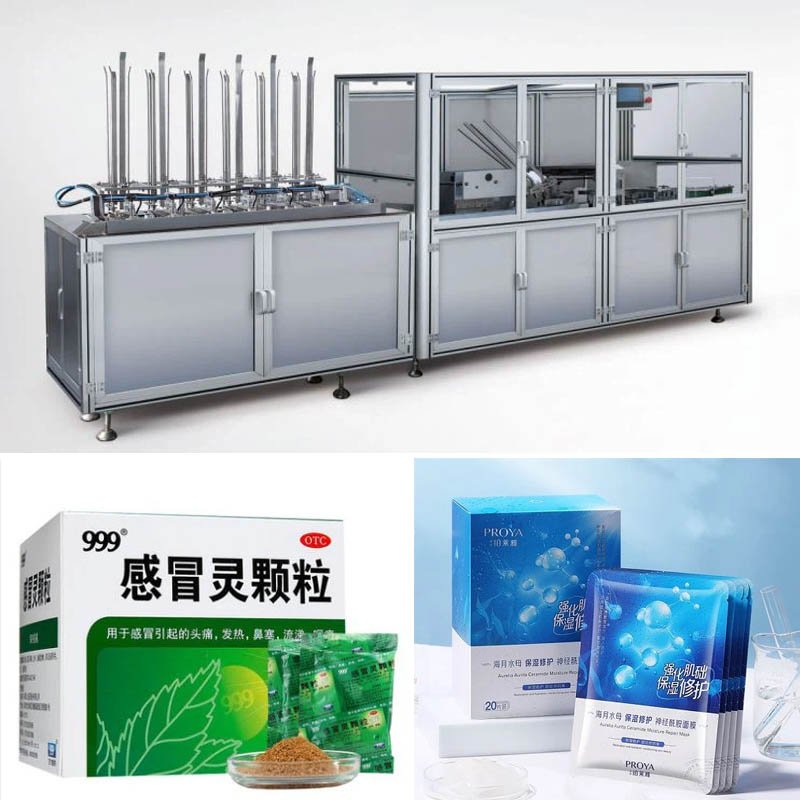
Representative horizontal food cartoning machine platform with other application samples
Representative horizontal cartoner. The pictured packs are pharmaceutical and cosmetic examples; your food feeder and format require a product-specific review.

What you are buying: a secondary-packaging configuration that erects folding cartons, presents and loads already packed products, closes each box and coordinates the agreed coding and rejection functions. Loose-food dosing, primary sealing and cold-room duty require a separately defined equipment scope.

A useful purchasing baseline

Three Documented Platforms. One Product-Specific Decision.

Food cartoning machine · selection summary

A food cartoning machine erects folding cartons, loads already packed food products in the specified quantity, closes each box and coordinates any agreed coding, inspection and rejection functions. For sachets, wrapped snacks and coffee capsules, the product feeder and pack arrangement determine which loading route is suitable. Start with accepted cartons per minute, count per box, carton dimensions and representative samples.

10–30 /minWZTS-60 reference speed
Coffee-capsule supply dependent
30–80 /minWZTS-130 reference speed
Automatic horizontal cartoning
80–200 /minZH-200 reference speed
High-speed platform
FAT by samplesAcceptance conditions belong
in your purchase specification

These speeds come from the supplied model documents. They describe reference configurations, rather than a guarantee for every food format. A ten-sachet box, a single wrapped bar and an upright capsule multipack place different demands on the feeder, carton opening and closing sequence.

The WZTS-60 document explicitly links its 10–30 cartons/minute range to the coffee-capsule filling machine. That matters when you compare suppliers: a faster carton mechanism cannot create products that your upstream machine has not delivered. Counted groups and reliable product presentation must be assessed together.

Use the complete HIJ cartoning-machine range to compare loading architectures. This page narrows the discussion to food multipacks, pack integrity, format turnover and purchasing scope. Your engineering team can then ask for a configuration with a measurable acceptance target.

Before ordering, request a sample-test record showing your actual packaging material, required count, accepted output and rejection criteria. Record which options were present during the test. A demonstration with a different carton or simpler product group does not establish performance for your production line.

Match your packed food

Food Applications: Choose the Feeder Before the Speed

The difficult part is often the product group arriving at the loading station. Select the loading route from your pack geometry and handling risk.

Counted flexible packs

Sealed sachets & stick packs

Specify the exact count, arrangement and seal overhang. Thin packs can overlap or double-feed, while filled sachets can bulge under compression. Your trial should show how the group is formed, retained and inserted without trapping a seal in the carton flap.

End-loading assessment

Wrapped bars & snack packs

Provide the packed length, thickness variation and acceptable cosmetic condition. Guides and pushers must transfer the finished primary pack without tearing film or crushing the contents. Include the weakest wrapper and the most difficult carton in the test set.

Top-loading assessment

Coffee capsules & pods

State capsules per carton, orientation and arrival pattern from the filler. The WZTS-60 reference document covers a coffee-capsule-linked application. Different pod sizes, nested groups or alternate presentations require feeder review and physical samples.

For food jars, trays, mixed assortments or heavier packs, send the complete packed assembly for assessment. A nominal carton envelope alone does not demonstrate that the loader can support the product. The finished pack must fit through the loading path and remain stable when the carton is closed.

Map your products into a format matrix: product dimensions, pack count, carton dimensions, closure, expected rate and annual volume. Group genuinely similar formats together and identify those needing separate parts. This makes the quotation easier to compare and gives your plant a realistic changeover plan.

For an upstream capsule project, the coffee-cartoning application guide adds context. Your purchase specification still needs the exact material and counting conditions for your line.

For counted flexible packs, use our sachet counting, output and sample-test guide to prepare the pack recipe and trial requirements before requesting a quotation.

Platform shortlist

Food Cartoning Machine Models & Reference Specifications

Flexible automatic platform

WZTS-130 · Horizontal

30–80

reference cartons/min · horizontal platform

Reference: 30–80 cartons/min. Evaluate this platform for sealed packs and products presented for end loading. Its source document lists automatic feeding, missing-material rejection, counting and carton closing.

Review the WZTS-130 platform

Coffee-capsule reference

WZTS-60 · Vertical

10–30

reference cartons/min · coffee-capsule supply dependent

Reference: 10–30 cartons/min. Assess upright loading and coffee-capsule-linked projects. The quoted speed depends on the upstream capsule filler. Define the count feeder and final presentation during review.

Compare the vertical loading route

Higher-volume assessment

ZH-200 · High speed

80–200

reference cartons/min · continuous high-speed platform

Reference: 80–200 cartons/min. Consider where product presentation and carton geometry support higher output. The supplied document includes bag-like items; this does not establish a universal food application capability.

Review the high-speed platform

Reference parameterWZTS-130WZTS-60ZH-200
Carton L × W × H (mm)70–200 × 30–150 × 13–70Minimum 40 × 30 × 50; maximum 180 × 180 × 30075–200 × 25–80 × 15–60
Reference board weight300–350 g/m²350 g/m², carton-size dependent250–300 g/m²
Reference supply380 V / 50 Hz380 V / 50 HzAC 380 V / 50 Hz
Quoted power entryMain motor: 1.5 kWMain motor: 1.5 kWPower entry: 4.1 kW
Machine L × W × H (mm)3100 × 1100 × 15503700 × 1650 × 19003500 × 1270 × 1670
Compressed air≥0.6 MPa; 120–160 L/min≥0.6 MPa; 120–160 L/min0.6–0.8 MPa; 20 m³/h

Source: supplied WZTS-130, WZTS-60 and ZH-200 documents. Main-motor ratings do not represent total installed power or measured energy consumption. Feeders, conveyors, glue units, guards and service access can change the complete installation envelope. Confirm all selected values in the signed proposal.

Loading, closure, inspection

Specify the Food Cartoning Sequence as One System

  1. Receive the primary pack. Establish conveyor height, product spacing and the handling condition after your wrapper or filler.
  2. Build the product group. Define count, stack arrangement and how incomplete groups are handled before loading.
  3. Open the carton. Check suction, crease response and squareness with the board your purchasing team will actually buy.
  4. Load and close. Prove insertion clearance, pack integrity and tuck or glue closure with the agreed materials.
  5. Inspect and discharge. Allocate responsibility for codes, count checks, closure checks and controlled rejection.
Carton opening mechanism used in food cartoning machine platform assessment
Carton opening mechanism on a HIJ cartoner; board behaviour is part of your sample-test scope.

Tuck closing avoids the adhesive unit but depends on carton design and consistent flap engagement. Hot-melt closing adds adhesive handling, warm-up and cleaning tasks. The WZTS-130 and WZTS-60 documents mention hot-melt applicability; the glue system remains a configuration item. Request the closure you need rather than assuming it is included.

A presence sensor does not automatically prove the correct pack count, readable printing or glue quality. If these are release-critical conditions, specify the detection method, reject action and challenge samples. Require a demonstration with intentionally missing packs, doubled packs, unreadable codes or poor closure as relevant.

For promotional assortments, list every component and its required position. Your supplier should explain whether the system loads a single prepared group or assembles multiple items. That distinction affects footprint, replenishment work, format parts and the practical output your operators can maintain.

See the mechanism

Watch a reference cartoner in operation

Company-channel video: “Cartoning machine” by TrustarTechnology, also linked from HIJ’s automatic cartoning page. This shows a reference application; your food product, pack count and feeder need their own sample test.

Watch on YouTube

Protect your operating time

Changeover, Cleaning & Pack Integrity

SKU turnover

Define the changeover boundary

Measure from the last accepted carton of format A to sustained accepted output of format B. Include carton magazine adjustment, guides, product-count settings, closing parts, inspection settings and the first-piece check. A recipe selection is only one step.

Plant hygiene

Test the actual cleaning method

Describe paper dust, incidental crumbs, adhesive residue and your cleaning procedure. Request access drawings and compatible cleaning methods. Neither stainless appearance nor an enclosed frame establishes washdown suitability for the complete machine.

Saleable output

Keep the primary seal intact

Inspect film, seams and product condition after loading and closing. Use the fullest sachet and weakest wrapped pack in the challenge set. Agree how deformation, trapped film, tears and visible product damage affect acceptance.

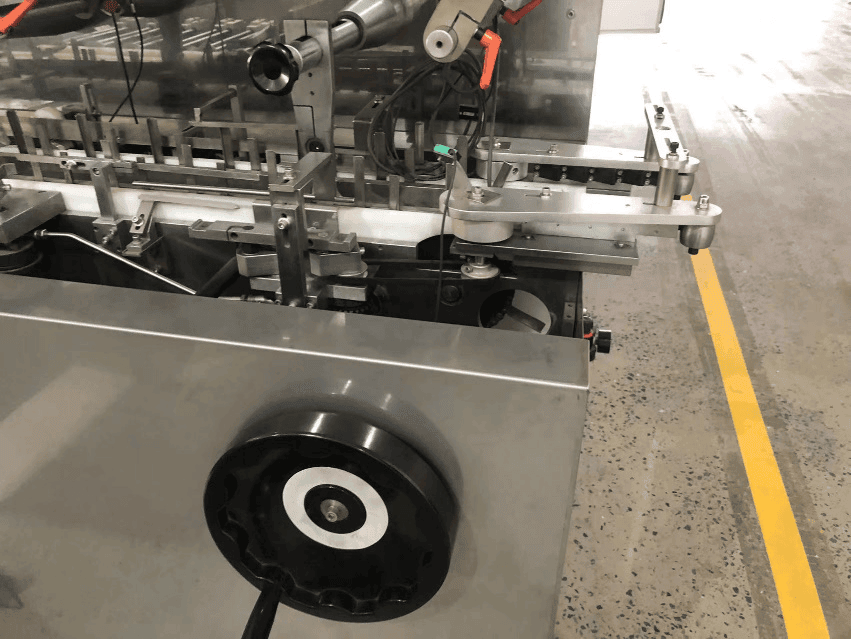
Food cartoning machine guide and format adjustment handwheel
Format-adjustment detail. Your changeover trial should include feeder setup, guides, closure settings and first-carton approval.

Ask for a format-parts list with identifiers, storage requirements and the adjustment points your operators will use. Your maintenance team should be able to restore a proven setup without relying on an undocumented sequence. Include operator-led changeover in FAT when frequent SKU changes drive your business case.

Allergen changeovers also need your plant's cleaning controls and verification procedures. Treat the cartoner as part of the production environment even when it handles sealed packs. Define how damaged primary packs are removed and how their contents are prevented from contaminating the loading path.

Review the cartoning changeover guide alongside your actual format matrix. Then request a measured changeover trial between representative formats. Record the tasks, people, tools and adjustments needed to return to the agreed output.

Fit the whole line

Wrapper-to-Cartoner Integration & Factory Layout

Your layout needs to work when the upstream line pauses and when the downstream case packer stops.

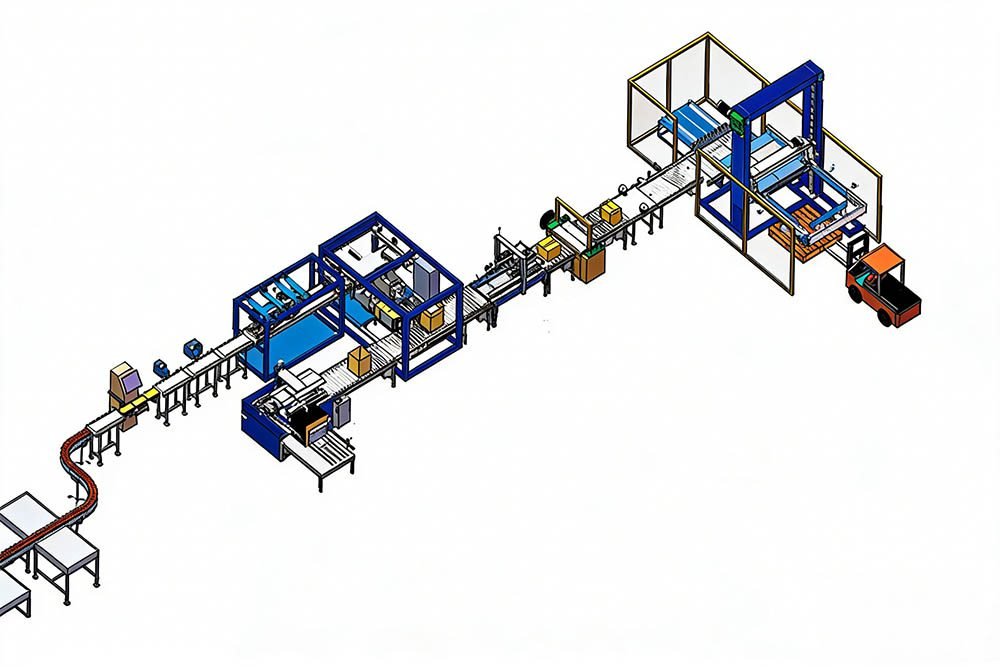
Illustrative secondary packaging line layout for food cartoning machine integration
Secondary-packaging layout illustration. This is an engineering rendering, not a photograph of a completed customer food line.

Define product arrival rate, number of lanes, orientation and conveyor handoff before selecting the cartoner. For multipacks, convert primary-pack rate into cartons per minute using the required pieces per box. Include the product-grouping station and any buffer in the layout rather than treating them as accessories with no space requirement.

Mechanical + controls

Upstream interface

Confirm pack-ready signals, permitted accumulation, starvation response and stop communication. Specify how the wrapper or filler resumes after a cartoner stop. Sealed pouches need suitable support through the transfer and grouping path.

Good-product path

Downstream interface

Agree conveyor height, carton spacing and blockage handling. Identify whether rejected cartons bypass the good-product conveyor. Your case-packing supplier needs the carton orientation and discharge pattern, not just the nominal output.

Usable factory space

Installation envelope

Reserve room for magazine refilling, guard opening, format-part changes and maintenance. Add access for rejected cartons, glue servicing and electrical panels. Confirm aisle widths and service zones against your plant drawing.

The source machine dimensions are starting points, not complete cell drawings. Feeders and transfer conveyors can extend the footprint. State available floor area, entrance restrictions, compressed-air connection, electrical supply and the direction of material flow in your URS (user requirement specification).

HIJ's turnkey packaging-line scope and case-packing equipment range provide the adjacent equipment routes. Ask for a responsibility matrix showing who supplies each conveyor, signal interface, guard and acceptance test when several vendors are involved.

Capacity and cost

Calculate Output Before You Compare Food Cartoning Machine Price

For counted multipacks, the upstream supply limit is primary packs per minute divided by packs per carton. Accepted cartons also depend on cartoner cycle rate, operating time and rejects. Use your own observations for planning; a short demonstration does not establish full-shift availability.

The estimator applies a single operating-time loss allowance and a reject allowance to the lower of supply capacity and cartoner rate. It is a planning calculation, not a rated-output claim. Do not enter the same downtime twice if your input rates already include those losses.

Total cost of ownership should include equipment, feeder engineering, format parts, utilities, freight, commissioning, training, spares, maintenance, adhesive and production losses. Count labour savings only where an operator role is actually removed or reassigned. Add contribution from extra capacity only when demand can use it.

Simple payback in months equals installed project cost divided by verified net monthly benefit. If that benefit is zero or negative, there is no positive simple payback. Compare suppliers on a matched scope and accepted-output target.

Your production estimate

Editable example inputs. Replace them with your plant data.

Estimated accepted cartons / day15,993Supply limit: 40.0 cartons/minute.

Request a matched-scope quotation: ask for separate entries for the base cartoner, product feeder, format parts, closure unit, inspection, conveyors, FAT and site services. Use your actual food packs and carton drawing to confirm the configuration and current price.

Purchase with measurable evidence

Food Cartoning FAT, Documents & Handover

Build the factory acceptance test (FAT) around your production risks. Agree materials, test duration, output measurement, permissible defects and the way deviations are closed before the machine is dispatched. A trial video is useful evidence only when its conditions and results are identified.

Use our cartoning machine FAT checklist to plan sample runs, fault challenges and accepted-output measurements. Send your proposed acceptance criteria with the enquiry so the test scope can be included in the equipment proposal.

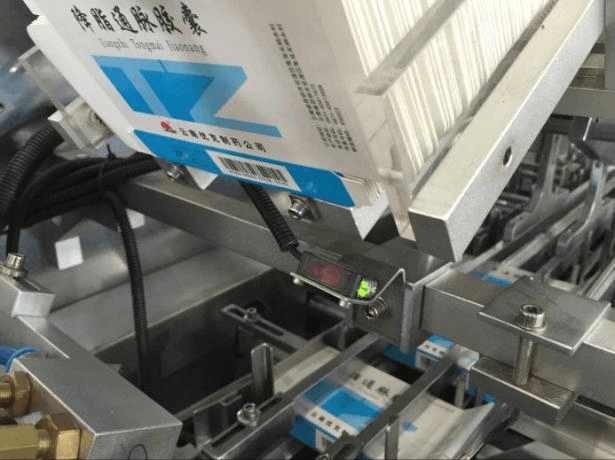
Carton and presence sensor at a cartoning machine station
Carton and sensor detail from an existing application. Carton presence alone does not establish the correct food-pack count or readable coding.
Normal production

Run representative materials

Provide production-grade primary packs and carton blanks from the planned converter. Include the smallest and largest approved formats, difficult pack groups and expected material variation. Agree sample quantities with the supplier before scheduling FAT.

Fault and recovery

Challenge abnormal conditions

Test missing or doubled packs, poorly opened cartons, blocked discharge and restart. Where coding or inspection is specified, introduce agreed defects and trace the reject result. Confirm how the machine prevents an incomplete carton reaching the good-product path.

Evidence for handover

Document the selected build

Request the approved specification, layout, utility requirements, electrical drawings, operating instructions, parts list, settings and FAT report. Name the required declaration and safety-document scope in the contract; avoid relying on a logo or generic certificate image.

Your site acceptance test (SAT) should confirm the installed interfaces, utilities, operator training and production materials in your plant. Define who approves each result and how unresolved items affect handover. If your QA team requires DQ/IQ/OQ/PQ support, agree responsibilities and document deliverables for your validation; sample-run success is not a completed customer validation.

For food production, send your hygiene, traceability and inspection requirements with the enquiry. The equipment proposal should address those specified requirements without promising that a machine alone satisfies your plant's audit obligations.

Delivery and lifetime support

Confirm Lead Time, Payment & Spares in the Same Quotation

Delivery planning starts when the format list, sample materials and purchase scope are agreed. Custom feeding, extra formats, inspection integration or a different electrical supply may change the schedule. Ask for milestones covering engineering approval, sample arrival, build, FAT and dispatch readiness.

Ask for the current build schedule after your format list and feeding concept are reviewed. The quotation should identify engineering approval, sample readiness, FAT and dispatch milestones, including the effect of any additional formats or inspection equipment.

Comparable contract

Commercial terms

Confirm the advance payment, balance milestone and FAT approval process in the current offer. If your purchasing team requires L/C at sight or another payment method, ask for availability and conditions before comparing commercial proposals.

Delivered project cost

Import and installation

State destination port, requested EXW/FOB/CIF basis and available voltage and frequency. Separate packing, freight, insurance, local import costs and installation expenses. Confirm the declared shipment dimensions and lifting requirements before arranging transport.

Maintainable production

Support and spare parts

Request recommended start-up spares, wear-part identifiers and replacement instructions. Distinguish part preparation time from courier transit and customs clearance. Agree fault-report information, remote assistance and any on-site service terms.

Confirm the warranty duration, start date, exclusions, service scope and recommended spares for the selected build. Your maintenance team should have the approved configuration, parts list and fault-reporting information at handover.

HIJ service and support is the starting point for discussing the support plan. Your signed quotation should identify the response arrangements and spare-parts commitments that your production schedule requires.

Purchasing questions

Food Cartoning Machine FAQ

How much does a food cartoning machine cost?

Price depends on the base platform, product feeder, pack count, carton formats, closure, coding, inspection, integration and service scope. Send your product photo, carton dimensions and output target for a current itemised quotation. Compare offers against the same feeding, format and acceptance requirements.

Can one machine pack both sachets and coffee capsules?

Possibly, but compatibility must be reviewed with the complete product group and carton. Sachets and capsules can need different feeding, grouping and loading arrangements. Ask for the format-parts list and sample trials for both applications; do not assume a carton-size range proves universal product compatibility.

How many operators will our food cartoning line need?

Staffing depends on automatic feeding, magazine refill intervals, reject handling, SKU changes, cleaning and the upstream and downstream equipment. Request an operating-task review with your layout and replenishment needs. The provided documents do not establish a universal one-operator guarantee.

What electrical supply, air and floor space are required?

The reference documents list 380 V / 50 Hz supply. WZTS-130 and WZTS-60 list air at at least 0.6 MPa and 120–160 L/min; ZH-200 lists 0.6–0.8 MPa and 20 m³/h. Complete power demand, feeder space, service access and any voltage adaptation need confirmation in the selected project layout.

Can we witness FAT using our own food packs and cartons?

Request a witnessed or remote FAT with production-grade samples and written acceptance criteria. Agree sample quantities, test formats, duration, count checks, reject challenges and changeover scope before the date is booked. Slot availability and any test costs belong in the project agreement.

How long is delivery, and can we pay by L/C?

Lead time depends on the approved format list, product feeding, inspection and available build schedule. Request current engineering, FAT and dispatch milestones. Payment terms, including any L/C request, should be confirmed in the current quotation.

Which documents are included, and how quickly can spares arrive?

Confirm the manual, drawings, parts list, utility details, FAT report and required safety documents in the quotation. Any customer validation support needs an agreed document scope. Ask for spare-part preparation and dispatch terms separately from freight and customs transit; no universal arrival time is established by the supplied documents.

How long does a carton-size or pack-count changeover take?

The time depends on magazine and guide adjustments, feeder parts, count settings, closure, inspection and first-piece approval. Define the start and finish of changeover and request a measured trial between your actual formats. No standard minute claim should be applied without that evidence.

From enquiry to a reviewable proposal

Start with your product photo and pack count

You can start a review before your complete URS is ready. Share the product, pieces per carton and required output, then add your drawing and layout as the project develops.

Use the optional brief builder below to organise what you know. Bring the summary into the enquiry popup, or copy it for email. If your carton drawing or upstream rate is not final, identify the open item so the review can focus on the right questions.

For soft packs, include seal overhang and thickness variation. For coffee capsules, include the capsule geometry, orientation and filling-line handoff. Identify the formats you need at launch and those reserved for later expansion; they should not be hidden inside a general statement of flexibility.

Prepare: product sample • carton blank • count per box • output target • voltage • destination

Your proposal review checklist

  • Product feeder, platform and format parts are named.
  • Good-output and changeover targets have test conditions.
  • Closure, coding and inspection are included or clearly excluded.
  • Layout, utilities, documents and acceptance responsibilities are listed.
  • Delivery, payment, installation, warranty and spares have written terms.

Prepare your food-cartoning brief

All fields here are optional. This prepares text for your enquiry; it does not send a message or upload a file.

If you do not know your carton rate, use the output calculator above and confirm the assumptions during sample testing.

Food cartoning enquiry
Product and required format: to be confirmed.

HIJ Machinery (Wenzhou)

European Quality, Smart Pricing. Pharmaceutical and packaging machinery, product-specific line configurations and support for your purchasing and validation process.

Company
HIJ Machinery (Wenzhou)
Location
Rui'an, Wenzhou, Zhejiang, China
Founded
2004
Founder / Chief Engineer
Forester Xiang
Website
https://hijpackingmachine.com/
Email
[email protected]
WhatsApp
+86 13868822120

Model specifications are reference values. Your approved samples, selected configuration and signed acceptance specification define the supplied system.

Let's Design Your Production Line

Share your requirements and I'll personally craft a solution that maximizes your efficiency and profitability.