CARTONING KNOWLEDGE · FOOD MULTIPACKS
Your carton count is only useful if every box contains the right number of undamaged sachets. Before you buy a sachet cartoning machine, qualify the feeding and grouping process, calculate the output your upstream packer can actually supply, and agree what a passing sample test looks like.
Have a product photo and a target pack count? Use them to start a suitability review.
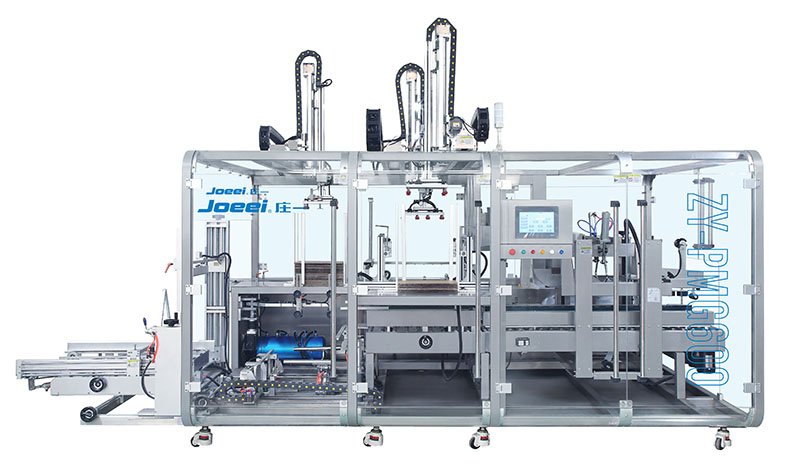
A sachet cartoning machine puts filled, sealed sachets or stick packs into cartons after they have been counted and arranged. It is a secondary packaging system: the upstream packer fills and seals the individual packs. Depending on the configuration, the cartoner opens a pre-glued carton or forms a carton, loads the group, closes the flaps and sends the carton to downstream inspection.
This guide is for your plant’s procurement, production engineering and quality teams evaluating food multipacks, including powdered drink sticks, sugar sachets and individually wrapped portions. The practical buying question is whether the complete line can deliver your required accepted cartons per hour across your actual SKUs.
Start here: define sachets per carton, accepted upstream output, the most difficult pack format and the count-verification method. Then compare equipment against that same specification.
1. Qualify the sachet feeder before the cartoner
Flexible packs can arrive curled, overlapping, standing on edge or in uneven bursts. A filled powder stick also behaves differently from an empty sample. When the cartoner receives an unstable group, the problem may appear as an insertion fault even though it began earlier in the feeder. Ask the supplier to show the entire route from the upstream discharge to the loaded carton.
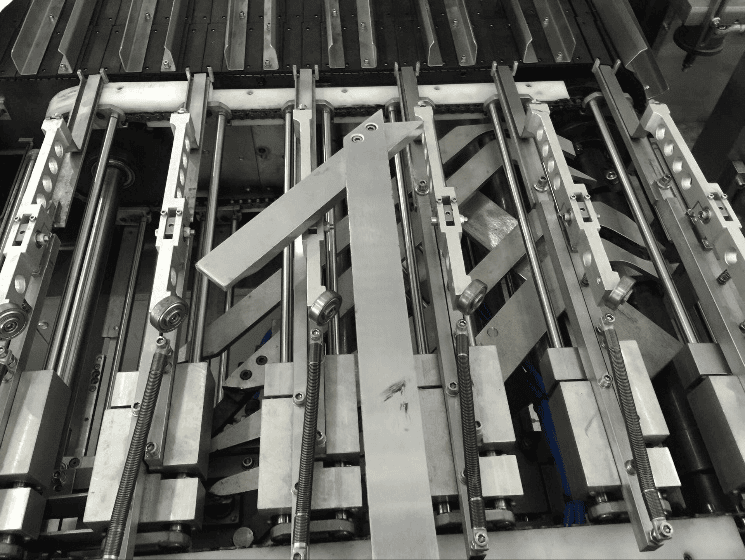
For a stick pack cartoning machine, define the discharge arrangement of every upstream lane, the direction of travel and the required orientation inside the carton. A grouping system may need to collate several lanes, stack packs in layers and present one complete group to the loading station. For flat sachets, test how the seals and corners behave when the group is transferred; a wider sachet is not simply a longer stick pack.
Do not specify counting as “a sensor is included.” Write down what is counted, where it is counted and what happens to an incomplete group. A counter before a transfer does not prove that every counted item reached the carton. If a pack is lost between the count point and loading, the controls need a defined way to identify and contain the affected group.
Make the grouping recipe part of your URS
Your user requirement specification (URS) should describe the saleable unit: for example, twelve sachets in two layers of six, all facing one direction. This is an illustrative format, not a capability claim for a particular model. State whether a leaflet, separator or inner tray is required, because each additional item changes the loading sequence and the verification task.
Also define recovery. What should happen after a feeder stop, a lane reject or a partly completed group? Ask for a demonstration that the system can restart without mixing counts or releasing an uncertain carton. During a sample trial, watch the first cartons after restart as closely as the steady running period.
2. Calculate cartons per minute from sachets per carton
Start with the accepted sachet supply while the upstream machine is running. If your packer supplies 360 accepted sachets per minute and the retail carton contains twelve sachets, the supply ceiling is 30 cartons per minute. A cartoner rated for 50 cartons per minute cannot create the missing sachets needed to run at its maximum.
The loading system can impose another limit. Its demonstrated rate with your filled packs, grouping recipe and carton may be lower than a machine’s headline mechanical speed. Use the lower of the upstream supply ceiling and the validated loaded-carton rate. Then account for the remaining stops and rejects when preparing a shift-output estimate.
Sachet cartoning output calculator
Planning example only. Replace the inputs with measurements or agreed trial values for your line.
Formula: min(accepted sachets/min ÷ sachets/carton, validated loaded cartons/min) × planning factor. The factor is a simplified allowance for remaining line losses. If your inputs already measure net output over the same elapsed period, use 100% to avoid counting those losses twice. This is not an OEE calculation or a performance guarantee.
With the example above and an assumed 85% remaining planning factor, the estimate is 25.5 cartons per minute, or 1,530 per hour. Changing the pack count to twenty-four reduces the supply ceiling to 15 cartons per minute; with the same factor, the estimate becomes 765 cartons per hour. Both examples are calculations, not HIJ test results.
Agree the measurement boundary
When comparing quotations, ask whether a quoted rate means machine cycles, cartons discharged or accepted cartons after inspection. Specify the trial duration, pack format, carton count and permitted losses. Record the reject quantity and stop reasons alongside the accepted output. A short video of rapid carton movement does not establish a sustained production rate.
Buffering can absorb short timing differences, but it cannot correct a permanent shortage of sachets. Discuss what happens when the upstream machine stops and when downstream case packing is blocked. Define the start/stop signals and the treatment of partly assembled groups as part of your sachet cartoning line integration scope.
3. Trial the pack, carton and loading direction together
Check the dimensions of the filled pack, including seal edges and normal thickness variation. Then check the complete group in its intended arrangement. Twelve loose sachets pushed into a box by hand do not necessarily represent the group delivered by an automatic feeder. Use the actual loading orientation, layer pattern and any divider when reviewing clearance.
The carton drawing should identify usable internal dimensions, board specification, crease layout, opening direction and closure style. Do not select by board weight alone: stiffness, crease behavior and carton production variation also matter. Trial production cartons from your intended converter, rather than a hand-made box chosen only because it is easier to open.
Choose top loading or side loading around the transfer
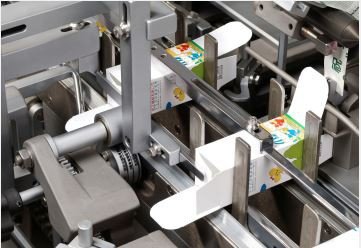
Top loading may suit an arrangement placed into an open carton from above. Side loading requires the group to remain controlled while it passes through an end opening. Neither method is automatically best for every flexible multipack. Ask the supplier to explain how the packs are supported during the final transfer and how corners and seals are kept out of the closing flaps.
Specify whether your retail carton needs tuck-in closure, adhesive closure or an additional tamper-evidence feature. Adhesive equipment adds its own utilities, maintenance and consumables. For a deeper closure discussion, see the tuck-in versus hot-melt carton sealing guide. Keep the closure requirement consistent across every offer you compare.
Include cleaning access in the layout review. Even when food is already sealed inside a primary pack, leaked powder or damaged sachets can reach the guides and collection area. Agree the intended cleaning method and access points with your plant team. Do not assume that a stainless-steel component means the complete machine is suitable for washdown.
4. Use a sample test to prove count control and recovery
Your factory acceptance test (FAT) should answer whether the offered configuration can handle your product, rather than simply confirm that the machine moves. Agree the protocol before the test: included SKUs, sample condition, running speed, measurement period, allowable rejects and the evidence to retain. The supplier should identify any format that requires different tooling or a revised feeder.
Provide filled and sealed production samples plus production cartons. Include the variants most likely to expose a weakness: the largest and smallest groups, the thickest pack, the least stable orientation and the tightest carton fit. Ask the supplier how many samples are needed for the agreed run. Sending a few ideal samples is useful for an initial review, but it is not a substitute for a representative trial.
What to observe during the trial
- Feed and grouping: observe lane collection, pack orientation, overlap handling and incomplete-group containment.
- Loading and closure: check for trapped seals, damaged sachets, bulging cartons and inconsistent flap engagement.
- Count challenge: introduce agreed under-count and over-count conditions and verify the actual system response.
- Reject confirmation: show that the affected carton leaves the saleable stream and record how a failed reject is handled.
- Stop and restart: check feeder starvation, upstream pauses and downstream blockage, including the first groups after recovery.
- Accepted output: record elapsed time, saleable cartons, rejected cartons and stop reasons for the same interval.
The test limits belong in your purchase specification; they should not be improvised after you see a good run. A practical record connects each requirement to an observation, the resulting pass or fail and any corrective work. Keep the configuration, sample batch and control recipe identifiable so your site team can repeat the relevant checks after installation.
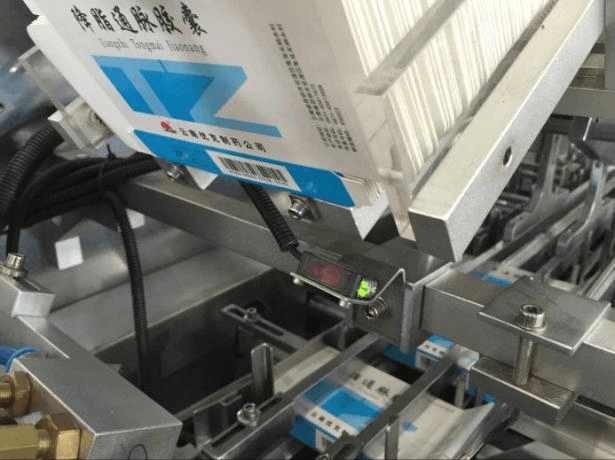
Separate carton detection from sachet-count verification
A sensor that detects a carton answers a different question from a system that verifies the contents. Barcode reading, leaflet presence, group counting and weight inspection also serve different purposes. Request a control description showing how each required defect is detected and what removes the affected carton from the accepted stream.
A checkweigher may support count verification if correct and incorrect counts can be distinguished despite normal pack and carton weight variation. The useful question is whether an under-count or over-count challenge can be detected reliably with your production samples. Agree limits and confirm physical rejection. Avoid accepting “checkweigher included” as proof of a count guarantee.
Review the difficult SKU first
Send your filled-pack photos, carton drawing and required count. Ask HIJ to identify the feeding and loading questions that need a sample trial before a configuration is quoted.
5. Measure a complete SKU changeover
Changing a count recipe on the HMI does not necessarily complete a format change. Your feeder may need a new group pocket, a different guide position or a revised transfer arrangement. The carton magazine, opening station, loading guides and closure settings may also change. Ask for a format-by-format list of adjustments and physical change parts.
Time the change from the last accepted carton of the previous SKU to the first accepted carton of the new SKU at the agreed running condition. Include line clearance, feeder setup, mechanical adjustments, recipe selection and quality checks. Define the starting and ending conditions so two suppliers are measuring the same activity.
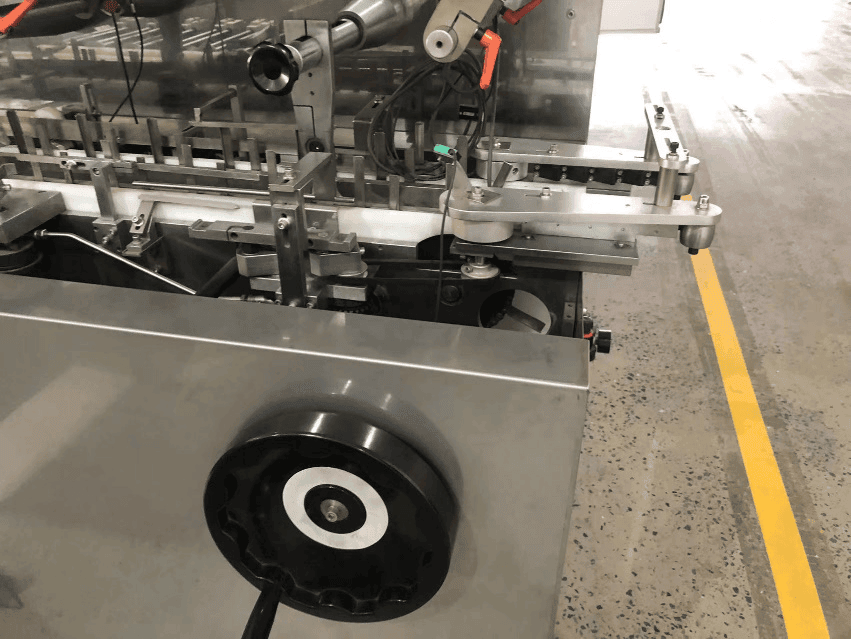
For frequent small batches, repeatable setup may be more valuable than a high mechanical maximum. Request marked positions or recorded settings where appropriate, a change-parts list and a practical operator procedure. Trial the change with the people and tools expected to perform it. A handwheel photograph does not establish a changeover time.
Use the cartoning machine changeover guide to develop the broader setup checklist. For this application, add the sachet count, orientation and first-carton contents check to the restart sequence.
6. Compare quotations by line scope and accepted output
For sachet counting and cartoning, the feeder and grouping equipment can be as important as the base cartoner. Ask suppliers to separate the cartoner, automatic feed system, inspection, change parts and integration work in the offer. A lower machine price is hard to assess when one quotation includes a production feeder and another assumes manual loading.
State which upstream machine will supply the sachets, its lane arrangement and discharge height. Identify the controls interface, conveyor direction, available footprint, utilities and downstream destination. Request a layout showing operator access, cleaning access, buffer positions and the reject collection point. Clarify who is responsible for each connection between machines.
Compare the committed result for each SKU, including pack count, agreed test conditions and accepted output. Confirm the sample-review stage, approval process, installation scope, training, spare parts and service arrangements. Ask how optional equipment changes the lead time. A reference quotation is not a current offer for your product or a confirmed delivery schedule.
Start your equipment comparison on HIJ’s automatic cartoning machine page, then request a product-specific feeding and loading review. If your project includes upstream filling and downstream case packing, discuss the hand-off points through turnkey packaging line planning. The integration scope should be written into the offer.
Buyer questions about sachet cartoning machines
Can one sachet cartoning machine handle both flat sachets and stick packs?
Possibly, but confirm the feeder, grouping pattern, guides and carton geometry for each format. Similar outside dimensions do not prove that two packs behave alike. Include both formats in the sample trial and obtain a written list of change parts and exclusions.
How many sachets per carton can the machine pack?
The supported count depends on the grouping system, available loading space and actual pack behavior. Specify the minimum and maximum counts, layer arrangement and every carton format. Ask the supplier to demonstrate each required recipe rather than assume that an HMI count setting proves mechanical compatibility.
How do I calculate the cartons per minute my line needs?
Divide the accepted sachet supply per minute by the number of sachets per carton. Compare that result with the validated loaded-carton rate. For planning, allow separately for the remaining line losses using consistent measurement boundaries. A faster cartoner cannot compensate for insufficient accepted sachet supply.
Is a checkweigher enough to prove the correct sachet count?
It can help when the weight difference between correct and incorrect counts can be reliably separated from normal sachet and carton variation. It is not a universal count guarantee. Trial under-count and over-count challenges, agree the weighing limits and confirm that the rejected carton is actually removed.
What affects the price of a sachet cartoning line?
Feeder automation, number of upstream lanes, counting and grouping complexity, SKU tooling, loading method, carton closure, inspection and line integration affect the scope. Request separate prices for the base cartoner, feeder, change parts and options, then compare offers against the same accepted-output and test requirements.
What should I send HIJ to request a suitable solution?
Send clear photos or a short video of the filled sachets, sachet dimensions and weight, sachets per carton, the carton drawing, required cartons per hour and the upstream machine output. If your layout is not ready, start with those items. Production samples and cartons are needed to confirm feeding and loading suitability.
PREPARE A CLEARER QUOTATION REQUEST
Show us the pack you need to put in the carton
You can start with a product photo or short video, the filled-pack dimensions, sachets per carton and your target cartons per hour. Add the carton drawing and upstream output if available. Those details help identify the suitable feeding concept and the samples needed to confirm it.
If your layout is still being developed, say so in your enquiry. Ask for a review of your product and pack count before committing to a complete line specification.
Explore HIJ automatic cartoning equipment or review our service and support.