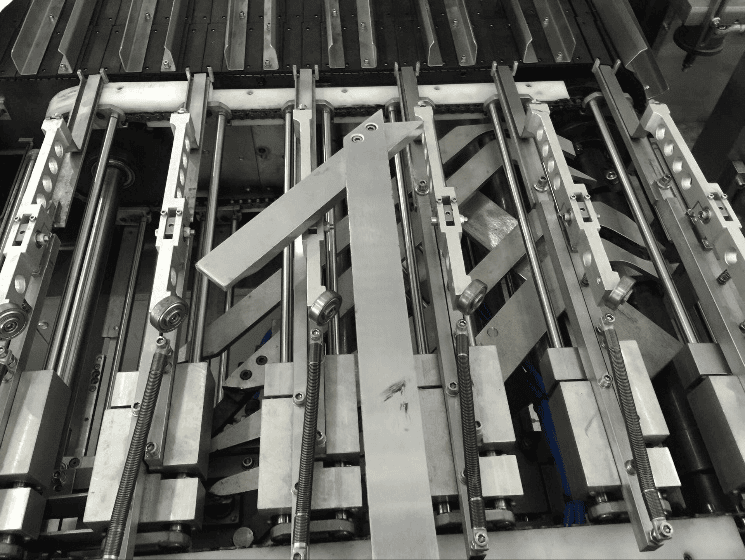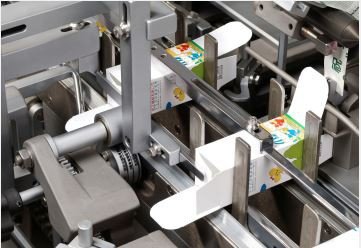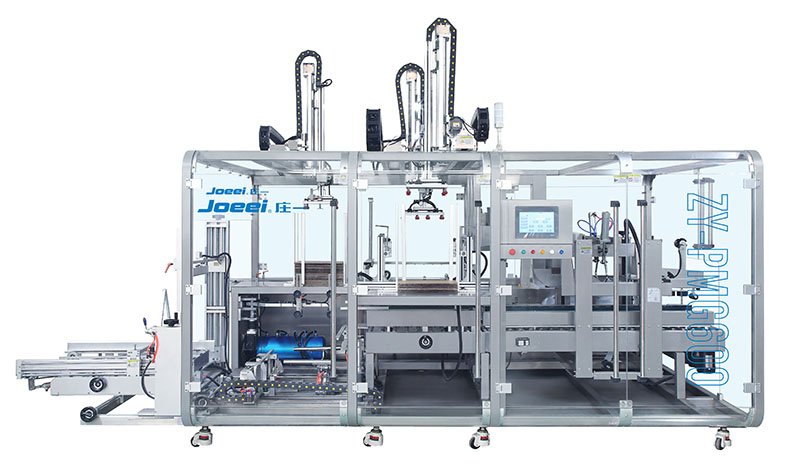
Choose cartoning machines for pods in individual bags by testing the sealed pack, counted group and carton together.
For individually wrapped coffee pods and capsules. Send pack photos, dimensions, quantity per carton and your required output.
A suitable coffee cartoning machine must receive sealed individual bags, build the required counted group, load it without trapping or damaging film, close the carton and contain uncertain packs after a fault. Top loading and side loading both require a product-specific assessment.
Specify the individual bag around the coffee pod
Loose capsules, wrapped paper pods and capsules inside individual flowpacks have different handling requirements. The loose item’s diameter does not describe the wrapped pack’s footprint. Seal edges, extra film, trapped air and the position of the pod inside the bag can change the way the pack collects and enters a carton.
Measure production samples as they arrive from the wrapper. Record overall bag length and width, filled thickness, seal overhang and normal variation. Include the thickest and least stable samples, rather than only a flattened pack prepared for a photograph. Describe whether each bag contains one pod or several items.
Define orientation, count and product support. A trial of loose capsules does not establish wrapped-pack performance.
Define the entire sealed bag, including seams and film tails, then trial the complete group.
Jars, large coffee pouches and sticks need their own format specification and loading assessment.
Separate primary packaging from cartoning
A coffee pod packaging machine may refer to equipment that makes or seals the primary pack, or to equipment that packs finished units into cartons. Make the purchase boundary explicit. This guide concerns secondary cartoning of finished packs; primary filling, individual wrapping and their quality checks must be separately identified in the project.
If the carton provides retail presentation around an existing sealed bag, specify the original film and seal requirements with the primary-pack supplier. The carton does not replace a failed primary seal. Agree how damaged or leaking individual packs are identified and removed before they reach the good-product path.
For a broader product review, the food cartoning machine page connects the application to HIJ’s cartoning platforms. Send the exact bagged-pod format for assessment rather than assuming that every coffee application uses the same feeder.
Compare top loading and side loading with the same samples
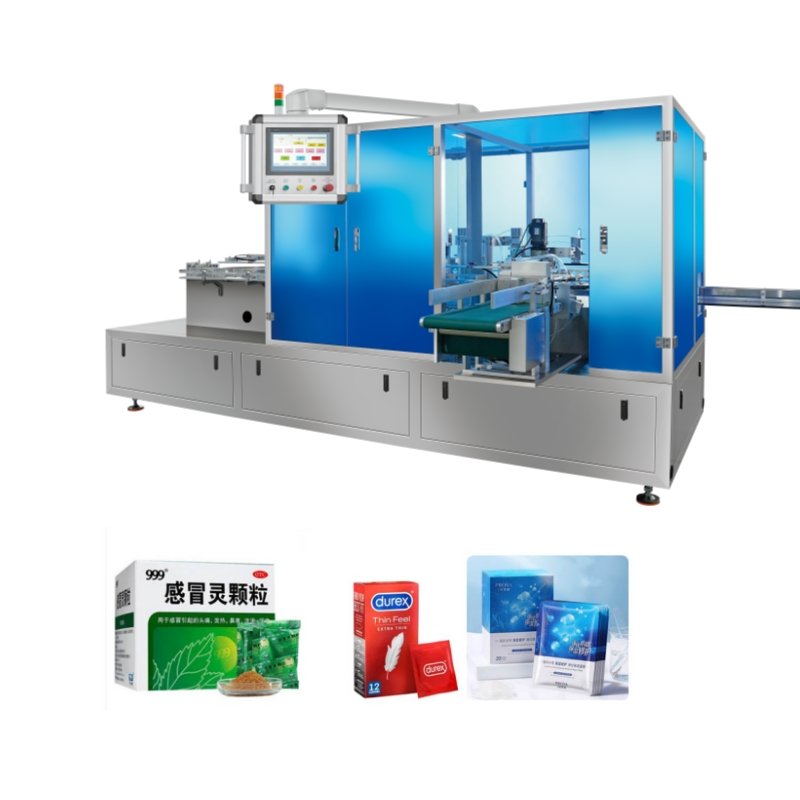
Loading direction should follow the required group and its stability through the transfer. Top loading places a group into an open carton from above. Side loading transfers the group through an end opening. Neither direction is automatically preferable for every bagged coffee pod.
| Question | Top-loading assessment | Side-loading assessment |
|---|---|---|
| How is the group retained? | Review pickup, support and release into the carton; preserve layers and orientation. | Review the guides and transfer support that retain the group through the carton opening. |
| Where can film catch? | Check the carton rim, tooling and closing-flap path after release. | Check the entrance, guides and pusher contact along the insertion path. |
| Which dimension governs fit? | Use the complete group in its final orientation and actual carton opening. | Use the group in its insertion orientation, including bag bulge and seal edges. |
| How is performance established? | Trial actual packs, carton board, count and release sequence. | Trial actual packs, carton board, count and controlled insertion sequence. |
Hand-packing a group into a box helps an initial fit discussion, but it does not reproduce automated handling. Check the carton drawing’s internal usable dimensions, opening direction, board stiffness, creases and closure style. Film tails that fit in a hand-loaded carton may still enter a flap or guide during the production sequence.
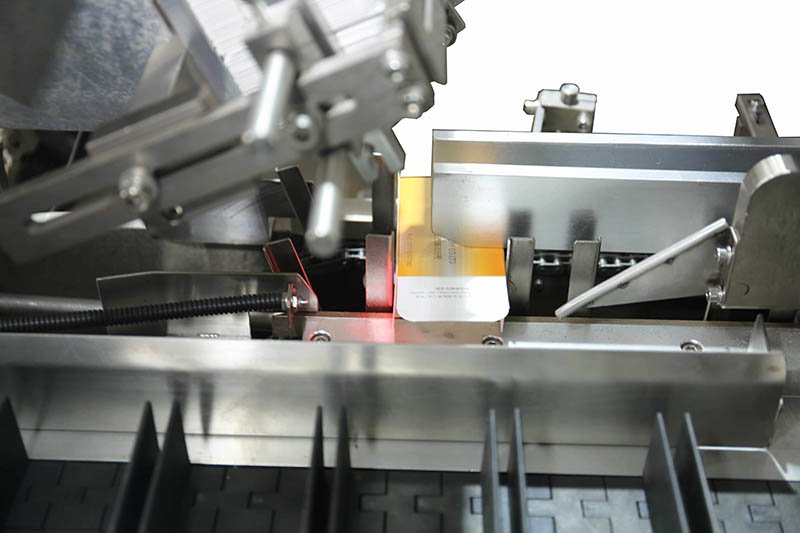
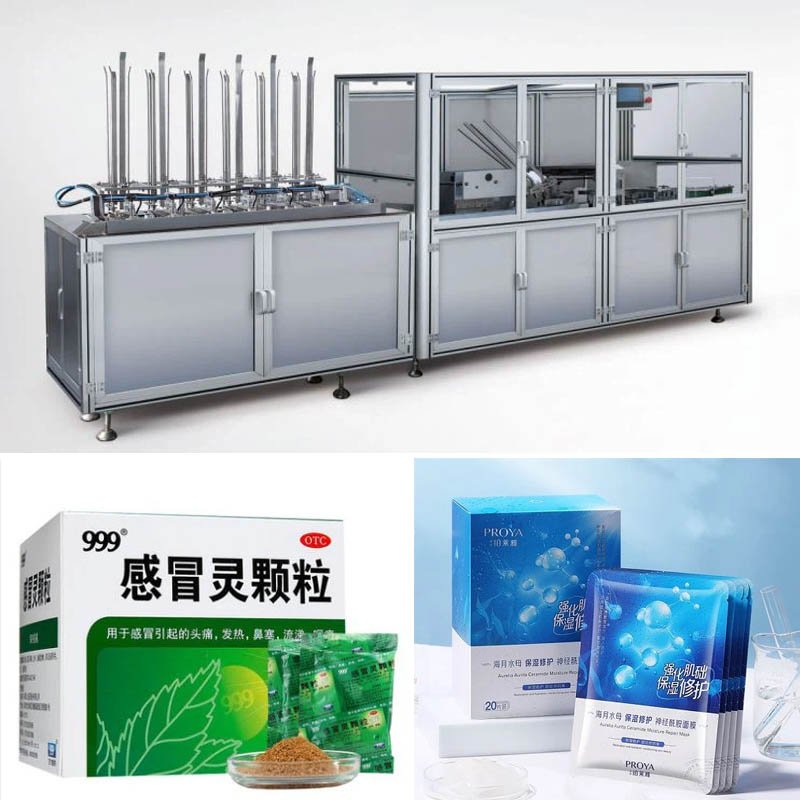
Review the vertical cartoning platform and horizontal cartoning platform as possible starting points. Use the loading-direction comparison alongside your required arrangement. The proposal should explain the actual transfer mechanism and the samples used to assess it.
Use the WZTS-60 reference as a starting point
The WZTS-60 model reference describes a vertical cartoning reference linked to a coffee capsule filling machine. It lists 10–30 cartons per minute, dependent on that upstream machine. This reference does not establish a tested speed for individually bagged pods, a universal film-handling capability or the correct model for your project.
Ask HIJ to confirm the feeder, tooling, inspection and demonstrated output for your specific bag and carton. Include those configuration items in the written proposal. A cartoner’s reference carton envelope or mechanical rate alone does not qualify a new wrapped format.
Control the bag count from collection to carton release
Write the carton recipe as a measurable specification: bags per carton, pods per bag, layer pattern, orientation and any insert. For example, twelve individually wrapped pods in two layers of six describe a handling requirement; they are not a capability claim for a particular HIJ model.
Cartoner feeding starts with the wrapper’s discharge pattern. Specify lanes, spacing, height, orientation and whether bags arrive regularly or in bursts. Overlapping bags and a pod that moves inside its film can influence grouping. Ask the supplier how the packs remain controlled after counting and before loading.
A count before transfer needs a defined follow-through
A sensor that counted twelve bags earlier in the route does not prove that twelve arrived inside the closed carton. Identify the count point, the tracked group and the action taken when a transfer is interrupted. Define the treatment of a missing bag, a partly completed group and packs retained during a stop.
Weight inspection can support the release strategy, but its ability to detect a missing item depends on filled-pack and carton-weight variation. Challenge the selected method with representative product. Do not infer exact-count detection from the presence of a checkweigher or from an equipment description saying that inspection is included.
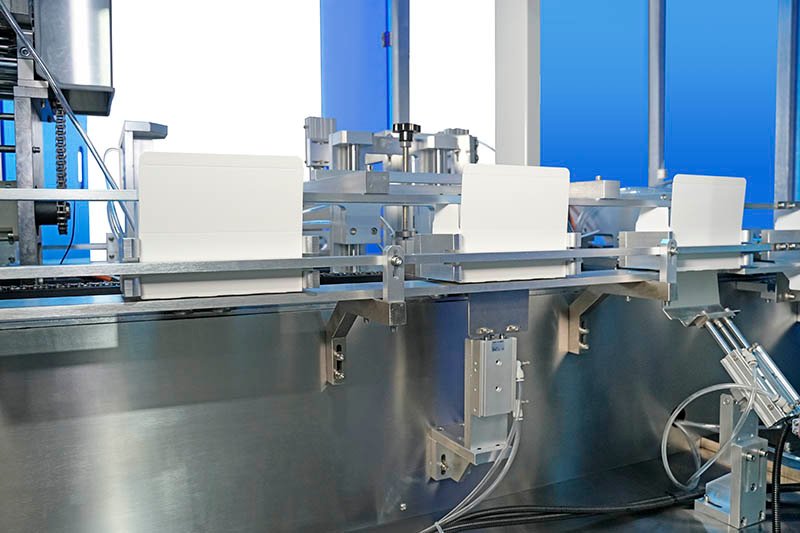
For grouping details that also apply to flexible packs, use the sachet counting and loading guide. For a feeder comparison, see automatic cartoner infeed systems. Specify the verified path for your actual wrapped pods in the acceptance protocol.
Make the difficult format the test format
Send the largest group, the bag with the longest seal tail and the most unstable filled pack. Include your production carton and the required layer arrangement.
Match the coffee packaging line to the carton recipe
Start with accepted individual bags per minute at the agreed handover. Divide that figure by bags per carton to find the supply ceiling. If the wrapper provides 240 accepted bags per minute and each carton contains twelve bags, supply supports twenty cartons per minute before subsequent handling losses.
Changing to twenty-four bags per carton reduces that same supply ceiling to ten cartons per minute. These figures are illustrative arithmetic, not HIJ trial results. A larger cartoner cannot make up the missing primary packs. Grouping and loading may impose additional limits, and final rejects and line stops reduce accepted output further.
Compare measured inputs on the same time basis. If the upstream figure already represents accepted packs over an entire shift, do not deduct its rejects and availability again. Define whether a quoted cartoner rate refers to cycles, discharged cartons or accepted cartons after inspection.
Test interruption and restart as connected operations
Define the upstream response when collection fills or the cartoner stops. Define what happens to a partial group when the wrapper pauses. On restart, show how the equipment reconciles retained packs and returns to the intended carton count without releasing an uncertain group.
A buffer may absorb a limited interruption when product handling allows it; it cannot correct a permanent supply-to-discharge imbalance. Confirm usable storage, access, product condition and recovery in the agreed layout. For related flexible-pack layout and transfer questions, see the bag-in-box cartoning guide. Specify rate boundaries and supplier responsibilities for your coffee line.
Forester’s My Insight: Check the buffer as well as the cartoner rate
A faster cartoner does not resolve an upstream supply limit or provide unlimited storage during a stop. Define the accepted incoming bag rate, bags per carton and usable accumulation capacity on the same time basis.
For an illustrative line supplying 240 accepted bags/minute with 12 bags per carton, the incoming supply ceiling is 20 cartons/minute before downstream losses. If the usable buffer has room for 36 additional bags when the cartoner stops, it provides only 9 seconds of accumulation at that incoming rate.
Supply ceiling: 240 ÷ 12 = 20 cartons/min
Available stop buffer: 36 ÷ 240 × 60 = 9 seconds
A 20-second stop would bring 80 additional bags into the handover if the wrapper kept running. The line therefore needs an agreed stop or rate-control response, or sufficient verified storage, rather than an assumption that the 36-bag buffer can absorb the interruption. Challenge the interlock and restart sequence with representative wrapped packs, including retained partial groups.
Worked engineering example, not HIJ operating-test data or a performance guarantee. Buffer capacity here means available space at the start of the stop; pack condition, usable storage and recovery must be verified for the actual layout.
Use a bagged-pod sample trial before accepting the configuration
Send representative filled, sealed production bags and cartons. Include ordinary variation, not only samples selected because they are easier to handle. Ask the supplier to confirm sample quantities for the agreed trial duration and format coverage. Initial photos support a discussion but cannot establish sustained automatic handling.
- Collect and count: observe overlapping bags, uncertain groups and the response to upstream rejects.
- Transfer and load: inspect bag film, seal edges and pod condition after loading at the proposed arrangement.
- Close the carton: check that film is clear of the tuck or adhesive path and the intended closure remains intact.
- Challenge inspection: agree controlled missing-item, unreadable-code and closure challenges relevant to the project.
- Stop and recover: observe the first cartons after interruption as well as sustained running.
- Change format: measure from the last accepted carton of one format to sustained accepted cartons of the next.
Record accepted counts, rejects, stop reasons, carton recipe and parts used. If primary wrapping is simulated rather than physically connected, document that boundary and the remaining site integration checks. Review the cartoning FAT checklist with your production and quality teams.
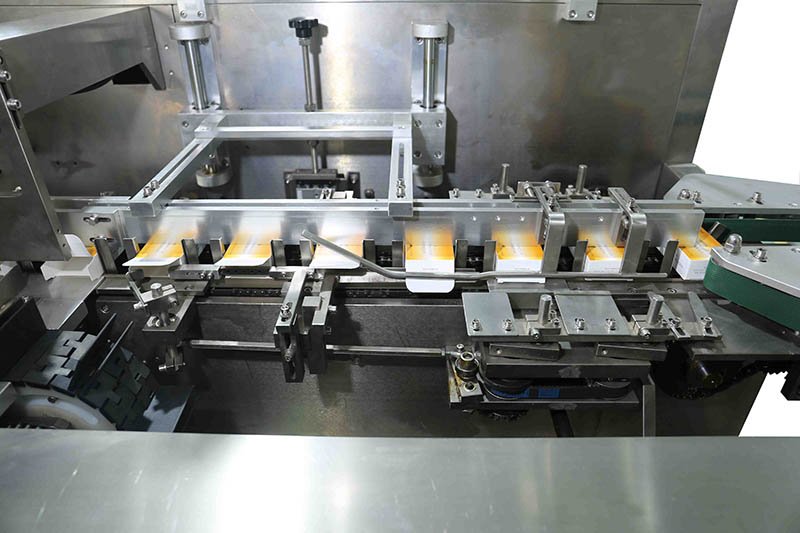
Choose tuck-in or adhesive closure from the approved carton design and product presentation. Adhesive equipment, utilities and maintenance should be listed in scope where selected. The carton closure comparison helps prepare that discussion; the bag-specific trial must confirm that film stays out of the closing path.
Compare quotations for the complete wrapped-pod application
List included equipment and interfaces: incoming conveyor, collection, counting, group retention, loading, cartoner, closure, inspection and good/reject discharge. Identify the primary wrapper as included, separately supplied or existing customer equipment. Case packing is a further scope item if shipping cases are required.
Compare formats, tooling, sample trials, installation, training, spare parts and service responsibilities alongside price. Ask which parts must change between counts or bag sizes. Confirm who approves the handover drawing and who resolves integration faults when more than one supplier is involved.
For jars, tins or large coffee pouches in the same facility, provide separate samples and format entries. A successful bagged-pod trial does not establish those other applications. Require the configuration and approved format matrix to appear in the current project offer.
Useful coffee packaging solutions begin with specific requirements. Send the existing equipment details, accepted upstream rate, carton count, target output and site layout. HIJ can then assess application suitability and the proposal scope against the actual product presentation.
Prepare a bagged-pod cartoning enquiry
These optional fields build a project summary for the existing contact form. Your contact details are entered in the enquiry popup when you choose to send it.
Sample-review brief
Review the summary before sending. Copying or opening the form does not submit an enquiry.
Cartoning machines for pods in individual bags: buyer questions
Is a machine for loose capsules suitable for individually bagged pods?
Suitability must be reassessed with the entire wrapped pack. Film, seals, filled thickness and group stability change the handling task. Use representative sealed samples.
Does the coffee cartoner make the individual bag?
This guide covers cartoning finished primary packs. Confirm whether the project also includes a primary wrapper or filler, its supplier and the connected acceptance scope.
Should bagged pods use top loading or side loading?
Compare the complete group, carton opening and film path for both methods. The supplier should demonstrate the selected support and transfer method with your packs.
Can checkweighing alone prove the exact count?
That depends on product and carton variation and the validated detection limits. Specify the count-tracking route and challenge the release method with representative missing items.
How do I estimate the required cartoner rate?
Divide accepted incoming bags per minute by bags per carton, then assess grouping, loading and remaining line losses on a consistent time basis. Confirm accepted output in a trial.
What should I send for a quotation?
Send filled bag and carton dimensions, photos, bags per carton, arrangement, wrapper details, accepted supply, output target, SKU range, samples and site requirements.
Technical context
This guide discusses individually wrapped coffee products. Other products described as “pods” require a separate product and application assessment.
- IMA — cartoning for coffee: secondary packaging across different primary pack styles.
- SOMIC — coffee, cocoa and tea packaging: product variety and primary-format considerations.
The WZTS-60 model reference is the basis for the 10–30 cartons/min discussion. Confirm the current machine configuration and application-specific output in your quotation. Other suppliers’ systems, outputs and options are not HIJ specifications or proof of application suitability.