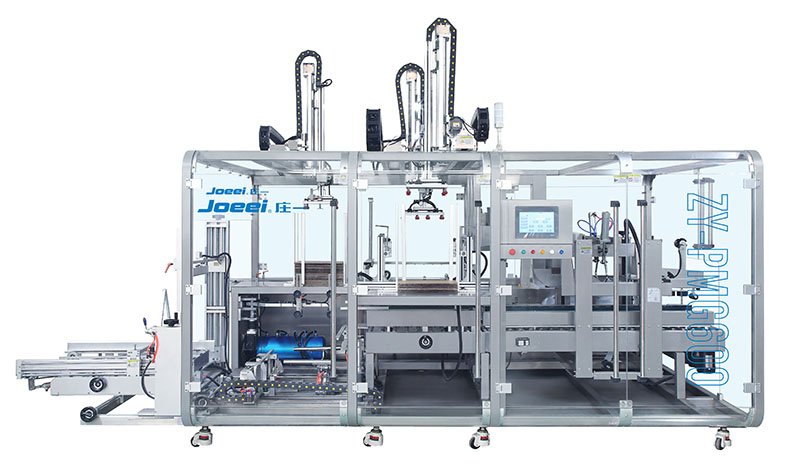
CARTONING • FORMAT CHANGE • BUYER GUIDE
Cartoning Machine Changeover: Steps, Time & Checklist
By Forester Xiang · Updated October 13, 2026
Plan the complete switch between SKUs—from the last accepted carton of one format to a verified, stable run of the next.
Cartoning machine changeover means changing the parts, positions, materials and settings needed to run a different product or carton. A useful time measurement includes clearance, mechanical adjustments, recipe checks and restart verification. Tool-less parts and stored recipes can reduce work, but there is no universal 15-minute changeover: the format pair, machine configuration, staffing and acceptance criteria determine the result.
For a line running several SKUs, the practical question is not just “How fast is the cartoner?” It is “How much usable production time remains after each format switch?” This guide shows what to inspect, how to compare supplier demonstrations and how to estimate the time a proposed improvement could recover.
1. Define what “changeover time” includes
Agree on the start and finish before comparing two machines. A mechanical swap timed from the first loosened clamp to the last fitted guide is different from the total interruption to production. Either measurement can be useful, provided it is named clearly.
For production planning, record the last accepted carton of SKU A, the first accepted carton of SKU B, and the point at which SKU B completes an agreed stable-run check. That third timestamp prevents a quick first carton from hiding repeated stops, rejects or further adjustments.
Example: start after the last accepted carton of A; finish after B meets the agreed quality checks and output condition for a defined observation period. State whether cleaning, line clearance, material delivery, coding, downstream equipment and quality release are included. The observation period is a project agreement, not an industry-wide fixed number.
Also distinguish elapsed minutes from labour minutes. Two operators working together for 20 minutes create 20 minutes of elapsed time and 40 operator-minutes. Adding the duration of overlapping tasks exaggerates downtime; ignoring the second operator understates labour.
2. Map every affected part and setting
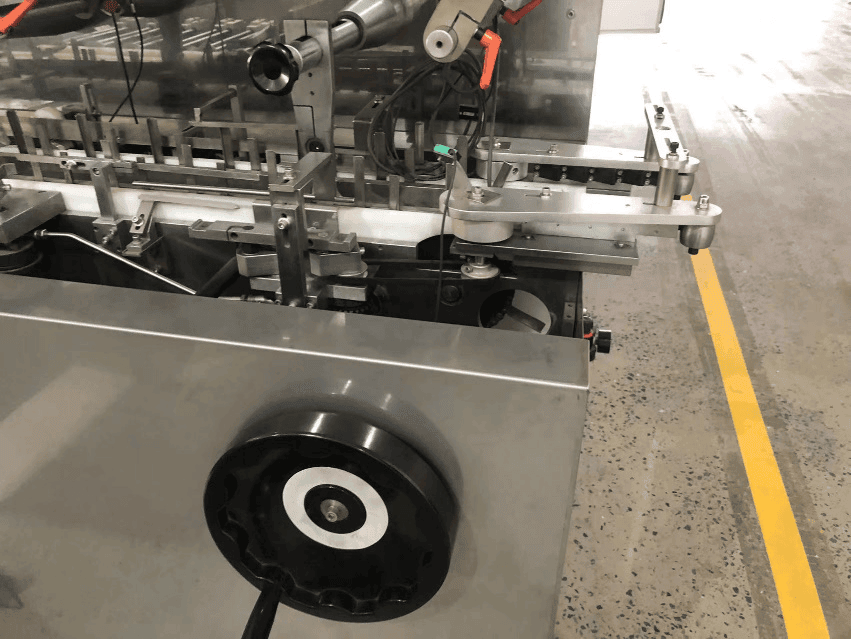
Two cartons with similar dimensions may require different work if the product count, leaflet, closure or printing changes. Build a format matrix from actual product samples and carton drawings. Record A-to-B and B-to-A separately when the return change needs different adjustments.
| Area | What may change | What to verify |
|---|---|---|
| Carton magazine and opening | Blank guides, magazine supports, pickup positions and opening setup | Consistent single-blank pickup and opening with the actual carton stock |
| Product feed and transfer | Guides, pockets, count arrangement, transfer tooling and orientation | Correct count and orientation without scuffing, tipping or missed transfers |
| Loading and carton transport | Product support, loading path, guides and format-dependent settings | Product and insert enter without crushing, snagging or excessive clearance |
| Leaflet or insert | Paper size, fold pattern, guides and insertion timing | Correct version, fold and presence; detection functions where specified |
| Closing station | Flap guides, tuck positions or the specified adhesive setup | Repeatable closure and acceptable appearance using agreed criteria |
| Coding, inspection and discharge | Print data, inspection recipe, reject settings and conveyor guides | Correct code, challenged inspection/rejection functions and reliable handoff |
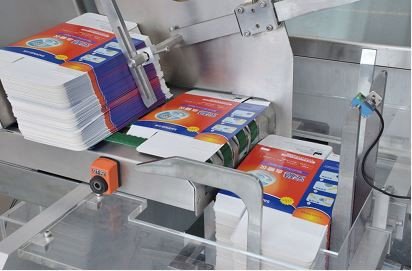
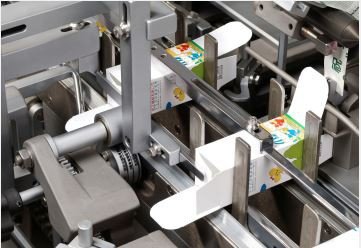
Do not assume every position is stored in the HMI. Ask the supplier to label each item as a physical part exchange, a manual adjustment, a displayed setpoint or an automatic axis movement. That distinction makes a quotation for horizontal cartoning equipment easier to compare.
3. Follow a repeatable changeover sequence
A useful improvement method is to separate work that needs the stopped machine from preparation that can be completed independently beforehand. The Lean Enterprise Institute describes this internal/external setup distinction in its SMED explanation. Applying the method does not guarantee a single-digit result on a particular line.
- Prepare the next format. Check the approved format sheet, identify the correct parts and recipes, and stage suitable materials and tools in the designated area. Resolve missing items before stopping production.
- Stop, secure and clear the line. Follow the equipment manufacturer’s safe intervention procedure and the site’s clearance requirements. Remove and account for the previous product and printed materials as required; preparation must not involve reaching into running machinery.
- Fit parts and record positions. Use the approved part list and setting references. Check correct seating and fastening rather than treating colour labels or a quick-release handle as proof of correct assembly.
- Load and verify the recipe. Confirm the SKU and version, manual positions, coding data and installed inspection configuration. Check that all linked machines are ready for the new format.
- Restart and inspect. Run the agreed verification sequence, inspect the packed product and challenge the specified detection/rejection functions. Keep trial output under the site’s control until it is released.
- Confirm a stable run and record the result. Log elapsed time, staff, adjustments, rejected cartons and interruptions. Save approved settings and note follow-up actions instead of silently changing the baseline.
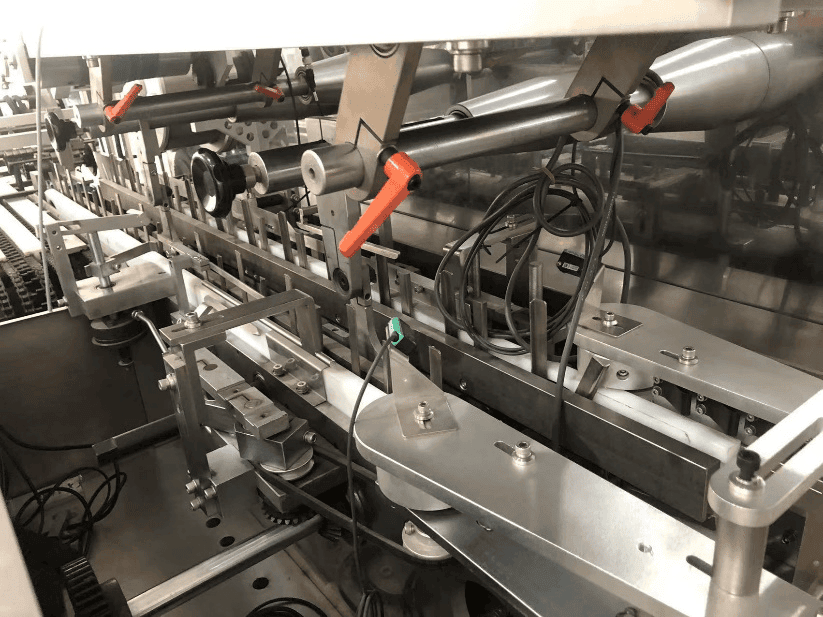
For the underlying station sequence, see how a cartoning machine works. If paper handling drives the delay, review leaflet folding and insertion before buying a higher nominal speed.
4. What tool-less parts and recipes can—and cannot—do
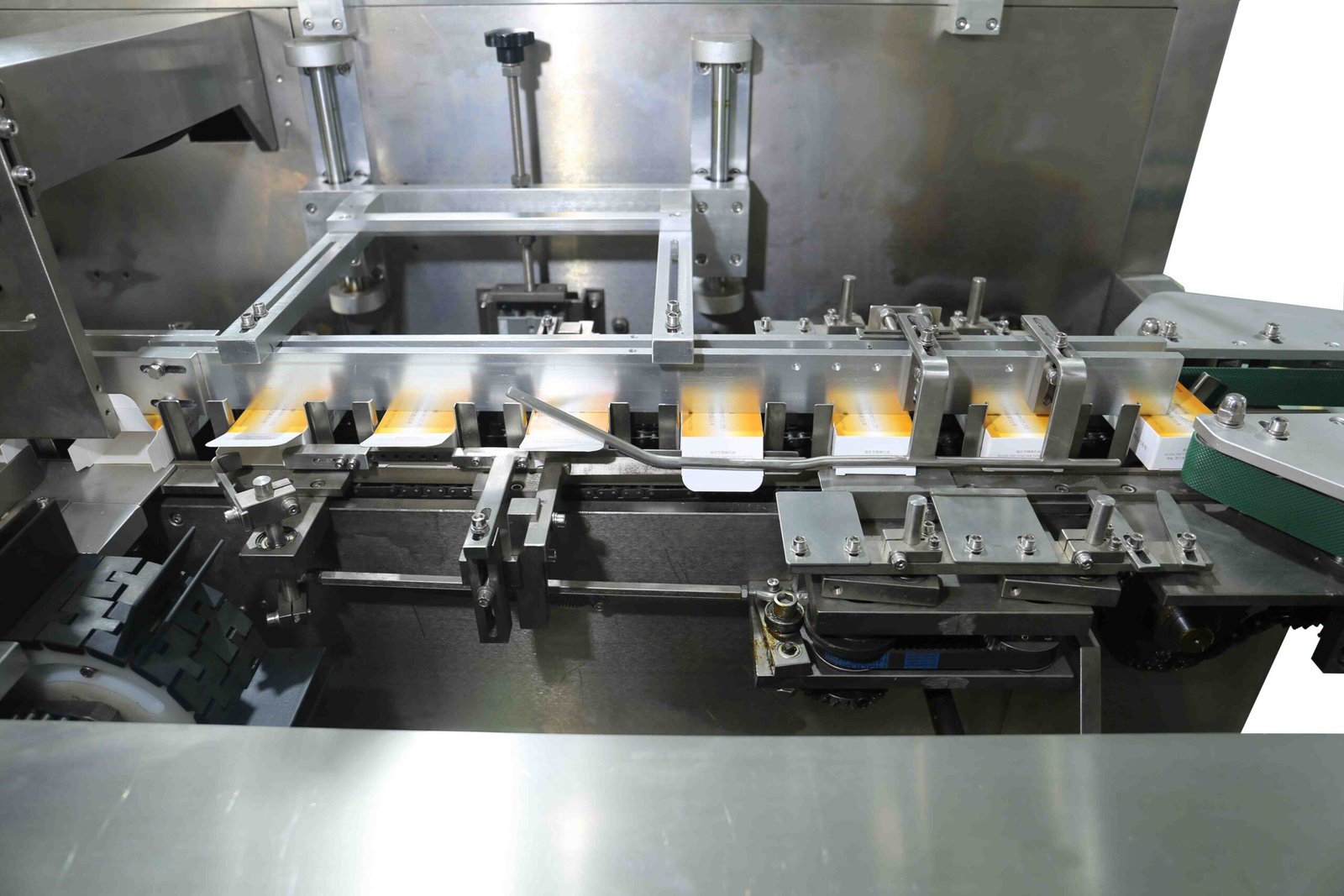
Tool-less changeover usually means that designated format parts or adjustments can be handled without separate tools. It does not establish that every station is tool-free, that cleaning is unnecessary or that the next format needs no trial run. Magnetic locating is one possible design choice, not a required feature of every quick-change cartoner.
| Feature | Potential benefit | Ask the supplier |
|---|---|---|
| Quick-release format parts | Less fastening and removal work | Which parts are included, and which still need tools? |
| Locators and setting references | More repeatable positioning | How is an incorrect part or position detected or prevented? |
| Stored HMI recipes | Less repeated data entry | Which settings move automatically, and which require a manual check? |
| Servo positioning | Automatic movement of specified axes | Which axes are covered, and how is the final position verified? |
| Organised format kits | Less searching and fewer missing components | Are labelled parts, storage, setting sheets and training included? |
Manufacturers describe different implementations. Syntegon’s TTM platform describes quick-lock interfaces and preset format rods. IMA’s FLEXA series describes servo-supported tool-free changeover. These are examples of those manufacturers’ designs, not evidence that an HIJ quotation includes the same mechanisms or performance.
Compare the proposed build and demonstrated formats. The labels “intermittent” and “continuous” do not, by themselves, determine the changeover time; see the motion-type comparison for the wider selection context.
5. Calculate the elapsed time difference
Use the same start/finish definition for your baseline and target. The example below compares 45 and 25 minutes per change, three changes per production day and 250 production days. It represents 60 minutes per day, or 250 hours per year, potentially available for other work or production. These are illustrative inputs, not typical machine performance.
Enter your own measurements or clearly labelled targets. Nothing entered here is submitted to HIJ. Results are rounded to two decimals; very small differences may display as 0.
Illustrative time reduction. Recovered time is not automatically saleable output or an OEE gain.
Annual hours difference = (baseline minutes − target minutes) × changes/day × production days/year ÷ 60.
Select the text and use your device’s Copy command.
The calculation reports elapsed time only. Extra accepted cartons depend on demand, material availability, the bottleneck elsewhere in the line and the sustained good-output rate after restart. An OEE change also depends on how planned time and changeovers are classified, plus performance and quality; do not equate “250 hours recovered” with a fixed percentage-point improvement.
6. Turn a supplier claim into a format-change trial
Choose a representative format pair and a demanding pair from your planned production—not only the supplier’s easiest demonstration. Consider differences in product count, carton geometry, leaflet, closure and inspection. Include the return change if repeatability matters to your schedule.
- Materials: identify the actual products, cartons, leaflets, artwork versions and sample quantities for the trial.
- Starting condition: agree what is already staged, which parts are fitted, whether recipes are validated and how many staff may assist.
- Timing: record the start, first accepted carton and stable-run completion; list included and excluded activities.
- Acceptance: agree the required good-output condition, quality checks, permitted interventions and observation period before testing.
- Evidence: log rejects, alarms and adjustments alongside the elapsed time. Obtain the final part list, setting sheet and training requirements.
- Repeat: use the agreed number of repeats to reveal variation. A single best attempt should not be presented as a guaranteed production result.
If the trial misses its target, identify the largest delay before specifying a remedy. Time spent searching for parts suggests a preparation problem; repeated loading faults suggest a format or transfer issue; repeated inspection setup suggests a recipe or verification problem. Different causes need different changes.
Planning several carton formats?
Send your SKU list, carton drawings, product and leaflet details, current changeover boundary and target good output. Ask HIJ to identify the proposed format parts, manual adjustments, recipe functions and trial scope in the quotation.
Request a Configured QuoteAttach the downloaded estimate as a planning brief. It is not a machine performance guarantee.
Frequently asked questions
What is cartoning machine changeover?
It is the switch from one product or carton format to another, including the required material clearance, part exchanges, adjustments, settings and restart checks. Define the timing boundary before comparing results.
How long should a cartoner changeover take?
There is no universal duration. The format pair, machine configuration, preparation, staffing, cleaning and release criteria all affect elapsed time. Ask for a timed trial using your agreed start and finish conditions.
Does tool-less changeover mean fully automatic changeover?
No. Designated parts may be changed by hand without separate tools while other positions, materials and checks remain manual. Request a station-by-station list of automatic and manual work.
Can the HMI recipe restore every format setting?
Only the functions included in the machine’s recipe and positioning design can be restored that way. Verify physical format parts, manual positions, coding data and inspection settings against the approved format sheet.
How do I calculate annual time savings?
Subtract target elapsed minutes from baseline elapsed minutes, multiply by changes per production day and production days per year, then divide by 60. Use matching timing boundaries. A negative result means the target takes more time.
Does a faster changeover automatically improve OEE?
It may reduce a loss included in your measurement, but the result depends on planned-time definitions, sustained performance and quality after restart. Calculate the effect using the site’s agreed OEE method rather than assigning a universal percentage.
What should I send for a multi-format cartoner quotation?
Send the SKU list, product samples or drawings, carton dimensions and artwork, leaflet requirements, target good output, format-change frequency and acceptance criteria. Ask which format kits, settings, training and trials are included.