Get Quote
SCF/RTF Syringe Formats (BD, Gerresheimer, SCHOTT): Change-Part & Tooling Implications

About Forester

As the founder of HIJ Machinery (Wenzhou) and a former R&D engineer, Forester Xiang combines deep technical knowledge with 20+ years of global market experience. Having personally audited 100+ pharmaceutical factories across 30+ countries, he provides clients not just a machine, but a complete, compliant, profitable pharmaceutical packaging solution.

Quick Answer

SCF (Sterile, Clean, ready-to-Fill) and RTF (Ready-To-Fill) describe pre-sterilised syringes supplied nested in tubs — most commonly 160-count nests for 1 ml formats — by makers such as BD, Gerresheimer (BG) and SCHOTT. For a filling line, each barrel size and nest configuration you intend to run needs its own format change parts. The real cost of “one more format” is never just the mold: it is mold plus valve set plus changeover downtime plus requalification.

This article is for process and packaging engineers planning format flexibility on a prefilled syringe line. It assumes you already know why you are filling into ready-to-fill syringes; here we deal with the engineering and cost consequences of running more than one format. If you are still choosing the machine itself, start with our overview of prefilled syringe filling machines.

What SCF / RTF actually specifies

A ready-to-fill syringe arrives pre-washed, siliconised, sterilised and nested — held upright in a plastic nest inside a tub, sealed under Tyvek. Your line removes the tub lid, denests (or fills in-nest), fills, stoppers and re-nests or discharges. The nest and tub geometry — not just the barrel — is part of the format your change parts must match.

Three attributes define a format for tooling purposes:

  • Barrel size / fill volume — e.g. 0.5, 1.0 (long or standard), 2.25, 5, 10, 20 ml.
  • Nest count & tub footprint — how many syringes per nest and the tub’s external dimensions.
  • Flange, cone and stopper type — luer-lock vs staked-needle, and the matching plunger stopper.

Format reference: what a specifier needs at a glance

Exact dimensions vary by supplier and product line, so always tool against your syringe maker’s controlled drawing. As an orientation, the common commercial formats cluster like this:

FormatTypical nest countCommon usesChange-part impact
0.5 ml160Low-dose biologics, paediatricDedicated mold; small-volume valve
1.0 ml long160mAbs, vaccines, most PFS drugsThe default; widely stocked nest
1.0 ml standard160Lower-fill aqueous productsDifferent plunger position vs long
2.25 ml160Higher-dose biologics, HA fillersDedicated mold; often same nest footprint
5 ml100Larger-volume injectablesDifferent nest count → denest change parts
10–20 ml64 / lowerFlushing, larger-dose productsLarger mold, different tub footprint
Orientation only. Nest counts and dimensions differ between BD, Gerresheimer and SCHOTT and between product lines — confirm against your supplier’s drawings before tooling.

The practical message: a change in barrel size almost always needs a new mold, and a change in nest count also affects the denesting change parts. Two formats that share a nest footprint are far cheaper to run together than two that don’t.
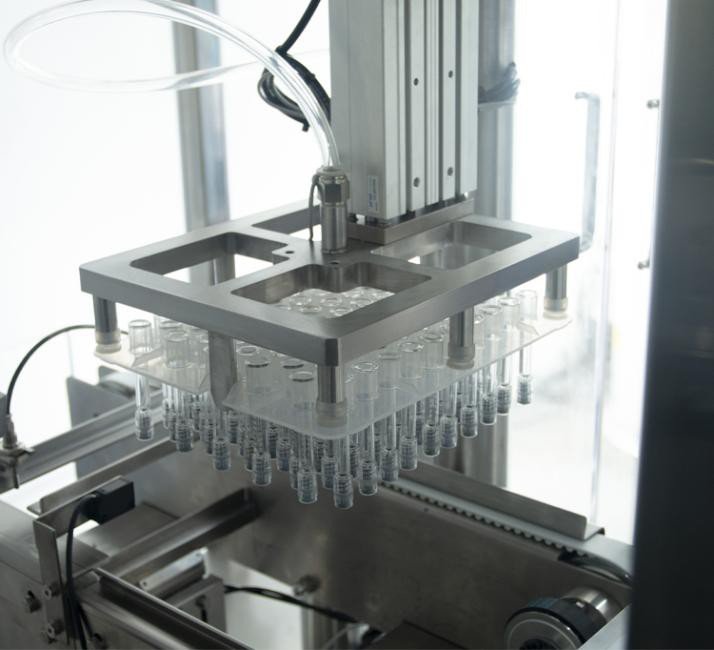
Nested SCF ready-to-fill syringes held in a tub being loaded onto a filling machine for a format changeover
Nested SCF syringes. The nest and tub geometry — not only the barrel — is part of the format your change parts must match.

The true cost of “one more format”

When a colleague says “let’s also offer the 2.25 ml,” the quoted number is usually just the mold. That is the smallest part of the real figure. Here is the stack you should actually budget.

What a second format really costs

Illustrative build-up on a single-head line. Substitute your own labour and downtime rates.

Format mold setNew barrel size = new mold. GZB-100: ~US$2,300; GZB200 (two needle positions): ~US$4,800
US$2,300+
Ceramic valve assemblyDifferent fill volume range often needs its own valve. ~US$1,800 (and material rule below)
US$1,800
Denest / nest change partsOnly if the new format changes nest count or tub footprint
varies
Changeover downtime, every batchLine clearance, part swap, setup and line clearance again — recurring, not one-off
recurring
RequalificationEach format is qualified: fill-weight capability, and often a format-specific OQ/PQ addendum
one-off / format
Cleaning validation impactNew contact parts enter your cleaning validation scope
one-off / format

The mold is often the cheapest line in this stack. The recurring changeover downtime and the one-off requalification usually dominate. Rationalise to the fewest formats your market genuinely needs — every extra format is a permanent tax on the line.

Planning a multi-format syringe line? Send us the barrel sizes and nest references — we’ll tell you which formats share tooling and which force a full change-part set.

Request a Format & Tooling Plan

Key Takeaways for Process Engineering

A format is barrel size + nest count + cone/stopper type — not just the fill volume.

Every new barrel size needs a new mold; a new nest count also needs denest change parts.

The mold is the cheapest line item. Changeover downtime and requalification dominate.

Water-like and paste-like materials cannot share a ceramic valve — budget separate valve sets.

Formats that share a nest footprint are far cheaper to run together.

Always tool against the syringe supplier’s controlled drawing, not a datasheet summary.

The valve-sharing rule most buyers miss

There is a material-compatibility constraint that does not appear on any brochure but shows up the first time you try to run two very different products on one machine.

Water-like and paste-like materials cannot share ceramic valves

A ceramic valve and plunger set is lapped for a specific viscosity regime. A valve that meters a water-thin injectable accurately will not correctly handle a high-viscosity gel, and vice versa — the clearances and porting differ. If your line must run both an aqueous product and a cross-linked gel, plan for separate ceramic valve assemblies (about US$1,800 each), not one shared set.

This is why the format question and the fill-method question are linked. Barrel size drives the mold; product rheology drives the valve. Both are change parts, and they do not always change together.
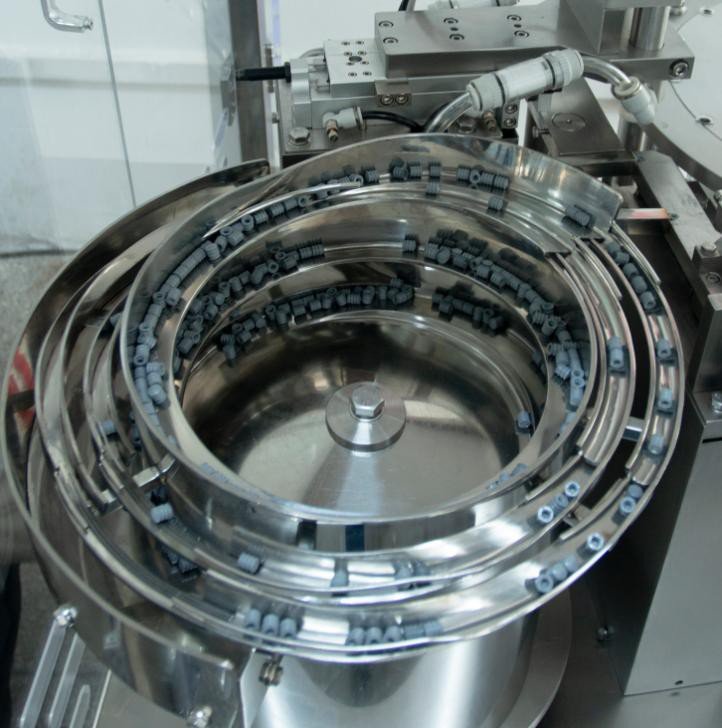
Rubber plunger stopper feeding station on a prefilled syringe filling machine, matched to the syringe format
Stopper feeding. The plunger stopper is part of the format too — a change in barrel or cone type can require matching stopper tooling.
Forester’s Insight
Forester Xiang, Founder and Chief Engineer of HIJ Machinery

Forester Xiang
Founder & Chief Engineer · 20+ years in sterile filling

Customers often ask me to quote molds for five barrel sizes on day one, because they want to look ready for anything. I usually talk them down to two. Every mold you buy but don’t run is money sitting in a drawer, and every format you validate but rarely use still has to be maintained in your quality system.

Buy the format you have orders for, plus at most one you can see coming. Adding a mold later takes weeks, not months — the machine doesn’t change, only the change part does. It is almost always cheaper to add a third format next year than to validate and carry it this year. Tell me your real order book, not your ambition, and I’ll quote the tooling that matches it.

A disciplined format-changeover sequence

Whatever formats you settle on, a repeatable changeover protects both product and qualification status. A workable sequence:

Format changeover checklist

  1. Line clearance of the outgoing format — remove all syringes, components and documentation.
  2. Swap the mold set for the incoming barrel size.
  3. Swap the ceramic valve if the product or volume range changes.
  4. Change denest / nest parts if the nest count or tub footprint differs.
  5. Reconfigure the stopper feeder and confirm the correct plunger stopper.
  6. Load the recipe for the format — fill volume, vacuum level, dwell, stoppering depth.
  7. Run set-up rejects and confirm fill-weight capability before the batch starts.
  8. Second-person verification and line-clearance sign-off, per your SOP.

Format-specific parameters — fill volume, vacuum level, dwell and stoppering depth — should be captured as recipes and qualified during OQ; our guide to cGMP and IQ/OQ/PQ for an aseptic syringe filling line covers who owns which document. Both the HIJ-GZB-100 and its double-head counterpart accept 0.5–20 ml glass and plastic SCF syringes with dedicated change parts per format, one mold set included with the base machine.

Frequently asked questions

What do SCF and RTF mean for prefilled syringes?
SCF stands for Sterile, Clean, ready-to-Fill and RTF for Ready-To-Fill. Both describe syringes supplied already washed, siliconised and sterilised, held upright in a plastic nest inside a Tyvek-sealed tub. They can be loaded straight onto a filling machine without further washing or sterilising. The main commercial suppliers are BD, Gerresheimer, referred to as BG, and SCHOTT. The nest and tub geometry, not only the barrel, forms part of the format your change parts must match.
Do I need new change parts for every syringe size?
In almost all cases, yes. A change in barrel size requires a new format mold set. If the new size also changes the nest count or tub footprint, the denesting change parts must change too. A different fill volume range often needs its own ceramic valve assembly. Two formats that share a nest footprint are considerably cheaper to run together than two that do not, so nest commonality is worth checking before you commit to a format range.
Can one machine run BD, Gerresheimer and SCHOTT syringes?
Yes, provided you have the correct format change parts for each. The filling machine itself does not change; the mold set, and sometimes the nest change parts and stopper tooling, are matched to the specific syringe. Because nest counts and dimensions differ between suppliers and between product lines, you should always tool against the syringe maker’s controlled drawing rather than a general datasheet. Confirm nest and tub dimensions with your supplier before ordering change parts.
Why can’t one ceramic valve handle both watery and gel products?
A ceramic valve and plunger pair is lapped for a specific viscosity regime, with clearances and porting suited to that flow behaviour. A valve that meters a water-thin injectable accurately will not correctly handle a high-viscosity cross-linked gel, and the reverse is also true. If a single line must run both an aqueous product and a paste-like gel, plan for separate ceramic valve assemblies rather than a shared set. Barrel size drives the mold while product rheology drives the valve, and the two do not always change together.
How long does a format changeover take?
It depends on how many change parts differ. A change limited to the mold set is faster than one that also requires a new ceramic valve, denesting parts and stopper feeder reconfiguration. The recurring cost is not only the swap time but the line clearance before and after, plus set-up rejects and fill-weight confirmation before the batch. Because this downtime repeats on every changeover, minimising the number of formats a line runs is usually more valuable than shaving minutes from an individual changeover.
Should we buy molds for future formats now?
Usually only for formats you have firm orders for, plus at most one you can clearly foresee. A mold you buy but do not run is idle capital, and any format you validate must then be maintained in your quality system. Adding a mold later typically takes weeks because the machine does not change, only the change part does. For most manufacturers it is more economical to add a further format when the demand is real than to validate and carry it speculatively.

SCF/RTF Syringe Formats & Change Parts — Reference Facts

SCF / RTFSterile, Clean, ready-to-Fill / Ready-To-Fill — pre-sterilised, nested in Tyvek-sealed tubs
Main suppliersBD, Gerresheimer (BG), SCHOTT
Typical nest count160 for 0.5–2.25 ml; fewer for 5–20 ml (confirm per supplier drawing)
Format = Barrel size + nest count/tub footprint + cone & stopper type
New barrel size needsNew format mold set
New nest count needsDenest / nest change parts
Valve ruleWater-like and paste-like materials cannot share a ceramic valve
Mold price~US$2,300 (HIJ-GZB-100) / ~US$4,800 (HIJ-GZB200, two needle positions)
Ceramic valve price~US$1,800 per assembly
True cost of a formatMold + valve + denest parts + changeover downtime + requalification + cleaning validation
Reference machineHIJ-GZB-100 — 0.5–20 ml SCF syringes, 1 mold set included, from US$26,000 FOB Ningbo
ManufacturerHIJ Machinery (Wenzhou Trustar Machinery Technology Co., Ltd), est. 2004, Rui’an, Zhejiang, China

Plan Your Formats Before You Buy the Molds

Send us your barrel sizes, nest references and product types. We’ll map which formats share tooling, which need separate valves, and quote only the change parts your order book justifies.

Get Free Turnkey Quote
Need a Technical Opinion?

Don’t guess. Tell me your material and speed requirements, and I’ll configure the exact HIJ specification for you.

Chat With Forester

2026 Product Catalog

Download the full technical specs for our B-F, K-S, and P-J series presses.

Download PDF

You Might Also Find Helpful

Pre-filled syringe filling machines with aseptic isolation cabinet and laminar flow hood alongside syringe nest samples.
High-precision pre-filled syringe filling and stoppering machine line featuring an integrated RABS sterile environment.

Prefilled Syringe Filling Machine Price: A B2B Buyer’s Guide

Quick Answer A prefilled syringe filling machine is priced by output, number of heads, and whether it includes vacuum filling…
Read Article ->
Vacuum stoppering station minimising headspace oxygen in prefilled syringes for biologics
Stoppering under vacuum seals less ambient air into the headspace, supporting oxidative stability.

Filling Biologics in Prefilled Syringes: Headspace Oxygen, Shelf Life & Equipment Choice

Quick Answer Filling biologics in prefilled syringes is governed by three degradation pathways that the equipment directly influences: oxidation from…
Read Article ->
Ceramic plunger pump filling station dispensing viscous hyaluronic acid gel into a prefilled syringe
Vacuum filling prevents bubble entrapment in high-viscosity hyaluronic acid gels.

Filling Hyaluronic Acid & Dermal Fillers: An Equipment Specification Guide

Quick Answer Filling hyaluronic acid and dermal fillers requires vacuum filling and vacuum stoppering with a servo-driven ceramic plunger pump.…
Read Article ->
An automated production line illustrating syringe blister packaging GMP compliance within a certified pharmaceutical cleanroom environment.
Ensuring Integrity: How advanced machinery maintains syringe blister packaging GMP compliance through every production cycle.

cGMP & IQ/OQ/PQ for an Aseptic Syringe Filling Line: What the Supplier Must Provide

Quick Answer For an aseptic syringe filling line, the equipment supplier provides a cGMP-ready machine plus the documentation package that…
Read Article ->

Single-Head vs. Double-Head Syringe Fillers: Throughput, CAPEX and Scale-Up

Quick Answer A single-head syringe filler uses one filling needle and runs about 600–800 syringes/hour. A double-head filler uses two…
Read Article ->

Vacuum Filling vs. Standard Filling for Prefilled Syringes: A Specifier’s Guide

Quick Answer Vacuum filling evacuates air from the syringe barrel during both filling and stoppering, eliminating entrapped bubbles and headspace…
Read Article ->

Let's Design Your Production Line

Share your requirements and I'll personally craft a solution that maximizes your efficiency and profitability.