Understanding IQ OQ PQ Validation for Pharmaceutical Packaging Equipment
A practical guide for QA managers, production engineers, and procurement teams navigating equipment qualification for the first time — or getting it right after an audit setback.

IQ OQ PQ validation refers to a three-phase qualification process used to confirm that pharmaceutical packaging equipment is correctly installed, operates within defined parameters, and consistently produces compliant output under real production conditions. Installation Qualification (IQ) verifies that a machine has been delivered and installed according to its design specifications and manufacturer requirements. Operational Qualification (OQ) confirms that the equipment operates as intended across its full functional range — including edge cases and alarm conditions. Performance Qualification (PQ) demonstrates, with documented evidence, that the machine reliably performs its intended function using actual production materials and at production-scale volumes. Together, the three phases form the backbone of equipment qualification required by FDA 21 CFR Part 211, EU GMP Annex 15, WHO GMP, and cGMP frameworks — and the absence of a complete, defensible validation package is one of the most common reasons pharmaceutical manufacturers fail regulatory audits.
What You’ll Learn in This Guide
- Why validation documentation is the real audit risk
- IQ — Installation Qualification: What it covers
- OQ — Operational Qualification: How to test properly
- PQ — Performance Qualification: Where most teams fall short
- Applying IQ OQ PQ to blister packaging equipment
- The one question to ask every equipment supplier
- Practical validation checklist
- FAQ
Why Validation Documentation Is Your Real Audit Risk
Here’s a scenario that plays out more often than most people in the industry want to admit: a pharmaceutical manufacturer installs a new packaging line, runs it for six months without a single mechanical failure, produces hundreds of thousands of compliant blister packs — and then fails an FDA inspection because they can’t demonstrate how they know the machine performs correctly.
The machine didn’t fail. The documentation did. And in the eyes of a regulator, those two things are functionally equivalent.
The IQ OQ PQ framework exists to create an unbroken chain of documented evidence — from the day a machine leaves the factory floor to the moment it produces product for your patient. Every phase answers a specific regulatory question. Skip a phase, or execute it superficially, and you leave a gap that an auditor will find.
Common mistake: Many teams treat validation as a post-installation formality — something to “write up” after the machine is already running. This approach almost always results in incomplete data, missing baseline measurements, and a documentation package that cannot withstand regulatory scrutiny.
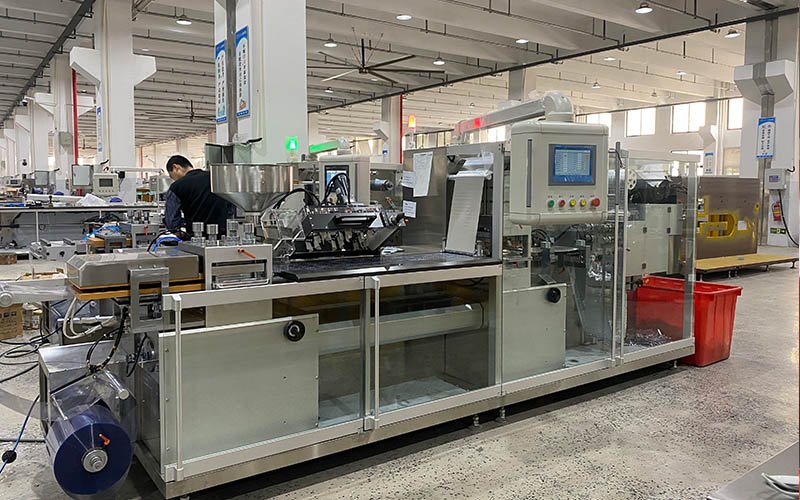
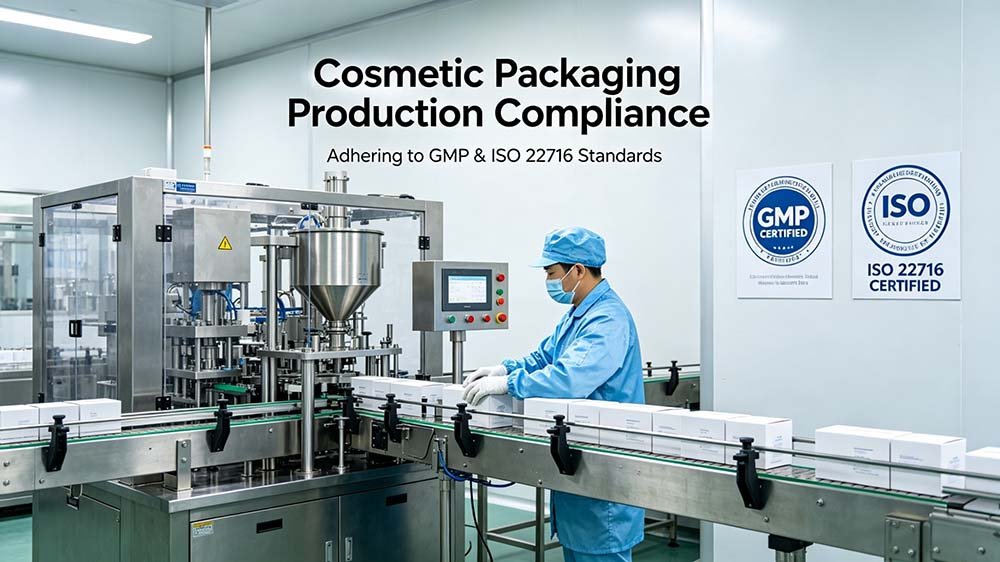
GMP-compliant structural design — validation begins at the engineering and manufacturing stage, not after installation.
Phase 1 — Installation Qualification (IQ)
Installation Qualification is the foundation of the entire validation lifecycle. It answers one essential regulatory question: “Has this equipment been delivered and installed exactly as the manufacturer designed and intended?”
IQ is not simply a matter of plugging in the machine and verifying that it turns on. A defensible IQ protocol will systematically document every aspect of the physical installation against pre-approved acceptance criteria drawn from the manufacturer’s specifications, your URS (User Requirement Specification), and applicable regulatory guidance.
Installation Qualification — Key Documentation Requirements
- Equipment identification: serial numbers, model numbers, firmware/software versions confirmed against purchase order
- Site preparation verification: utilities (electrical, compressed air, water) confirmed within specification
- Physical installation confirmation: leveling, anchoring, clearances, environmental conditions (temperature, humidity, cleanroom class)
- Component verification: all installed components confirmed against approved BOM (Bill of Materials)
- Calibration status: all measuring instruments and sensors confirmed calibrated with valid certificates
- Supplier documentation package received: manuals, CE/GMP certificates, spare parts lists, wiring diagrams
- Change control: any deviations from design specifications formally documented and approved
- Safety systems verified: guards, interlocks, emergency stops confirmed installed and functional
One detail that often gets overlooked during IQ: software and firmware versions matter. If your automatic blister packing machine runs a PLC control system, the specific firmware version installed must be documented and locked. Any subsequent update triggers a change control event — and potentially a partial re-validation. Getting this right at the IQ stage prevents expensive headaches during future audits.
Phase 2 — Operational Qualification (OQ)
If IQ answers “is the machine installed correctly?”, OQ answers “does the machine actually work the way it’s supposed to?” — and crucially, across its entire operating range, not just at the settings you intend to use every day.
This distinction matters more than most teams realize. Regulatory guidance consistently requires OQ testing to cover worst-case operating conditions. For packaging equipment, this typically means testing at minimum and maximum production speeds, at the extremes of your validated temperature and pressure ranges, and with deliberate fault injection to verify that alarm systems and automatic shutdowns work as described.
Operational Qualification — Key Testing Areas
- Functional testing of all operating modes against acceptance criteria from the URS
- Speed range verification: minimum, nominal, and maximum production rates documented with actual output data
- Temperature and pressure profile confirmation for heat-sealing and forming stations
- Alarm and interlock testing: each fault condition triggered deliberately and response documented
- HMI/control system validation: all operator inputs verified to produce correct machine response
- Film tracking and indexing accuracy testing across full roll-to-roll cycle
- Reject system verification: confirmed defective packs are rejected and logged correctly
- Cleaning and changeover procedure documentation and verification
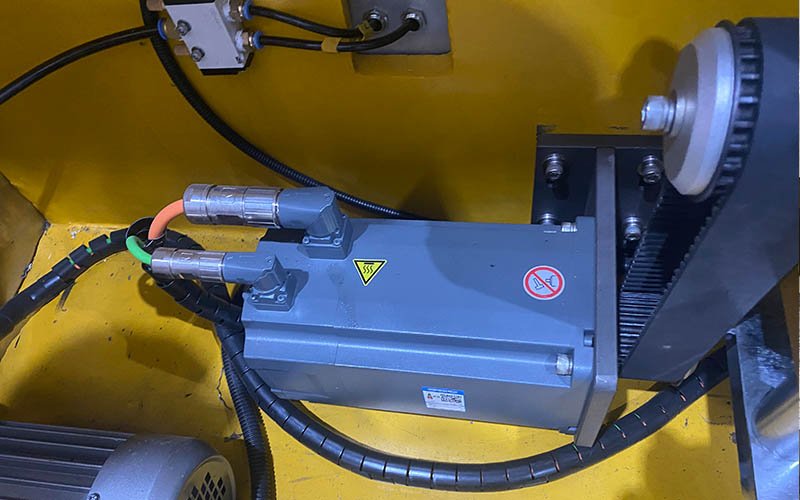
Servo motor control systems must be fully tested under OQ protocols — verifying accuracy across the complete operational speed range.
OQ testing should always be conducted using surrogate materials or representative placebos, not your actual drug product. The goal is to prove the machine works mechanically and electronically — the drug product performance comes in PQ. Mixing these two phases is a common source of validation failures because you lose the ability to isolate equipment performance from formulation variables.
Phase 3 — Performance Qualification (PQ)
Performance Qualification is where everything comes together — and where the most validation failures occur. PQ must demonstrate, with statistically sound evidence, that the equipment consistently produces output meeting your product specifications when running actual production materials under actual production conditions.
The phrase “consistently produces” is doing a lot of regulatory work in that sentence. A single successful production run does not constitute a valid PQ. FDA guidance and WHO GMP both expect to see a minimum of three consecutive successful runs at production scale, with all results falling within pre-defined acceptance criteria. The “three runs” rule exists because it provides a defensible minimum statistical basis for consistency — though your quality team may specify a higher number based on product risk classification.
Performance Qualification — What Regulators Expect to See
- Minimum 3 consecutive production runs at commercial batch size using actual drug product or validated placebo
- Seal integrity testing on finished blister packs: bubble leak test, vacuum decay, or dye penetration per validated method
- Fill accuracy data: weights or counts sampled at regular intervals throughout each run
- Visual inspection data: defect rates (missing tablets, deformed blisters, misaligned foil) documented against AQL limits
- Environmental monitoring during runs: temperature, humidity, particle counts (where applicable)
- Equipment performance data: speed consistency, downtime events, alarm activations — all logged and reviewed
- All data reviewed and approved by QA before the validation report is closed
- Approved PQ report and batch records retained as part of the permanent validation master file
Founder’s Field Insight
“After 20 years in this industry, I’ve seen IQ OQ PQ validation treated in two very different ways — as a genuine quality safeguard, or as a box-ticking exercise rushed through before handover. The difference in outcomes is night and day. Validation documentation isn’t the finish line; it’s the foundation. When we deliver packaging equipment at HIJ, our IQ OQ PQ protocols aren’t prepared after the machine is built — they’re engineered alongside it. Every sensor calibration, every tolerance parameter, every edge case in the PQ stress testing reflects decisions we made during design. The clients who struggle most with FDA, WHO GMP, or cGMP audits are almost never struggling because their machine failed — they’re struggling because their validation package couldn’t prove the machine performed. That’s a documentation problem, not an engineering problem, and it’s entirely avoidable.”
— Forester, Founder, HIJ Machinery · About HIJ
Applying IQ OQ PQ to Blister Packaging Machines
Blister packaging machines present some of the most technically demanding validation challenges in pharmaceutical secondary packaging. The reasons are straightforward: a blister packing machine simultaneously manages film forming, product filling, heat sealing, and die-cutting — four distinct critical process parameters that all interact with each other and must be individually validated.
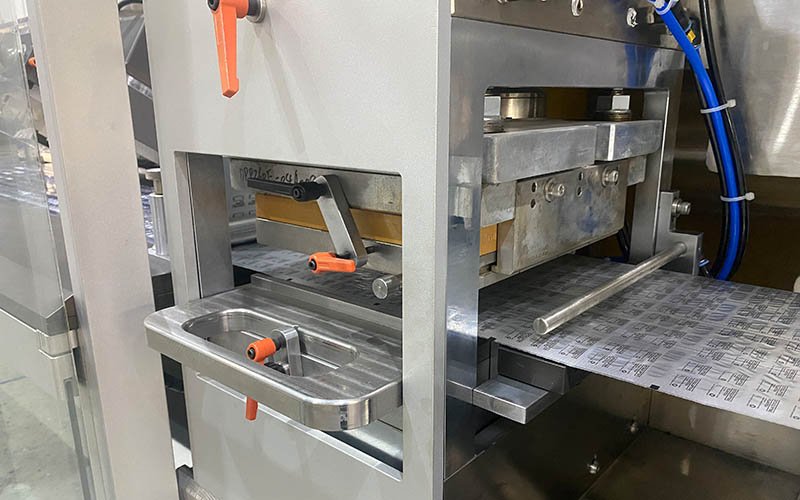
The heat-sealing station is one of the most critical components requiring rigorous OQ and PQ testing — seal integrity failures are invisible to the naked eye but devastating to product shelf life.
The heat-sealing station deserves particular attention. Sealing temperature, dwell time, and sealing pressure are all interdependent — and they all drift over time as machine components wear. A properly executed OQ will establish the validated operating window for all three parameters. A properly executed PQ will then confirm that running within that window consistently produces packs that pass seal integrity testing across the full production run.
What the Validation Package for a Blister Machine Should Include
| Validation Phase | Blister Machine Specific Requirements | Typical Acceptance Criteria |
|---|---|---|
| IQ | Forming station die dimensions confirmed; all heating element calibration certificates; PLC firmware version locked; film roll holder alignment verified | All measurements within ±0.1mm of design spec; all certs current and traceable |
| OQ | Forming depth uniformity across full mold width; sealing temperature uniformity mapping; fill station accuracy at min/max speed; reject system activation test | Temperature uniformity ±2°C; forming depth ±0.2mm; reject rate 100% at defined defect threshold |
| PQ | 3 × production-scale runs; seal integrity on 100% of sampled packs; tablet count accuracy; visual defect rate; environmental conditions throughout | Zero seal failures on sampled units; tablet count accuracy ≥99.9%; visual defect rate within AQL 0.65 |
When evaluating the DPP-260 automatic blister packing machine or any comparable equipment, ask the supplier specifically whether they can provide a pre-approved IQ OQ PQ protocol template as part of the delivery package. The best suppliers will have these templates developed, reviewed, and ready to execute — not something they draft from scratch after installation.
The Validation Lifecycle — From Factory to First Batch
The One Question to Ask Every Equipment Supplier
Selecting packaging equipment for a regulated pharmaceutical environment involves a long list of technical specifications — speed, format range, film compatibility, HMI capabilities. But there’s one question that will tell you more about a supplier’s suitability than any specification sheet:
“Can you walk me through your standard PQ protocol?”
A supplier who truly understands pharmaceutical compliance will have a clear, structured answer. They’ll be able to explain how they define acceptance criteria, how many runs they specify by default and why, and how they handle deviations during testing. A supplier who treats this question as an afterthought — or who suggests that “the validation is your team’s responsibility” — is telling you something important about how much trouble you’ll have during your next audit.
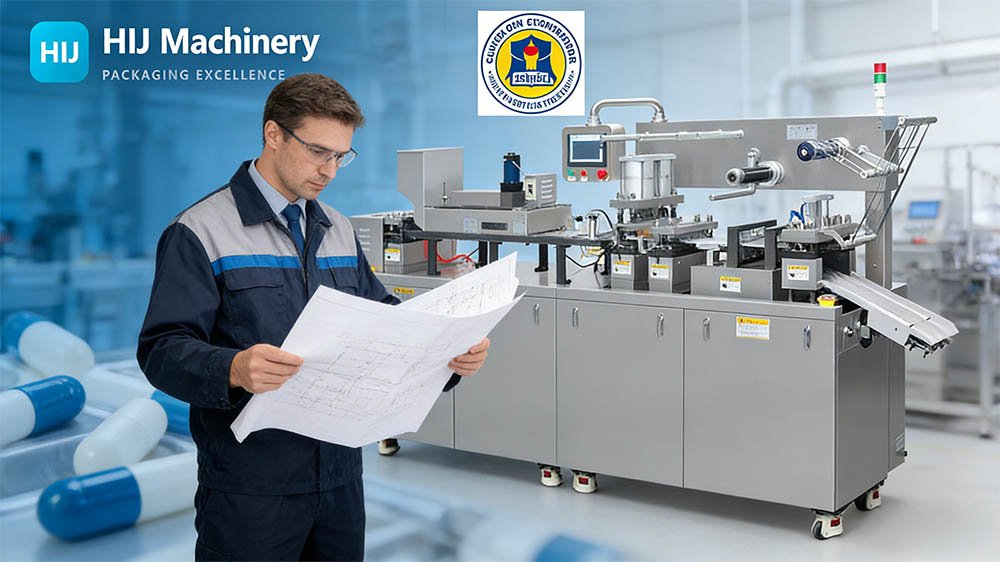
Validation documentation is reviewed and structured during the engineering phase — not written after the fact.
At HIJ Machinery, we take a clear position on this: validation support is not an optional add-on. Every equipment delivery includes pre-structured IQ OQ PQ protocol templates aligned to your specific machine configuration, calibration certificates for all critical instruments, and direct technical support during execution. Our team has executed validation projects across FDA, WHO GMP, and cGMP-regulated facilities across four continents — we know what auditors look for because we’ve seen what gets flagged.
If you’re currently evaluating blister packaging equipment or a complete turnkey packaging line, we’d encourage you to make the validation conversation part of your initial supplier assessment — not something you address after the purchase order is signed.



Practical Validation Readiness Checklist
Before your validation team schedules the first IQ execution date, confirm the following items are in place. Missing any of these at the start will cause delays — and in a GMP environment, delays often mean re-validation from scratch.
One item on this list deserves a specific note: the seal integrity test method. Many teams discover during PQ that their leak testing method hasn’t itself been validated — and without a validated test method, your PQ data has no regulatory standing. If you’re using bubble leak testing or vacuum decay, ensure the method is validated and documented before you begin PQ execution.
Looking for GMP-Compliant Blister Packing Equipment?
The HIJ DPP-260 Automatic Blister Packing Machine is designed from the ground up for validated pharmaceutical production — with pre-structured IQ OQ PQ protocol templates included as standard. Explore technical specifications, validation support details, and configuration options.
View DPP-260 SpecificationsFrequently Asked Questions
What is the difference between validation and qualification in pharmaceutical manufacturing?
In regulatory terminology, qualification refers to demonstrating that equipment and utilities are suitable for their intended use — which is exactly what IQ, OQ, and PQ achieve. Validation is a broader term that covers the entire documented evidence collection process demonstrating that any process, procedure, or activity consistently produces a result meeting its predetermined specifications. Equipment qualification (IQ OQ PQ) is therefore a specific subset of the overall validation framework. In common industry usage, the terms are often used interchangeably, which is why you’ll see both “equipment validation” and “equipment qualification” used to refer to the same IQ OQ PQ process.
How often does packaging equipment need to be requalified after initial IQ OQ PQ?
Initial IQ OQ PQ establishes the validated baseline. Requalification is then required whenever a defined change occurs — this is captured through your change control system. Common triggers include: major component replacement (e.g., new heating elements, new forming dies), software or firmware updates, equipment relocation to a different facility or room, significant maintenance events, and any time production data trends outside the validated operating window. In addition, most quality systems include periodic requalification (typically annually) as a proactive measure even in the absence of specific change events. The frequency and scope of requalification should be defined in your Validation Master Plan.
Does a blister machine supplier need to provide IQ OQ PQ documentation?
While regulations don’t legally mandate that suppliers provide IQ OQ PQ documentation, a reputable GMP-compliant supplier should provide at minimum: equipment design specifications, calibration certificates for all critical instruments, a Factory Acceptance Test (FAT) report, and ideally pre-structured protocol templates for IQ, OQ, and PQ execution at the customer site. Suppliers who understand regulated pharmaceutical environments will offer this as standard practice. The actual execution of the protocols and the resulting validation reports are the responsibility of the purchasing organization’s quality team — but having supplier-provided protocol templates significantly reduces the risk of gaps and accelerates the validation timeline.
What happens if a defect or failure is found during PQ?
A PQ failure is not a catastrophe — but it must be handled correctly. The first step is to halt PQ execution and raise a formal deviation report. The root cause must be investigated: is the failure due to equipment performance (a machine issue), process parameters (settings outside the validated window), materials (product or packaging material variability), or operator error? Once root cause is established, a CAPA (Corrective and Preventive Action) is implemented and documented. Depending on the severity of the failure and the root cause, the PQ may need to restart from the beginning — or it may be sufficient to execute additional runs after the CAPA is verified. All of this must be documented in the validation record. Regulatory inspectors don’t expect perfection; they expect rigorous investigation and documented resolution of any failures that occur.
Can IQ OQ PQ be performed by the equipment supplier or must it be done internally?
In practice, most pharmaceutical manufacturers take a collaborative approach. The supplier typically leads or supports IQ execution (since they know the machine best) and may provide technical support during OQ. However, the regulated party — the pharmaceutical manufacturer — must review, approve, and own all validation protocols and reports. The QA team must be present and active throughout execution. PQ, in particular, should be primarily led by the manufacturer’s team since it involves actual production materials under real production conditions. Some large manufacturers retain specialist validation consultants for the documentation framework while working with the supplier for technical execution. Regardless of who executes the protocols, final approval authority for the validation package must rest with the manufacturer’s quality function.
Ready to Validate Your Packaging Line with Confidence?
Talk to our team about IQ OQ PQ protocol support, GMP-compliant equipment specifications, and turnkey validation packages designed for FDA, WHO GMP, and cGMP environments.