
DPP Series · Thermoforming & Alu-Alu
Automatic Alu/PVC Blister Packing Machine
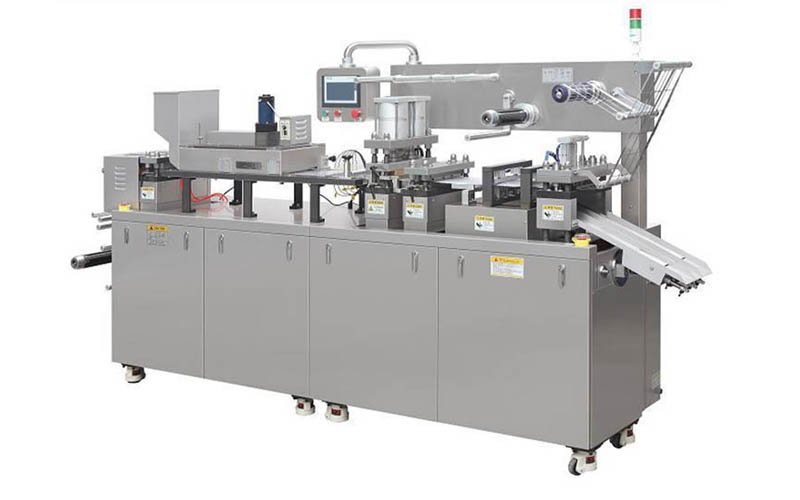
A fully automatic blister packing machine engineered for pharmaceutical tablets, capsules and softgels — running PVC, PVC/PVDC and cold-form Alu-Alu films on one servo-driven, cGMP-ready platform. Forming, feeding, sealing, embossing and die-cutting integrated in a single inline cycle.
Servo + PLC control
cGMP-ready design
CE-marked · ISO 9001
30–80punches / min (model dependent)
3film types: PVC · PVC/PVDC · Alu-Alu
±0.1mmservo registration accuracy
<30 mintool-less format changeover
Overview
What is an automatic Alu/PVC blister packing machine?
An automatic Alu/PVC blister packing machine is a pharmaceutical packaging system that thermoforms PVC or PVC/PVDC film (or cold-forms Alu-Alu laminate) into blister cavities, automatically feeds tablets or capsules, then heat-seals an aluminium lidding foil, embosses the batch/expiry code and die-cuts finished blister cards — all in one continuous, GMP-compliant cycle. The "automatic" designation means the machine runs unattended from film roll to finished blister with integrated vision inspection and reject control.
HIJ Machinery builds this platform on the proven DPP series (flat-plate thermoforming) and DPH cold-forming architecture, giving small-batch and high-volume pharmaceutical, nutraceutical and medical-device manufacturers a single line that switches between PVC clarity packs and high-barrier Alu-Alu protection for moisture- and light-sensitive drugs. Every unit ships with servo drives, a Siemens or Omron PLC, recipe-based touchscreen control and full IQ/OQ/PQ validation documentation.
Why this machine
Built for compliant, repeatable blister output
Dual-material capability
One frame runs thermoformed PVC / PVC/PVDC blisters and cold-formed Alu-Alu laminate. Switch from clear consumer packs to high-barrier pharma protection without buying a second machine.
Servo + PLC precision
Servo-driven forming, feeding and indexing hold ±0.1mm registration. A Siemens/Omron PLC stores product recipes so changeovers are repeatable and audit-friendly.
Inline vision & reject
Integrated camera inspection checks fill, seal and print, then a servo rejection gate removes defective blisters before cartoning — protecting your batch yield.
cGMP-ready structure
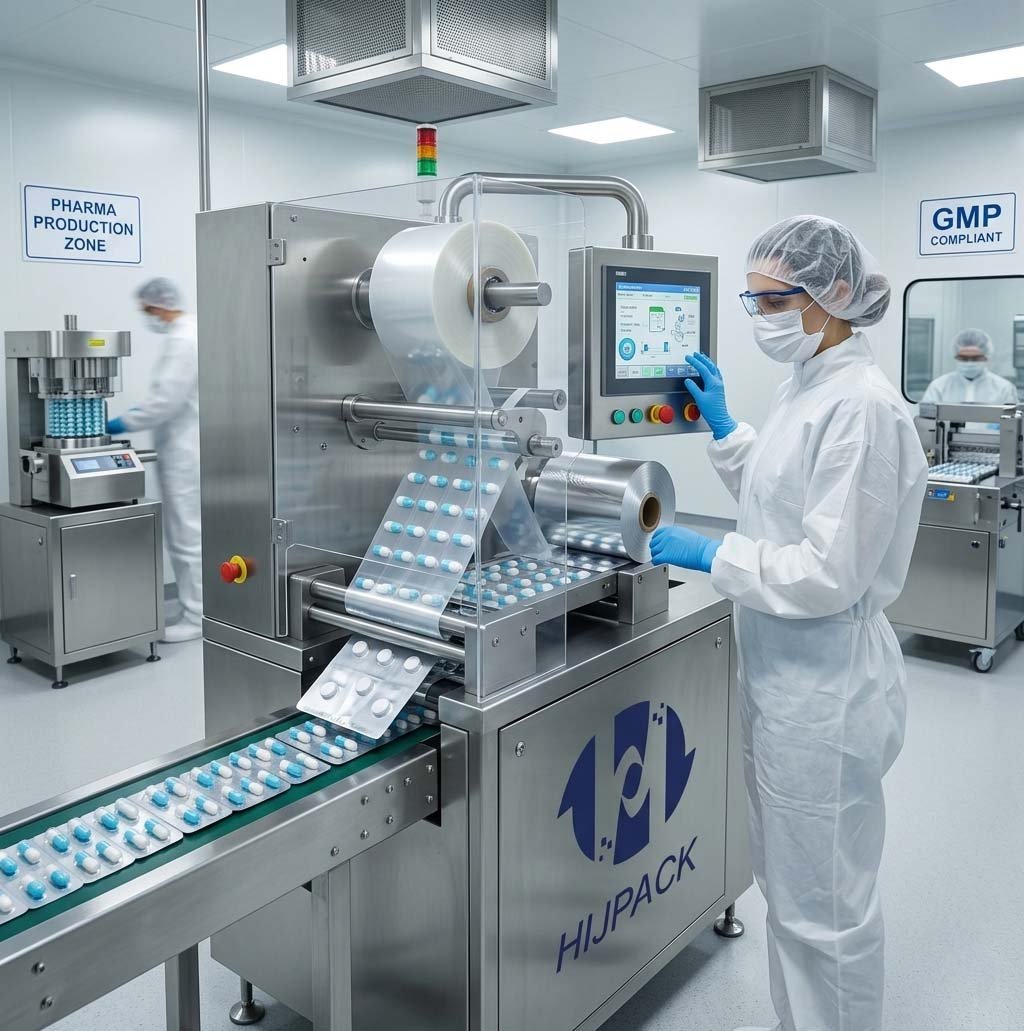
304/316L stainless contact surfaces, enclosed guarding, washdown-friendly framing and documented material certificates support GMP audits and cleanroom installation.
Fast format change
Quick-release forming and cutting tooling enables blister-size and product changes in under 30 minutes — see our tooling & format-change guide.
Coding & traceability
Embossing or thermal/inkjet printing applies batch number and expiry inline, with optional 21 CFR Part 11 audit-trail support for regulated markets.
Working principle

How the automatic blister cycle works
From base-film roll to finished, die-cut blister card, the machine runs five synchronised stations in one continuous pass.
Film forming
PVC/PVDC is heated and pressure/plug-formed into cavities — or Alu-Alu is cold-formed for high-barrier packs.
Product feeding
Brush or vibratory feeders place tablets/capsules into each cavity; sensors confirm fill.
Heat sealing
Aluminium lidding foil is heat-and-pressure sealed across the cavity web for an airtight pack.
Coding & embossing
Batch/expiry is embossed or printed; perforations are added for snap-off strips.
Die-cutting
Rotary or flat-plate punch separates finished blister cards and ejects web scrap.
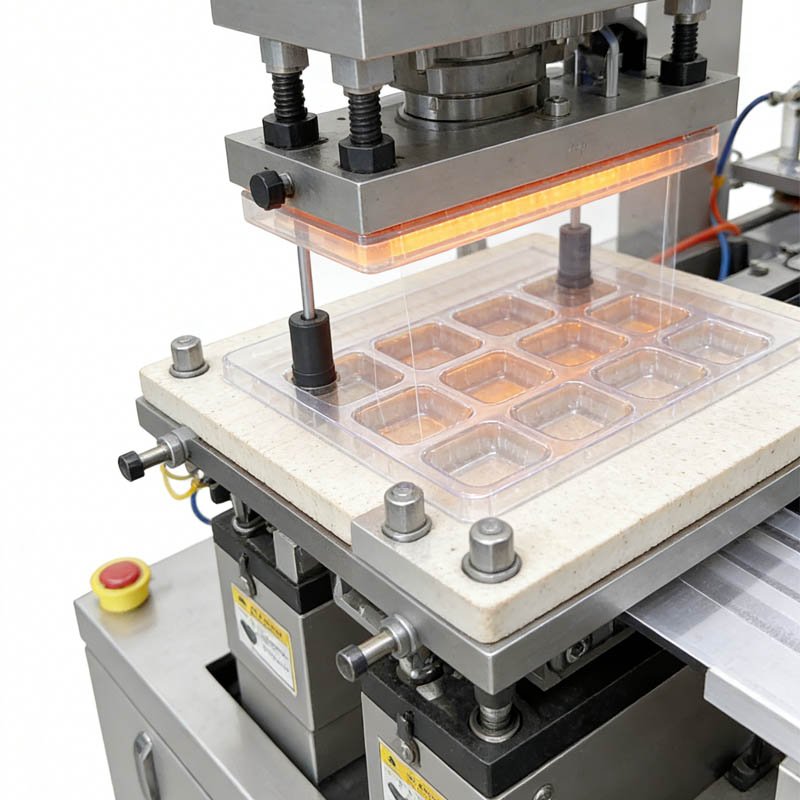
Forming & feeding station
The forming station heats and shapes the base web with servo-controlled depth, while the automated feeder precisely drops product into every cavity. A dual-roll holder keeps film tension constant for consistent cavity geometry.
- Plug-assist forming for deep cavities and softgels
- Brush-type feeder with photoelectric fill detection
- Quick-change forming molds — see forming materials guide
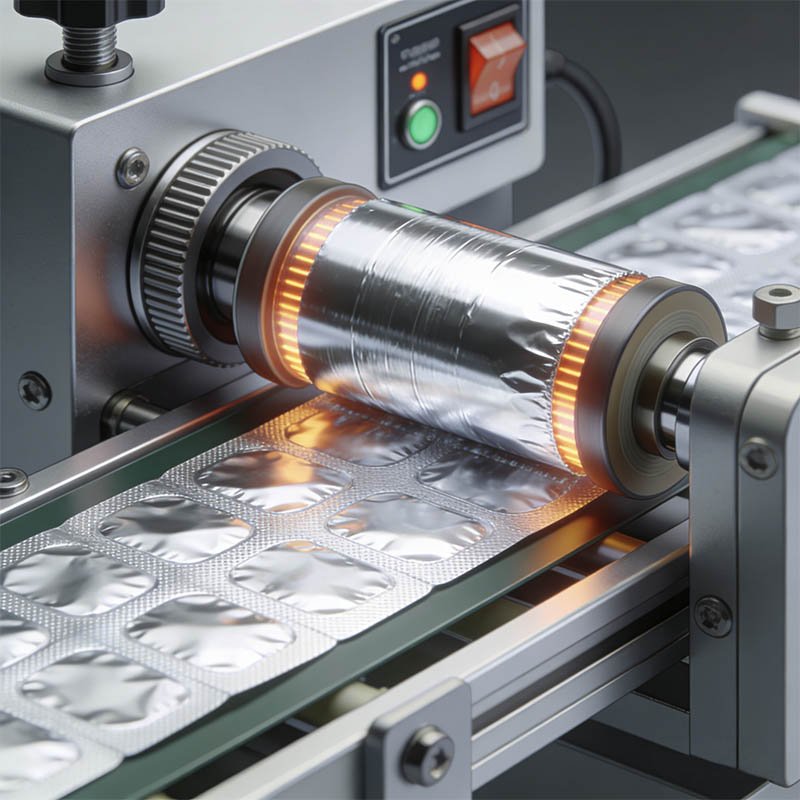
Sealing, coding & cutting
Heated rollers press the aluminium lidding foil onto the formed web for a leak-tight seal, followed by inline embossing and a precision die-cut. A waste-removal system clears scrap web automatically to keep the line running unattended.
- Temperature- and pressure-controlled sealing for foil integrity
- Rotary punch tooling for clean, burr-free blister edges
- Automatic waste removal & finished-product output conveyor
Technical data
DPP series — indicative specifications
Figures below are indicative across the DPP automatic blister range; final specifications are confirmed against your product, blister format and output target. See full DPP-250 specifications →
| Parameter | DPP-80 | DPP-140 | DPP-250 | DPP-260 (high speed) |
|---|---|---|---|---|
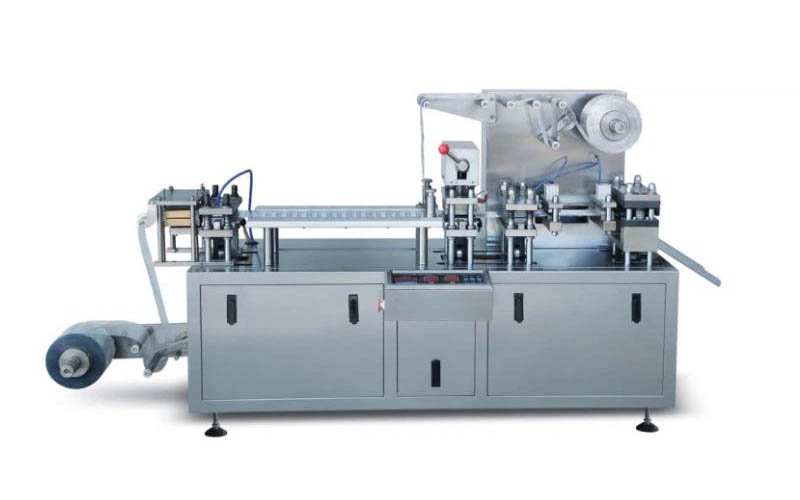
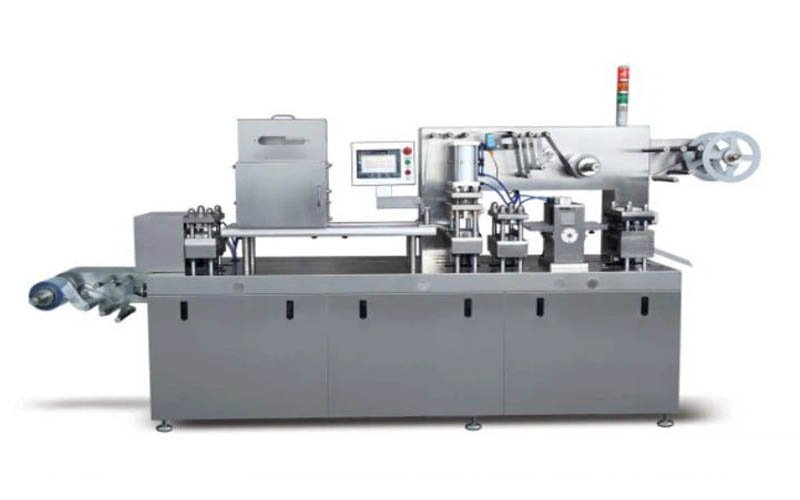
| Forming type | Flat plate | Flat plate | Flat / roller plate | Roller plate, fully auto |
| Output (punches/min) | 30–40 | 25–55 | 30–60 | up to 80 |
| Max forming area | 80×100 mm | 140×80 mm | 250×150 mm | 260×150 mm |
| Max forming depth | 12 mm | 26 mm | 35 mm | 35 mm |
| Base films | PVC | PVC, PVC/PVDC | PVC, PVC/PVDC, Alu | PVC, PVC/PVDC, Alu-Alu |
| Lidding foil | PTP aluminium | PTP aluminium | PTP aluminium | PTP aluminium |
| Drive | Mechanical/servo | Servo-assisted | Servo | Full servo |
| Control | PLC + HMI | PLC + HMI | PLC + HMI | PLC + HMI, recipe |
| Compliance | cGMP-ready | cGMP-ready | cGMP, CE-marked | cGMP, CE-marked |
Need cold-form Alu-Alu only? See the dedicated cold-form blister machine and Alu-Alu blister packing machine.
Material choice
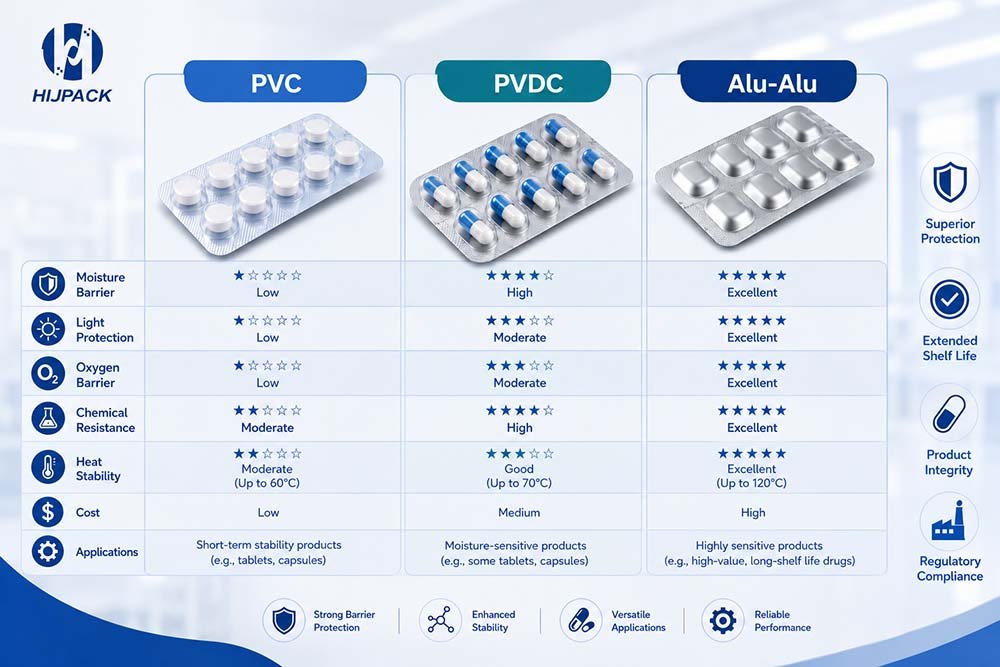
Alu-Alu vs PVC vs PVC/PVDC
The same automatic platform handles three barrier classes. Choosing the right film depends on your drug's sensitivity to moisture, oxygen and light, plus your target shelf life and cost.
| Property | PVC | PVC/PVDC | Alu-Alu |
|---|---|---|---|
| Moisture barrier | Basic | Good | Highest |
| Light barrier | Low | Medium | Opaque |
| Forming | Thermoform | Thermoform | Cold form |
| Pack clarity | Clear | Clear | Opaque |
| Relative cost | Lowest | Mid | Highest |
Applications
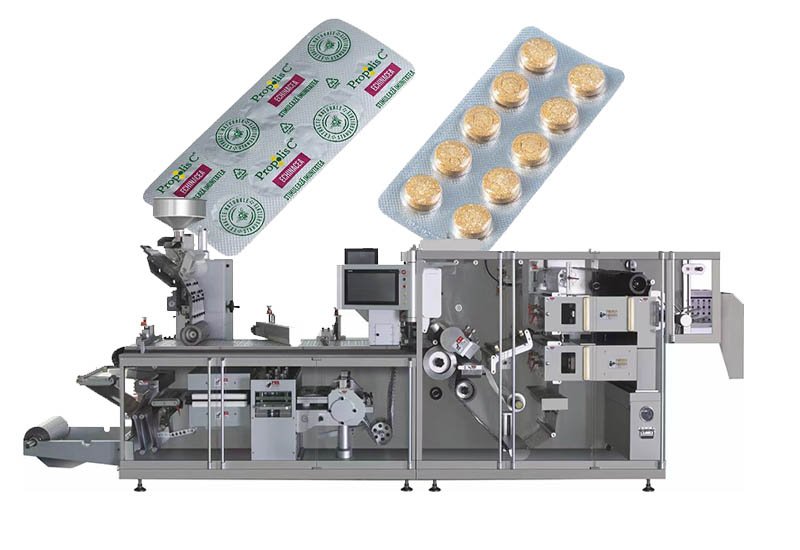
What you can blister-pack

Compliance & engineering


Engineered to pass audits — not just to pack
Every HIJ automatic blister machine is built around international compliance: cGMP-ready construction, CE marking, ISO 9001 manufacturing and complete validation support. Core electrics use globally serviceable components so your maintenance team is never locked out.






21 CFR Part 11 · WHO-GMP · CE certification · Why choose HIJ
Explore the range
Related blister & packaging machines
FAQ
Automatic blister packing machine — FAQ
What is the working principle of an automatic blister packing machine?
It runs five synchronised steps in one cycle: the base film (PVC/PVDC) is heated and formed into cavities — or Alu-Alu is cold-formed — then product is automatically fed into each cavity, aluminium lidding foil is heat-sealed over the web, batch/expiry codes are embossed or printed, and a punch die-cuts the finished blister cards. See our speed & output guide for cycle details.
What is the difference between Alu-Alu and PVC blister packaging?
PVC (and PVC/PVDC) is thermoformed and produces clear blisters with basic-to-good barrier protection. Alu-Alu is a cold-formed aluminium laminate that is opaque and gives the highest moisture, oxygen and light barrier — ideal for moisture-sensitive or photosensitive drugs. The HIJ automatic platform runs both. Read the full Alu-Alu vs PVC comparison.
How many blisters per minute can the machine produce?
Output depends on model and blister format: smaller DPP-80/140 units run roughly 25–55 punches per minute, the DPP-250 reaches 30–60, and the high-speed fully automatic DPP-260 can run up to about 80 punches per minute. Each punch can carry multiple blister cards, so finished-pack throughput is higher.
Is the machine GMP and FDA compliant?
The machine is built with cGMP-ready construction (stainless contact parts, enclosed guarding, documented materials) and ships CE-marked from an ISO 9001 facility, with full IQ/OQ/PQ validation and optional 21 CFR Part 11 audit-trail support. Note that the FDA certifies drug products and facilities, not packaging equipment — so we provide cGMP-compliant, FDA-inspection-ready design rather than an "FDA-approved machine" claim.
Which films and materials are supported?
Base webs: PVC, PVC/PVDC, PVC/PE and cold-form Alu-Alu laminate. Lidding: PTP hard-temper aluminium foil. Optional child-resistant and peel-push configurations are available. See the forming materials guide.
How long does a format changeover take?
With quick-release forming and cutting tooling, a trained operator typically completes a blister-size or product changeover in under 30 minutes. Recipe storage in the PLC restores all servo and temperature settings automatically — details in the tooling & format-change guide.
How much does an automatic Alu/PVC blister packing machine cost?
Price depends on model, output speed, film type (PVC vs Alu-Alu), inspection options and tooling. Because configurations vary widely, we quote per project rather than list a fixed price. Request a tailored quotation, or review the 2026 blister machine price guide and ROI calculator.
What is the lead time and after-sales support?
Typical build lead times and the production schedule are covered in our lead-time guide. Every machine includes installation support, operator training, spare-parts kits and remote technical assistance. Contact our engineers to plan your project.
Ready to spec your blister line?
Tell us your product, blister format and target output. Our engineers will recommend the right DPP/DPH configuration and send a turnkey quotation — from blister machine to cartoning and case packing.