
Material Selection Guide
PVC vs PVDC for Syringe Blister Packaging
A data-driven comparison of PVC, PVDC-coated PVC, and Alu-Alu films for syringe blister packs — barrier performance, cost, and which to specify for your formulation.
PVC
Economy
vs
PVDC
High Barrier
vs
Alu-Alu
Maximum
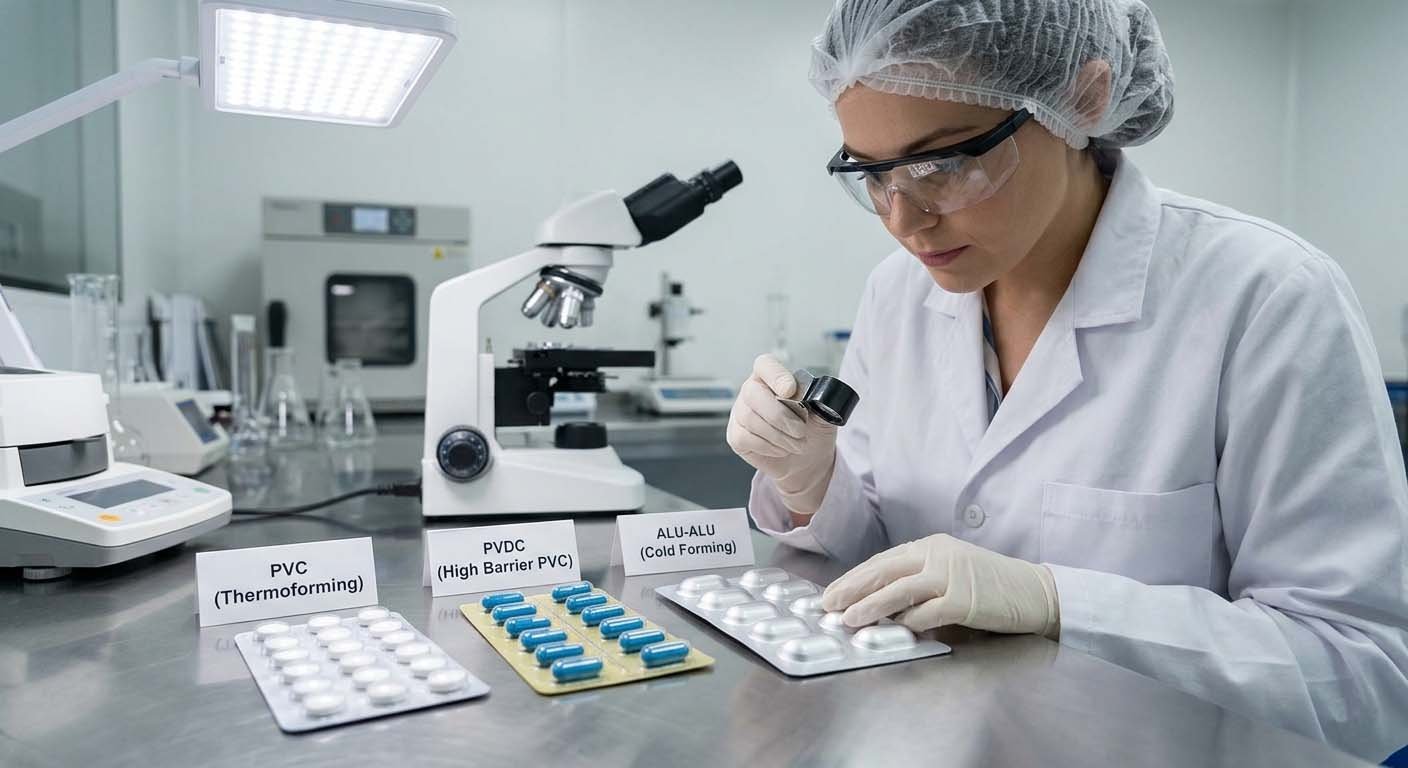
Quick Answer: PVC or PVDC for Syringe Blister Packaging?
For syringe blister packaging, PVC is the economical choice for standard disposable syringes with no moisture sensitivity, while PVDC-coated PVC is the industry standard for prefilled syringes and moisture-sensitive formulations, offering 5–10× better moisture barrier. For light-sensitive biologics, insulin, and vaccines, Alu-Alu cold-form film provides near-absolute barrier protection.
The key difference: PVC alone has a water vapor transmission rate (WVTR) of about 3.0 g/m²/day, PVDC-coated PVC reduces this to 0.15–0.5 g/m²/day, and Alu-Alu achieves a near-zero WVTR. The HIJ-260S syringe blister packing machine supports all three materials with simple tooling and temperature adjustments.
Side-by-Side Data
PVC vs PVDC vs Alu-Alu: Complete Comparison
Objective performance data to help you specify the correct forming film for your syringe blister packaging line.
| Property | PVC | PVDC-Coated PVC | Alu-Alu (Cold Form) |
|---|---|---|---|
| Moisture Barrier (WVTR) | ~3.0 g/m²/day | 0.15–0.5 g/m²/day | Near zero |
| Oxygen Barrier | Low | Good | Excellent |
| Light Protection | ✗ None | ✗ Limited | ✓ Complete |
| Relative Material Cost | $ (baseline) | $$ (1.5–2×) | $$$ (3–4×) |
| Forming Temperature | 120–140°C | 125–145°C | Cold form (no heat) |
| Pack Transparency | ✓ Clear | ✓ Clear | ✗ Opaque |
| Shelf Life Extension | Standard | +30–50% | +100% or more |
| Best For | Disposable syringes | Prefilled, moisture-sensitive | Biologics, insulin, vaccines |
Material Deep Dive
When to Choose Each Material
Each forming film has an ideal application. Here's how to match the material to your syringe and drug type.
PVC
Economy Choice
The most widely used and cost-effective forming film. Ideal for standard disposable syringes where the contents are not moisture or light sensitive.
- Lowest material cost
- Crystal-clear transparency
- Easy thermoforming at 120–140°C
- Limited moisture barrier
- No light protection
Recommended
PVDC-Coated PVC
Industry Standard
PVC laminated with a PVDC barrier layer (60–90 g/m²). The go-to choice for prefilled syringes and any formulation needing enhanced protection while keeping pack transparency.
- 5–10× better moisture barrier than PVC
- Good oxygen barrier
- Maintains pack clarity
- 30–50% shelf-life extension
- Compatible with standard thermoforming
Alu-Alu (Cold Form)
Maximum Protection
Aluminum-laminate cold-form film offering near-absolute barrier. Required for light-sensitive biologics, insulin, vaccines, and any product needing the longest possible shelf life.
- Near-zero moisture & oxygen ingress
- Complete light protection
- Doubles shelf life or more
- No heat needed (cold forming)
- Opaque (contents not visible)
Decision Framework
How to Choose in 4 Questions
Answer these in order to arrive at the right material for your syringe blister pack.
1
Is the drug or content light-sensitive?
If YES → Go straight to Alu-Alu. Light-sensitive biologics, insulin, and many vaccines require complete light blockout that only aluminum laminate provides.
2
Is it moisture-sensitive or a prefilled syringe?
If YES → Choose PVDC-coated PVC. The PVDC layer cuts moisture transmission by 5–10× while keeping the pack transparent for visual inspection.
3
Do you need to see the syringe through the pack?
If YES → Stay with PVC or PVDC. Alu-Alu is opaque. For pharmacy or retail display where visibility matters, transparent films are essential.
4
Is cost the primary constraint?
If YES and no special protection is needed → PVC is your most economical option for standard disposable syringes.
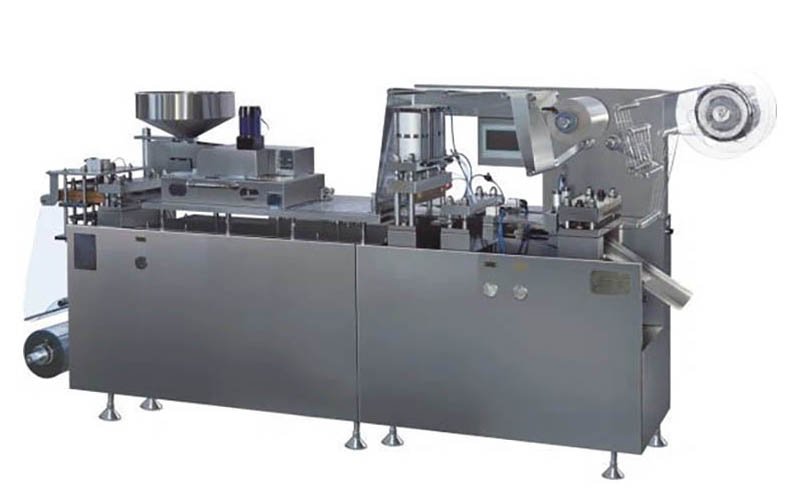
One Machine, All Materials
HIJ-260S Runs PVC, PVDC & Alu-Alu
Don't lock yourself into one material. The HIJ-260S syringe blister packing machine handles all three forming films with simple tooling and temperature adjustments — so you can serve different product lines on a single line.
- Thermoforming for PVC & PVDC (120–145°C)
- Cold-forming station for Alu-Alu
- Recipe-based changeover stores material profiles
- Servo feeding adapts to any syringe size
Material FAQ
Common Questions on Syringe Blister Materials
What is the main difference between PVC and PVDC blister film?
PVC is a single-layer thermoplastic film with a moderate moisture barrier (WVTR ~3.0 g/m²/day). PVDC-coated PVC adds a polyvinylidene chloride barrier layer that reduces moisture transmission to 0.15–0.5 g/m²/day — a 5–10× improvement — while keeping the pack transparent. PVDC is the standard for moisture-sensitive syringe products.
Is PVDC worth the extra cost for syringe packaging?
For prefilled syringes, vaccines, and moisture-sensitive drugs, yes — the 30–50% shelf-life extension and reduced product degradation usually outweigh the 1.5–2× higher material cost. For standard dry disposable syringes, plain PVC is sufficient and more economical.
When should I use Alu-Alu instead of PVDC?
Choose Alu-Alu cold-form when the product is light-sensitive (insulin, biologics, certain antibiotics) or requires the absolute longest shelf life. Alu-Alu provides near-zero moisture and oxygen ingress plus complete light blockout, but the pack is opaque and costs 3–4× more than PVC.
Can one machine run all three materials?
Yes. The HIJ-260S supports PVC, PVDC, and Alu-Alu through interchangeable tooling and adjustable forming parameters. Thermoforming handles PVC and PVDC, while a cold-forming station processes Alu-Alu. Recipe storage on the Siemens HMI makes switching between materials fast.
What forming temperature does each material require?
PVC forms at 120–140°C, PVDC-coated PVC at 125–145°C (slightly higher due to the barrier layer), and Alu-Alu uses cold forming with no heat — the aluminum is mechanically pressed into shape. The HIJ-260S adjusts these automatically by stored recipe.
Does PVDC affect blister pack recyclability?
PVDC-coated PVC is harder to recycle than mono-material PVC because of the laminate layers. If sustainability is a priority, mono-material PVC or newer PET-based barrier films are alternatives, though they offer lower moisture protection. This is an evolving area in pharmaceutical packaging regulation.
Not Sure Which Material You Need?
Tell us your syringe type, drug formulation, and shelf-life target. Our packaging engineers will recommend the optimal forming film and machine configuration — free of charge.