Servo vs. Mechanical Drive in Blister Packing: A Total Cost of Ownership Analysis
Don’t just look at the initial price tag. We’re breaking down the numbers to reveal which drive technology truly saves you money in the long run.

Which Drive System Offers a Better ROI?
When analyzing the Total Cost of Ownership (TCO), a servo-driven blister packing machine consistently delivers a superior long-term Return on Investment (ROI) compared to a mechanical drive. While mechanical machines have a lower initial purchase price, servo systems generate significant savings over time by drastically reducing material waste (up to 3-5%), slashing format changeover times from hours to under 30 minutes, and minimizing maintenance costs due to fewer wearing parts. This increased uptime, higher operational efficiency, and pinpoint precision translate directly into higher output and a healthier bottom line, making the higher initial investment for a servo machine pay for itself within 18-36 months.
In This Article:
- Understanding the Traditional Mechanical Drive
- Introducing the Modern Servo Drive
- The TCO Breakdown: A Head-to-Head Comparison
- An Expert’s Perspective: Beyond the Spec Sheet
- Calculating the Real ROI: When Servo Pays for Itself
- The HIJ Solution: European Quality, Smart Pricing
- Frequently Asked Questions
Understanding the Traditional Mechanical Drive
For decades, mechanical drives have been the workhorses of the packaging industry. These systems rely on a main motor that powers a complex network of cams, gears, shafts, and chains to synchronize the different stations of the blister packing process—forming, filling, sealing, and cutting. Think of it like a clockwork mechanism, where every movement is physically linked to the next.
- Pros: The primary advantage is a lower initial capital expenditure (CapEx). The technology is also familiar to many long-serving maintenance technicians.
- Cons: The complexity is its downfall. Wear and tear on numerous moving parts leads to frequent maintenance, synchronization issues, and costly downtime. Format changes are a grueling, manual process involving mechanical adjustments that can take hours, leading to significant production losses.
Introducing the Modern Servo Drive
A servo-driven system represents a paradigm shift in machine control. Instead of one main motor and a cascade of mechanical links, it uses multiple independent servo motors, one for each key station. These motors are controlled digitally by a central PLC (Programmable Logic Controller). Each motor’s position, speed, and torque are monitored and adjusted in real-time, providing unparalleled precision and flexibility.
- Pros: Extreme precision, digital control, and repeatability. Format changeovers are recipe-driven and can be completed in minutes via a touchscreen HMI. Fewer mechanical parts mean drastically reduced maintenance and higher reliability.
- Cons: The main drawback is a higher initial investment compared to mechanical systems.
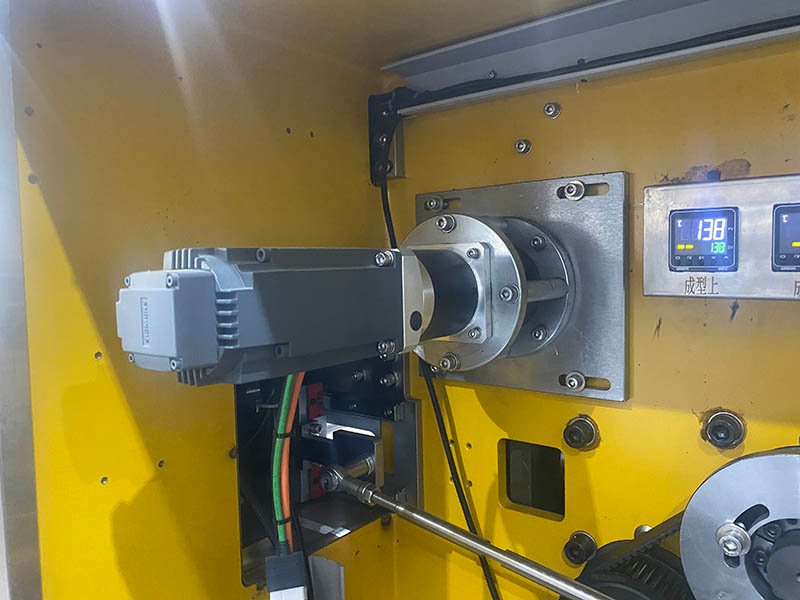
The clean, simplified architecture of servo motors versus complex mechanical linkages.
The TCO Breakdown: A Head-to-Head Comparison
The initial quote is just the tip of the iceberg. Here’s where the real costs lie.
1. Material Waste: The Silent Profit Killer
Mechanical: Due to mechanical inertia and synchronization delays, material waste is inherent. During startup, stopping, and especially after a jam, you can lose significant lengths of valuable PVC/PET and lidding foil. A conservative estimate is 1-3% material wastage.
Servo: With precise digital control, the machine can start and stop almost instantly with perfect registration. This “intelligent start/stop” function can reduce material waste to less than 0.5%.
The Bottom Line: For a line running two shifts, saving 2% on material that costs $5/kg can easily translate to over $15,000 in savings annually.
2. Changeover Downtime: Time is Money
Mechanical: A format changeover is a labor-intensive ordeal. Technicians need to physically swap out gears, adjust cams, and fine-tune linkages. This process typically takes 3-5 hours and requires skilled personnel.
Servo: Changeovers are a “digital” process. The operator selects the new product recipe from the HMI, makes a few quick tool-less part swaps, and the machine is ready. The entire process takes less than 30 minutes.
The Bottom Line: If a production line is worth $500/hour, a single 4-hour mechanical changeover costs $2,000 in lost production. With two changeovers a week, that’s over $200,000 in lost revenue potential per year compared to a servo machine.
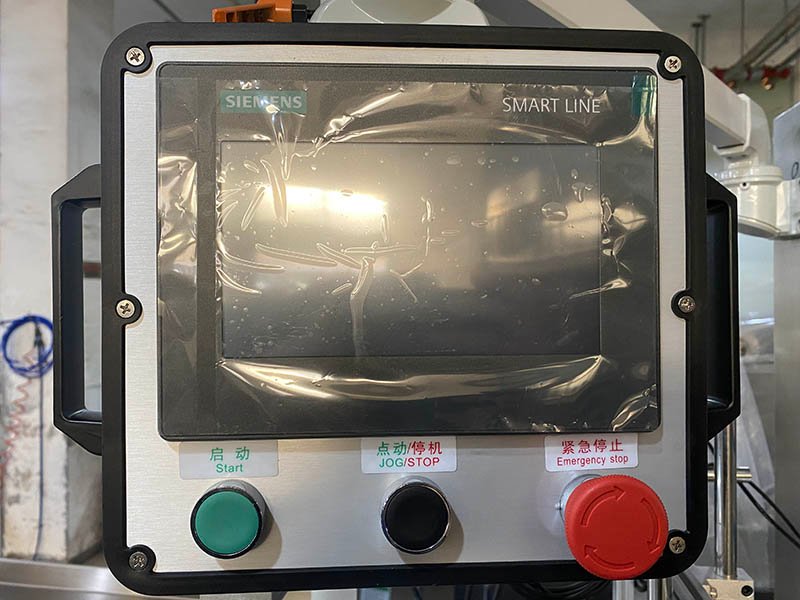
Recipe management on a modern HMI enables sub-30-minute changeovers.
3. Maintenance & Spare Parts: The Hidden Costs
Mechanical: The sheer number of moving parts—chains that stretch, gears that wear, bearings that fail—creates a constant need for lubrication, adjustment, and replacement. You need to stock a large inventory of mechanical spare parts.
Servo: The system is mechanically simple. Servo motors are brushless and designed for millions of cycles with minimal maintenance. The primary “spares” are electronic components, which are far more reliable and compact.
The Bottom Line: Mechanical machines can incur 3-4 times the annual maintenance and parts cost of a servo-driven equivalent. This means reduced technician time spent on reactive repairs and more on proactive improvements.
“Over my 20 years of troubleshooting production lines from South America to Southeast Asia, I’ve watched countless buyers fall into the same trap: choosing a mechanical-drive blister machine to save on the initial quote. Yes, mechanical drives might protect your budget on Day 1, but they will quietly bleed your margins by Year 3 through grueling 4-hour format changeovers, mechanical wear, and synchronization failures.
When we talk about Total Cost of Ownership (TCO), Servo technology isn’t just a ‘premium upgrade’—it’s a survival tool for modern pharmaceutical manufacturing. At HIJ, we engineered our blister packing machines to solve the classic dilemma: you shouldn’t have to pay inflated European prices to get top-tier servo reliability. We integrate advanced servo systems to ensure your production is agile, fully GMP-compliant, and ultimately, far more profitable in the long run. Don’t just look at the price tag; invest in your uptime.”
Calculating the Real ROI: When Servo Pays for Itself
Let’s put it all together. While the initial cost of a servo machine might be 20-30% higher, the operational savings quickly close the gap. By adding up the annual savings from reduced material waste, eliminated downtime, and lower maintenance, most companies find that the servo machine’s premium is paid back within 18 to 36 months.
After the payback period, the servo machine doesn’t just cost less to own—it becomes a profit center, generating significantly more revenue year after year due to its superior Overall Equipment Effectiveness (OEE).
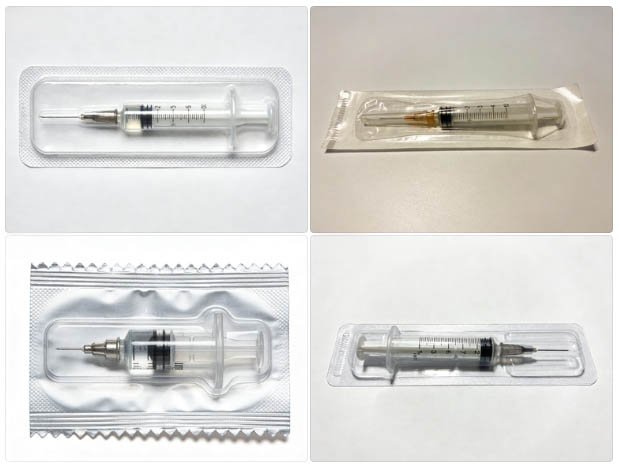
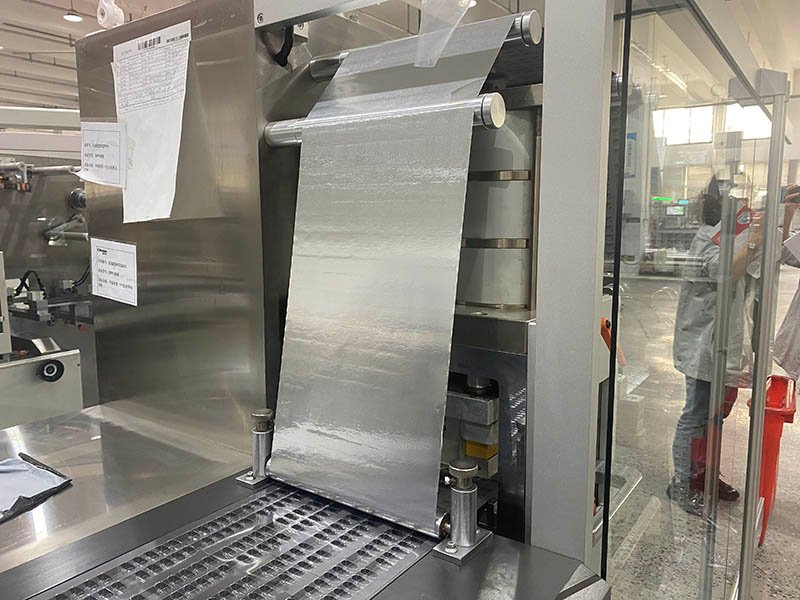
Flawless product quality, a direct benefit of precise servo control.
The HIJ Solution: Advanced Servo Performance, Smart Investment
At HIJ Machinery, we believe world-class technology should be accessible. We have spent 20 years perfecting our servo-driven blister packing machines, integrating top-tier components from brands like Siemens and Allen-Bradley. Our expertise allows us to deliver the performance, reliability, and TCO benefits of a European machine at a price point that makes sense for your business. We don’t just sell you a machine; we deliver a long-term competitive advantage.
Request a Custom TCO AnalysisFrequently Asked Questions
Is a servo machine harder for my team to operate and maintain? ▼
Quite the opposite. Operation is simplified through a user-friendly touchscreen HMI. For maintenance, while it requires some basic electronic know-how, troubleshooting is often easier as the PLC provides specific error codes, pinpointing the exact issue, unlike the guesswork often involved in diagnosing mechanical problems.
Can a servo machine handle delicate or difficult-to-feed products? ▼
Yes, this is a major strength. Servo drives allow for customized motion profiles. This means the feeding, sealing, and cutting actions can be programmed to be gentler and more precise, making them ideal for fragile tablets, softgels, or complex-shaped products that would jam a purely mechanical system.
How does a servo drive improve GMP compliance? ▼
Servo systems excel in GMP environments. They have fewer mechanical parts, which means fewer lubrication points and less particulate generation. All operational parameters (speed, temperature, pressure) are digitally controlled, monitored, and can be logged for batch records, supporting 21 CFR Part 11 compliance and ensuring process repeatability and validation.
What is the typical lifespan difference between a mechanical and servo machine? ▼
While both can have long service lives with proper care, servo machines generally maintain their “as-new” precision for much longer. Mechanical machines suffer from cumulative wear that degrades performance over time, requiring major overhauls. Servo systems, with their reduced mechanical wear, can often run for over a decade with only minimal electronic component replacement, maintaining high efficiency throughout their lifespan.