2026 procurement guide · price, scope and total cost
An automatic capsule filling machine price is useful only when it identifies the model, formulation, capsule tooling, accepted-output basis, auxiliaries, documentation, delivery term and acceptance test. This guide shows how to turn a headline price into a comparable project budget.
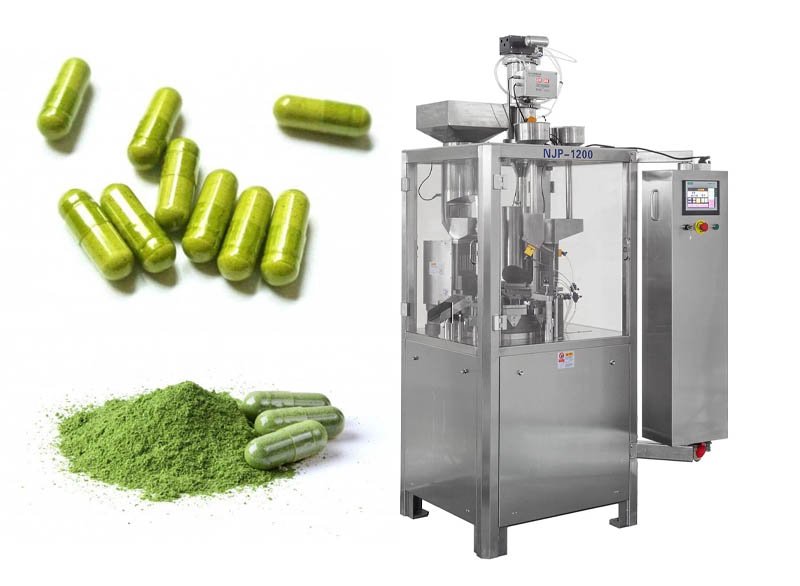
What does an automatic capsule filling machine cost in 2026?
There is no defensible universal price for every automatic capsule filler. Machine size, formulation, dosing system, capsule formats, feeders, dust extraction, finishing equipment, controls, qualification support and delivery boundary can materially change the quotation.
Those references do not define a market-wide range and should not be converted into a budget without checking what is included. A lower-output powder machine, a higher-output commercial platform and a specialized liquid-in-hard-capsule system are different projects even when all are described as automatic.
Why this guide does not publish an invented market range
Online price ranges often combine bench equipment, semi-automatic machines, used machines, base fillers, complete lines and regulated projects. The endpoints may look precise while the compared scopes are unrelated. Currency movement, options, delivery terms and market-specific service make a fixed global range age quickly.
A useful price guide should disclose the source and date of every numeric reference, separate historical evidence from a current offer and show the technical inputs needed to update the number. That approach produces fewer dramatic figures but a better capital decision.
Current HIJ price references and their boundaries
| Reference | Price status | Published boundary | Buyer action |
|---|---|---|---|
| NJP-800C powder filler | Historical: RMB 124,200 FOB China, quote dated 4 June 2025 and valid one month | One 0# change-part set, dust collector, PLC and touchscreen were identified in the source package | Request a new price for the actual powder, capsule sizes, options and destination |
| NJP-1200C automatic filler | No fixed current public price | Configured around formulation, tooling, controls, documents and project boundary | Issue the defined application and required accepted output |
| NJP-2500C commercial filler | Current website starting reference: USD 60,000+ FOB China port | Base reference; tooling, dosing options, auxiliaries, documents, FAT and service may change it | Request included, optional, excluded and supplied-by-others lines |
Review the current NJP-800C powder capsule filler, NJP-1200C automatic capsule filler and NJP-2500C commercial capsule filler pages before relying on these references. Ask for a new quotation if any source or commercial condition has changed.
What changes an automatic capsule filling machine quotation?
Product and dose
Powder flow, density, compaction, pellets, granules, tablets or liquid determine the dosing route and trial work.
Machine and output
Required accepted capsules per shift—not only rated speed—determines the appropriate platform and line balance.
Tooling and auxiliaries
Capsule sizes, feeders, polishing, inspection, dust extraction and downstream handling expand the equipment boundary.
Evidence and delivery
Documents, FAT, packing, Incoterm, commissioning, training, spares and site work change the commercial boundary.
Every quotation should connect each price line to one of these decisions. A lump sum prevents the buyer from seeing whether a difference comes from stronger scope, a missing item or simply a different commercial assumption.
Compare machine classes before comparing prices
| Equipment route | Typical operating model | Main cost drivers | Decision question |
|---|---|---|---|
| Bench or small-batch | Development, trials or low-volume work with substantial operator handling | Manual steps, batch tools, cleaning and repeatability | Does the process need production automation? |
| Semi-automatic | Operators transfer or control more filling and closing steps | Labour, batch time, handling and changeover | Is operator-assisted production sustainable at the planned demand? |
| Automatic powder | Integrated indexed cycle for qualified powder, pellet or supported combination fills | Output class, dosing parts, capsule tooling, dust and controls | Which formulation and accepted output will be demonstrated? |
| Higher-output commercial | Longer campaigns or multi-shift production with upstream and downstream equipment | Line balance, feeders, inspection, maintenance and spares | Can the whole line use the filler’s rated capacity? |
| Liquid hard-capsule | Dedicated liquid dosing plus leakage-control and sealing strategy | Product path, dosing, sealing, cleaning and environmental needs | Has the formulation-shell system been qualified? |
Rated speed is not the capacity you should buy
A published maximum helps screen a machine family, but the capital decision should use accepted capsules produced under defined conditions. Capsule quality, powder behavior, replenishment, sampling, stops, rejects, cleaning, changeover and downstream constraints reduce the time available for saleable output.
Define the unit clearly: capsules per minute, hour, batch or shift. State whether the result is rated output, gross production or accepted capsules after rejects. During FAT, record both elapsed time and every interruption so bidders are compared on the same boundary.
Formulation and dosing hardware can change the price class
Powder flow, bulk and tapped density, particle-size distribution, moisture response, static, cohesion, compaction and segregation influence dose formation. Pellets, mini-tablets, combinations and supported liquids can require different dosing and product-handling systems.
Send representative material and define the fill target, permitted variation, sampling plan and test method. If the production formula cannot be supplied, agree a placebo that reproduces the risk-driving properties. A visually similar powder is not automatically a valid substitute.
Capsule shell and size determine the tooling scope
The supplier needs the shell material, manufacturer, size, locking style, tolerances and representative lots. Do not assume that one format set covers all capsule sizes or that capsules with the same nominal size behave identically.
List every launch and planned future format. The quotation should identify the included change parts, storage, setup aids, gauges and price for each additional set. Future tooling lead time and requalification effort belong in the lifecycle comparison.
Feeding and dust extraction are part of the machine boundary
An automatic filler still needs controlled delivery of empty capsules and formulation. The quote should identify manual loading, automatic capsule loading, powder feeding, product-level controls, vacuum, dust collection and the interface to the facility extraction system.
Clarify which supplier owns each hose, fan, filter, sensor, interlock and connection. A dust collector listed beside the machine is not the same as a complete containment or room-pressure strategy.

Polishing, inspection and rejection can be separate line items
A base filler may discharge closed capsules without polishing, sorting, metal detection, weight control or downstream packing. Define the finished-product boundary and the defect conditions each device must detect.
For every inspection function, specify test pieces or challenge samples, sensitivity or acceptance logic, reject confirmation, reject-bin security, event records and response to a failed challenge. Equipment names alone do not define performance.
Controls and electronic records need an intended-use specification
A PLC and touchscreen do not automatically provide the user management, recipes, alarm history, audit trail, backup, restore, time synchronization, data export or network controls a site may need. State intended use and required functions before asking for a price.
If electronic records or signatures are used to meet regulated requirements, the buyer’s quality and IT teams should define the applicable boundary. Avoid paying for undefined “readiness,” but also avoid discovering after installation that required functions, licenses or validation evidence were excluded.
Documentation scope can make two base prices incomparable
“Standard documents” and “validation package” are not sufficient descriptions. Ask for an index and representative redacted samples. Define language, format, review cycles, approvals and delivery milestones.
| Document group | Define before order | Common gap |
|---|---|---|
| Design | URS response, functional description, drawings, components and utilities | A brochure replaces a controlled project specification |
| Operation | Installation, operation, cleaning, maintenance and troubleshooting manuals | Generic manuals arrive after FAT |
| Quality evidence | Material records, calibration evidence, FAT protocol/report and deviation log | Certificates are named without applicable items or acceptance use |
| Qualification support | DQ/IQ/OQ content, execution responsibility and editable files | Supplier templates are mistaken for the buyer’s completed validation |
| Lifecycle | Spare-parts list, drawings, backups, licenses and change control | Access or source information remains unclear |
FAT scope changes both price and project risk
A witnessed factory acceptance test requires agreed product, capsules, duration, staffing, instruments, measurements, challenge tests and reporting. Those items consume engineering and machine time, so they should be priced and scheduled explicitly.
- Confirm the build. Match model, tooling, dosing system, auxiliaries, controls and documents to the approved order.
- Run representative material. Record product and capsule lots, settings, conditions and approved substitutions.
- Challenge operation. Test feeding, separation, dosing, rejection, closing, alarms, stops and restarts.
- Measure accepted output. Record totals, rejects, interventions, samples and elapsed time on one agreed basis.
- Close deviations. Assign owner, correction, retest, evidence, due date and shipment effect.
Delivery terms can hide a large quotation difference
FOB, CIF and delivered offers allocate transport, insurance, import, unloading and risk differently. Compare all bidders at the same named place and Incoterm. Record export packing, container plan, freight assumptions, destination charges, duties, taxes, customs support and inland delivery separately.
Do not convert an FOB machine price directly into an installed-site budget. The buyer should obtain current logistics and import costs from the responsible providers for the actual destination and shipment date.
Installation, commissioning and training must name responsibilities
Clarify whether the price includes remote guidance, an on-site engineer, travel, visas, accommodation, local labour, lifting, utilities, startup material, interpretation and return visits. State when the site must be ready and who confirms readiness.
Training should identify audience, language, duration, topics, materials and completion evidence. Operator training, maintenance training and quality-system training are different scopes.
Spare parts and lifecycle support affect total cost
Separate startup spares, consumables, wear parts, critical spares, format parts and recommended inventory. Ask for part numbers, quantities, storage conditions, expected inspection needs and the method for ordering replacements.
Service claims should name engineer locations, support hours, languages, remote-access rules, escalation, parts dispatch and chargeable work. A warranty period does not describe downtime risk, and a common component brand does not guarantee local availability for the supplied version.
Cleaning and changeover create recurring production cost
Purchase price occurs once; cleaning and format work recur. Compare the number of parts removed, tools required, access, identification, wash method, drying, reassembly, setup verification and line-clearance records.
The relevant time depends on formulation, containment, cleaning procedure, capsule format, operator method and release evidence. Do not publish or accept one universal changeover time. Demonstrate the buyer’s selected route during FAT or site qualification.
Containment is a project boundary, not a cabinet label
Dusty, sensitizing or potent materials may require risk-based enclosure, extraction, pressure control, safe access, cleaning and waste handling. The machine supplier, facility, HVAC, procedures and personal protection may have different owners.
Define the target exposure-control strategy with qualified site specialists, then ask the machine supplier to state exactly what is included and how interfaces will be verified. Do not infer containment performance from stainless steel, closed doors or a dust port.
Downstream equipment can decide the correct filler size
Polishers, metal detectors, counters, blister packers, bottle lines and cartoners may limit accepted output. Define transfer, accumulation, reject tracking, start-stop handshakes, line control, data exchange and responsibility for integrated testing.
Buying excess filler capacity can add cost without increasing shipped product. Conversely, an undersized filler can starve a downstream packer. Use the demonstrated operating rate and planned product mix to balance the complete line.

Build a total project budget instead of a machine-only budget
| Budget group | Possible line items | Evidence source |
|---|---|---|
| Core equipment | Filler, dosing route, capsule tooling, feeders and dust handling | Itemized supplier quotation |
| Finishing and packing | Polishing, inspection, detection, counting, blistering or cartoning | Line scope and interface specification |
| Engineering and quality | Drawings, software, FAT, qualification support and change control | Document index and responsibility matrix |
| Delivery and site | Packing, freight, import, unloading, utilities, installation and commissioning | Named Incoterm plus site estimates |
| Operations | Labour, cleaning, rejects, maintenance, consumables, spares and downtime | Buyer assumptions and test evidence |
Keep supplier amounts, third-party estimates and buyer operating assumptions in separate columns. This exposes uncertainty and makes later revisions traceable.
Compare total cost per accepted capsule
A low purchase price may not remain low when it creates higher labour, more rejects, slower cleaning or longer downtime. A higher price is not automatically justified either; extra capacity and controls have value only when the project uses them.
Use the same production horizon, currency date, discount assumptions, shift pattern, product mix and accepted-output definition for every option. Test optimistic and conservative cases rather than presenting one payback number as certain.
Normalize every supplier quotation line by line
| Scope area | Normalize | Question that exposes the gap |
|---|---|---|
| Machine | Model, output class, dosing route and electrical configuration | Which controlled specification governs the supplied build? |
| Formats | Included capsule sizes and future change parts | How many complete tooling sets are in the price? |
| Auxiliaries | Feeding, extraction, polishing, inspection and transfer | Which items are included, optional or supplied by others? |
| Evidence | Trials, FAT, documents and qualification support | Which deliverables arrive before acceptance and shipment? |
| Commercial | Currency, tax, Incoterm, validity, payment and warranty | What event changes price, responsibility or risk? |
| Lifecycle | Training, spares, service, software and obsolescence | Who supports the installed machine, from where and on what terms? |
Low-price warning signs
- The model and application-specific configuration are missing.
- Rated speed is presented as guaranteed accepted output.
- Only one capsule size is priced although multiple sizes are planned.
- Feeders, dust extraction, polishing, inspection or rejection are assumed.
- “GMP,” “Part 11” or “validation” appears without named functions and documents.
- FAT uses unspecified material, duration, sample size or acceptance criteria.
- FOB, freight and installed-site costs are mixed into one unexplained number.
- Training, spares, software access or service location remain undefined.
Use different price questions at each project stage
Early feasibility
Ask for equipment routes, relative investment, required trials and major exclusions. Do not demand false precision before the process is defined.
Budget approval
Ask for a budgetary proposal with assumptions, options, validity and total project categories.
Supplier selection
Issue one URS and quotation template so every bidder prices the same machine, evidence and delivery boundary.
Purchase order
Attach the approved technical agreement, responsibility matrix, document list, FAT protocol and commercial schedule.
Budget scenarios can be useful without invented price bands
Model scenarios by scope rather than attaching unsupported dollar ranges. An entry automatic scenario may cover one qualified powder, one capsule format and a stand-alone filler. A production scenario may add automatic feeding, polishing, detection, multiple formats and an expanded FAT. A regulated or integrated scenario may add controlled records, qualification support, line interfaces and site services.
Ask suppliers to price the base scenario and every expansion separately. This shows which requirements cause each increase and lets the buyer remove or defer noncritical scope without losing essential quality or safety functions.
Send these inputs for an accurate quotation
- Formulation. Type, composition or safe technical description, flow, density, moisture, particle distribution and containment concern.
- Fill target. Nominal dose, permitted variation, sampling method and acceptance rule.
- Capsules. Material, supplier, sizes, locking style, drawings and representative samples.
- Production. Accepted capsules per hour and shift, batch size, shifts, product mix and campaign length.
- Changeover. Launch formats, future formats, cleaning method and available change time.
- Quality. Inspection, rejection, records, document index and qualification-support boundary.
- Line and site. Feeders, extraction, finishing, packing, utilities, room, access and interfaces.
- Commercial. Destination, Incoterm, installation, training, spares, target schedule and quotation currency.
Score suppliers only after critical requirements pass
Create pass-fail gates for formulation fit, capsule handling, required accepted output, safety, cleaning, essential records, documentation and site support. Only proposals that pass should proceed to weighted comparison.
Then score evidence strength, changeover, integration effort, delivery, lifecycle service and total cost. Keep the source behind every score. A low price cannot compensate for a failed critical requirement, and a famous brand cannot substitute for project-specific evidence.
Put price assumptions into the contract
The purchase package should identify the exact model, configuration, components, tooling, auxiliaries, documents, software, FAT, delivery term, site services, training, spares, warranty, exclusions and change process. Attach controlled versions rather than relying on emails or a marketing page.
Define what happens when samples, site inputs or requirements change. An agreed change-order process is more useful than pretending the first budget number can never move.
When a semi-automatic capsule filler may cost less overall
Semi-automatic equipment can fit small, variable or development batches when trained operators and manual transfers are acceptable. Compare batch output, labour, ergonomic burden, handling risk, cleaning and scheduling—not only purchase price.
If automatic capacity would remain idle or frequent product work dominates the schedule, flexible lower automation may be the better economic route. Review the semi-automatic capsule filling machine scope using the same accepted-output and total-cost method.
When automatic capsule filling can justify the investment
Automatic equipment becomes relevant when repeatable integrated handling, sustained demand, fewer manual transfers, defined process controls or line integration matter. The justification should be tied to the buyer’s product mix and evidence, not a generic labour-saving percentage.
Model the current process and proposed process using the same accepted-output boundary. Include staffing, rejects, cleaning, changeover, maintenance, utilities, floor space, downstream capacity and implementation risk.
Final checklist before requesting a price
- Formulation and safety information prepared
- Representative capsule and product samples identified
- Fill target and sampling rule agreed
- Accepted output defined per hour and shift
- Every capsule format listed
- Feeding and dust boundary mapped
- Polishing and inspection scope named
- Cleaning and changeover expectations stated
- Controls and data functions specified
- Document index and FAT protocol outlined
- Site utilities and access confirmed
- Incoterm and destination fixed
- Installation and training responsibilities assigned
- Spare-parts and service terms requested
Frequently asked questions
How much does an automatic capsule filling machine cost?
There is no universal current price because output class, formulation, dosing hardware, capsule tooling, auxiliaries, controls, documents, FAT and delivery scope differ. As checked on 14 September 2026, HIJ publishes the NJP-2500C from USD 60,000 FOB a China port; other models require a current itemized quotation.
Is the NJP-800C price of RMB 124,200 still valid?
No. The NJP-800C product source identifies RMB 124,200 FOB China as a quotation dated 4 June 2025 with one-month validity. It is historical evidence, not a current offer. Request an updated quotation for the actual powder, capsule formats, options and destination.
What should an automatic capsule filler quotation include?
It should identify the machine, dosing route, every capsule tooling set, feeders, dust extraction, polishing and inspection, controls, documents, FAT, packing, Incoterm, installation, training, spares, warranty, exclusions and validity. Mark each line included, optional, excluded or supplied by others.
Why can two capsule filling machine prices differ so much?
The quotations may cover different output classes, formulations, capsule formats, auxiliaries, control functions, evidence packages, delivery terms and site services. Normalize the technical and commercial boundary before treating the prices as comparable.
Does every capsule size require separate tooling?
Each planned capsule size and shell configuration needs the applicable change parts and verification. Ask the supplier to name the exact format covered by each tooling set and price all launch and future formats separately.
Should I compare automatic capsule fillers by rated speed?
Rated speed is only an initial screening value. Compare sustained accepted capsules under defined product, capsule, settings, sampling, reject, replenishment and downstream conditions. Use representative trials and one agreed calculation.
What hidden costs should be added to the machine price?
Review tooling, feeders, extraction, polishing, inspection, software, documents, FAT, freight, import, utilities, site work, installation, training, spares, maintenance, cleaning, changeover, rejects and downtime. The applicable items depend on the project and destination.
What information does a supplier need for an accurate quote?
Send formulation properties and samples, fill target, capsule specifications, accepted output, batch pattern, formats, cleaning and containment needs, inspection and records, line interfaces, utilities, documentation and FAT scope, destination and Incoterm.
Evidence boundary: numerical machine and price references above are limited to current HIJ product pages and the dated historical source they disclose. Qualification context follows the buyer’s applicable requirements; EU GMP Annex 15 describes lifecycle, risk-based qualification and validation, while eCFR 21 §211.67 addresses equipment cleaning and maintenance. Supplier documents and FAT support the buyer’s program but do not replace site qualification, process validation, cleaning validation or product-release responsibility.
Request a comparable automatic capsule filler quote
Send your formulation, capsule sizes, fill target, accepted output, line boundary, documentation needs and destination. HIJ can return the machine, tooling, options, evidence and delivery scope as separate lines.