Drive architecture · Purchasing guide
Servo-driven cartoners use servo motors and feedback to control selected machine movements. The important buying question is not how many servos are listed, but which movements they control—and whether that control solves your product handling, synchronization or changeover problem.
Compare the axis list, remaining manual adjustments, demonstrated output and controls support before paying for a drive-system upgrade. “Servo,” “fully automatic” and “continuous motion” describe different aspects of a cartoner.
What is a servo-driven cartoning machine?
A servo axis combines a motor, drive, feedback and control commands to manage a defined movement. On a cartoner, that movement might feed a carton blank, space an incoming product, advance a transport or operate an insertion mechanism. The axis still needs a suitable mechanical connection and tooling; adding feedback does not remove belts, guides or product-contact parts.
Electronic synchronization can relate one movement to another through programmed profiles. Bosch Rexroth describes synchronized multi-axis movements and cam profiles in its packaging motion-control overview. That explains a control principle, not a specification for every cartoner or an endorsement of a particular HIJ configuration.
Separate three purchasing decisions: loading automation describes who or what presents the product; intermittent or continuous motion describes the carton movement; drive architecture describes how the mechanisms are powered and coordinated. A servo axis alone does not establish any of the other answers.
If your unresolved question is whether cartons should stop during loading or remain moving, use the separate intermittent vs continuous motion cartoner guide. Here, the focus is the drive scope and what you should receive for it.
Start with an axis list, not a servo count
Ask the supplier to map every quoted servo axis to a physical station. Record the function, control reference, feedback method, adjustable recipe parameters and safe recovery procedure. A list of motor brands without this mapping does not show whether product insertion or only carton supply has electronic positioning.
On a phone, swipe the table sideways to see all columns.
| Possible controlled function | What to ask | Evidence to request |
|---|---|---|
| Carton magazine supply | Does the axis replenish the blank stack, perform pickup, or both? | Station description and demonstration of low-stack and replenishment behavior. |
| Product spacing or grouping | Which product position or group count can the controller change? | Actual product trial with normal spacing variation and missing-product conditions. |
| Carton transport | How is transport position referenced and coordinated with the loading station? | Axis map, operating sequence and controlled stop/restart demonstration. |
| Product insertion | Is insertion servo-controlled, mechanically linked or operated another way? | Documented stroke/profile scope and sample loading at the agreed rate. |
| Format positioning | Which guides actually move automatically when a recipe is selected? | Adjustment list separating motorized, manual and change-part tasks. |
| Auxiliary stations | How do leaflet, closure, coding and rejection coordinate with transport? | Functional description identifying independent units, signals and exclusions. |
These are possible functions to investigate, not a standard six-axis configuration. If a proposal says “full servo,” ask for its explicit definition and included stations. Do not assume every adjustment is powered, every mechanism has independent feedback or every axis can be freely reprogrammed by an operator.
Also distinguish position feedback from product inspection. A motor reaching its commanded position does not by itself prove that a leaflet is present, a carton contains the correct count or a printed code is readable. Inspection devices and fault responses belong in the quotation separately.
When should you choose mechanical, hybrid or servo control?
Make the decision around the motion that needs to change, rather than treating one drive label as universally better. Beckhoff’s packaging drive overview identifies synchronization and flexible format handling as engineering applications for motion control. Whether those benefits appear on your line depends on the actual machine design and commissioned functions.
A mechanically linked design can remain a good fit
For a stable product family and repeatable loading sequence, ask whether the proposed mechanical arrangement already meets accepted output and changeover requirements. Keeping a proven arrangement may be sensible if an alternative adds electronics without removing a measured production constraint. Include access, lubrication, wear items and the maintenance team’s familiarity in the comparison; do not assume mechanical systems are automatically cheaper to own.
A hybrid design can target the difficult station
A proposal may combine servo-controlled feeding with mechanical transport or insertion and pneumatic auxiliary actions. Evaluate the boundary between them. For example, changing an infeed profile is useful only if the downstream loading window and carton support can accept the resulting product presentation. For feeder-specific decisions, consult the cartoner infeed systems guide.
More independently controlled axes need a defined reason
Consider a broader servo architecture when the project genuinely needs coordinated motion profiles or repeatable recipe-controlled movements across several stations. Require the supplier to identify which current limitation each axis addresses. Then include training, diagnostics, backups, component compatibility and recovery behavior in the acceptance scope. More axes are not a substitute for correct carton geometry or stable product support.
What does servo control actually change during changeover?
A recipe can recall available electronic settings. It cannot automatically replace a physical pusher head or reposition a guide that has no motorized adjustment. Split each SKU change into recipe selection, physical adjustments, format-part replacement, material loading and first-good-carton verification. Ask which steps the quoted design changes.
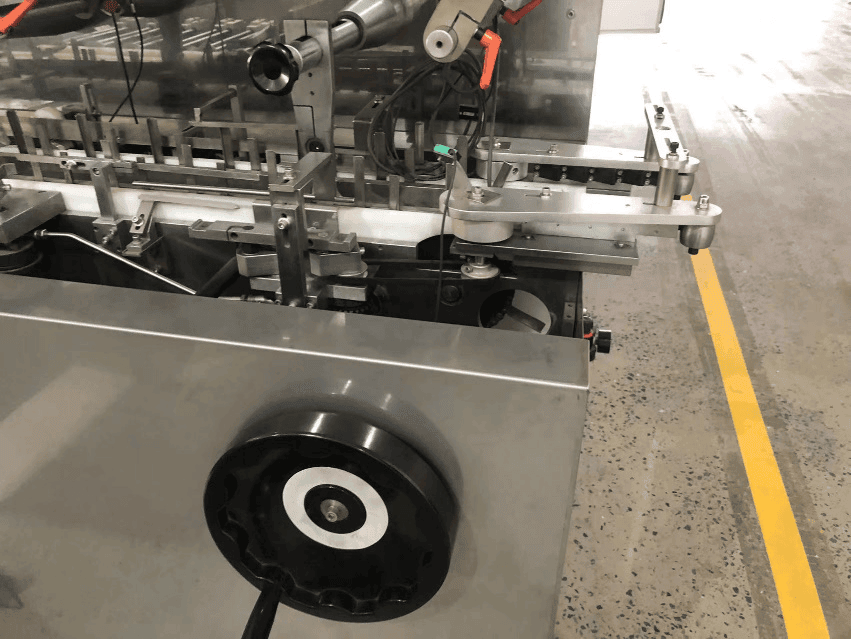
For a fair timed comparison, use the same starting and ending conditions. Start from the last accepted carton of format A and finish when format B meets the agreed restart acceptance criteria. Record operator count, tooling preparation and trial rejects. If a supplier reports only the time to recall a recipe, that is not the complete product changeover.
Ask what happens when the wrong recipe is selected and which settings are operator-accessible. Request the approved recipe-management and backup process, including responsibilities after a software or format update. Do not assume permissions, audit trails or automated size verification are standard features.
Compare the investment against measurable recovered time
Normalize quotations before comparing totals: same sample formats, feeder, inspection devices, format kits, documentation, training and acceptance conditions. Then isolate the additional cost of the proposed drive architecture. A price difference between differently equipped lines is not a clean “servo premium.”
Forester’s My Insight: put a number on the changeover benefit
Hypothetical planning example—not a customer result: suppose an accepted comparison shows an eight-minute reduction per changeover, with four changeovers on each of 220 production days. Recovered time would be 8 × 4 × 220 ÷ 60 = 117.3 hours per year.
If the plant can genuinely use those hours and values them at an illustrative $80 per hour, the gross annual value is about $9,387. With an illustrative $20,000 additional investment and $1,500 annual incremental cost, simple payback is $20,000 ÷ ($9,387 − $1,500), or about 2.54 years. These amounts are calculation inputs, not HIJ prices or savings promises.
If recovered time cannot generate useful production or avoid a real cost, do not assign it that value. Replace every assumption with your records and tested results. This simple calculation excludes financing, tax and residual value.
Keep changeover recovery separate from running-speed gains and reduced rejects so the same benefit is not counted twice. Also budget for the agreed controls support, spare drives, software access and staff training where applicable. Avoid assuming that existing spare motors or drives will be interchangeable with the new system.
Acceptance tests that make the drive claim useful
Write the following into the proposed factory acceptance test with agreed samples, durations and pass criteria. These are purchasing checks, not instructions to alter drive parameters or bypass machine safeguards.
- Match the delivered axis list. Reconcile the quoted stations, hardware references and adjustable functions with the supplied machine and documentation. Resolve any substitutions before acceptance.
- Run the demanding formats. Include the agreed extremes of product and carton geometry, difficult presentation conditions and required leaflet formats. Record accepted cartons, rejects by cause and interventions—not only the cycle counter.
- Demonstrate coordinated operation. Observe the approved acceleration, operating-rate and deceleration sequences. Verify product support and loading throughout the agreed operating range.
- Challenge normal line interruptions. Under the supplier’s approved test procedure, demonstrate upstream starvation, downstream blockage and relevant missing-material responses. Record disposition of cartons already inside the machine and the restart sequence.
- Time a complete format change. Use the agreed last-good/first-accepted boundary, actual operators and required format parts. Separate settings recall from hands-on tasks and verification.
- Demonstrate controls recovery and handover. Confirm alarms, approved backup/restore arrangements, software ownership or access terms, training and the spare-parts list. Any recovery exercise must follow the machine supplier’s authorized procedure.
Set numerical acceptance limits in the project specification, not from a generic article. Servo feedback does not certify machine safety, product quality or pharmaceutical compliance. Those requirements need their own defined design and verification scope.
HIJ ZH-200: a platform reference, not a “full servo” shortcut
The published HIJ ZH-200 high-speed cartoning machine configuration lists three Siemens servo axes, servo-controlled feeding and a continuous-motion platform. It also lists a main motor, gearbox/clutch arrangement and scaled manual adjustment stations. These are specific platform references; they should not be relabeled as an all-servo, fully automatic changeover system.
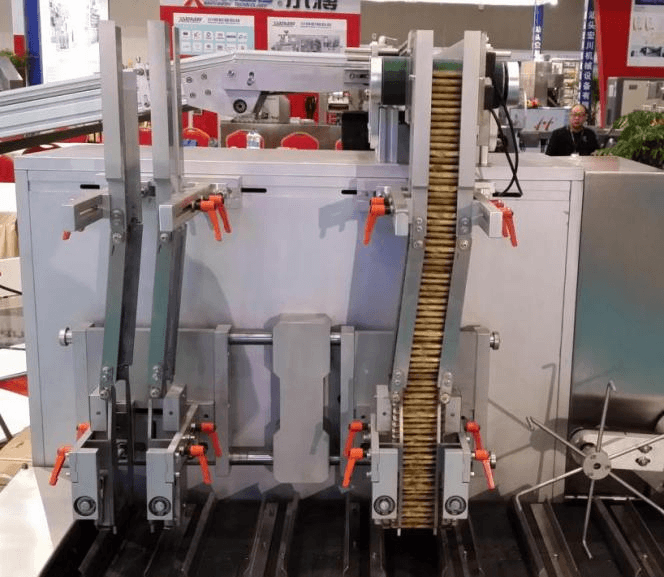
For a project review, provide your product and carton drawings, required accepted output, SKU/changeover pattern and upstream presentation. Request the final axis-to-station mapping and adjustment list with the quotation. The product page owns model specifications and configuration; this guide helps you compare the control scope.
Buyer questions about servo-driven cartoners
Does a servo cartoner always run faster?
No. Accepted output depends on the complete feeding, opening, insertion, inspection and closing sequence, as well as the product and packaging materials. Compare demonstrated output under the same sample and run conditions, not the drive label alone.
Is a PLC-controlled cartoner necessarily servo-driven?
No. A PLC can coordinate sensors, valves, motors and other devices without every movement using a servo axis. Ask for the actual motor/drive list and its station mapping.
Does “full servo” mean tool-free changeover?
Not by itself. Ask which dimensions are motorized, which settings are recalled and which guides or format parts still need physical adjustment or replacement. Require a complete changeover demonstration for the agreed formats.
Can an existing mechanical cartoner be converted to servo control?
Treat conversion as an engineering project, not a motor swap. The transmission, loads, motion sequence, controls, guarding, documentation and acceptance requirements need review by the machine supplier or a qualified integrator. Feasibility and value cannot be confirmed from the model name alone.
What should I send to compare two servo cartoner quotations?
Send the same product/carton/leaflet sample matrix, accepted-output target, loading conditions and changeover requirements to both suppliers. Request matched scope, axis lists, manual-adjustment lists, inspection functions, support terms and an agreed acceptance test.
Need to compare a servo cartoning proposal? Share the product format, line target and changeover pattern. We can discuss the required configuration and the questions to resolve before quotation. Start with the ZH-200 platform reference for the published machine details.
Discuss My Cartoning Configuration