Buying stick pack packaging and cartoning lines starts with one question: can the complete system deliver your required cartons with the right number of intact, sealed sticks?
Start with your product, sticks per carton and primary-packer output. Add drawings and samples when available.
Specify the primary filler, accepted-stick transfer, counting and grouping, cartoner, inspection and downstream discharge as connected stages. Compare their rates on the same time basis, and assign responsibility for every handover before comparing quotations.
Choosing the cartoning stage? Review HIJ machine references, sealed-pack grouping requirements and quotation inputs on the sachet and stick-pack equipment page. Primary filling and sealing scope remains a separate line decision.
Compare sachet & stick-pack cartoning machines ↗What do stick pack packaging and cartoning lines include?
Stick pack packaging forms, fills and seals the individual primary packs. Cartoning collects those finished packs into the retail carton. These operations have different units: the primary packer may quote cycles per minute or sticks per minute, while the cartoner quotes cartons per minute. A complete purchase specification connects those units to your actual pack count.
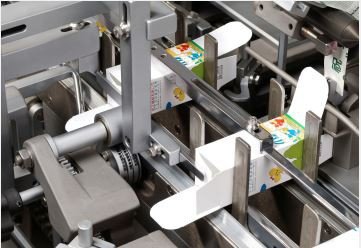
The line can include product supply and dosing, film handling, sealing and cutting, primary-pack checks, lane collection, grouping, carton opening, loading, leaflet insertion where required, carton closing and final inspection. Define case packing separately if shipping cases are part of the project. A quotation described as a “complete line” should identify where it begins and ends.
Keep your current filler in the specification. Provide its discharge drawing, measured accepted output and available control signals.
Name the supplier responsible for the primary filling process and the party coordinating the tested connection to secondary packaging.
State that filled, sealed sticks are supplied to the cartoner. Agree whether lane collection and grouping are included.
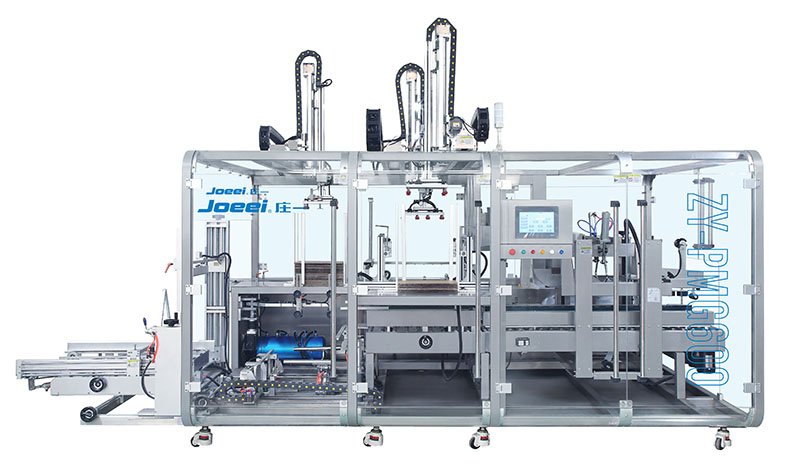
For HIJ cartoning assessment, send the finished-pack samples and line requirements first. Confirm the offered primary-filling equipment, application coverage and integration responsibilities in the project proposal. Do not infer a powder-stick filler specification from a liquid-pack or blister-machine document.
If you are still choosing the primary format, see single-dose sachets versus stick packs. For detailed handling of already sealed flexible packs, use the sachet cartoning buying guide. This article concentrates on the connection between the primary packer and the complete cartoning line.

Choose the stick pack filling process before the cartoner
A stick pack machine must be evaluated with the actual product and film. Powder flow, bulk-density variation, liquids that drip and materials that bridge can produce different dosing and sealing challenges. Ask the primary-machine supplier to trial the product rather than selecting solely from a nominal filling-volume range.
Document the intended dose, permitted variation, film structure, seal geometry and coding requirements. Include normal product temperature and the condition of samples sent for testing. A successful trial with an easy-flowing substitute does not establish the behavior of your production powder, granules or liquid.
Define the filled pack at the transfer point
The secondary-packaging team needs filled length, width, thickness variation, seal overhang and the position of the cut. Also describe how the sticks leave the primary packer: number of active lanes, lane spacing, orientation, elevation, timing and whether packs arrive in a synchronized batch or an uneven stream.
For stick pack manufacturing with several SKUs, prepare a format matrix. List each dose, primary-pack size, sticks per carton, layer pattern and annual volume. Identify the least stable stack and the carton with the tightest clearance. These formats may influence grouping parts and loading tools more than the SKU with the highest sales volume.
Allocate primary-pack inspection to a named stage. Weight, seal integrity and code readability are different checks; their detection methods and reject actions should be explicit. The cartoner should receive the accepted-stick stream or a defined status that lets it contain uncertain product. A full retail carton does not prove that each primary pack passed its required checks.
Balance lane output with cartons per minute
First establish what the primary-machine rate means. If each active lane produces one stick per cycle, six lanes at fifty cycles per minute generate three hundred sticks per minute before primary rejects. If the supplier already reports three hundred total sticks per minute, multiplying that figure by six again would overstate supply.
Next convert accepted sticks into the requested retail unit. In the illustrative example below, a 98% primary pass share leaves 294 sticks per minute. Ten sticks per carton give a supply ceiling of 29.4 cartons per minute. Entered grouping and cartoner stages of 35 and 40 cartons per minute cannot raise that supply ceiling.
Stick-to-carton output planner
Screening arithmetic only. Align each input to the same measurement period. These example values are not HIJ machine ratings or a guaranteed line output.
Gross primary output: 300 sticks/min. Primary supply limits these inputs. The target is above the minimum entered stage rate.
Accepted supply = entered gross total × primary pass share. Supply ceiling = accepted sticks/min ÷ sticks/carton. Minimum stage rate = min(supply ceiling, grouping rate, cartoner rate). Pause equivalent = ceil(accepted sticks/min × pause seconds ÷ 60).
The pause figure only counts incoming accepted sticks while a stopped downstream stage receives no discharge. It does not specify a safe buffer size, allowable residence time, storage method or recovery rate. Existing inventory and control response also matter.
A rate comparison needs a shared boundary
If the primary figure already measures accepted sticks, set primary pass share to 100% rather than deducting the same rejects twice. If one stage is measured while running and another over an entire shift, normalize them before using the comparison. This planner does not add a separate availability factor or calculate OEE.
The minimum entered rate is a screening ceiling. Additional line stops, handling losses and final-carton rejects can lower accepted output. Equality with your target leaves no arithmetic headroom in this comparison. Use measured trials to decide the required operational allowance; a universal percentage is not a substitute for evidence.
Buffering may absorb a brief interruption, but it cannot fix a permanent capacity mismatch. When the cartoner restarts, ask how quickly stored product is cleared without damaging seals or mixing groups. Define the upstream slowdown or stop response before approving the collection layout.
Define interfaces before ordering linked machines
The transition from a primary packer to a cartoner is a mechanical, control and product-status interface. Put it in the specification as a documented deliverable with an owner. Two machines that fit on the same drawing may still disagree about timing, stop conditions or which packs belong to the next complete group.
| Connection | Information to agree | Evidence to request |
|---|---|---|
| Primary packer → collection | Discharge height, lane spacing, orientation, timing and accepted/rejected pack routing. | Dimensioned handover drawing and trial with the actual discharge pattern. |
| Collection → grouped load | Recipe, count tracking, incomplete groups, lane interruption and retained product after a stop. | Recorded challenge sequences and reconciliation of uncertain packs. |
| Grouped load → cartoner | Ready signals, receiving pocket, timing, insertion support and response to a missing carton. | Loaded-carton trial with your filled sticks and production board. |
| Cartoner → inspection / discharge | Code, closure and required count checks; reject confirmation; downstream blockage. | Defined good/reject routes and demonstrated fault response. |
| Shared line controls | Start permission, stop propagation, restart order and agreed safety responsibilities. | Approved signal list, state sequence and integrated commissioning record. |
Assign one coordinator for the interface list and revision control. A changed lane spacing or discharge elevation can affect conveyor and tooling design after both machines have been ordered. Require approval of the updated drawing from the affected suppliers before releasing fabrication.
Plan product access as well as floor space
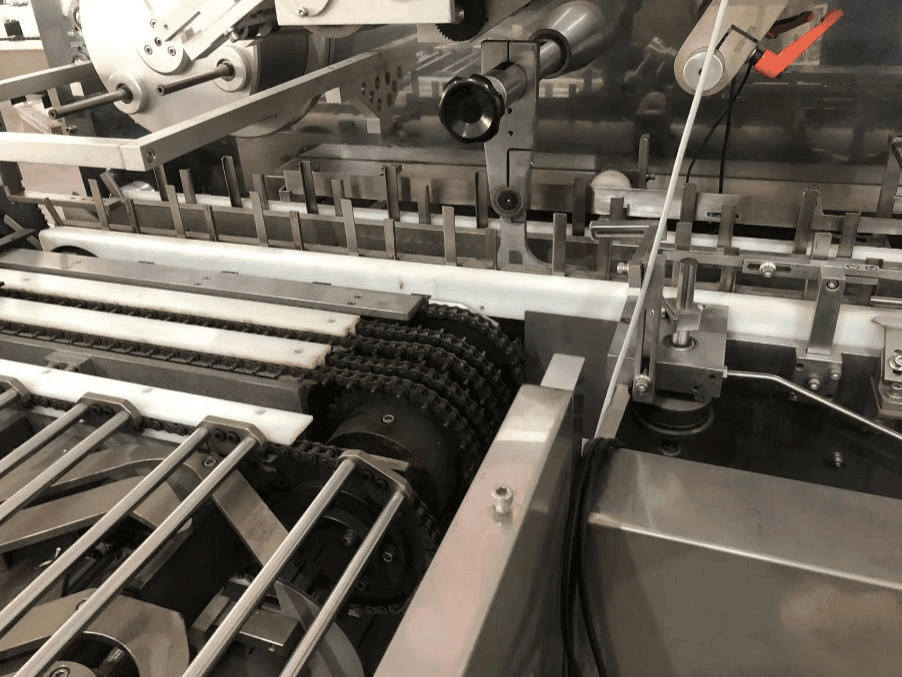
Reserve access for film reels, carton refilling, guard opening, cleaning, format-part storage, rejected product and control panels. Show utilities at each included machine. Installed footprint and operating envelope are different: a layout that fits the frames may still obstruct maintenance or replenishment.
Specify containment after a primary pack leaks. Even sealed food sticks can release powder into collection guides if damaged. Agree access and cleaning methods with the plant team, including changeovers between products. For cartoning options, compare the sachet and stick-pack cartoning configurations and horizontal cartoning platform against the required product arrangement.
Have an existing stick packer?
Send its model, discharge drawing, measured accepted rate and a short video showing all active lanes. Include the requested carton count and final group arrangement.
Accept the connected line with production materials
Agree acceptance targets before placing the order. Define the trial formats, running period, accepted-output boundary, permitted rejects, stop reporting and retained evidence. Confirm whether the suppliers will test the equipment together or simulate a specified discharge interface where full connection is unavailable.
A standalone cartoner test is useful, but it cannot establish primary-filler performance or a connection that was absent from the test. Record every simulated boundary and carry the remaining integrated checks into the site acceptance plan. Distinguish a trial of counted, pre-arranged sticks from a trial using the actual multi-lane packer.
- Normal running: reconcile primary output, primary rejects, grouped packs and accepted cartons over the agreed period.
- Lane interruption: demonstrate the response when one lane stops or rejects product; verify the fate of partly assembled groups.
- Downstream pause: show collection limits, upstream stop response and recovery without uncertain cartons entering the good-product path.
- Fault challenges: test relevant missing packs, failed codes, poor closure and unconfirmed rejection using an agreed, controlled method.
- Format change: measure from the last accepted carton of one format to sustained accepted cartons of the next, including first-piece approval.
Provide representative filled sticks, production film where the primary packer is tested, cartons and leaflets or inserts. Record sample condition and quantities. Retain the settings, active lanes, parts used, stop log and accepted/rejected counts. A favorable short video alone does not explain sustained output or recovery performance.
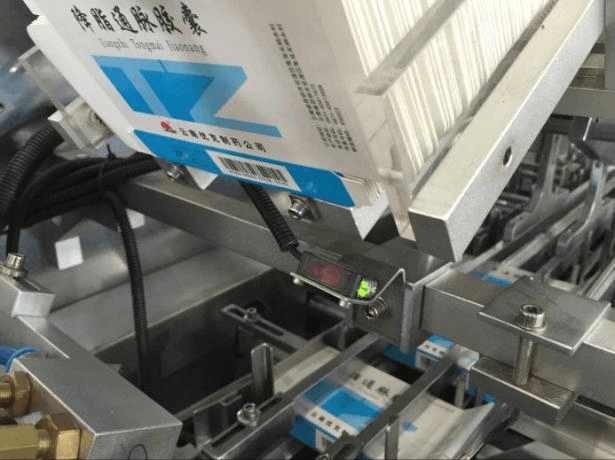
Use the cartoning machine FAT checklist to develop the secondary-packaging test items, then add the primary-machine and interface checks for your project. Allocate each open item to a responsible party and completion stage.
Compare complete quotations on the same scope
A meaningful price comparison begins with the bill of equipment and format coverage. Separate the primary packer, dosing equipment, lane collection, grouping, cartoner, leaflet equipment, closure system, inspection, conveyors and downstream case packing. Mark every item as included, optional, customer-supplied or supplied by another named party.
Request a format-parts list and identify which SKUs were assessed. Compare trial scope, installation, interface engineering, software access, training, spares, consumables and service arrangements alongside equipment price. Confirm shipping terms, proposal validity and site-readiness responsibilities in the current commercial offer.
Do not treat an older model quotation as a current price for a complete stick-pack line. Different products, lanes, film, counts, loading arrangements and inspection requirements can change scope. Ask for a project quotation based on your format matrix and the agreed measurement boundary.
For a broader layout discussion, visit HIJ turnkey packaging solutions. Identify the specific machines and responsibilities required for this application during the review.
Prepare your stick pack line enquiry
Use the planner and optional fields below to prepare a concise first enquiry. The existing contact form collects your contact details when you choose to send it. Add photos, drawings and samples through the agreed follow-up route.
Project review brief
Review the assumptions before sending. Copying or opening the form does not submit an enquiry.
Stick pack packaging and cartoning lines: buyer questions
Does a cartoner fill and seal the individual sticks?
No. Primary filling and sealing happen before cartoning. Confirm whether your project quotation includes that primary equipment, its supplier and the integrated test scope.
Why does a multi-lane packer not guarantee the cartoner output?
Lane output must be converted into accepted sticks and divided by sticks per carton. Grouping, loaded-carton handling, stops and final rejects can impose further limits.
Can I connect an existing stick pack machine?
That requires an interface assessment. Supply the discharge pattern, elevations, lane spacing, accepted rate, control signals and filled samples. Confirm the mechanical and control work before ordering.
Can a buffer solve a slower cartoner?
A buffer can accommodate limited interruptions if the product and controls allow it. It cannot correct a persistent supply-to-discharge imbalance, and its safe capacity needs a separate layout and handling review.
Does carton checkweighing prove the exact stick count?
Not automatically. Filled-stick weight variation and carton variation affect what a weight check can distinguish. Validate the detection method with representative missing-item challenges and define the count-tracking route.
What should I send for a useful quotation?
Send product and dose, filled-stick dimensions, active lanes and rate basis, sticks per carton, production carton drawing, output target, SKU matrix, existing-machine details and site constraints.
Technical context and references
This guide offers procurement methods and illustrative calculations. HIJ application suitability, model selection, scope and accepted output require a project-specific proposal and trial.
- Romaco — stick-pack cartoning: examples of counting, controlled transfer and stack-handling issues.
- Syntegon — pharma VFFS systems: primary filling/sealing, lane checks, grouping and integrated secondary packaging.
These references describe their suppliers' systems. Their published capacities and options are not HIJ performance specifications.