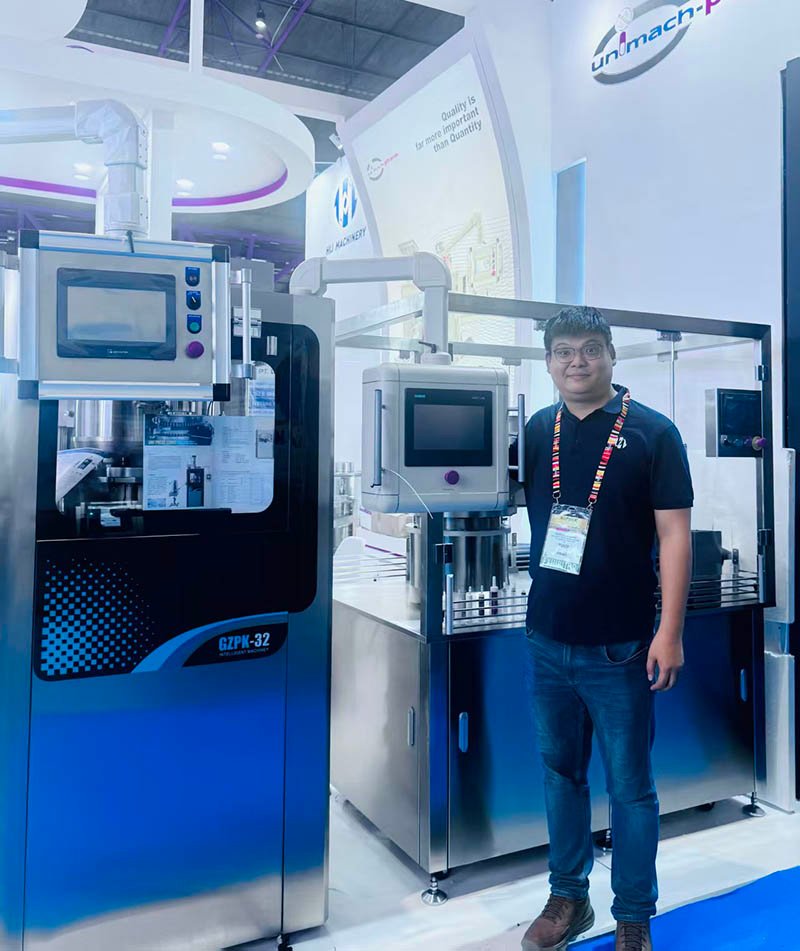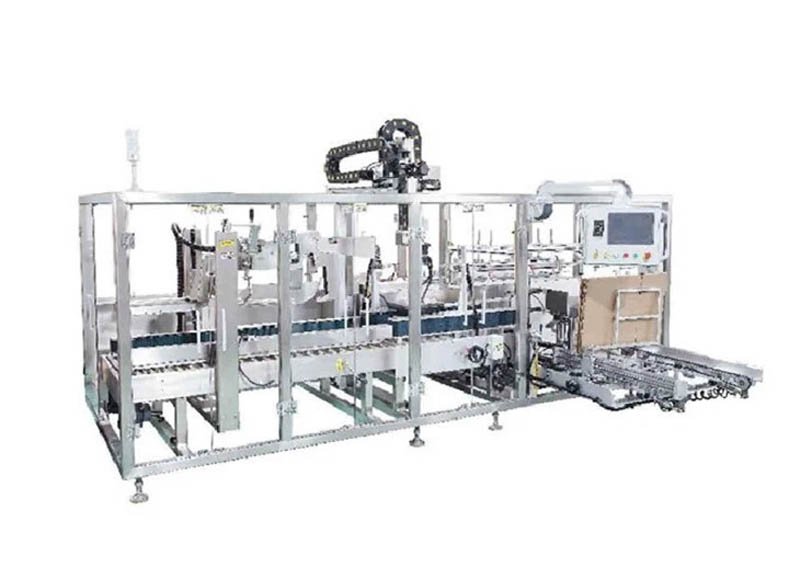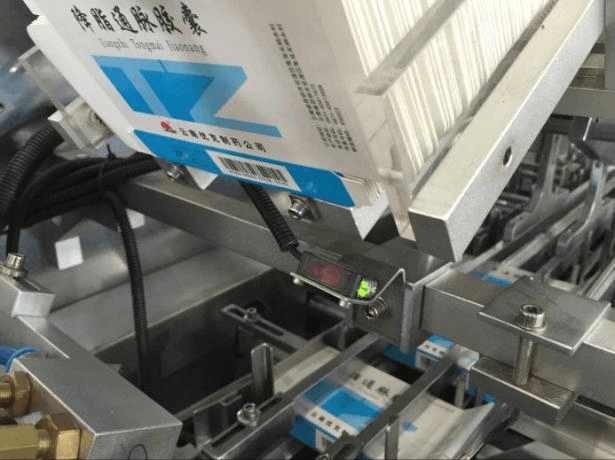
Choose a tablet blister packing machine by matching the approved pack, required accepted output, feeding behavior, forming and sealing configuration, and site acceptance requirements. A catalog speed or “GMP-ready” label is not enough. Ask each shortlisted supplier to demonstrate the proposed configuration with representative products and packaging materials.
This guide helps engineering, purchasing, production and quality teams build a comparable specification before requesting quotations. For actual equipment configurations, use the HIJ tablet blister packing machine page alongside the decision checks below.
Start with the tablet and finished pack—not a model number
A blister packing machine forms individual pockets, receives tablets, seals the filled web with a lidding material and separates the finished cards. Machine selection starts with what those cards must contain and protect. A machine that runs one demonstration pack successfully may need different feeding, tooling or controls for your product.
Create a format matrix: one row for each tablet, blister layout and material combination. Identify which formats are required at launch and which are future options. This separates essential capability from features that can be quoted later.
On small screens, scroll this table sideways.
| Input | Record for each format | Why it changes the selection |
|---|---|---|
| Tablet | Dimensions and tolerances, shape, coating, handling sensitivity and representative samples. | Cavity fit, feeder design, product presentation and damage risk. |
| Blister card | Card drawing, tablets per card, cavity layout, seal area, perforations and code position. | Tooling, usable format area, web layout, cutting and inspection coverage. |
| Materials | Forming-web structure and thickness, lidding specification, approved supplier information. | Forming process, sealing compatibility, material handling and package evaluation. |
| Production plan | Accepted cards per batch/period, SKU mix, planned hours and changeover frequency. | Required sustainable capacity, operator workload and practical scheduling. |
| Site and output | Utilities, access, cleaning requirements, discharge orientation and cards per carton. | Installation, service clearance and connections to downstream equipment. |
Send the drawing revision with the enquiry. If the product or packaging design is still being developed, identify it as an open item. Do not freeze the equipment configuration around an unapproved pack and assume that later material or cavity changes will fit.
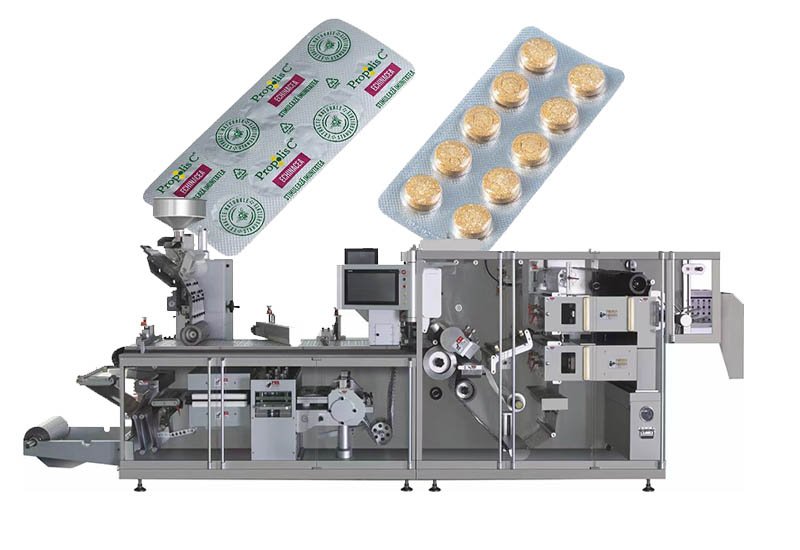
Calculate required output in accepted blister cards
First define the unit. A tablet is the individual product; a blister card contains a stated number of tablets; a carton may contain several cards. A machine cycle can produce several cards, depending on the layout. A quote in cycles per minute cannot be compared directly with one in cards per minute.
For a single format, a useful planning equation is:
Required ideal rate in cards/min = accepted-card demand ÷ (planned production minutes × assumed OEE).
For this calculation, OEE is the combined availability, performance and quality fraction relative to the stated ideal rate and planned production time. Define the treatment of breaks, cleaning and changeovers consistently. The assumption is a planning input—not a supplier guarantee.
Size against a documented production plan, then test the sensitivity to losses. These numbers are hypothetical and are not a HIJ machine rating, regional average or customer result.
240 days × 2 shifts × 8 hours × 60 = 230,400 planned minutes12,000,000 accepted cards ÷ (230,400 × 0.75) = 69.4 cards/min
With an explicitly assumed 20% demand increase, demand becomes 14.4 million cards and the required ideal rate becomes 83.3 cards/min at the same 75% OEE. A proposed 90-card/min configuration would theoretically provide 15,552,000 accepted cards over that schedule at 75% OEE. The actual format must demonstrate the necessary performance; the calculation does not prove machine capability.
On small screens, scroll this table sideways.
| Assumed OEE | 12 million accepted cards | 14.4 million accepted cards |
|---|---|---|
| 60% | 86.8 cards/min required | 104.2 cards/min required |
| 75% | 69.4 cards/min required | 83.3 cards/min required |
| 85% | 61.3 cards/min required | 73.5 cards/min required |
In this example, a 90-card/min machine would not cover the growth case at 60% OEE. That is why an unsupported universal “25% safety factor” is less useful than a stated loss model and a sensitivity check.
Avoid counting the same loss twice
If your available hours already exclude cleaning and changeovers, do not apply an availability factor that removes those hours again. If the supplier’s demonstrated rate counts only accepted cards, do not apply the same quality loss a second time. Ask whether any quoted rate is an ideal mechanical rate, a running rate or an accepted output measured over the whole trial.
For multiple formats, estimate the time required for each at its own demonstrated rate, then add the changeover and other losses that are not already included. Also check the busiest month or campaign: an annual total can conceal a short period with insufficient capacity.
Compare forming, sealing and motion separately
“Flat-plate” and “rotary” are incomplete descriptions unless the supplier identifies the station being described. Do not turn them into a universal ranking of accuracy, tablet shapes, speed or price. A platform can combine different forming, sealing and transport arrangements.
On small screens, scroll this table sideways.
| Design choice | What it means for the project | Evidence to request |
|---|---|---|
| Thermoforming vs. cold forming | The forming process must match the specified forming web. Cold-form aluminum laminate requires suitable mechanical forming and tooling, not ordinary heat-softening of plastic film. | Material specification, forming arrangement, cavity drawing and samples made on the proposed tooling. |
| Platen vs. rotary sealing | These describe sealing arrangements; they do not, by themselves, define the forming process or all material capabilities. | Specified seal geometry, material compatibility, operating range and results on your actual pack. |
| Intermittent vs. continuous movement | The timing of web movement and individual operations affects feeding, registration and interfaces. | Station sequence, product-handling demonstration and format-specific output. |
For example, Uhlmann’s B 1880 technical sheet distinguishes platen and rotary sealing options and identifies configuration-dependent material coverage. It illustrates why station-level terminology matters; its specifications are not HIJ specifications.
Compare the actual forming area, index range, cavity depth, web width and sealing arrangement against the complete layout. Do not assume that a machine’s maximum web width equals its usable forming width, or that every maximum dimension can be achieved simultaneously.
Request a tooling/layout review for the largest, smallest and most difficult intended packs. A shaped or scored tablet is a reason to examine cavity clearance and feeding—not proof that every rotary platform is unsuitable.
Select packaging materials from product evidence
PVC-based thermoforming structures and cold-form aluminum laminates have different forming requirements. The responsible product and packaging teams should define the required protection, usability and approved pack. The machine supplier then confirms whether the proposed equipment can process that construction reliably.
Ask the material supplier for the full layer structure, thickness, sealing guidance and barrier data with the test method and conditions. A water-vapor transmission value without a material grade, thickness, temperature and humidity basis is not a reliable comparison. A flat-sheet barrier value also does not establish the performance of the complete formed and sealed package.
Do not choose a pack solely because a destination is described as tropical or because aluminum is described as premium. Product stability evidence, handling, light protection where relevant, opening requirements and the marketed pack design all matter. Confirm the finished-package evaluation with the responsible quality and development teams.
A dual-material offer needs two verified configurations. If both Alu-PVC and Alu-Alu are required, request the capability list, tooling, conversion procedure and format-specific test results for each. “Compatible with aluminum foil” may refer only to the lidding foil; it does not establish cold-form base-web capability.
Use product trials to evaluate feeding and inspection
Representative tablets reveal handling issues that a machine photograph cannot. Give the supplier the dimensional range and relevant differences between intended products. Include difficult but representative conditions rather than testing only the easiest tablet at a convenient rate.
- Feeding: observe stable cavity filling, missing or extra products, tablet orientation where relevant, and how replenishment affects output.
- Product condition: examine chips, abrasion, coating damage and dust before and after handling. Investigate the actual cause instead of assuming that the feeder alone is responsible.
- Inspection: define which defects must be detected and how challenged packs are identified, tracked and removed.
- Recovery: test agreed stop/restart and blocked-discharge scenarios, including treatment of partly processed packs.
- Evidence: record product/material lots, format, settings, duration, total packs, accepted packs, rejects and stoppages.
Separate inspection capabilities. A camera checking cavity fill does not automatically establish seal integrity or readable variable data. Ask what each system detects, what remains outside its scope and how the proposed tests demonstrate that boundary.
Use approved challenge procedures and reconcile every challenge sample. No test sample should be allowed to mix with saleable output. Acceptance limits and sample plans should be agreed before the trial, not chosen after seeing the results.
Evaluate automation, changeover and cleaning together
The practical choice between a compact, semi-automatic and fully automatic setup depends on operator tasks, batch sizes, product handling and downstream demand—not a universal annual-volume threshold. Ask exactly which operations are manual: product loading, film changes, card collection, inspection, grouping or cartoning.
For smaller-batch requirements, compare the small-scale tablet blister machine route with the broader equipment range. A smaller footprint does not automatically mean a tabletop machine, lower qualification effort or compatibility with every material.
Measure a changeover from the last accepted card of one format to the first accepted card of the next, and state which activities are included. Record line clearance, cleaning, tooling, recipe selection, print setup, checks and release separately. A quick tool swap is only part of that sequence.
Check access to product-contact parts, tools, waste collection and service points. Confirm whether cleaning requires dismantling and whether any proposed cleaning system is actually included. Do not assume clean-in-place capability or impose a universal cleaning frequency without a product- and equipment-specific basis.
Translate “GMP-ready” into reviewable requirements
Ask for a design and document list tied to the intended use. Under 21 CFR 211.65, product-contact construction must avoid interactions that adversely affect the product. This is not a blanket instruction to make every contact component from one stainless-steel grade. Specify suitability, cleanability and supporting evidence for the actual contact parts and product.
EU GMP Annex 15 sets out a risk-based qualification approach and site review of supplier documentation. A supplier template can be a starting point; it requires project-specific review, execution and approval as applicable. Another customer’s completed protocol does not qualify your installation. Define who supplies, executes, reviews and approves the required work.
For electronic records, ask your quality team to identify the regulated records and intended system use. FDA’s Part 11 scope guidance explains why applicability depends on records and their electronic use, rather than simply on a PLC brand. Specify relevant access, audit, retention and review functions instead of accepting a generic compliance checkbox.
Confirm factory acceptance, site installation checks and qualification responsibilities separately. Agree the required drawings, manuals, calibration evidence, software/recipe records, test reports and open-item closure. There is no fixed validation duration that can be promised for every tablet and installation.
Compare suppliers by evidence and contracted scope
Send each supplier the same format matrix and acceptance requirements. Request an explicit response for every item: included, optional, excluded, not supported or awaiting samples. A clear limitation is more useful than an unqualified “yes” against every requirement.
On small screens, scroll this table sideways.
| Question | Useful evidence | Clarify before ordering |
|---|---|---|
| Can the proposed configuration run our pack? | Drawings, sample trials and format-specific performance records. | Whether results came from the quoted machine/configuration or a different demonstration setup. |
| How will we accept the equipment? | Agreed protocol, measurement method, records and deviation handling. | Witnessing arrangements and tests that must be performed on site. |
| What documentation and support are included? | Deliverable register, responsibility list, training and installation scope. | What the supplier provides versus what the site must execute or approve. |
| How will we maintain it? | Manuals, parts identification, recommended spares and service terms. | Availability, response arrangements, travel costs and software/support conditions. |
Remote support, remote witnessing or a separate installation price is not automatically evidence of an unsuitable supplier. Evaluate whether the proposed arrangement covers the project’s risks and leaves adequate evidence. Where physical access or on-site testing is necessary, specify it explicitly.
Respect customer confidentiality. An anonymized example, redacted document or reference contact provided with consent can help establish experience. A refusal to disclose another customer’s confidential validation records should not, by itself, disqualify a supplier.
If a required capability remains unproven, record the gap and a closing action. Do not allow a high overall supplier score to hide a mandatory format, safety or acceptance requirement that the supplier cannot meet.
Compare ownership cost on the same production basis
The base machine price is only one part of the decision. Compare initial tooling, additional formats, inspection, controls, installation, training, documentation support, utilities, planned maintenance and spare parts. Record what is included before comparing totals.
Keep modeled costs separate from quoted costs. Use your own labor rates, utility prices, material usage and downtime assumptions, then show the assumptions alongside the result. Do not apply an unsupported industry-wide downtime percentage or a fixed installation multiplier to every machine.
A practical comparison metric is the modeled cost over a stated period divided by accepted cards over that same period. Use consistent treatment of financing, depreciation, residual value and other accounting items, with your finance team’s input. Do not count lost output both as a downtime charge and as a second full lost-sales amount without checking the overlap.
Test how the comparison changes if changeovers are more frequent, output is lower or a critical spare takes longer to arrive. Ask for contractual service terms rather than relying on an assumed service network. A higher purchase price is not automatically cheaper over its life, and a lower price is not automatically a poor choice.
Write a URS that can be checked against the proposal
A User Requirements Specification should turn the production need into clear, testable requirements. Identify the format and operating conditions, the evidence expected, the responsible reviewer and when the item will be checked. Leave unresolved requirements visible rather than disguising them as agreed specifications.
On small screens, scroll this table sideways.
| Instead of a vague statement | Specify the project requirement | How to check it |
|---|---|---|
| “High-speed machine” | Accepted card target for each named format, stated test conditions and treatment of stops/rejects. | Agreed timed trial with counts and stoppage records. |
| “Runs all materials” | Each approved forming-web/lidding combination and required change parts. | Material list, tooling review and representative trials. |
| “Quick changeover” | Named format pair, start/end points, included cleaning/checks and agreed target. | Observed changeover with separate activity times. |
| “Good inspection” | Defined defects, detection and reject-confirmation behavior, with approved challenge procedure. | Challenge results and reconciliation of affected packs. |
| “Complete documentation” | Named deliverables, revision control, responsible parties and acceptance milestones. | Document register checked against the contract. |
Include the equipment footprint plus operating and service clearances, utilities, room access, installation route and training needs. Specify coding, language, records and interfaces only where the process needs them. Mark future options separately so they do not obscure the initial acceptance scope.
Before placing an order, resolve exceptions between the URS, quotation and technical proposal. Attach the agreed format matrix and acceptance basis to the contract. If a format changes later, use a documented change review rather than assuming that the original output commitment still applies.
Check the connection to the rest of the packaging line
Match the blister discharge to the intended card grouping and cartoner. Compare rates in the same unit: for example, 120 cards/min with two cards per carton corresponds to 60 cartons/min before downstream losses. Feeder capacity must be expressed in tablets and related to tablets per card; it cannot be compared with a card rate without conversion.
Agree transfer orientation, height, controls, blocked/starved response and restart handling. A connection to MES or SCADA is a separate requirement when the site needs it, not an automatic feature of every blister project.
For a detailed interface and buffer review, continue with the blister-to-carton line planning guide. For the receiving machine, review the blister cartoning machine configuration. This selection article focuses on choosing the blister machine, not replacing a full line design review.
Frequently asked questions
What should I decide first when choosing a tablet blister packing machine?
Define the tablet, approved blister materials, pack drawing and required accepted output before selecting a model. Those inputs determine the forming process, feeding system, tooling, sealing arrangement and useful capacity. Compare suppliers against the same format and test requirements.
How much machine capacity do I need?
Divide the required accepted blister cards by the planned production minutes and an explicitly defined, evidence-based efficiency allowance. Keep tablets, cards, cycles and cartons separate. If downtime or rejects have already been deducted, do not deduct them again. Evaluate each intended format and the busiest production period.
Is a flat-plate machine always better than a rotary machine?
No. Ask what the description refers to: forming, sealing, web movement or the overall platform. Compare the actual tooling, material compatibility, feeding, sealing results and demonstrated output. A machine label alone does not establish a universal accuracy, tablet-shape restriction or changeover advantage.
Can one machine run both PVC-based and Alu-Alu blisters?
Only when the specified configuration supports both approved forming processes and pack formats. Cold-form aluminum laminate is not processed as ordinary heat-softened thermoforming film. Ask for the required tooling, conversion steps and separate performance evidence for each material and format.
Can the same blister machine pack tablets and capsules?
Potentially, with a compatible configuration, product feeder, tooling and inspection setup. Tablet capability alone does not prove capsule capability. Provide both product drawings and samples, then verify the proposed changeover and output for each product.
Should I reject a supplier that offers remote FAT or qualification templates?
Not automatically. Assess whether the proposed tests can be witnessed, recorded and traced adequately, and agree the remaining on-site work. Templates need project-specific review and execution; another customer’s completed documents are not a substitute for your site’s evidence. Require a clear responsibility and deliverable list.
How much does a tablet blister packing machine cost?
A useful price requires the product, materials, format range, output target and included scope. Compare tooling, inspection, controls, documentation, installation, training and service terms alongside the base machine price. Generic price bands do not establish the cost of your configuration.
Does a GMP-ready label mean the machine is ready for production release?
No. Review the actual design, product-contact suitability, cleaning access, controls and documentation against your site’s requirements. Equipment acceptance and site qualification have different purposes. Your responsible quality team must approve the evidence and release process for the intended use.
Turn your pack requirements into a machine enquiry
Share your tablet and blister drawings, forming and lidding materials, target accepted output and planned format range. Add site constraints and documentation needs so the discussion can focus on a testable configuration.
Review the HIJ tablet blister packing machine page, then contact the team to discuss the proposed scope. Arrange sample and drawing exchange through the agreed contact channel; do not assume the website form accepts attachments.
Technical references and scope
This is a procurement and engineering guide, not a machine certificate or a site qualification protocol. The calculations are illustrative. Manufacturer references describe their own configurations; do not transfer their ratings or capabilities to HIJ equipment.
- Uhlmann B 1880 technical sheet — station-level sealing terminology and configuration-dependent capabilities.
- 21 CFR 211.65 — product-contact equipment construction requirements.
- EU GMP Annex 15 — qualification planning and supplier-document review.
- FDA Part 11 scope guidance — electronic-record applicability.