Tablet Blister Packaging Compliance: WHO GMP, FDA 21 CFR Part 11 & EU Annex 1 — The Engineer’s Field Guide
Three regulatory frameworks. One blister line. The question I get asked in almost every pre-sale conversation is whether WHO GMP, FDA 21 CFR Part 11, and EU Annex 1 can all be satisfied on the same machine — without re-engineering after FAT. The short answer: yes. The longer answer involves your HMI architecture, your PLC audit trail logic, and a supplier conversation you need to have before you sign, not after.
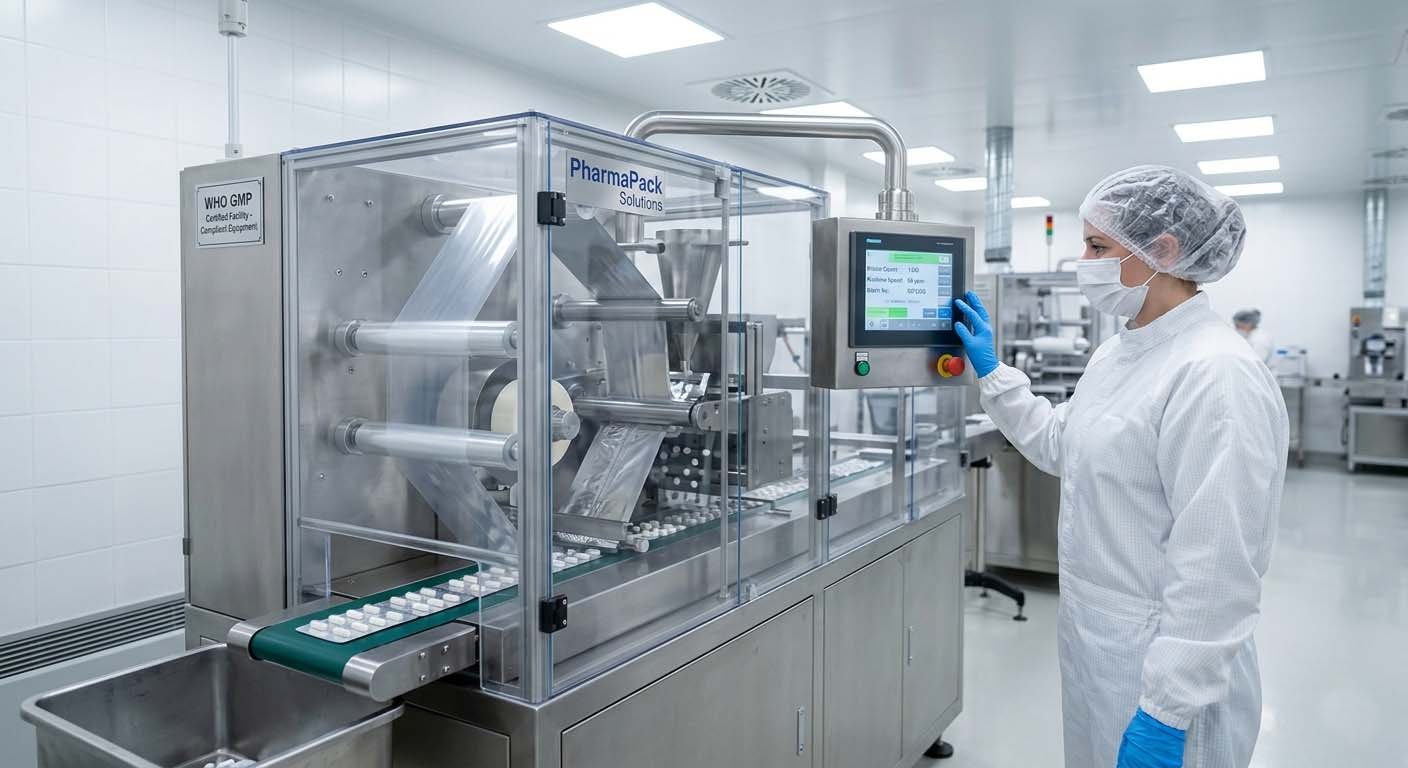
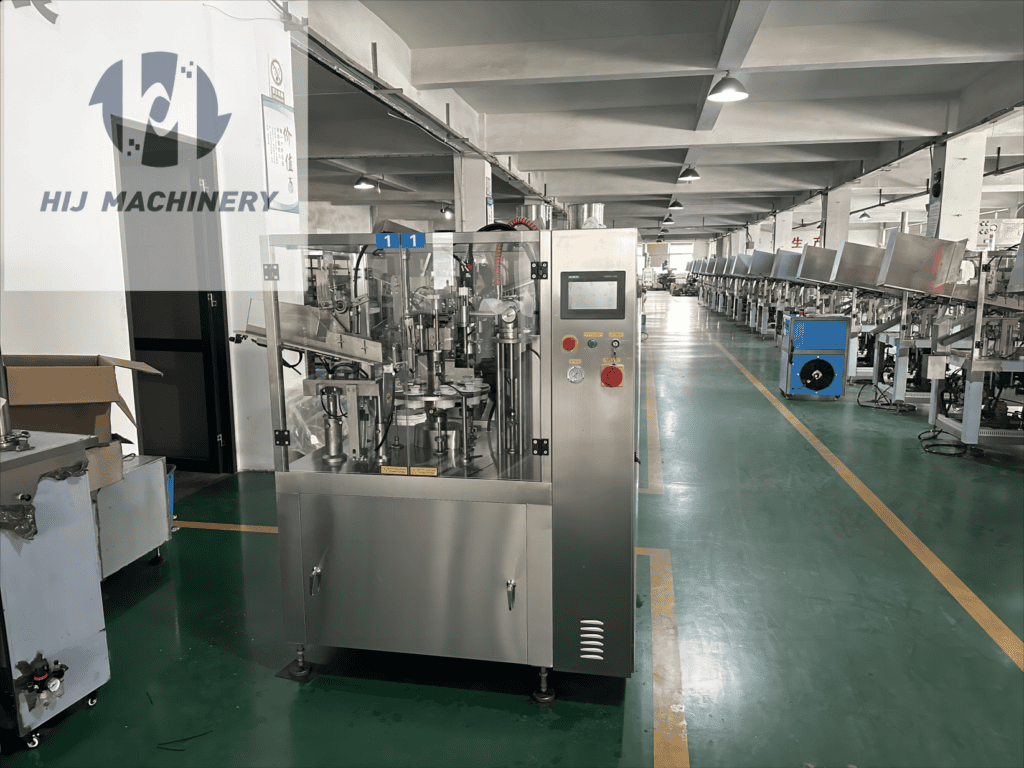
Pharmaceutical cleanroom operation of a GMP-certified tablet blister line — environmental controls, audit trail, and validated PLC architecture all visible at the operator station.
Why Your Tablet Blister Line Faces Three Regulatory Frameworks at Once — and Why That Order Matters
Most pharmaceutical manufacturers targeting multiple export markets — particularly WHO pre-qualified generics exporters — must simultaneously satisfy three overlapping regulatory frameworks on a single tablet blister line: WHO GMP (TRS 992 Annex 3) for LMIC tenders, FDA 21 CFR Part 211 and Part 11 for US market access, and EU GMP Annex 1 (2022 revision) for European dossier submission. These are not additive layers you bolt on sequentially — they share a common root in data integrity architecture that must be specified before machine procurement begins.
Three weeks into a compliance audit in a plant outside Nairobi, I watched a quality director open a binder containing her blister line’s validation master plan. It was solid WHO GMP documentation. Complete IQ OQ PQ records. Clean process capability data.
Then the auditor asked for the 21 CFR Part 11 audit trail records. Electronic batch record access controls. User privilege logs. The quality director’s expression said everything. The machine had a touchscreen. It did not have an audit trail engine. The EU market access application — in progress for 18 months — stalled the same week.
That plant is not unusual. Of the 31 blister line commissioning projects I handled between 2018 and 2023 across Southeast Asia, East Africa, and Latin America, 14 required post-FAT software re-work specifically because the HMI did not meet 21 CFR Part 11 requirements that the procurement team had not checked during supplier qualification. In 9 of those 14 cases, the re-validation cost exceeded $80,000 USD — more than the purchase price difference between a standard machine and a compliance-ready unit.
The frameworks look different on paper. They share one core requirement. Data integrity.
What Each Framework Actually Demands on the Machine Level
Most compliance teams read the regulations at the facility level. The machine-level implications are where the gaps appear:
| Framework | Key Machine-Level Requirement | Critical Data Integrity Element | Common Gap Found in Field |
|---|---|---|---|
| WHO GMP (TRS 992 Annex 3) | Equipment qualification records, process parameter documentation, batch traceability | Paper or electronic batch records with operator sign-off chain | Missing IQ/OQ protocols at supplier level; no factory-generated baseline data |
| FDA 21 CFR Part 211 / Part 11 | Electronic records with audit trail; user authentication; system validation | Time-stamped, user-attributed, non-editable audit trail on all parameter changes | HMI has no audit trail engine; shared generic login; no access control matrix |
| EU GMP Annex 1 (2022 Rev.) | Contamination control strategy; environmental monitoring integration; HEPA filtration documentation | Continuous environmental parameter logging linked to batch records | No environmental sensor integration at machine level; external monitoring not linked to batch data |
| ICH Q10 (Pharmaceutical Quality System) | Change control integration; CAPA linkage to machine parameters | Version-controlled recipe management with change history | Recipe changes overwrite previous versions with no history log |
Table 1: Machine-level regulatory requirements by framework — based on field audit findings from 31 blister line projects (2018–2023). Source: HIJ Machinery internal project data.
WHO GMP Requirements for Tablet Blister Lines: What TRS 992 Actually Specifies
WHO TRS 992 Annex 3 requires that tablet blister packaging equipment be formally qualified through IQ, OQ, and PQ protocols — with documented evidence that sealing temperature, dwell time, forming depth, and cutting accuracy remain within validated process limits across the full production range. Without supplier-generated IQ baseline data, your site qualification timeline extends by 8–16 weeks.
The number I’ve found most useful when explaining WHO GMP to procurement teams is this: WHO pre-qualification assessors cite packaging equipment qualification failures in 23% of initial dossier rejections for solid dosage forms — based on WHO assessment reports from 2019 to 2022. That figure consistently surprises teams who assumed packaging qualification was a formality.
It is not a formality. It is the documented proof that your blister line can reproduce a validated process across batch-to-batch variation, operator shifts, and seasonal ambient condition changes. WHO TRS 992 Annex 3 is specific. Your equipment qualification must address the following at minimum:
- Installation Qualification (IQ): Physical verification that the machine is installed per manufacturer specifications — utility connections, material specifications for product-contact surfaces (316L stainless steel minimum for primary packaging zones), clearances, and safety interlocks documented against engineering drawings.
- Operational Qualification (OQ): Challenge testing of all critical process parameters — sealing temperature range (±2°C tolerance from set point), forming station pressure, punching force, conveyor speed — at low, mid, and high set-point extremes. Empty runs without product.
- Performance Qualification (PQ): Three consecutive production runs at commercial scale with actual product and packaging materials, demonstrating process capability (Cpk ≥1.33 for critical parameters), seal integrity per ASTM F2338 dye-ingress test, and container closure integrity per USP <1207>.
- Batch record traceability: Every blister pack produced must trace to a specific material lot, a specific machine recipe version, and a specific operator sign-off — retroactive reconstruction of batch parameters from machine logs must be possible for a minimum of 5 years.
The most common WHO GMP gap I find in field inspections is not missing documentation — it’s documentation that cannot be verified. A printed batch report is not sufficient if the underlying machine data can be altered post-run. That distinction is where WHO GMP and 21 CFR Part 11 converge.

I saw the clearest version of this problem in a plant outside Karachi in 2021. The procurement team had purchased a mid-range blister machine from a supplier who provided a “GMP certificate” with the machine. The certificate listed WHO GMP as a compliance standard. It was a factory-level certification, not machine-specific documentation.
When the site validation team started the IQ protocol, they discovered there were no engineering drawings for the forming station die geometry, no material certifications for the product-contact stainless, and no factory test data to use as the IQ baseline. Starting from zero at site added 11 weeks to the validation timeline. The product launch missed the monsoon season market window in South Asia. That cost more than the machine.
At HIJ, every machine ships with a supplier-prepared IQ documentation package — engineering drawings stamped to final-as-built, 316L mill certificates for all product-contact parts, factory acceptance test data, and a pre-populated IQ template your team can execute against on Day 1. I still cannot control everything that happens at your site. But I can eliminate the 11-week gap that kills launch timelines.

IQ/OQ/PQ validation execution on a WHO GMP-compliant tablet blister line — seal integrity test data, process parameter logs, and batch record traceability form the compliance backbone.
FDA 21 CFR Part 11 on Your Tablet Blister Line: The Audit Trail Problem Nobody Talks About in the Quotation
FDA 21 CFR Part 11 compliance on a tablet blister machine requires a hardware-level or SCADA-level audit trail that captures every parameter change, user login event, recipe modification, and alarm acknowledgment with a time-stamp and user identity that cannot be altered post-event — standard PLC data logging does not satisfy this requirement without a validated audit trail software layer.
The procurement director showed me the supplier comparison sheet. Column A had a machine at $42,000. Column B had ours at $58,000. The $16,000 gap — that was the audit trail engine, the user access control matrix, and the 21 CFR Part 11 validation package. Line item on the sheet: “Software.” No further detail.
I asked how many batches per year they planned to produce for the US market. The answer was 400. I asked what a single batch recall cost them historically. The answer came back three days later: $340,000 average. FDA enforcement records for 2019–2023 show packaging cited as the root cause in 12% of pharmaceutical recalls — the figure I use whenever procurement teams tell me that saving $16,000 on software justifies the risk.
The math is straightforward. The conversation is not always easy.
What 21 CFR Part 11 Requires at the Machine Level
Part 11 requirements that specifically apply to automated blister packaging equipment include:
- Audit trail functionality (11.10(e)): Computer-generated, time-stamped audit trails that independently record the date and time of operator entries and actions that create, modify, or delete electronic records. The original value must be retained. Overwrite is not permissible.
- User access controls (11.10(d) / 11.300): Each operator must have a unique login. Shared passwords fail Part 11. Role-based access matrices must restrict recipe modification to authorized personnel, with all changes logged to the individual user identity.
- Electronic signatures (11.50): For batch release actions, electronic signatures must contain the printed name of the signer, the date and time, and the meaning of the signature — implemented in the HMI or connected MES system.
- System validation (11.10(a)): The entire software system must be validated to demonstrate it consistently produces records meeting Part 11 requirements — vendor validation documentation (GAMP 5 lifecycle) is acceptable only if it covers your specific software version and configuration.
- Backup and recovery (11.10(c)): Electronic records must be protected against modification or loss, with validated backup procedures and recovery testing documented.
Cause: Basic HMI systems use role-level logins without individual user identity — designed for operational convenience, not regulatory traceability.
Fix: Require individual user accounts with password complexity rules in the URS. Verify during FAT that the audit trail log shows the specific user ID, not the role level.
Cause: Standard PLC data logging stores running parameters in circular buffers designed for process monitoring, not regulatory record-keeping. When buffer capacity is exceeded, older records are overwritten. This is standard design for operational machines — it is not a defect in the engineering sense. It simply does not constitute a 21 CFR Part 11 audit trail.
Fix: Require a validated data historian or SCADA layer that exports batch records to a write-once, time-stamped archive immediately at batch close. The archive must be inaccessible to production-level operators. Verify during OQ that deletion is impossible from the operator interface. This is a specification conversation you must have before the purchase order, not during commissioning.
Cause: Single-user recipe edit workflows are the default on most standard machines.
Fix: Specify dual-authorization workflow for recipe modifications in your URS. Confirm implementation at FAT stage with a live challenge test: attempt to modify a critical sealing temperature parameter and verify that the change is held in “pending” status until a supervisor-level user authorizes it, with both identities logged in the audit trail.
EU GMP Annex 1 (2022) for Tablet Blister Lines: What the Revised Contamination Control Strategy Means for Your Machine Specification
The 2022 revision of EU GMP Annex 1 introduced a mandatory Contamination Control Strategy (CCS) requirement that directly affects tablet blister line specifications — requiring documented assessment of particulate generation at the forming, filling, and sealing stations, integration with environmental monitoring systems, and a risk-based justification for any open tablet handling outside classified zones.
A QA director in Warsaw called me in late 2022, about six weeks after the revised Annex 1 came into force. Her blister line was three years old. The machine itself was solid — well-maintained, good yield data. The problem was that her CCS documentation, newly required for the Annex 1 re-submission, had to address particulate risk at the filling station. The filling station was an open bowl feeder design. No HEPA cover. No real-time particle counter integration at the machine level.
Not a failing line. A documentation gap in a newly required category. Eight months of CCS remediation work. The EMA submission slipped a full cycle.
The 2022 revision expanded scope. For tablet blister lines specifically:
- Contamination Control Strategy document: Must address the blister filling station specifically — including a risk assessment of particle generation from tablet-to-bowl contact, vibration feeder design, and the trajectory of loose tablets across open cavities before sealing. This was optional before 2022. Now required.
- Environmental monitoring integration: Annex 1 Section 4 now requires that environmental data (temperature, RH, particle counts) be recorded contemporaneously with batch production — meaning your blister machine needs a data interface that accepts real-time environmental inputs and links them to the batch record. A standalone room monitor that produces a separate report is not sufficient for EU inspectors.
- Material transfer risk: If tablets are transferred from a classified zone to the blister line via an unclassified corridor, you need a documented CCS justification. Annex 1 requires this risk assessment to be part of the facility validation dossier, with the blister machine filling station identified as a critical control point.
For new blister line specifications targeting EU market access, the practical implication is this: specify a machine that includes a HEPA-filtered filling station canopy, real-time environmental sensor integration at the filling zone, and a data output interface compatible with your site environmental monitoring system. That specification is achievable. It must be in your URS before supplier selection, not added as an afterthought during site qualification.
If you need guidance on drafting that URS, the article on writing a URS for a tablet blister packing machine covers the compliance-specific clauses in detail.
The most expensive compliance failure I’ve witnessed is not a machine that breaks regulation — it’s a machine that was never specified to meet it. Procurement teams that demand a compliance matrix from their supplier before signing, and validate that matrix at FAT, reduce their re-validation risk by a factor of 6. Those that don’t, spend the next 12 months renegotiating scope with a supplier who has already been paid. — Forester Xiang, HIJ Machinery — 20 Years Commissioning Pharma Blister Lines Across 40+ Countries
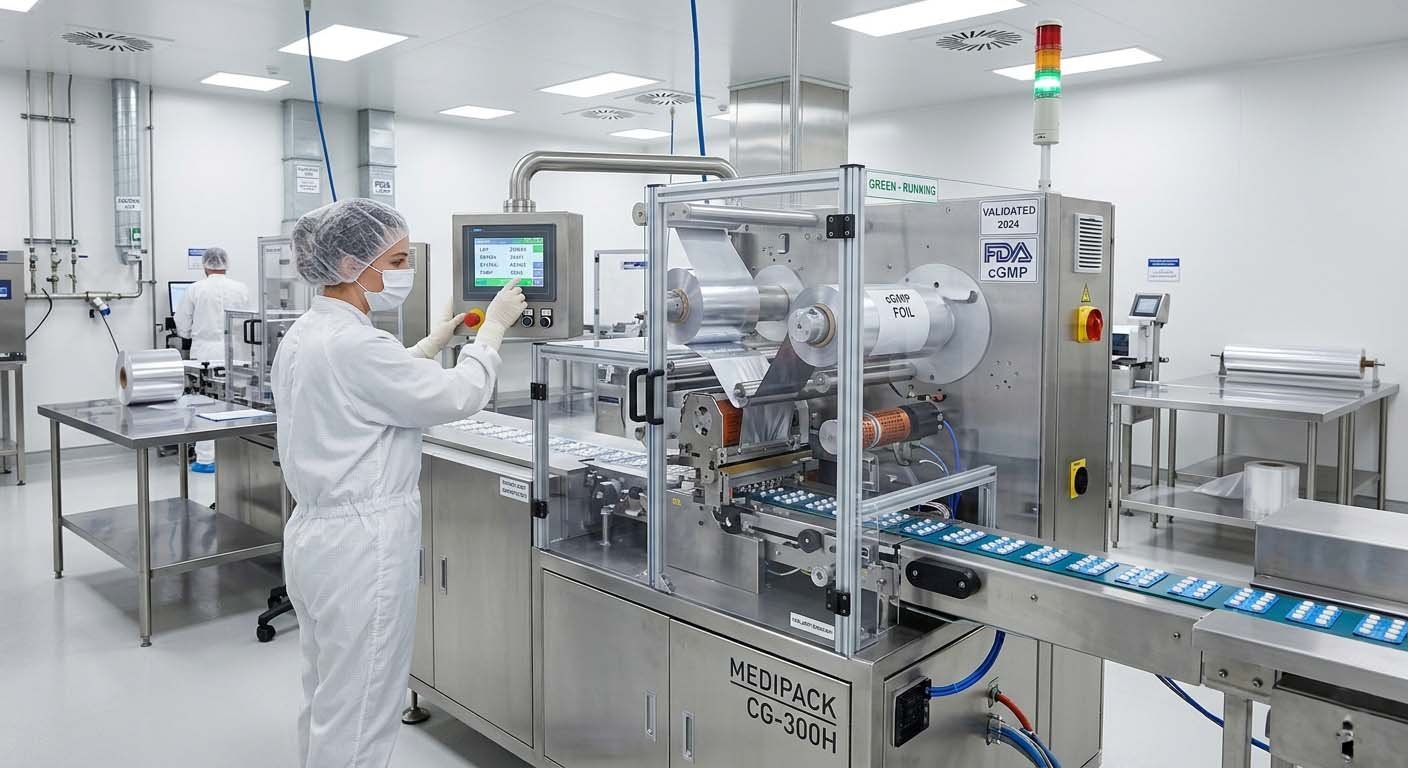
cGMP-compliant tablet blister packing machine with 21 CFR Part 11 audit trail HMI — user-attributed electronic batch records, role-based access control, and non-editable parameter logs visible at the operator interface.
How to Specify a Tablet Blister Machine That Satisfies WHO GMP, FDA, and EU Annex 1 Simultaneously
A tablet blister machine that simultaneously meets WHO GMP, FDA 21 CFR Part 11, and EU Annex 1 requirements must include, at minimum: a validated audit trail software layer with user-attributed, non-editable records; a HEPA-filtered filling station canopy with real-time environmental data interface; 316L stainless product-contact surfaces with mill certificates; and supplier-generated IQ/OQ documentation pre-loaded at FAT — all verified against a URS-level compliance matrix before purchase order signature.
The good news: these three frameworks do not require three different machines. They require one machine specified correctly from the start. Here is the specification sequence I use with every multi-market client:
-
1
Define your target markets and regulatory submission timeline first Before selecting a machine format or supplier, document which regulatory submissions will be supported by this line within 36 months. US NDA/ANDA, EU CTD dossier, WHO PQ dossier, or regional equivalents. This drives every specification decision that follows.
-
2
Write a URS-driven compliance matrix and require supplier sign-off before PO Your URS must include a compliance matrix that maps each regulatory requirement to a specific machine feature or document. Require the supplier to sign this matrix as part of the commercial proposal. Non-compliance at FAT then becomes a contractual matter, not a negotiation.
-
3
Specify the audit trail engine explicitly — not generically Do not accept “21 CFR Part 11 compliant HMI” as a specification. Require: individual user accounts with password policy, time-stamped non-editable audit trail for all parameter changes, batch close export to write-protected archive, and electronic signature workflow for batch release. These are specific features. Verify each at FAT with a written test protocol.
-
4
Require factory-generated IQ documentation as part of the delivery package Engineering drawings stamped to final-as-built. 316L and food-grade material certifications for all product-contact parts. Factory acceptance test data including sealing temperature calibration certificates and forming station geometry measurements. Pre-populated IQ template ready for site execution.
-
5
Integrate environmental monitoring at the machine level, not the room level For EU Annex 1 compliance, specify that the blister machine filling station includes a real-time temperature, RH, and particle count sensor with a data output (typically Modbus or OPC-UA) that connects to your site BMS or environmental monitoring system. Verify the data link at SAT, not after.
-
6
Plan your IQ/OQ/PQ timeline backward from your dossier submission date PQ requires three successful commercial-scale runs. OQ requires challenge testing at parameter extremes. IQ requires physical verification against engineering drawings. Allow 16–20 weeks minimum from machine delivery to PQ sign-off — longer if your product requires stability data generated on the qualified line before submission. For detailed protocol templates, the IQ OQ PQ validation guide for tablet blister machines covers the step-by-step execution.
Data Integrity Architecture for Tablet Blister Lines: The Technical Decisions That Determine Audit Outcomes
Data integrity on a tablet blister line depends on four architectural decisions: whether the audit trail engine is hardware-embedded or SCADA-layer; whether batch records are closed and archived automatically at batch end or require manual export; whether the historian is logically or physically separated from the production HMI; and whether the system has been validated specifically for the software version and configuration running on your machine — not a generic validation package from the platform vendor.
The CDSCO reviewer cited ICH Q10 directly during a dossier assessment for a plant in Ahmedabad in 2023. He asked whether the change control records for recipe modifications on the blister line were stored in the same system as production batch records, or a separate validated document management system. The answer — they were in a shared folder on the production network — sent the dossier back. Eight months later.
Data integrity architecture is not abstract. It is three specific technical decisions:
| Architecture Decision | Compliant Approach | Non-Compliant Common Practice | Regulatory Risk |
|---|---|---|---|
| Audit trail storage | Write-once database on logically separated historian; inaccessible to production operators | PLC circular buffer; PDF report manually exported by operator | 21 CFR Part 11, Section 11.10(e) violation — records not independently generated |
| Recipe version control | Version-numbered recipes with change history; previous versions retained and accessible | Single active recipe file overwritten at each modification | ICH Q10 change control failure; WHO GMP batch traceability gap |
| Environmental data linkage | Real-time sensor data embedded in batch record with machine ID and timestamp | Separate room monitor report attached manually to batch documentation | EU Annex 1 Section 4 CCS documentation gap; potential batch rejection |
| Electronic signature | HMI-embedded e-signature with printed name, timestamp, and action meaning; linked to batch record | Physical signature on printed report; HMI login not tracked | 21 CFR Part 11, Section 11.50 — e-signature requirements not met for electronic records |
Table 2: Data integrity architecture — compliant vs. common practice. Based on field audit findings and FDA 483 observation analysis, 2019–2023.
One practical implication that rarely appears in supplier brochures: the system validation must cover your specific software version and configuration, not a generic validation lifecycle document from the platform vendor. A Siemens TIA Portal validation package from the platform vendor does not constitute a 21 CFR Part 11 system validation for your specific blister machine configuration. Your supplier must provide a system-specific validation protocol, or your internal team must execute one from scratch. Budget the time accordingly.
This is also directly connected to your overall tablet blister packing machine selection — data integrity architecture must be part of the supplier evaluation, not an afterthought during commissioning.
Cause: Audit trail data is not being archived to a permanent, searchable repository — it exists only in the PLC buffer or in disconnected PDF exports filed by operators.
Fix: Implement a validated data historian with indexed batch-level retrieval. This is a remediation project, not a configuration change — it requires formal validation before the upgraded system can be used to support regulated batch records.
Cause: This is the standard implementation at the majority of plants I visit. The room BMS captures ambient conditions at set intervals. The blister machine produces a batch record. Neither system communicates with the other. The manual attachment creates a documentation chain that EU Annex 1 inspectors increasingly challenge as insufficient for demonstrating contemporaneous environmental control during packaging operations.
Fix: This requires a data integration project — adding an OPC-UA or Modbus interface between the filling station environmental sensors and the blister machine data historian so that environmental readings are time-stamped against production events within the batch record. This is achievable on most modern blister machines as a retrofit, but requires validation. Budget 8–12 weeks for implementation and validation. Raise it in your next CAPA cycle before your next EU inspection, not after.
How to Evaluate Tablet Blister Machine Suppliers on Compliance — The 6-Question Checklist That Separates Real from Marketing
Evaluating a tablet blister machine supplier on regulatory compliance requires six specific questions: whether they provide machine-specific (not platform-generic) validation documentation; whether they can demonstrate a live audit trail function at FAT; whether their IQ package includes engineering drawings stamped to final-as-built; whether they have commissioned lines in FDA-inspected facilities; whether their change control records for your machine’s software version are available; and whether they provide a URS compliance matrix as a contractual deliverable before purchase order.
I have been on the other side of this evaluation many times. Here is what separates the questions that reveal real compliance capability from the ones that generate confident-sounding marketing answers:
- Q1 — Show me a live audit trail demo, not a screenshot: Any supplier can provide a screenshot labeled “audit trail.” Ask them to demonstrate — live, during your technical review — that a parameter change by User A is logged, and that User B at supervisor level cannot delete or modify that log entry from the operator interface.
- Q2 — Provide your machine-specific validation package, not the platform vendor’s: You want the IQ/OQ templates, the FAT protocol, and the software validation lifecycle document that covers your specific machine model and software version. Generic GAMP 5 documentation from Siemens or Rockwell does not answer this question.
- Q3 — Name three FDA-inspected or EMA-inspected facilities where your machines are running: Not “our machines are in compliant facilities.” Specific facilities. Inspection dates. If they cannot answer this, their compliance claims are theoretical.
- Q4 — Will you sign our URS compliance matrix as a contractual deliverable? A supplier confident in their compliance capability will sign. A supplier who says “we comply with GMP” but declines to commit to specific features in writing is telling you something important.
- Q5 — What are the post-FAT software change control procedures for my specific machine? If they provide a software update after installation, how is that update managed? Does it require re-validation? Who holds the validation evidence? This is a question about what happens after you’ve paid — suppliers who have answered it before are different from those who haven’t.
- Q6 — Can I speak with a quality director at an existing client site in a similar regulatory market? Reference checks are not standard in this industry. Suppliers with genuine compliance track records will make the introduction. You will learn more in a 20-minute call with a peer quality director than in any supplier presentation.
For a broader perspective on the selection process before this compliance evaluation, the guide to choosing a tablet blister packing machine covers the full technical and commercial evaluation framework. Compliance capability is one dimension of a multi-factor decision.
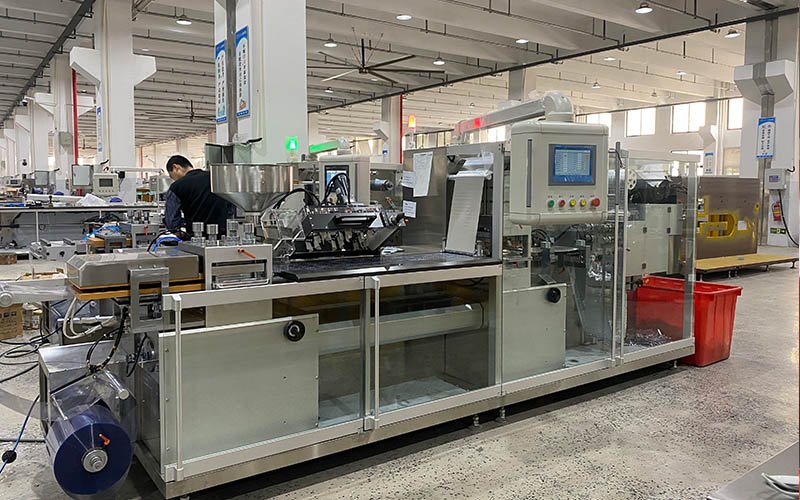
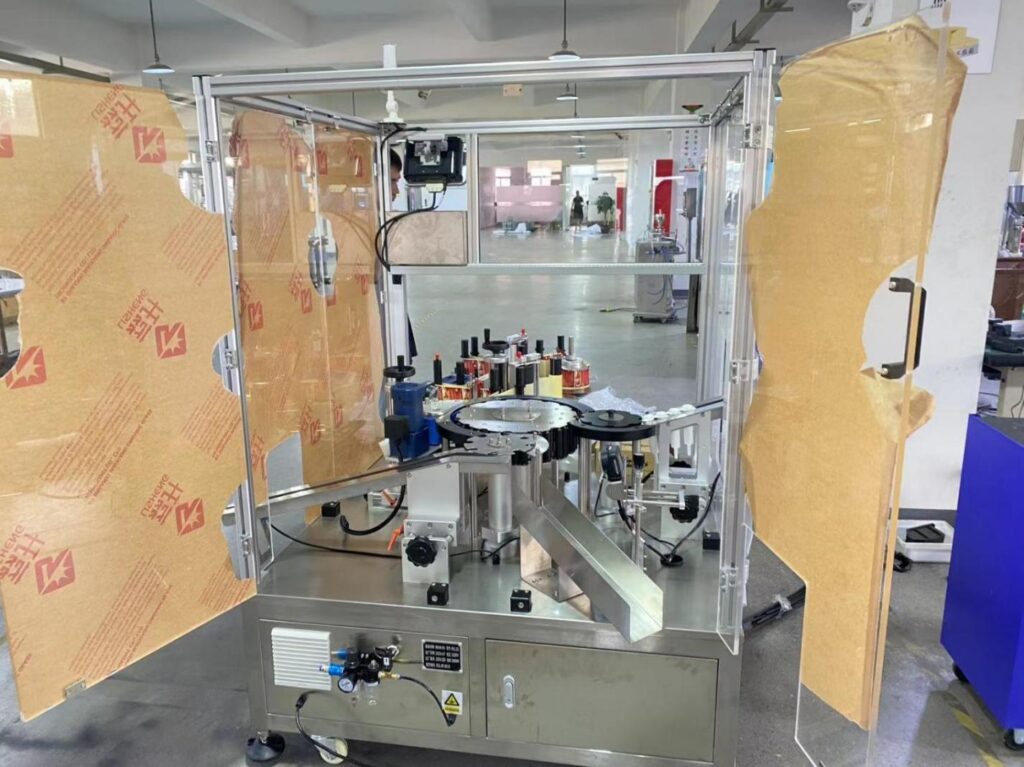
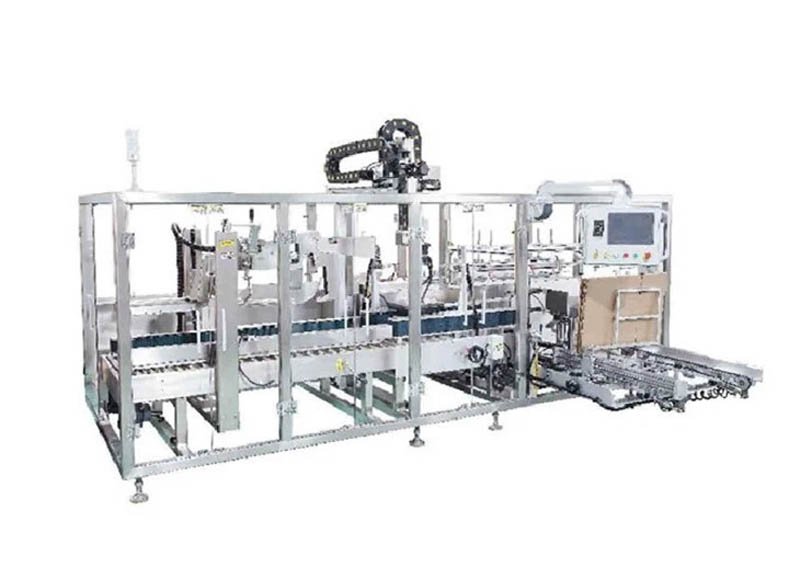
GMP-compliant structural design of a tablet blister machine — 316L stainless product-contact surfaces, smooth-radius frame for cleanroom compliance, and mill-certified material documentation included in the IQ package.
I want to push back against the framing that a multi-regulatory compliant blister line is a premium product for large pharma. It is not. It is a correctly specified product for any manufacturer targeting export markets.
The additional cost of compliance-ready features — audit trail engine, validated HMI software, HEPA filling canopy, environmental sensor interface — is typically 15–22% of the base machine price. Against a validation re-work project after a failed FAT or a failed audit, that premium pays back in the first year. Against a recalled batch, it pays back in the first batch.
I won’t tell you the compliance decision is simple. It involves your API profile, your target markets, your regulatory submission timeline, and sometimes your relationship with the regulatory reviewer. But the starting point is always the same: write the compliance requirements into the URS, and require the supplier to sign the matrix before you sign the purchase order. Everything that happens after that is easier — or harder — depending on whether you did that one thing.
Frequently Asked Questions: Tablet Blister Packaging GMP & FDA Compliance
❓ Is WHO GMP compliance the same as FDA cGMP compliance for a tablet blister machine?
No. WHO GMP (TRS 992 Annex 3) and FDA cGMP (21 CFR Part 211) share core equipment qualification principles but differ critically on data integrity. FDA 21 CFR Part 11 adds mandatory electronic record and audit trail requirements that WHO GMP references but does not enforce at the same specificity. A machine that satisfies WHO GMP documentation requirements may still fail a US FDA inspection if its HMI lacks a validated audit trail engine. Both frameworks must be independently addressed in the URS.
❓ Does my blister machine supplier need to be FDA-registered?
Not as a mandatory requirement for equipment suppliers — FDA registration is required for drug product manufacturers, not equipment manufacturers. However, your machine must be qualified and validated to produce drugs under cGMP conditions, and your supplier’s ability to provide validation documentation, audit trail demonstrations, and reference sites in FDA-inspected facilities is a critical evaluation criterion. Supplier qualification under your pharmaceutical quality system is required by 21 CFR Part 211.
❓ What does EU GMP Annex 1 (2022) specifically add for tablet blister packaging lines compared to the previous version?
The 2022 Annex 1 revision introduced a mandatory Contamination Control Strategy (CCS) requirement that did not exist with the same specificity in the previous version. For tablet blister lines, this requires a documented risk assessment of particulate generation at the filling station, integration of environmental monitoring data into batch records, and a formal justification for any open tablet handling outside classified zones. These requirements directly affect machine specifications — specifically, the need for HEPA-filtered filling station canopies and real-time environmental sensor data interfaces at the machine level.
❓ How long does IQ OQ PQ validation take for a new tablet blister line?
Allow 16–20 weeks minimum from machine delivery to PQ sign-off under normal project conditions. IQ typically takes 2–3 weeks if the supplier provides complete factory documentation. OQ challenge testing requires 3–5 weeks for a full parameter matrix. PQ requires three consecutive commercial-scale runs with acceptable results — 3–6 weeks depending on your batch size and stability testing requirements. Projects without supplier-provided IQ documentation regularly add 8–11 weeks to this timeline.
❓ Can a standard blister machine be retrofitted to meet 21 CFR Part 11?
Sometimes — but less often than vendors claim. A Part 11 retrofit requires adding a validated audit trail software layer, implementing individual user account management, and validating the complete modified system. If the base PLC and HMI hardware support the required software architecture, a retrofit is technically possible. If the hardware is too limited — which is common on machines more than 8 years old — the retrofit cost can approach the price of a new machine, without the benefit of current hardware and a clean validation baseline. Get a technical assessment before committing to a retrofit path.
❓ What seal integrity test is required for GMP-compliant tablet blister packaging?
ASTM F2338 dye-ingress method at 60 mbar is the standard referenced by USP <1207> for container closure integrity testing of blister packages. WHO TRS 992 and cGMP requirements do not specify a single mandatory method, but USP <1207> is universally accepted by FDA, EMA, and WHO assessors. Your PQ protocol must include ASTM F2338 testing at the validated sealing parameter extremes — not just at the nominal set point.
❓ Does my tablet blister line need to be in a classified cleanroom for WHO GMP compliance?
WHO GMP requires that packaging areas be maintained at appropriate cleanliness levels for the product being packaged, but solid oral dosage tablet blistering is not classified as an aseptic process under WHO TRS 992. Non-sterile tablet blister packaging typically operates in a controlled (unclassified) environment with defined temperature, RH, and particulate monitoring requirements. EU Annex 1, however, applies primarily to sterile products and may affect your classification requirements if you are packaging sterile-secondary tablet products. Confirm your product’s classification status with your regulatory team before specifying the facility environment.
The Compliance Decision Is Made Before You Sign — Not After You Commission
Tablet blister packaging GMP and FDA compliance is not a post-installation problem. It is a pre-procurement specification decision. The cost of getting it right before the purchase order is 15–22% of machine price. The cost of getting it wrong after FAT is measured in months of re-validation, missed launch windows, and batch recall exposure.
WHO TRS 992, 21 CFR Part 11, and EU Annex 1 (2022) are simultaneously achievable on a single blister line. That is not in question. What is in question is whether your URS includes the specific features that make it achievable — the audit trail engine, the environmental sensor interface, the IQ documentation package — and whether your supplier has committed to delivering those features in writing before you sign.
If you are currently in supplier evaluation, the how to choose a tablet blister packing machine guide covers the full technical and commercial framework. If you are moving into validation planning, the IQ OQ PQ validation step-by-step guide provides the protocol templates and execution sequence.
At HIJ, our approach to this is a turnkey compliance architecture — data integrity, environmental controls, and multi-regulatory PLC logic pre-validated as an integrated system. I am not going to tell you it eliminates every compliance risk. What it eliminates is the multi-vendor blame game that stalls your market launch when the audit trail engine turns out not to be what the supplier described in the proposal.
The HIJ tablet blister packing machine line is engineered for markets where compliance is not optional. If you want to discuss how your regulatory requirements translate to specific machine specifications, start with the conversation below.
Get a Compliance Matrix for Your Target Markets — Before You Sign
Tell us your regulatory targets — WHO GMP, FDA, EU Annex 1, or a combination — and we will provide a written compliance matrix showing exactly how our blister line architecture meets each requirement. No generic claims. Specific features, specific documentation, specific FAT test protocols.