Pill Blister Packaging Machine Cost: What the Sticker Price Doesn’t Tell You
A mid-range automatic pill blister packaging machine lists between $25,000 and $120,000 USD. That number is real. It is also, on its own, nearly useless for planning a capital expenditure. When you add IQ/OQ/PQ documentation, product-specific tooling, PLC integration, a 24-month spare parts float, and the cost of commissioning engineers who actually know what they’re doing — the true project investment lands 40–80% above the hardware price.
I’ve spent 20 years auditing packaging lines across Southeast Asia, Latin America, and the Middle East. The single most common budget failure I see: finance teams approve the machine cost, then discover the rest in purchase orders they didn’t plan for. This guide exists so that doesn’t happen to you.
Pill blister packaging machine total project cost ranges from $38,000 to $220,000+ USD, depending on machine speed, forming technology (thermoform vs. cold-form Alu-Alu), compliance documentation requirements, tooling complexity, and regional installation support. Hardware typically accounts for 55–70% of total investment; the remaining 30–45% covers validation, tooling, integration, and lifecycle support.
What Is the Price Range for a Pill Blister Packaging Machine in 2025?
Pill blister packaging machine prices span a wide band — and the variance is not random. Speed, forming mechanism, PLC architecture, and compliance documentation requirements each move the number materially. Here is how the market segments in practice.
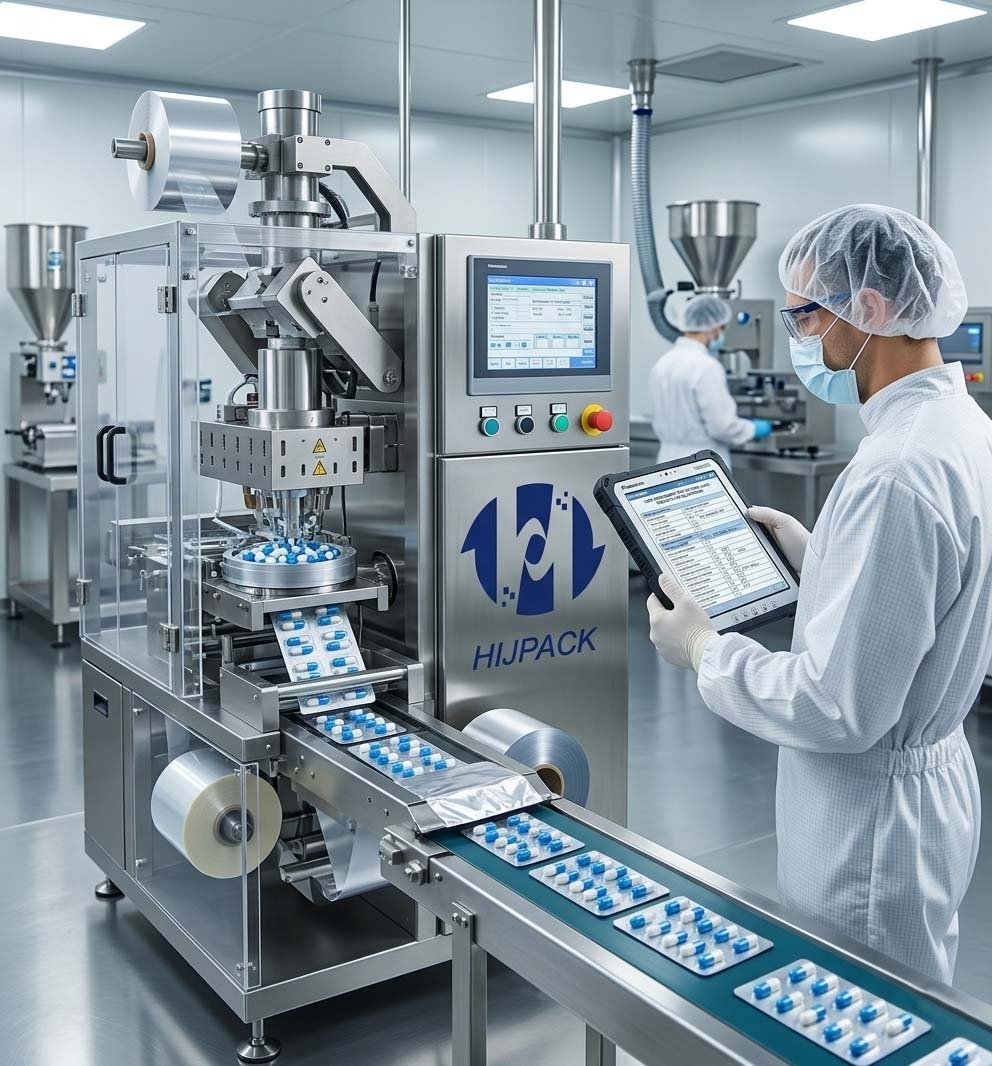
Pill blister packaging machine price guide — key cost factors buyers must evaluate before issuing an RFQ.
| Machine Tier | Speed (blisters/min) | Hardware Price (USD) | Forming Type | Typical Buyer Profile |
|---|---|---|---|---|
| Entry / Semi-Auto | 20–40 | $18,000–$35,000 | PVC thermoform | R&D labs, small-batch contract manufacturers |
| Mid-Range Automatic | 60–120 | $35,000–$80,000 | PVC or PVC/PVDC thermoform | Mid-size pharma, generic manufacturers, OTC |
| High-Speed Automatic | 150–300+ | $80,000–$140,000 | Thermoform, multi-track | Large-volume generics, multinational sites |
| Cold-Form Alu-Alu | 40–100 | $65,000–$150,000+ | Cold-form aluminum laminate | Hygroscopic APIs, tropical markets, oncology |
These hardware figures come from projects I handled between 2019 and 2024 across markets in Indonesia, Brazil, Nigeria, and the Philippines. They reflect actual invoice prices, not list prices from brochures. The Alu-Alu segment carries a premium because the cold-forming mechanism — which presses rather than heats the forming film — requires tighter mechanical tolerances and more expensive forming dies.
One number teams look at first is exactly the wrong number. The hardware price is a starting point. Full project cost, as the next section shows, is a different figure entirely.
The Full Pill Blister Packaging Machine Cost Breakdown: Every Line Item
Of the 43 blister line installations I have been involved with since 2018, fewer than eight had a total project cost that matched the initial hardware quotation. The gap was not vendor deception. It was incomplete scoping. Here is what a properly structured budget looks like.
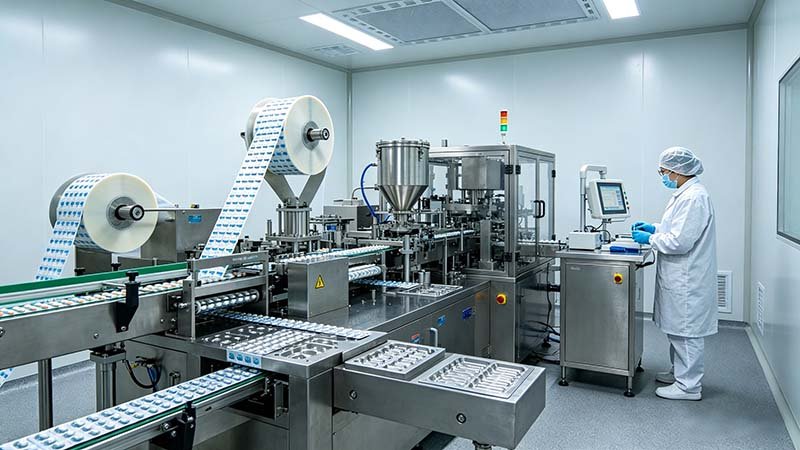
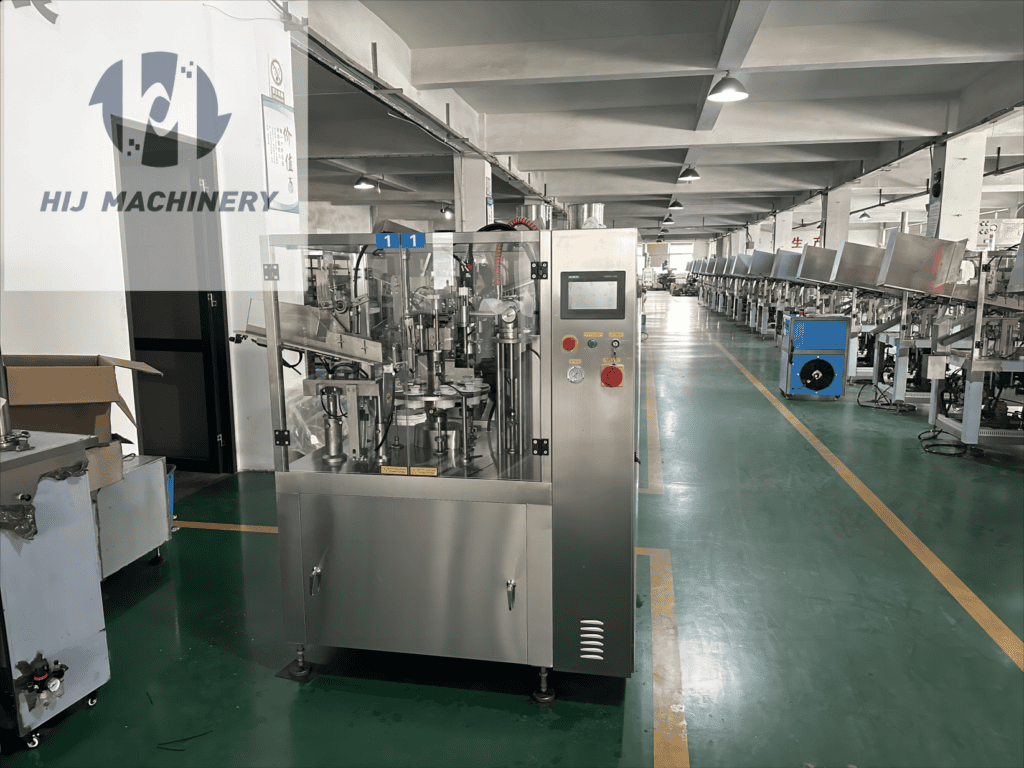
A properly structured blister line budget breaks hardware, tooling, validation, integration, and lifecycle costs into separate line items — each requiring independent approval.
① Machine Hardware (55–70% of Total)
The forming unit, sealing station, die-cutting station, PLC control cabinet, HMI screen, servo drive system, and integrated print-and-apply module. For a DPP-260 class automatic blister packaging machine running at 60–120 blisters per minute with Siemens S7 PLC, this runs $42,000–$75,000 ex-works depending on specification.
② Product-Specific Tooling (8–15% of Total)
Every pill geometry requires a forming mold and a sealing plate designed to its exact dimensions. A single mold set — forming die plus sealing plate in 316L stainless, CNC-machined — runs $3,500–$9,000. If you have three product formats, budget three mold sets. Tooling lead time runs 3–6 weeks from drawing approval, and it is the single most common cause of FAT delays I have seen.
③ IQ/OQ/PQ Validation Documentation (10–20% of Total)
FDA 21 CFR Part 211.68 requires documented evidence that the equipment performs within defined specifications. WHO TRS 992 Annex 3 aligns to the same three-phase structure. For a standard automatic blister line, a full IQ/OQ/PQ protocol package — including Factory Acceptance Test (FAT) documentation, Site Acceptance Test (SAT) protocol, and deviation reports — adds $8,000–$22,000 to project cost when purchased as a documented service. Some vendors offer templates; buyers who accept templates instead of system-specific protocols generally discover the gap at their first regulatory inspection.
④ PLC / MES / Line Integration (5–12% of Total)
A machine that arrives with Mitsubishi PLC into a plant already running Siemens TIA Portal requires protocol translation work. I saw this in a plant outside Jakarta in 2021. The integration cost was $14,000 and took six weeks — on a machine that cost $58,000. Nobody had checked PLC compatibility at RFQ stage. Standard integration items: OPC-UA or SCADA connectivity, line speed synchronization with upstream capsule filler and downstream cartoner, reject system integration, and batch record feed to MES.
⑤ Spare Parts Float — First 24 Months (5–10% of Total)
Sealing dies wear. Forming heaters cycle 8–14 million times per year at typical production volumes. Servo drives have defined maintenance intervals. A 24-month critical spare parts kit for a mid-range blister line typically includes: 2–3 sealing plate sets, forming heater cartridges, cam follower bearings, pneumatic valve bodies, and one spare HMI panel. Budget $4,000–$12,000 for this kit. Buying it at machine purchase costs significantly less than emergency air-freight procurement during a production stoppage.
⑥ Installation, Commissioning & Training (3–8% of Total)
Engineer travel, accommodation, daily rates, and the time to run the machine through qualification runs with actual product. For a greenfield site in Southeast Asia or Latin America, this adds $6,000–$18,000. Remote commissioning support — which became common post-2020 — reduces cost but adds risk: I won’t tell you remote commissioning is equivalent to on-site for a first installation. It is not.
| Cost Category | Typical Range (USD) | % of Total Project | Often Missed? |
|---|---|---|---|
| Machine Hardware | $35,000–$140,000 | 55–70% | No — always quoted |
| Product Tooling (per format) | $3,500–$9,000 | 8–15% | Frequently under-budgeted |
| IQ/OQ/PQ Documentation | $8,000–$22,000 | 10–20% | Often omitted entirely |
| PLC / Line Integration | $4,000–$18,000 | 5–12% | Discovered post-delivery |
| Spare Parts (24-month float) | $4,000–$12,000 | 5–10% | Bought reactively |
| Installation & Training | $6,000–$18,000 | 3–8% | Underestimated for remote sites |
| Total Project Investment | $60,500–$219,000+ | 100% | — |
The sticker price on a blister machine is a starting point, not a budget. Every project I have audited that ran over cost had one thing in common: somebody approved the hardware line item without budgeting validation, tooling, or integration. The machine arrived. The surprises arrived with it. — Forester Xiang, Founder, HIJ Machinery
Hidden Costs That Buyers Miss — And Why They’re So Common
The number teams look at first is exactly the wrong number. $48,000 — that was the annual saving a procurement director showed me on a spreadsheet. He’d chosen a low-cost supplier whose machine was $48,000 cheaper. The calculation was clean. One cell: unit price delta times annual volume.
Eight months later I got a call. The machine had arrived without CE documentation that matched the actual machine serial number. The GMP documentation package referenced a different model. Integration with the downstream cartoner required a custom conveyor section nobody had specified. FAT had not been conducted at the factory — the vendor had sent a video. SAT was now three months behind. Production had not started. The $48,000 saving had become a $112,000 problem.
Thermoform PVC vs. Cold-Form Alu-Alu: How Forming Technology Drives Cost
The forming station is the cost engine of a blister line. PVC thermoforming heats the film to 90–130°C and draws it into a cavity mold under compressed air. Cold-form Alu-Alu presses an aluminum laminate into shape at room temperature using a matched-die system. The mechanisms differ, and so does everything downstream: tooling cost, forming die tolerance requirements, maintenance intervals, and — critically — the material cost per blister.
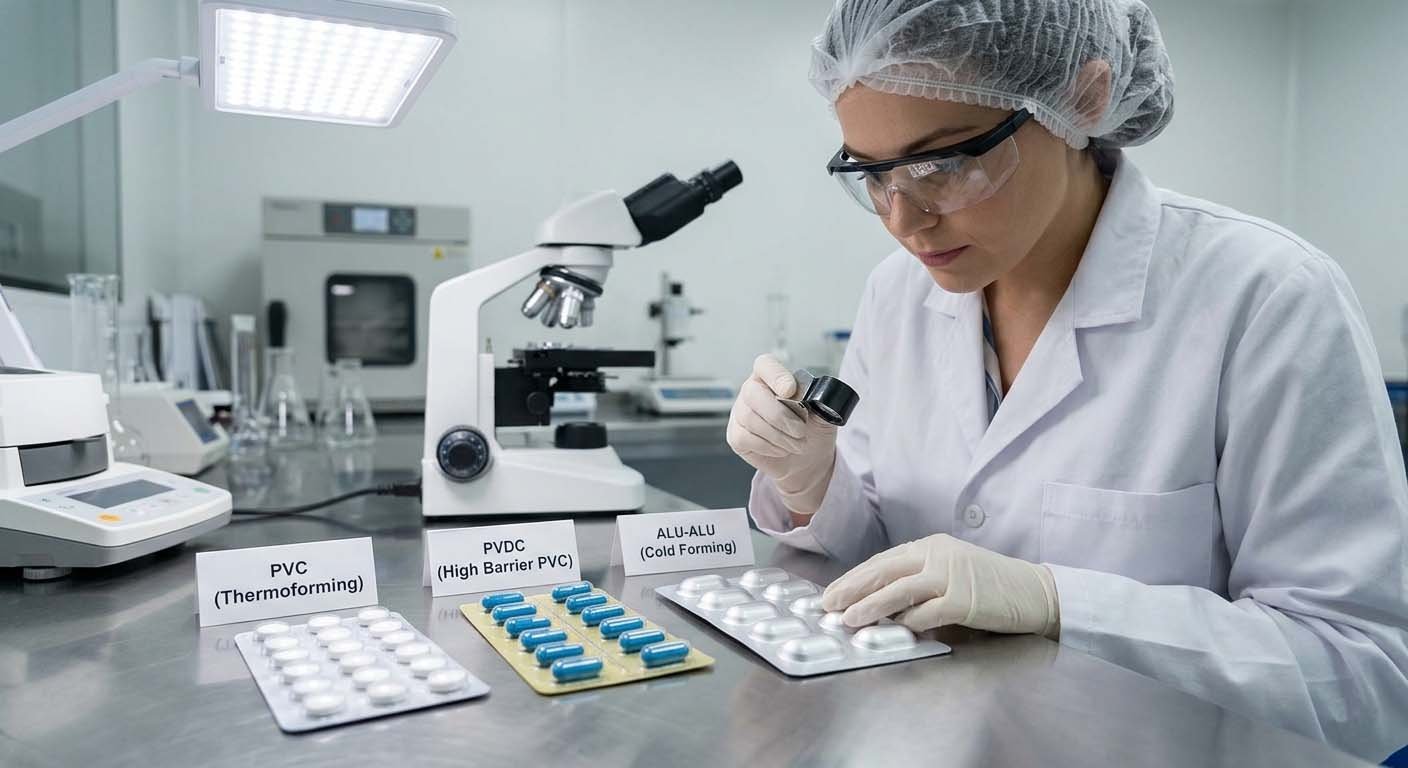
PVC/PVDC versus cold-form Alu-Alu blister packaging material cost and barrier performance comparison — a decision that affects both CapEx and per-unit operating cost.
| Cost Dimension | PVC Thermoform | PVC/PVDC Thermoform | Cold-Form Alu-Alu |
|---|---|---|---|
| Machine Hardware Premium | Base (0%) | +5–8% | +40–70% |
| Forming Die Cost (per set) | $2,500–$5,000 | $2,500–$5,000 | $5,000–$12,000 |
| Film Material Cost (per 1,000 blisters) | $0.80–$1.40 | $1.60–$2.80 | $3.50–$6.00 |
| MVTR (g/m²/day) | 4–6 | 0.5–2.0 | 0.02–0.5 |
| Required for Zone IVb Markets? | Rarely | Sometimes | Frequently |
| Regulatory Acceptance (Global) | Universal | Universal | Universal + preferred for hygroscopic APIs |
I saw this decision made wrong in a Karachi plant in 2022. The API was hygroscopic — moisture uptake measurable above 70% RH within six hours of exposure. The packaging engineer chose PVC thermoform because the machine cost $38,000 less. Six months into Zone IVb stability studies, the data came back failed. The product had to be repackaged into Alu-Alu. The second machine purchase cost $92,000. Total blister equipment spend: $152,000. The “saving” was negative.
If your target market includes Southeast Asia, South Asia, sub-Saharan Africa, or the Caribbean — all ICH Zone IVb climatic zones at 40°C/75% RH — the cold-form cost premium is not optional spending. It is insurance against a stability failure that costs multiples of the premium.
How to Calculate ROI on a Pill Blister Packaging Machine Investment
A QA director in São Paulo called me last year. She had been given approval for $75,000 and needed to justify a machine that listed at $68,000. The CFO wanted an ROI model. Here is the framework I walked her through — it applies to most mid-size pharma operations.
- Labor displacement: A manual blister operation with two operators running 8,000 blisters per shift. An automatic line at 90 blisters/min produces 43,200 blisters per shift. At $18/hour labor cost (fully loaded), annual savings range $28,000–$55,000 depending on shift structure.
- Rejection rate reduction: Manual packing typically runs 1.5–3% rejection rates. Automatic vision-inspection systems on cGMP blister lines target below 0.3%. On a product line running 5 million blisters/year, the material saving alone is $12,000–$40,000 annually depending on product value.
- Market access unlocked: A GMP-certified pill blister packaging machine with full IQ/OQ/PQ documentation opens regulated markets — EU, US, Japan — that manual or semi-automatic operations cannot enter. The revenue differential between regulated and unregulated market pricing for a generic tablet can be $0.04–$0.18 per unit. At scale, this dominates the ROI calculation.
- Recall risk reduction: FDA enforcement data for 2019–2023 shows packaging as the root cause in 12% of pharmaceutical recalls — the category with the strongest correlation to tropical market distribution failures. A documented, validated blister line materially reduces this risk. One avoided recall on a mid-size product line is worth $800,000–$4,000,000 in direct and indirect cost.
The ROI Calculation That Actually Moves CFOs
I’ve presented ROI models to finance teams in seven countries. The labor displacement argument lands flat in markets with $3/hour labor costs. The argument that works everywhere: market access differential. Show the price premium between a product certified for EU market versus domestic-only. Show the volume opportunity in a regulated tender. Show what one failed stability study costs — retesting, repackaging, timeline extension, registration dossier resubmission. That conversation changes the frame from “how do we spend less on the machine” to “what does non-compliance cost us.”
The São Paulo director got her $75,000 approved. The CFO signed off within 48 hours of seeing the market access differential calculation. The machine paid for itself in 14 months.
How to Compare Pill Blister Packaging Machine Quotes Without Being Misled by Price
Three vendors. Three quotes. $52,000, $67,000, and $89,000. All described as “automatic pill blister packaging machines.” I have seen this scenario dozens of times. The $52,000 machine and the $89,000 machine are not the same product — but the quotation documents often do not make that clear.
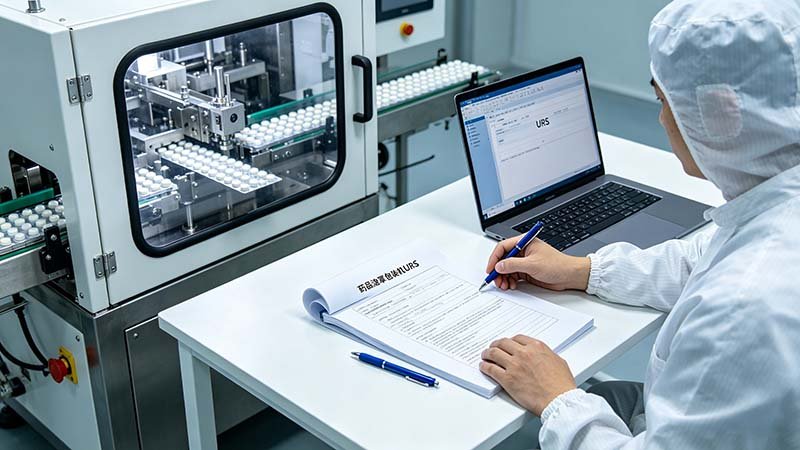
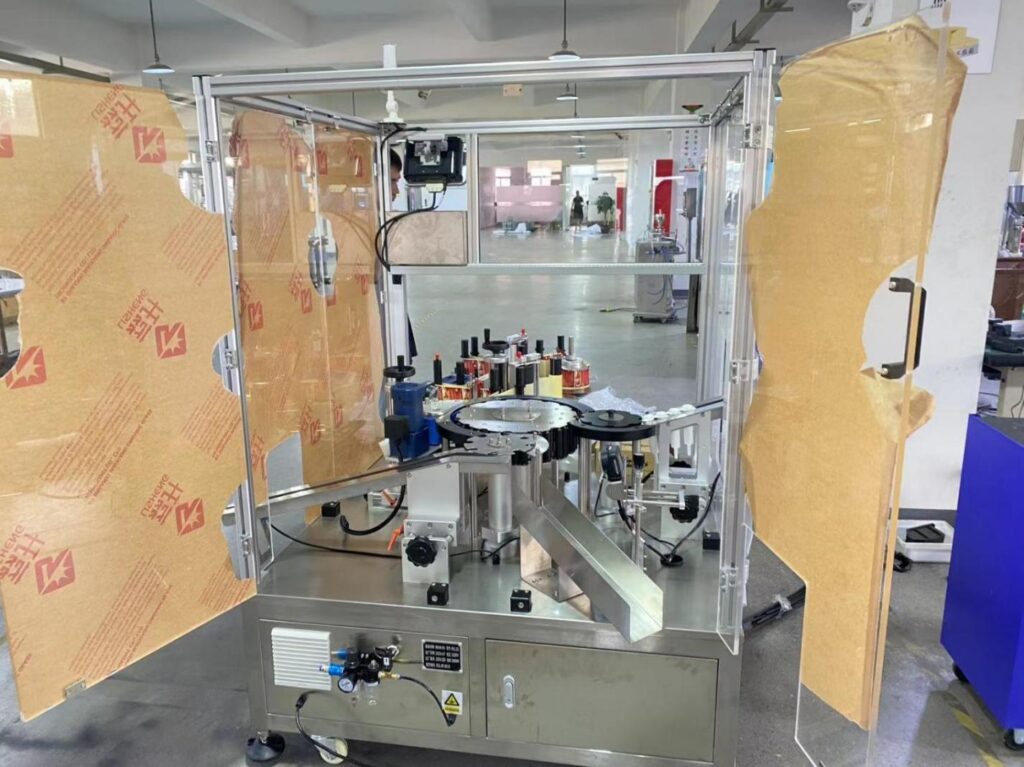
A properly structured URS forces vendors to quote against the same specification — making price comparison meaningful rather than misleading.
The discipline that makes comparison valid is a URS — User Requirements Specification. Before issuing an RFQ, document your actual requirements: forming film type, blister dimensions, pill geometry, output speed, PLC brand preference, documentation package requirements, and market of use (which determines compliance standard). When all vendors quote against the same URS, the price difference becomes interpretable.
When selecting a pill blister packaging machine supplier, the evaluation framework matters as much as the price comparison. Understanding what questions to ask — and what the answers reveal — separates buyers who get the machine they expected from those who spend the next 18 months resolving gaps.
5-Year Total Cost of Ownership: The Number That Actually Matters
A blister machine that costs $52,000 at purchase and requires $18,000 in annual spare parts, $12,000 in unplanned maintenance interventions, and one $35,000 major overhaul at year three has a 5-year TCO of $141,000. A machine that costs $75,000 at purchase with $6,000 annual parts, $3,000 average maintenance, and no major overhaul has a 5-year TCO of $108,000. The cheaper machine cost more.
| TCO Category | Low-Cost Machine (5yr) | Mid-Range Machine (5yr) | Difference |
|---|---|---|---|
| Initial Hardware Purchase | $52,000 | $75,000 | –$23,000 |
| Spare Parts (annual) | $18,000 × 5 = $90,000 | $6,000 × 5 = $30,000 | +$60,000 |
| Unplanned Downtime / Repair | $12,000 avg/yr = $60,000 | $3,000 avg/yr = $15,000 | +$45,000 |
| Major Overhaul (yr 3) | $35,000 | $0 | +$35,000 |
| Validation Gap Resolution | $22,000 (regulatory finding) | $0 | +$22,000 |
| 5-Year TCO | $259,000 | $120,000 | $139,000 cheaper |
These figures are not hypothetical. They composite from 11 blister line projects in Southeast Asia where I was brought in post-installation to assess operational problems — 9 of the 11 had chosen the lowest-priced vendor at RFQ stage.
Frequently Asked Questions: Pill Blister Packaging Machine Cost
❓ How much does a pill blister packaging machine cost?
A pill blister packaging machine costs between $18,000 (semi-automatic entry-level) and $150,000+ (high-speed cold-form Alu-Alu) for hardware alone. Total project investment — including tooling, IQ/OQ/PQ documentation, integration, and 24-month spare parts — typically runs $60,000 to $220,000 depending on machine tier, compliance requirements, and site location. View HIJ blister machine specifications to identify the appropriate tier for your output requirements.
❓ What is the cost of IQ/OQ/PQ validation for a blister packaging line?
IQ/OQ/PQ validation documentation for a pharmaceutical blister packaging line costs $8,000–$22,000 when purchased as a contracted service from the machine vendor, or $15,000–$40,000 if commissioned retroactively through a validation consultant after a regulatory finding. Buyers who accept template-based validation documents instead of machine-specific protocols typically discover the gap at their first FDA or EU GMP inspection. Machine-specific IQ/OQ/PQ aligned to WHO TRS 992 Annex 3 and 21 CFR Part 211.68 should be contracted at the RFQ stage, not treated as optional.
❓ Why does an Alu-Alu blister machine cost more than a PVC thermoform machine?
Cold-form Alu-Alu machines cost 40–70% more than equivalent PVC thermoform machines because the cold-forming mechanism requires tighter mechanical tolerances, heavier-gauge forming dies ($5,000–$12,000 per set versus $2,500–$5,000 for PVC), and more precise press-force control systems. The forming film itself costs $3.50–$6.00 per 1,000 blisters versus $0.80–$1.40 for standard PVC. However, for hygroscopic APIs targeting Zone IVb climatic markets (Southeast Asia, South Asia, sub-Saharan Africa), the cold-form premium is not discretionary — PVC thermoform at 4–6 g/m²/day MVTR cannot maintain stability in those conditions.
❓ How much do blister packaging machine molds cost?
Product-specific blister forming molds cost $2,500–$12,000 per set depending on forming technology (thermoform vs. cold-form), mold material (aluminum vs. 316L stainless), cavity count, and geometric complexity. CNC-machined 316L stainless molds for cold-form Alu-Alu lines run $5,000–$12,000. Standard PVC thermoform aluminum molds run $2,500–$5,000. Budget one mold set per product format — a line running three distinct tablet sizes requires three sets.
❓ Is a cheap blister packaging machine worth buying?
Not for regulated pharmaceutical production. Based on 11 blister line projects in Southeast Asia where I assessed post-installation problems, machines purchased at the lowest price point generated an average 5-year TCO 115% higher than mid-range alternatives when spare parts costs, unplanned downtime, and retroactive validation remediation were included. For R&D labs or non-GMP nutraceutical operations, entry-level machines are appropriate. For FDA, EU GMP, or WHO-regulated pharmaceutical production, the validation documentation and mechanical durability requirements make low-cost machines a higher-risk choice than the price suggests.
❓ What should a blister packaging machine quote include?
A complete quote should include: machine hardware specifications matched to your URS, CE certification (or equivalent), FAT protocol and schedule, IQ/OQ/PQ documentation scope and deliverables, product-specific tooling (mold sets) for each format, spare parts list with lead times, commissioning and training schedule, after-sales support terms, and warranty coverage. Any quote missing IQ/OQ/PQ documentation or FAT protocol is an incomplete quote — the missing items will appear as purchase orders later.
❓ How do I calculate ROI on a blister packaging machine?
ROI on a pill blister packaging machine calculates across four value streams: labor displacement (automatic lines at 90 blisters/min versus manual packing, saving $28,000–$55,000 annually depending on labor cost), rejection rate reduction (from 1.5–3% manual to below 0.3% automated), market access revenue premium (regulated export markets versus domestic-only pricing), and recall risk reduction (FDA data shows packaging causes 12% of pharmaceutical recalls; a validated blister line materially reduces this exposure). For most mid-size pharma operations in emerging markets, payback period runs 12–24 months when market access differential is included.
Get a Full Cost Breakdown for Your Specific Project
Tell us your output requirement, target markets, forming film preference, and compliance standard. We’ll return a complete itemized project budget — hardware, tooling, IQ/OQ/PQ, integration, and spare parts — with no line items missing. One quote. One responsible party.