The sticker price covers only 55–65% of what you will actually spend. Before you sign a purchase order, here is every cost layer that procurement teams routinely underestimate — with real numbers from 31 commissioned lines across Southeast Asia and Latin America.
- 1. What Does the Machine Actually Cost?
- 2. Forming Tooling: The Cost Nobody Quotes Upfront
- 3. IQ/OQ/PQ Validation: Where Budget Projections Collapse
- 4. The Multi-Vendor Integration Gap That Kills SAT Day
- 5. Total Cost Comparison: PVC vs. Alu-Alu Tablet Blister Lines
- 6. Forester’s Insight: 20 Years of Hidden Cost Patterns
- 7. Pre-PO Checklist: 8 Cost Items to Verify Before Signing
- 8. FAQ: Tablet Blister Packing Machine Cost
A procurement director in Kuala Lumpur sent me a quote last year. Single-vendor, mid-range tablet blister packing machine. The number looked right. Forty-eight hours later, she forwarded me the tooling addendum — $38,000 in proprietary forming molds, not included in the original quote. Her budget was already committed. The project went sideways for six months while finance scrambled.
That is not an unusual story. The tablet blister packing machine sticker price is the number that gets put into capex proposals, gets approved by boards, and gets celebrated in procurement meetings. The true tablet blister packing machine cost — including forming tooling, IQ/OQ/PQ validation, PLC integration, and SAT remediation — is a different number entirely. This guide breaks it down, layer by layer, with real ranges based on projects I have been part of since 2005.
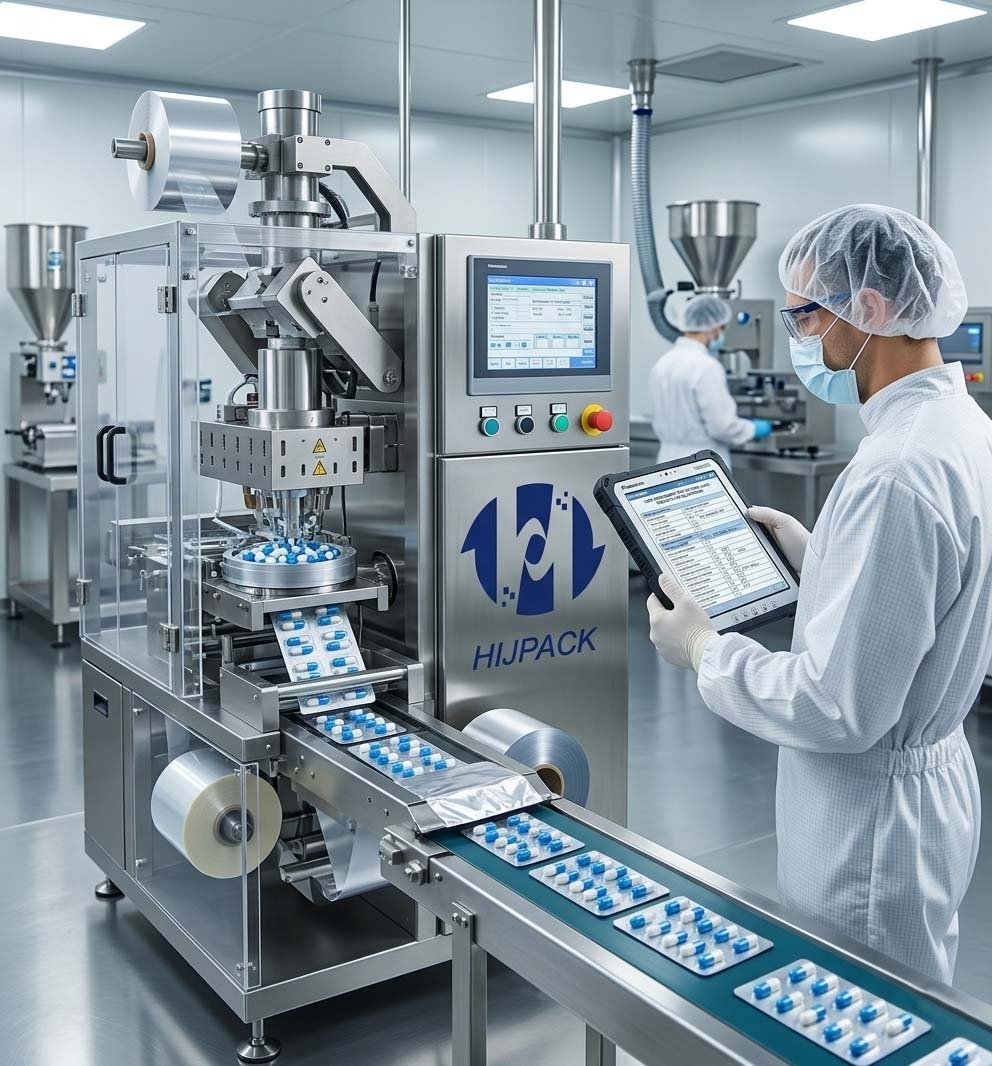
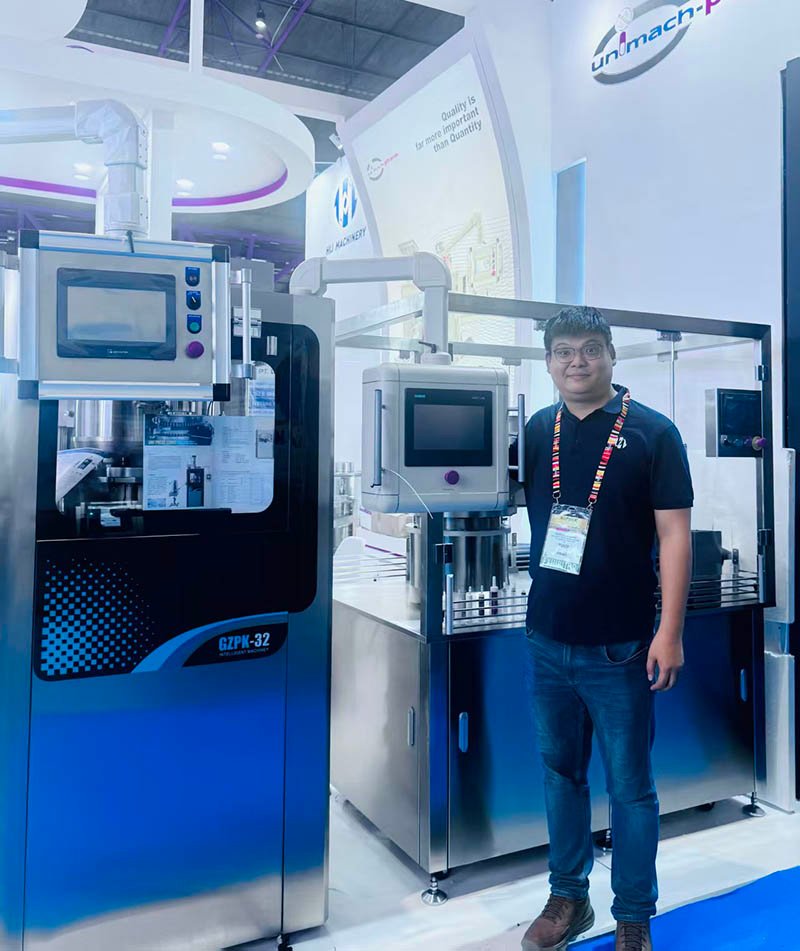
Full cost anatomy of a tablet blister packing line — machine price is only the beginning.
What Does a Tablet Blister Packing Machine Actually Cost in 2025?
$80,000. That is the floor. Below that, you are looking at semi-automatic equipment, no 21 CFR Part 11 audit trail, and forming speeds under 30 blisters per minute — unsuitable for regulated pharmaceutical markets. The number that appears on most serious pharmaceutical capex proposals sits between $150,000 and $250,000 for a fully automatic system with servo-driven forming, vision inspection, and GMP-compliant contact surfaces.
The factors that push a machine toward the top of that range: output speed (blisters per minute), forming system type (flat-die vs. rotary-die), PLC and HMI sophistication (Siemens S7 vs. proprietary), foil width capacity, 21 CFR Part 11 compliance architecture, and whether the unit ships with a validated checkweigher integration. A machine running 300 blisters per minute with an Allen-Bradley PLC, integrated vision system, and full audit trail software costs roughly $240,000–$280,000 in 2025. The same output speed without the compliance architecture is $40,000 cheaper. That $40,000 saving will cost you more than $40,000 in validation remediation. It always does.
| Machine Category | Speed (blisters/min) | Compliance Level | Machine Price Range (USD) | Typical Market |
|---|---|---|---|---|
| Semi-Automatic | 20–40 | Basic GMP | $25,000–$60,000 | R&D / Small Pharma |
| Entry Auto (PVC/PVC) | 60–120 | WHO GMP | $80,000–$120,000 | Developing Markets |
| Mid-Range Auto | 120–200 | GMP + cGMP | $150,000–$230,000 | ASEAN, LATAM, MEA |
| High-Speed Auto | 200–350 | 21 CFR Part 11 Ready | $230,000–$350,000 | FDA / EMA Markets |
| Alu-Alu Cold-Form | 80–160 | 21 CFR Part 11 Ready | $180,000–$320,000 | Moisture-Sensitive APIs |
| 📊 Machine price alone. Tooling, validation, integration, and spare parts are additional. — HIJ Machinery field data, 2018–2025. | ||||
Forming Tooling: The Cost Nobody Quotes Upfront
The number teams look at first is exactly the wrong number. Machine price dominates the capex conversation. Tooling gets footnoted. But tooling is where I have watched the most projects hemorrhage unplanned spend — quietly, after the purchase order is signed and the validation timeline is already locked.
Here is the mechanic. A forming mold for a standard 10-tablet blister card in PVC costs $8,000–$18,000. The same mold in Alu-Alu cold-form aluminum — which requires higher forming pressure tolerances and hardened steel cavities — runs $22,000–$45,000. A multi-format line with four SKUs means four sets of forming molds, four sets of sealing dies, and four sets of die-cutting punches. That is $60,000–$180,000 in tooling alone, depending on material and complexity. Most vendors quote a base machine with one tooling set. The rest shows up as a supplemental PO six weeks into the project.
Proprietary tooling compounds the problem. Some manufacturers design their forming stations around non-standard mold interfaces — meaning you can only source replacement tooling from them, at margins that would make a luxury goods company blush. Of the 31 blister line projects I handled in Southeast Asia between 2018 and 2023, 11 required a forming material change after month-12 stability failure — and 7 of those 11 were locked into proprietary tooling systems with 14–18 week lead times for replacement molds. That is a production halt, not a maintenance inconvenience.

Forming tooling is the second-largest cost in most tablet blister packing line budgets — and the most frequently omitted from initial quotes.
IQ/OQ/PQ Validation: Where Budget Projections Actually Collapse
The stability report landed in March. The client had planned for a June commercial launch. IQ was done. OQ was done. PQ was halfway through when the sealing integrity data showed inconsistent hermetic closure at the high end of the humidity range. The root cause took 11 days to isolate: the sealing temperature profile had been validated against the machine manufacturer’s internal PVC specification, not the actual foil grade the client was sourcing locally. Three PQ cycles scrapped. Commercial launch moved to October. Validation budget overrun: $67,000.
This is more common than the industry admits. A basic IQ protocol for a single blister machine in a WHO GMP market costs $12,000–$20,000 in CRO or internal QA labor, excluding equipment calibration and document management. Add OQ and PQ, and the total for a WHO GMP market validation runs $25,000–$55,000 when everything goes right. When it does not — and in my experience, roughly 40% of first-cycle PQ runs require at least one repeat — the cost climbs to $45,000–$90,000.
FDA-regulated markets are more expensive. A 21 CFR Part 11 compliant validation package for a tablet blister line destined for a US NDA submission requires audit trail verification, electronic batch record integration, and a computer system validation (CSV) protocol alongside the standard IQ/OQ/PQ. That package runs $70,000–$120,000. I have never seen it done for less, at a quality level that survives an FDA Pre-Approval Inspection (PAI).
The Multi-Vendor Integration Gap That Kills SAT Day
A QA director in São Paulo called me on a Friday afternoon. SAT was supposed to start Monday. The blister machine was running. The cartoner was running. Individually, both passed FAT at their respective factories in Germany and China. Together, on-site, the handshake protocol between the blister machine PLC and the cartoner infeed conveyor simply did not work. Different Modbus register maps. Nobody had tested the integration. Nobody — not the blister machine vendor, not the cartoner vendor, and not the EPC contractor — owned the interface.
That is the integration gap. And it is more expensive than it sounds. The remediation in Brazil required a custom PLC middleware module, four weeks of on-site engineering from both vendors (billed separately), and a delay to the site’s scheduled regulatory inspection. Total unplanned cost: $52,000. The combined machine purchase had been $380,000. Nobody had budgeted $52,000 for an integration fix that should have been a pre-purchase specification item.
The solution is architectural, not technical. Before issuing any RFQ for a multi-machine tablet blister packing line, require that all vendors confirm written compatibility with a single PLC communication standard — preferably Siemens S7 with Profinet, or Allen-Bradley with EtherNet/IP, depending on your region. Demand a signed FAT protocol that includes integrated line testing, not individual machine testing. At HIJ, our turnkey packaging line approach puts the integration interface under a single contract — so the protocol compatibility is our engineering problem before FAT, not your budget problem after SAT.
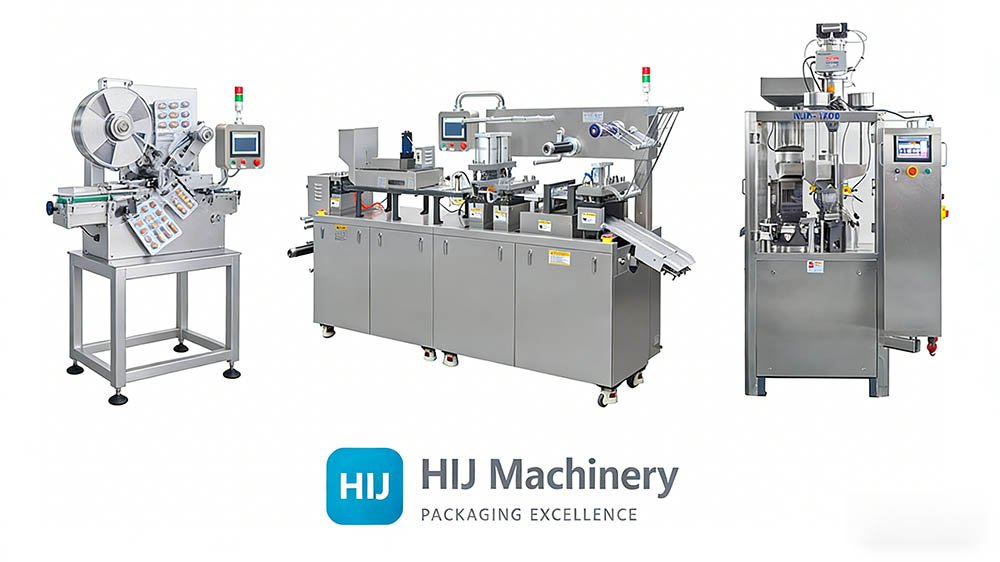
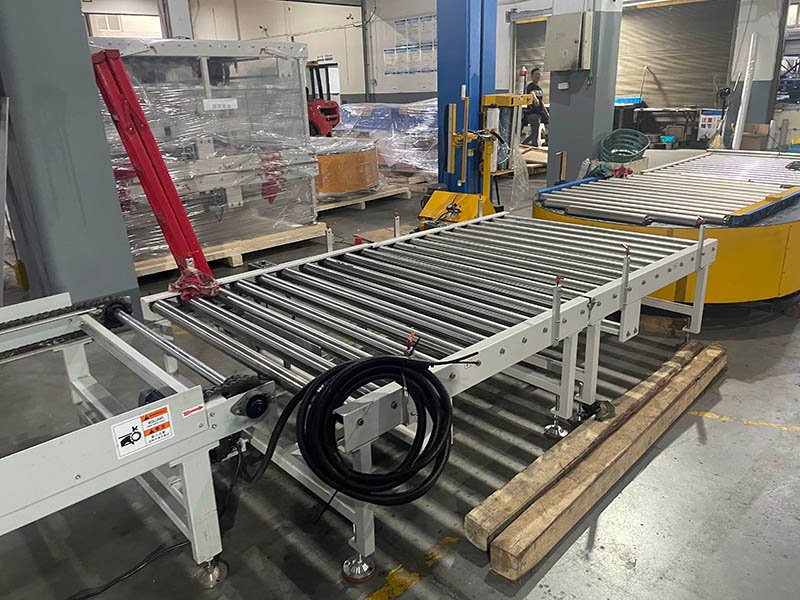
A fully integrated turnkey blister-to-cartoner line eliminates the inter-vendor protocol gap that collapses SAT budgets.
Total Cost Comparison: PVC Thermoform vs. Alu-Alu Tablet Blister Lines
The material choice drives cost at every level. PVC thermoform lines are cheaper to buy, cheaper to tool, faster to validate, and easier to source consumables for globally. Alu-Alu cold-form lines cost more on every dimension — but for hygroscopic APIs with moisture vapor transmission requirements below 0.5 g/m²/day, there is no viable alternative. The cost comparison below covers both scenarios, for a single-format, single-shift production setup in a WHO GMP regulated market.
| Cost Category | PVC Thermoform Line (WHO GMP) | Alu-Alu Cold-Form Line (WHO GMP) | FDA 21 CFR Line (Either Material) | Budget Risk Level |
|---|---|---|---|---|
| Machine (base unit) | $80,000–$200,000 | $180,000–$320,000 | $230,000–$350,000 | LOW |
| Forming Tooling (1 format) | $8,000–$22,000 | $22,000–$50,000 | $20,000–$55,000 | HIGH |
| Sealing Die + Punch Tooling | $5,000–$12,000 | $8,000–$20,000 | $8,000–$22,000 | MEDIUM |
| IQ/OQ/PQ (single machine) | $18,000–$45,000 | $22,000–$60,000 | $70,000–$120,000 | HIGH |
| PLC / Integration Engineering | $5,000–$20,000 | $8,000–$25,000 | $15,000–$60,000 | HIGH |
| Spare Parts (Year 1) | $8,000–$15,000 | $12,000–$25,000 | $15,000–$30,000 | MEDIUM |
| Training & Commissioning | $5,000–$15,000 | $8,000–$20,000 | $10,000–$25,000 | LOW |
| TOTAL INVESTMENT | $130,000–$320,000 | $260,000–$520,000 | $370,000–$660,000 | — |
The sticker price on a tablet blister packing line is rarely more than 60% of your true total cost — tooling, IQ/OQ/PQ validation, and multi-vendor integration gaps quietly devour the rest. I have seen a $200,000 machine quote become a $380,000 line commissioning by the time SAT closes. Budget for the system, not the machine. — Forester Xiang, Founder, HIJ Machinery
Forester’s Insight: 20 Years of Hidden Cost Patterns
I’ve commissioned lines in Jakarta, São Paulo, Lagos, and Karachi. Every market is different. The cost patterns are not. The procurement director celebrates the machine price win. The QA manager discovers the validation gap six months later. The production head absorbs the integration remediation cost that nobody budgeted.
Before I recommend any tablet blister packing line — regardless of budget — I ask four questions. What is your target market’s regulatory framework? How many SKU formats will run on this line in the first 24 months? Do you have an internal validation team or do you need a CRO? And what is your downstream cartoner — because that answer determines 60% of the integration engineering scope before we even open the blister machine RFQ.
I won’t tell you the cost calculation is simple. It involves your API moisture profile, your market’s regulatory reviewer, your internal engineering bandwidth, and sometimes your relationship with a specific foil supplier. But I can tell you this: every pharmaceutical plant that has ever come to me after a budget overrun had the same root cause — they bought a machine, not a line. See how we approach full-line integration for tablet blister projects.
Forester Xiang and the HIJ engineering team reviewing a tablet blister line commissioning plan — cost transparency starts at the design stage.
The procurement director showed me the competing quote. PVC entry-level machine: $68,000. Looked like a legitimate saving versus our $145,000 mid-range proposal. I asked two questions. First: how many formats in 24 months? Answer: four. Second: what was the competing vendor’s tooling quote for all four formats? Silence. The tooling addendum, when it arrived two weeks later, was $72,000. The “$68,000 machine” was a $140,000 line investment before validation — and with 16-week proprietary tooling lead times for each additional format.
That is a pattern. Not an exception. The solution is not to distrust vendors — it is to ask the right questions before the purchase order is signed. The tablet blister machine selection guide covers the technical specification questions in detail. This article covers the financial ones.
Pre-PO Checklist: 8 Cost Items to Verify Before Signing Any Tablet Blister Line Contract
Of the projects where I was brought in post-purchase to fix a budget crisis, 80% had skipped at least three of the eight items below. None of them are technically complex to verify. All of them are contractually awkward to raise after the PO is signed.
- Tooling scope confirmed in writing: How many forming mold sets are included? Sealing dies? Punch tooling? Get a complete tooling bill-of-materials as part of the quote, not as an addendum.
- Tooling interface is open-standard: Verify that forming molds can be sourced from at least two independent tooling suppliers. Proprietary interfaces create long-term vendor dependency at premium pricing.
- Validation documentation responsibility assigned: Who writes the IQ/OQ/PQ protocols — vendor, CRO, or your team? Who provides the master validation plan template? Get this in the contract scope, not a verbal agreement.
- PLC communication protocol specified: Confirm the blister machine PLC speaks the same protocol as your cartoner, checkweigher, and ERP system. Siemens Profinet, Allen-Bradley EtherNet/IP, or equivalent — document the standard before FAT.
- FAT scope includes integrated line test: If you are buying a multi-machine line, FAT must include the full blister-to-cartoner integration run, not individual machine acceptance. A machine that passes FAT in isolation can still fail SAT when connected.
- Year-1 spare parts package included: Sealing gaskets, forming station heating elements, feeder brushes, and PLC I/O modules should be included in the purchase. Sourcing critical spares post-installation in an unfamiliar supply chain adds 3–6 week downtime risk.
- On-site training scope defined: How many operator days? How many maintenance engineer days? Is training in English, local language, or both? Training scope directly affects your OQ timeline — operators who cannot run the machine cannot generate OQ data.
- Single-point-of-accountability clause: For multi-vendor lines, insist on a system integrator or primary contractor who holds accountability for the entire line performance — not individual machine performance. This single clause prevents the inter-vendor blame loop that delays SAT by months.
If you are building a URS before issuing the RFQ, the GMP and FDA compliance guide for tablet blister lines covers the regulatory documentation scope in detail — essential reading before finalizing your validation budget estimate.
FAQ: Tablet Blister Packing Machine Cost
Request a fully itemized quote from HIJ Machinery — machine, tooling by format, validation scope, and integration engineering. One contract. No hidden addenda.