What Is Blister Packing?
The Complete Guide for Pharmaceutical Manufacturers
A 20-year industry veteran breaks down everything you need to know — from materials and process steps to compliance, equipment selection, and strategic decision-making.

Forester
Founder, HIJ Machinery · 20 Years in Pharma Packaging
What Is Blister Packing?
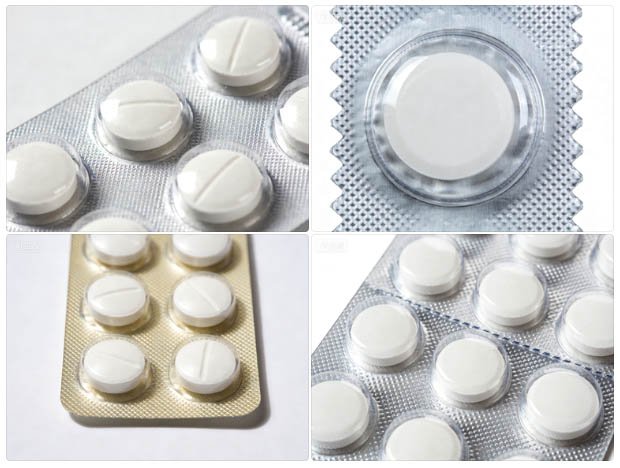
Blister packing is a pharmaceutical primary packaging method in which individual unit doses — tablets, capsules, softgels, or other solid dosage forms — are sealed inside pre-formed plastic cavities (known as “blisters”) that are then covered and hermetically sealed with a flexible lidding material, typically aluminum foil or a laminated film. Each cavity holds a single dose, creating a tamper-evident, moisture-resistant, and individually identifiable package that protects product integrity from manufacture through to the point of patient use. Widely adopted across the global pharmaceutical industry, blister packing satisfies the requirements of GMP, WHO, 21 CFR, and EU pharmaceutical regulations, making it the dominant unit-dose packaging format worldwide.
If you’ve ever popped a tablet out of a foil-backed plastic card at your pharmacy, you’ve already held a blister pack in your hand. But for pharmaceutical manufacturers, what happens before that moment — the machinery, materials, process validation, and compliance engineering behind it — is where the real complexity lives.
Over the past two decades visiting production floors from Brazil to Indonesia to Germany, I’ve watched blister packing evolve from a relatively straightforward packaging step into one of the most strategically significant decisions a pharmaceutical company can make. Your choice of forming film, sealing material, machine platform, and process parameters directly determines your shelf life, your regulatory pathway, your SKU flexibility, and your cost per unit.
“Blister packing is not just a packaging choice — it’s a strategic decision that touches regulatory compliance, unit-dose accuracy, cold-chain integrity, and brand credibility in demanding markets like the EU and North America.”
— Forester, Founder, HIJ Machinery
Types of Blister Packaging: PVC, PVDC, and Alu-Alu
Not all blister films are created equal. Material selection is your first and most consequential decision.
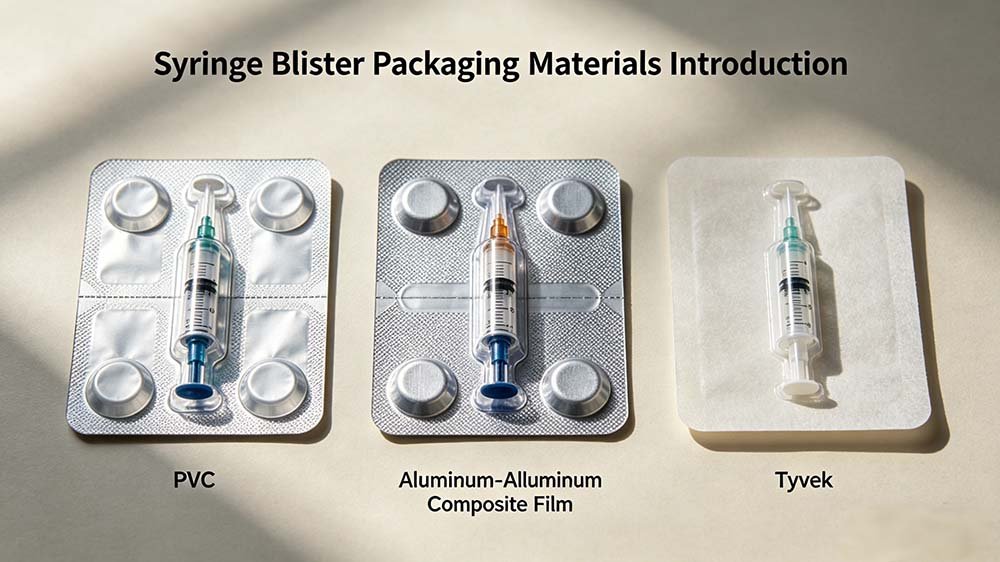
PVC (Polyvinyl Chloride)
The most widely used forming film globally. Thermoformable, cost-effective, and transparent. Standard thickness: 250–300 µm.
✓ Low cost, excellent clarity
✓ Easy to thermoform
✗ Limited moisture barrier
Best for: Non-hygroscopic tablets in standard climates
PVC/PVDC Laminate
A PVC base film coated with Polyvinylidene Chloride. Significantly improves moisture and oxygen barrier properties while retaining thermoformability.
✓ Superior moisture barrier vs. plain PVC
✓ Maintains thermoforming process
✗ Higher cost than plain PVC
Best for: Moisture-sensitive APIs, tropical markets
Cold-Form Alu-Alu (OPA/AL/PVC)
Both forming film AND lidding are aluminum-based laminates. Zero moisture and oxygen transmission. The gold standard for highly sensitive formulations.
✓ Near-zero WVTR and OTR
✓ Light-blocking, child-resistant options
✗ Requires cold-forming machine; higher cost
Best for: Hygroscopic APIs, biologics, high-value drugs
⚡ Forester’s Field Note: I’ve seen companies in Southeast Asia specify PVC film to save cost, only to discover — after regulatory submission — that their target EU market required WVTR performance only achievable with PVDC or Alu-Alu. The re-validation cost more than three years of material cost savings. Get the film spec right in your URS, before you buy the machine.
Thermoforming vs. Cold-Forming: A Critical Choice
These two forming technologies are fundamentally different — and the wrong choice can cost you six figures in re-validation.
🔥 Thermoforming
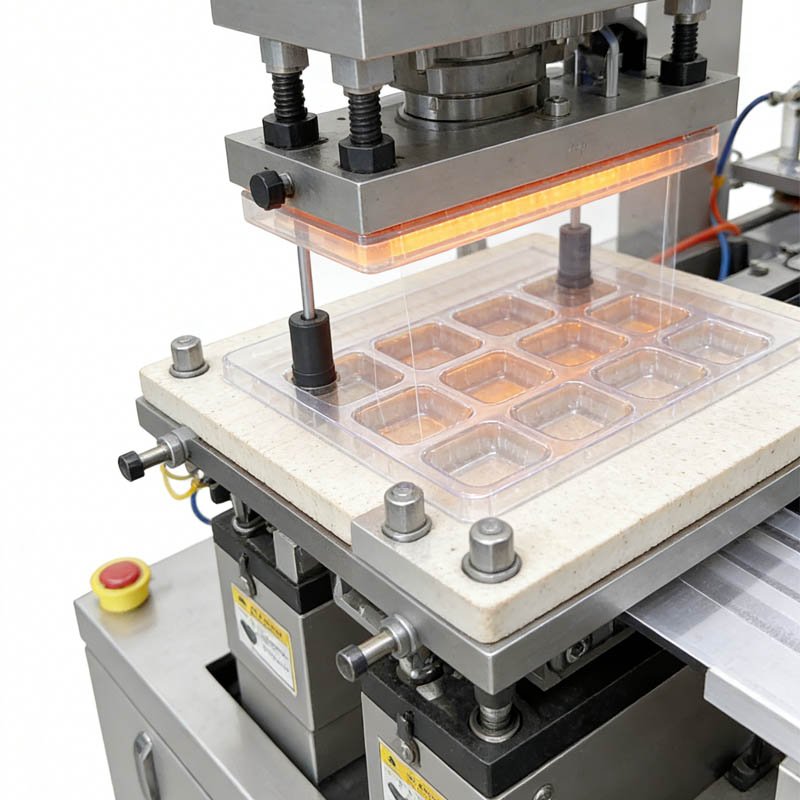
PVC or PVDC film is heated to its softening point (typically 130–150°C), then pressed into a forming mold using pressurized air or mechanical plugs. Fast, economical, high output.
- Output: up to 600 blisters/min (high-speed lines)
- Film cost: lower
- Cavity clarity: excellent (transparent)
- Suitable for: tablets, capsules, lozenges
❄️ Cold-Forming (Alu-Alu)
OPA/AL/PVC laminate is cold-pressed (no heat) into a forming die. Slower process, but delivers absolute barrier protection — essential for moisture or light-sensitive APIs.
- Output: lower (30–60% of thermoforming speed)
- Film cost: 3–5x higher than PVC
- Cavity: opaque, silver appearance
- Suitable for: highly sensitive APIs, biologics


Left: HIJ DPP-250 Thermoforming Machine · Right: HIJ DPH-300 Cold-Form Alu-Alu Machine
How Does Blister Packing Work? Step-by-Step
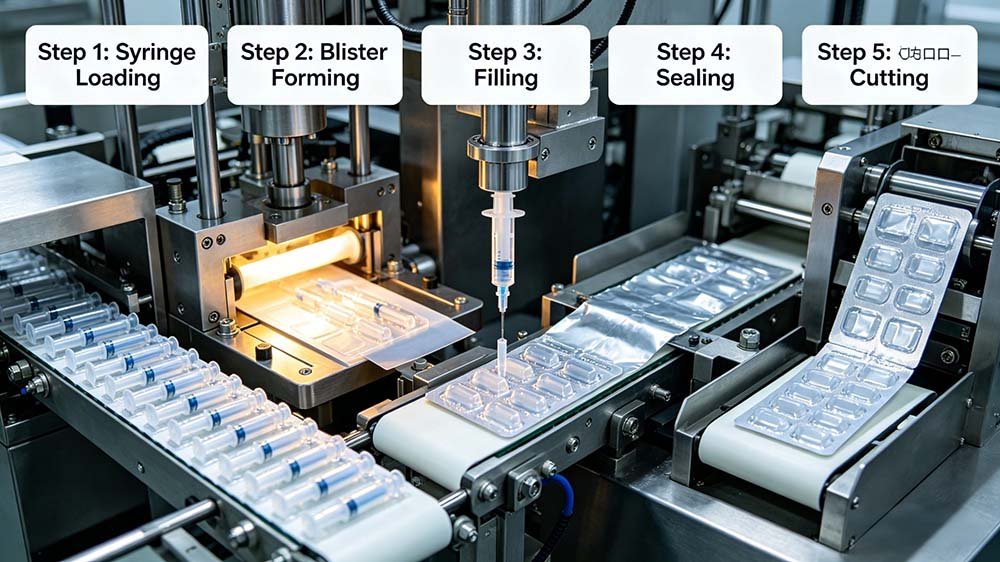
Every blister pack starts as a flat roll of film. Here’s exactly what happens between raw material and finished package.
Film Loading & Web Feeding
A roll of forming film (PVC, PVDC laminate, or OPA/AL/PVC for cold-form lines) is mounted on a dual roll holder. The web is fed through a tension control system to ensure precise, consistent film advance. Web tension calibration here directly impacts cavity depth consistency downstream.
Film Heating (Thermoforming Only)
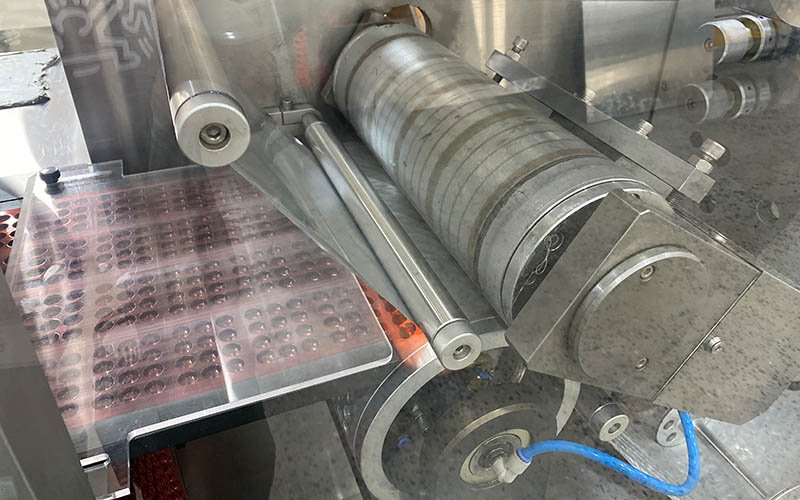
The forming film passes over a precisely controlled heating plate (or between heated platens). Temperature is a critical process parameter — too low and the film won’t form properly; too high and the film degrades, creating microscopic pinholes that destroy your moisture barrier. On GMP lines, this temperature is logged by PLC and forms part of your process validation data.
Cavity Forming
The heated (or cold, for Alu-Alu) film is pressed into the forming mold using compressed air and/or mechanical plugs. The mold defines the cavity shape and depth precisely. Cavity depth uniformity is non-negotiable — even a 0.2mm variance across the web width can cause filling inconsistencies and sealing failures. Quality tooling matters enormously here.
Product Filling
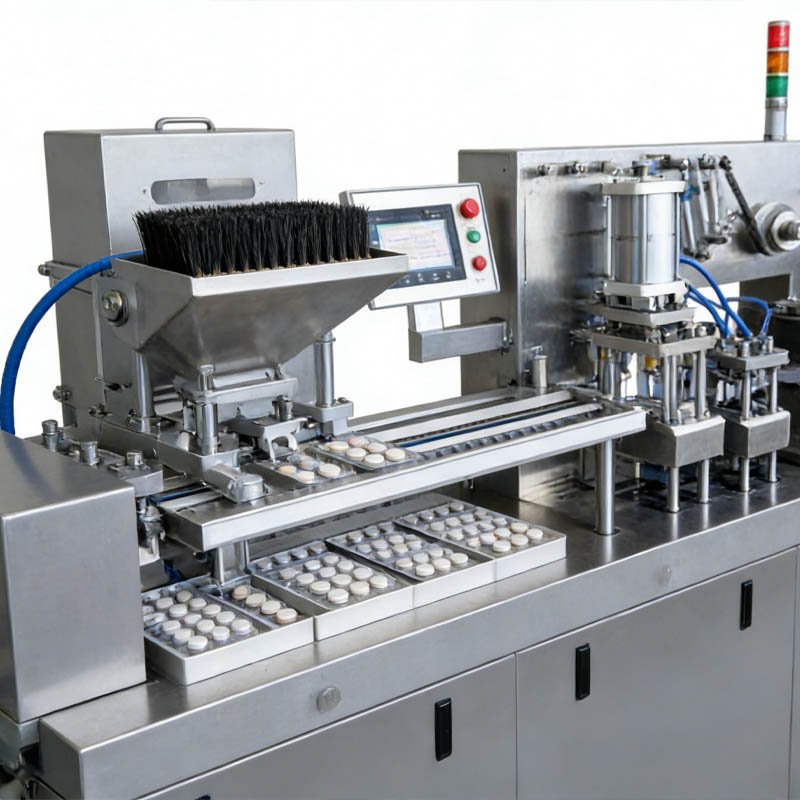
Tablets or capsules are fed into the formed cavities via a brush-type feeder, vibrating feeder, or combination feeding system. The filling station is where production speed and fill accuracy intersect. On modern lines, integrated optical inspection systems verify cavity fill at this stage — catching missing or broken tablets before sealing, which is far more GMP-efficient than post-punch inspection.
Heat Sealing
A roll of lidding foil (typically 20–25µm pharmaceutical-grade aluminum coated with heat-seal lacquer) is unwound and pressed against the filled forming web using a heated sealing die. Temperature, pressure, and dwell time are the three sealing parameters that must be validated as a set — not individually. A seal integrity failure is invisible to the naked eye but catastrophic for product stability.
Batch Code Printing & Embossing
Before or after sealing, the lidding foil receives batch number, expiry date, and lot code via thermal inkjet printer, hot stamping, or embossing device. Under 21 CFR Part 11, data integrity requires that print parameters and outputs be electronically logged and audit-trailed. This step is frequently underestimated in machine selection.
Punching & Die-Cutting
The sealed web is cut into individual blister cards of the specified size using a rotary or flat-bed punch die. Cut quality, clean edges, and dimensional accuracy are critical — misaligned punch cuts are a primary cause of cartoning machine jam-ups downstream. Investing in precision rotary punch tooling pays back in reduced downtime alone.
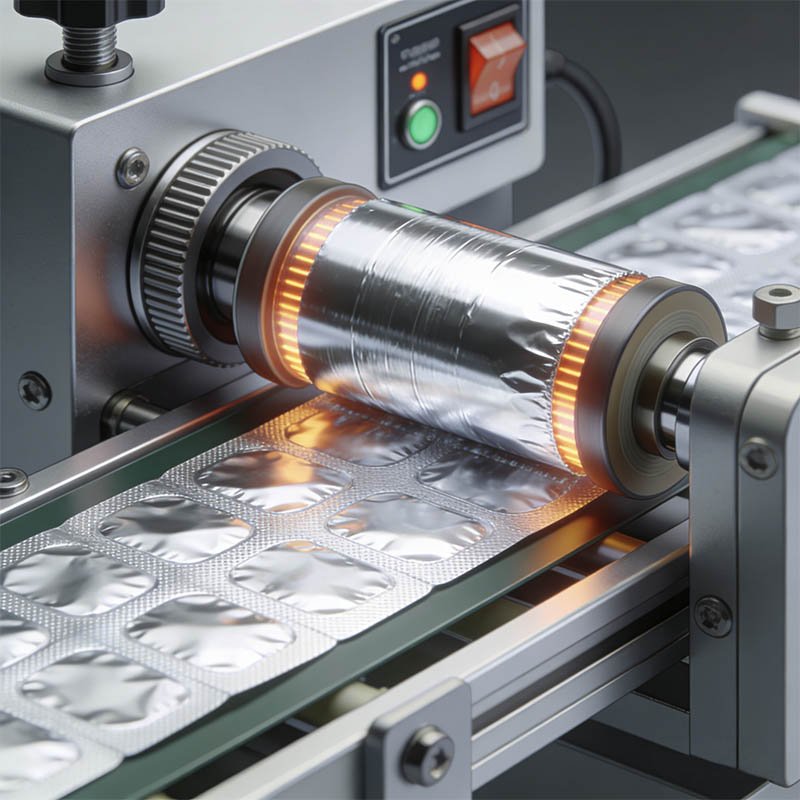
Heat sealing station — aluminum lidding foil pressed onto filled blister cavities under controlled temperature, pressure, and dwell time.
| Step | Process Parameter | GMP Criticality |
|---|---|---|
| Web Feeding | Film tension, advance pitch | Medium |
| Film Heating | Temperature (±2°C), time | Critical |
| Cavity Forming | Air pressure, plug depth, mold temp | Critical |
| Product Filling | Fill rate, optical inspection | Critical |
| Heat Sealing | Temp / pressure / dwell time | Critical |
| Batch Printing | Ink jet / emboss parameters, audit trail | Medium-High |
| Punching | Cut force, die alignment | Standard |
Why the Pharmaceutical Industry Relies on Blister Packing
There are six reasons blister packaging has become the default format for over 70% of global solid dose pharma products — and none of them are accidental.
Unit-Dose Accuracy
Each cavity contains exactly one dose. This eliminates the possibility of dispensing errors that are endemic to bottle-based multi-dose formats. For markets requiring unit-dose dispensing (hospital pharmacy, EU serialization), blister is not optional — it’s mandated.
Tamper Evidence
A broken blister is immediately visible. Unlike bottles (which can be re-sealed), a compromised blister pack cannot be restored without obvious physical evidence. This is why regulators and hospital procurement departments overwhelmingly prefer blisters for prescription medications.
Moisture & Oxygen Barrier
Even standard PVC/aluminum blisters provide dramatically better individual cavity protection compared to HDPE bottles (where all tablets share the same headspace). With PVDC or Alu-Alu, individual dose barrier performance approaches that of glass ampules.
Serialization & Track/Trace
EU FMD Directive, DSCSA (US), India FSSAI — all require unit-level or pack-level serialization. Blister lines can integrate 2D data matrix printing and vision inspection directly into the production process, enabling compliance without costly downstream rework.
Extended Shelf Life
Each unopened cavity maintains its original protective environment right up to the moment a patient pushes through the foil. A bottle, once opened for the first dose, exposes all remaining doses to ambient conditions. Blister packaging routinely enables 24–36 month shelf life claims in tropical ICH Zone IV conditions.
Global Market Access
Regulatory agencies in the EU, Southeast Asia, and Latin America increasingly require or strongly prefer blister packaging for reimbursable medications. Manufacturers who invested in blister lines early consistently outperformed competitors in new market entry timelines — a pattern I’ve observed consistently across three continents.
Blister Packs vs. Bottles vs. Sachets: Which Is Right for You?
There is no universal answer — but there is a systematic way to make the decision. Here’s the real-world comparison across the parameters that matter most to a pharmaceutical manufacturer.
| Parameter | Blister Pack | HDPE Bottle | Sachet/Strip |
|---|---|---|---|
| Unit-Dose Accuracy | ⭐⭐⭐⭐⭐ | ⭐⭐⭐ | ⭐⭐⭐⭐⭐ |
| Tamper Evidence | ⭐⭐⭐⭐⭐ | ⭐⭐⭐ | ⭐⭐⭐⭐ |
| Moisture Barrier | ⭐⭐⭐⭐⭐ (Alu-Alu) | ⭐⭐⭐ (once opened) | ⭐⭐⭐⭐ |
| Serialization Readiness | ⭐⭐⭐⭐⭐ | ⭐⭐⭐ | ⭐⭐⭐ |
| Packaging Material Cost | Medium | Low | Medium |
| Capital Equipment Cost | Medium–High | Low | Medium |
| Regulatory Preference (EU/US) | Very High | Medium | Medium |
| Patient Compliance Aid | Excellent (dose tracking) | Poor | Good |
| SKU Flexibility | High (mold change) | High | Medium |
The real decision matrix isn’t “blister vs. bottle” — it’s about understanding your API’s moisture sensitivity (get a WVTR number from your formulation team), your target regulatory markets, and your volume projections over 5 years. I’ve built this framework for dozens of clients. If you want to work through it for your specific product, reach out to our team directly.
Choosing the Right Blister Packing Machine
Machine selection is where I’ve seen the most expensive mistakes made. Here are the five specification criteria that matter most — and what to insist on in your RFQ.

HIJ DPP-260 — Fully Automatic Blister Packing Machine
GMP-compliant design · Servo-driven precision · Siemens PLC · 21 CFR Part 11 ready · Integrated vision inspection · CE certified. Built for manufacturers who can’t afford to fail an audit.
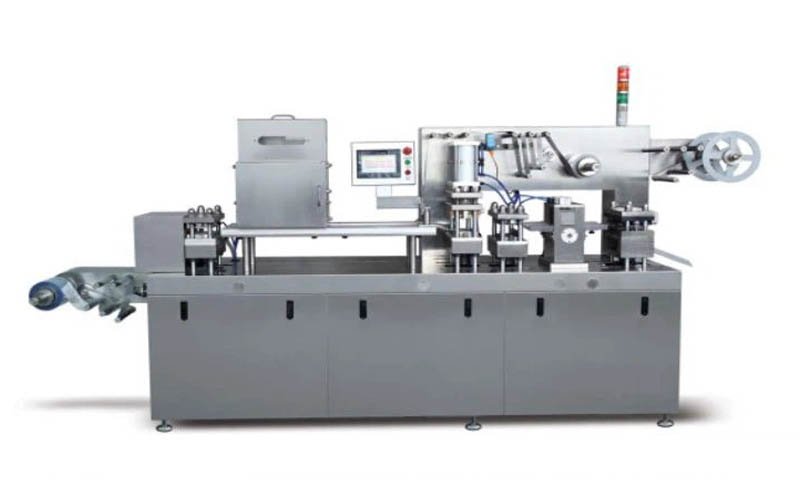
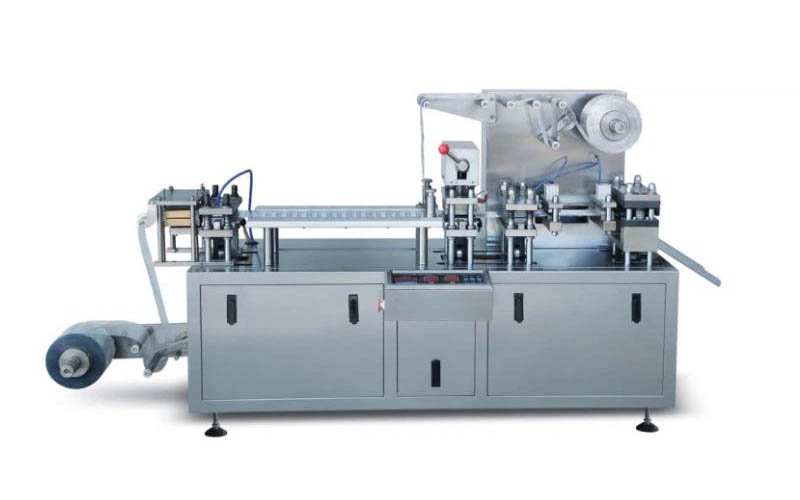
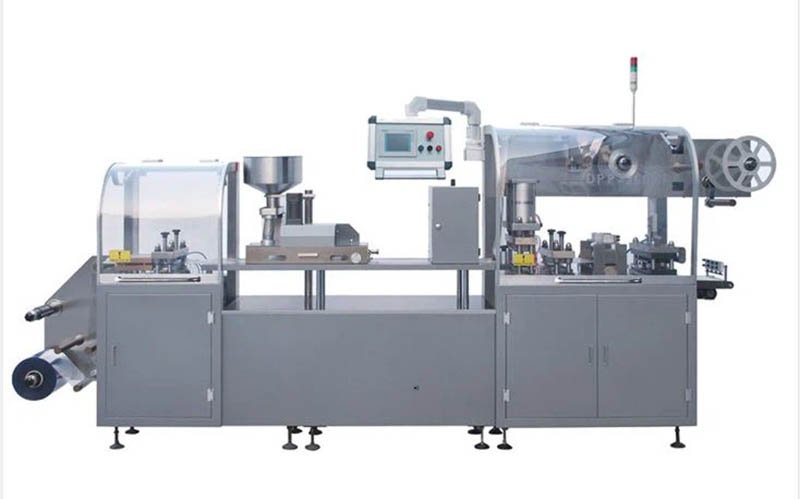
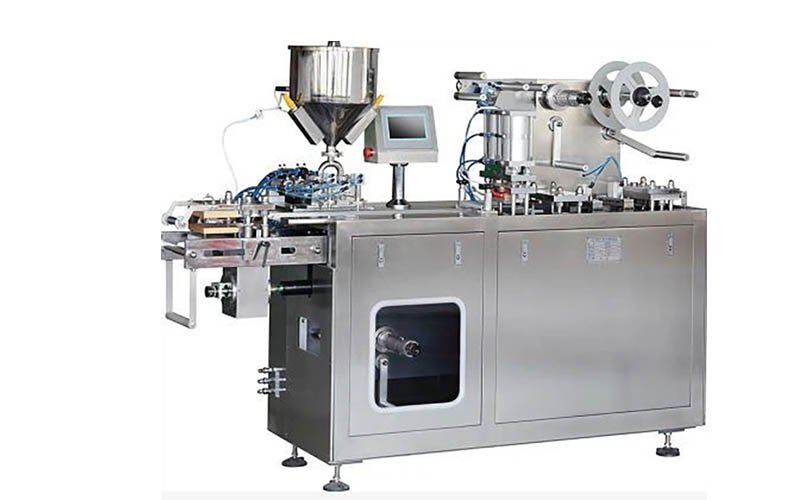
Explore the Full HIJ Blister Packaging Line
Frequently Asked Questions
Forester
Founder & CEO, HIJ Machinery Co., Ltd. · 20 Years in Pharmaceutical Packaging Engineering
Forester has spent two decades working directly on production floors across South America, Southeast Asia, the Middle East, and Europe — helping pharmaceutical manufacturers select, commission, and validate blister packaging lines. He founded HIJ Machinery to bridge the gap between European-quality engineering standards and practical cost constraints for manufacturers worldwide.
Ready to Upgrade Your Blister Line?
Get Expert Guidance From 20 Years on the Production Floor
Whether you’re selecting your first blister line or re-evaluating your current platform for EU/US regulatory compliance, our team will help you build the right specification — for free, with no obligation.
20+
Years Experience
100+
Global Clients Served
GMP
Compliant Design
CE
Certified Machines