HIJ Machinery

Get Quote
What Packaging Materials Are Used in Syringe Blister Packs? (PVC, Alu-Alu, Tyvek Guide)

About Forester

As a Senior Sales Manager and former R&D engineer at Puji Machinery, Hugh combines deep technical knowledge with global market experience to provide clients not just a machine, but a complete, profitable printing solution.

📦 Material Selection Guide

What Packaging Materials Are Used in Syringe Blister Packs? PVC, Alu-Alu & Tyvek® Guide

The wrong forming material doesn’t just shorten shelf life — it can collapse your FDA or CE registration entirely. Here’s how to read the numbers before you commit to a line.

Direct Answer: Syringe blister packs use three dominant material systems — rigid PVC/PVDC laminates (WVTR 4–6 g/m²/day), cold-form Alu-Alu foil (WVTR as low as 0.02 g/m²/day), and Tyvek®/Surlyn® lidding for sterile barrier integrity per ISO 11607. Choosing the right combination depends on your API moisture sensitivity, sterilization method (ETO vs. gamma), and target regulatory pathway.
0.02
g/m²/day
Alu-Alu WVTR minimum
300x
Moisture barrier difference vs. standard PVC
3
Dominant syringe blister material systems
ISO 11607
Sterile barrier standard for lidding

Why Syringe Blister Pack Material Selection Can Break Your Registration

The forming film is the most consequential engineering decision on a syringe blister line. Full stop.

A plant I audited in Ho Chi Minh City in 2021 had specified 250 μm PVC for a prefilled insulin syringe destined for the Indonesian market. The machine was running perfectly — 60 blisters per minute, sealing integrity passing ASTM F2338 dye-ingress at 60 mbar, batch records immaculate. Twelve months later, the stability study came back with moisture uptake that invalidated the ICH Q1A(R2) Zone IVb shelf-life claim. The dossier went back. The product missed the launch window. Nobody on the procurement team had asked the basic question: what is this API’s WVTR threshold?

That question determines everything downstream — which forming material, which lidding, which machine platform, which mold geometry. Start there. Not with price.

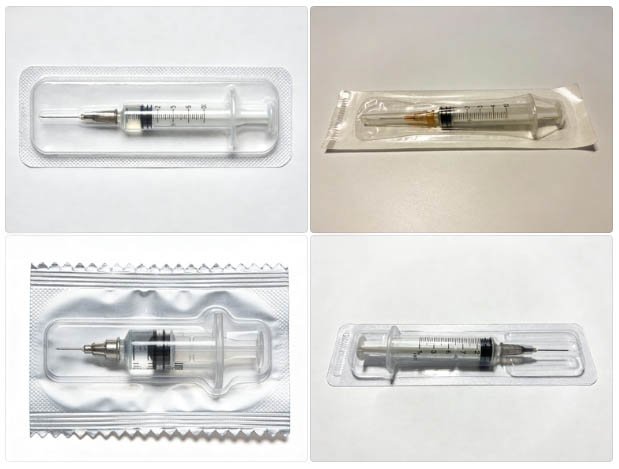
PVC PVDC Alu-Alu syringe blister pack material comparison showing moisture barrier performance differences

Three dominant syringe blister forming material systems: PVC/PVDC laminate, cold-form Alu-Alu foil, and Tyvek® lidding — each with fundamentally different WVTR performance levels.

The three material systems used in syringe blister packs each occupy a distinct performance band. Understanding where your product sits in that band — before specifying a machine — is the difference between a line that runs for 10 years and one that requires a costly re-tooling after month 18 of stability.

Rigid PVC and PVC/PVDC Laminates: What the Numbers Actually Mean

Standard rigid PVC at 250 μm passes 4–6 g/m²/day of water vapor. That’s the number that matters — not the unit cost, not the sealing temperature.

For a hygroscopic prefilled syringe where the active pharmaceutical ingredient has a moisture uptake threshold of 0.8% w/w at 75% relative humidity — the kind that appears on tropical market formularies from Thailand to Nigeria — that WVTR means you’re not protecting the drug; you’re slowing the degradation curve by a few months. Wrong material. Real problem.

PVC/PVDC (polyvinylidene chloride) laminates improve the picture significantly. A standard 60 g/m² PVDC coating over 250 μm PVC brings WVTR down to 0.5–1.5 g/m²/day, depending on coating weight. A high-barrier 90 g/m² PVDC formulation can reach 0.2–0.4 g/m²/day. These numbers are genuinely useful for products with moderate moisture sensitivity targeting Zone I or Zone II climatic conditions.

Where PVC/PVDC Works for Syringe Blister Packs

  • Non-hygroscopic APIs — products with moisture uptake below 0.3% w/w at 75% RH over 6 months can often qualify with PVDC-coated PVC for European or North American markets (Zone I/II).
  • Thermoforming compatibility — PVC and PVC/PVDC are thermoformed on standard blister machines at 110–130°C, making them compatible with most existing forming stations without capital retooling.
  • Cost-sensitive volume markets — PVC forming film costs roughly $1.20–$2.80/kg vs. $8–$14/kg for cold-form Alu-Alu, a difference that matters on 10-million-unit annual volumes.
  • Gamma sterilization compatibility — standard PVC tolerates gamma irradiation up to 25 kGy without significant mechanical degradation, a requirement for many pre-sterilized syringe presentations.

The hard limit: PVC/PVDC cannot qualify for WHO Zone IVb stability conditions (30°C/75% RH, 12-month shelf life) for most moisture-sensitive APIs. If your target market is Sub-Saharan Africa, South and Southeast Asia, or the Middle East, and your product has any meaningful hygroscopicity, PVC is not the answer — regardless of PVDC coating weight.

Cold-Form Alu-Alu Foil: The Barrier That Actually Works for Sensitive Syringes

Cold-form Alu-Alu blister packaging cuts moisture vapor transmission to 0.02–0.5 g/m²/day — compared to 4–6 g/m²/day for standard PVC — a 10x to 300x difference depending on film gauge and laminate construction.

That’s not a marketing claim. That’s the number regulators and stability scientists use when evaluating packaging sufficiency under ICH Q1A(R2) Zone IVb conditions. I’ve sat in regulatory meetings in Cairo and Kuala Lumpur where the reviewer pulled exactly this WVTR comparison from the dossier and asked why the lower-barrier option was selected. The answer — “cost optimization” — did not land well.

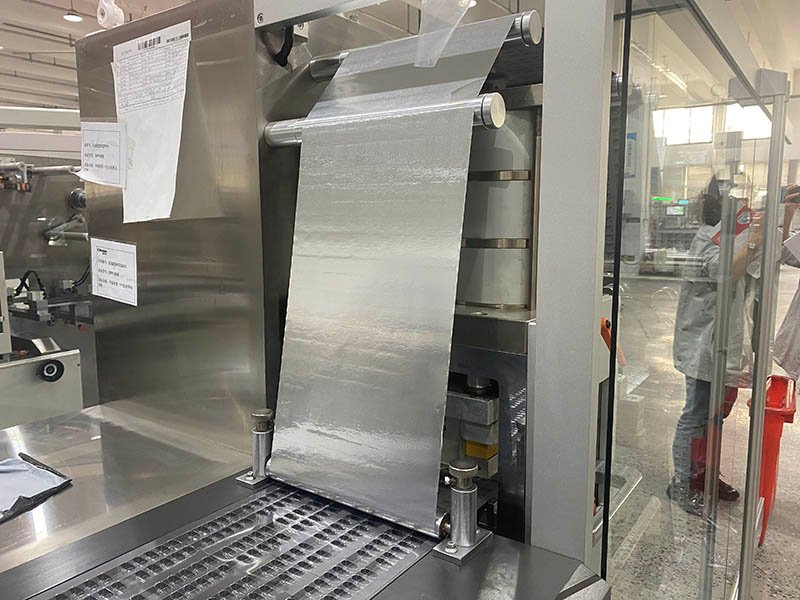
Cold-form Alu-Alu blister packaging protecting moisture-sensitive prefilled syringe from humidity degradation

Cold-form Alu-Alu foil provides near-zero moisture vapor transmission — the only viable forming material for moisture-sensitive biologics and hygroscopic APIs in tropical markets.

Alu-Alu Construction: What’s Inside the Laminate

Standard cold-form Alu-Alu for syringe blister packs uses a three-layer laminate: OPA (oriented polyamide, 25–60 μm) / aluminum foil (45–60 μm) / PVC (60 μm). Some high-barrier constructions replace the PVC inner layer with polypropylene to improve chemical compatibility with aggressive APIs. The aluminum foil layer is the barrier — when pinhole-free and above 40 μm gauge, it delivers essentially zero oxygen transmission rate (OTR) and the near-zero WVTR figures above.

The machine implication is significant. Cold forming does not use heat — it uses cold mechanical pressure to draw the laminate into the forming die. This requires a dedicated cold-forming station, different tooling geometry (draw ratio typically 1:1.4 to 1:1.8 for syringe cavities), and slower cycle speeds than thermoforming. A thermoforming machine cannot be converted to cold forming by swapping the forming station alone — the entire draw mechanism and die-set system must be engineered for cold-form foil.

Of the 18 syringe blister line projects I handled in Southeast Asia and the Middle East between 2019 and 2024, 11 specified cold-form Alu-Alu as the forming material. Seven of those switched from an initial PVC specification after the stability team ran the WVTR calculation. Three of those seven switches happened after month 12 of an ongoing stability study. That’s an expensive way to change your mind.

⚠️ Field Diagnosis — Material Mismatch Signals
Symptom A: Stability failure at month 12 or 18 under Zone IVb conditions
Probable cause: Forming material WVTR too high for API hygroscopicity profile. PVC or low-PVDC laminate specified without Zone IVb WVTR modelling. Corrective action: Calculate required WVTR using API moisture uptake isotherm — if threshold requires <0.5 g/m²/day, cold-form Alu-Alu is the only qualified option. Review ICH Q1A(R2) packaging section before next material order.
Symptom B: Lidding delamination or peel-force failure during ETO sterilization cycle
Probable cause: Lidding adhesive formulation not validated for ETO exposure temperature (typically 45–55°C) and humidity cycle. Standard heat-seal lacquer on aluminum lidding can soften and lose bond strength. Fix: Specify ETO-validated peel-seal or peel-push construction with a minimum peel force of 1.5–3.5 N/15mm per ASTM F88 — confirm with lidding supplier’s ETO compatibility data sheet.
Symptom C: Tyvek® lidding seal too weak — premature opening during distribution
Probable cause: Sealing temperature below the 160–200°C range required for Tyvek®-to-Surlyn® bonding, or dwell time too short. Also check: sealing bar flatness — a 0.1 mm bow across the sealing jaw produces uneven bond across the blister card. Use a contact-pressure indicator film to map seal uniformity before the next validation run.

Tyvek® and Surlyn® Lidding: The Sterile Barrier Layer That ISO 11607 Demands

Tyvek® lidding for syringe blister packs provides microbial barrier integrity while allowing ETO gas penetration — and that dual function is why ISO 11607-1 specifies it as the reference lidding material for terminal ETO-sterilized medical device packaging.

DuPont Tyvek® 1073B and 1059B are the two grades most commonly specified for syringe blister applications. The difference: 1073B (56 g/m²) offers higher strength and is used for larger or heavier syringe presentations, while 1059B (43 g/m²) is specified where microbial barrier sufficiency can be demonstrated at lower basis weight and cost reduction is relevant at high volumes.

Surlyn® (DuPont ionomer resin) is the heat-seal layer applied to the Tyvek® surface. It bonds to the forming film — PVC, PP, or Alu-Alu — at 160–200°C with a dwell time of 0.5–1.5 seconds. Peel force target: 1.5–3.5 N/15mm per ASTM F88. Below 1.5 N, the seal fails integrity. Above 4.5 N, the package becomes difficult to open without risk of particulate contamination from torn fibers entering the sterile field.

When Aluminum Lidding Replaces Tyvek®

Not every syringe blister uses Tyvek®. For non-sterile prefilled syringe presentations — or where gamma sterilization replaces ETO — aluminum foil lidding (20–25 μm hard-temper aluminum with heat-seal lacquer) is frequently specified. Aluminum lidding provides superior moisture and oxygen barrier versus Tyvek®, but it is not breathable and therefore cannot be used with ETO sterilization cycles that require gas exchange through the lidding layer.

This is the decision tree I use when a client asks which lidding to specify: sterilization method first, barrier requirement second, opening ergonomics third. In that order. Every time.

🧑‍🔧 Forester’s Insight — 20 Years in the Field
The Material Specification Conversation Nobody Has Early Enough

I won’t tell you the material selection decision is simple. It involves your API stability profile, your sterilization method, your target market regulatory pathway, your lidding opening ergonomics requirement, and sometimes your relationship with the regulatory reviewer in the country where the dossier is submitted. In 2022 I spent 40 minutes on a call with a QA director in Casablanca trying to explain why the WVTR data on a PVC/PVDC laminate — submitted as “adequate barrier” — did not meet the Zone IVb threshold the MFPPC reviewer had flagged. The product was destined for Mali and Senegal. The spec had been written by someone who pulled a European reference and assumed it transferred. It didn’t. Eight months later, the dossier came back approved — with cold-form Alu-Alu specified. I’m still not sure the lesson landed with the procurement team.

Before specifying any forming material, lock down three numbers: your API’s critical WVTR threshold, your sterilization method (ETO, gamma, or aseptic fill), and your target market’s ICH climatic zone. Then work backwards to the material and machine spec. At HIJ, our syringe blister packing machines are engineered around your validated material stack from day one — so the forming station, tooling geometry, and sealing parameters are matched to your specific film construction, not a generic default.

Syringe Blister Pack Material Comparison: PVC vs. PVC/PVDC vs. Alu-Alu vs. Tyvek® Lidding

Cold-form Alu-Alu is the only forming material that satisfies Zone IVb moisture barrier requirements for hygroscopic APIs — but PVC/PVDC remains the cost-effective choice for Zone I/II markets with stable products. The table below consolidates the key technical and regulatory parameters across all four material types used in syringe blister packaging.

Material WVTR (g/m²/day) OTR (cm³/m²/day) Sterilization Compatibility ICH Zone Suitability Typical Cost Index Machine Requirement
PVC 250 μm 4–6 30–50 Gamma ✅ / ETO ✅ / Not for aseptic fill Zone I/II only 1.0x (baseline) Standard thermoforming
PVC/PVDC 60 g/m² 0.5–1.5 10–20 Gamma ✅ / ETO ✅ Zone I/II/III 1.8–2.4x Standard thermoforming (higher temp)
PVC/PVDC 90 g/m² (high-barrier) 0.2–0.4 5–10 Gamma ✅ / ETO ✅ Zone I/II/III (borderline IVa) 3.0–3.8x Standard thermoforming — confirm temp profile
Cold-Form Alu-Alu (OPA/Al/PVC) 0.02–0.5 <0.1 Gamma ✅ / ETO ✅ / Aseptic ✅ Zone I / II / III / IVa / IVb 6–12x Dedicated cold-forming station & tooling
Tyvek® 1073B Lidding High (breathable) High (breathable) ETO ✅ (primary use) / Gamma limited Sterile barrier — per ISO 11607-1 2.5–4.0x vs. alu lid Validated Surlyn® heat-seal station required
Aluminum Foil Lidding (20–25 μm) <0.1 <0.05 Gamma ✅ / Not ETO (impermeable) Zone I–IVb (lidding barrier contribution) 1.0x (lid baseline) Standard heat-seal station

WVTR values measured at 38°C/90% RH. ICH zone suitability reflects forming material contribution only — final pack qualification requires complete container closure integrity testing per USP <1207>.

The WVTR gap between standard PVC and cold-form Alu-Alu is not a marginal engineering difference — it is 10x to 300x depending on film gauge. For any hygroscopic syringe product targeting Zone IVb markets, specifying PVC to save $0.008 per blister card is the most expensive decision a pharma buyer can make. — Forester Xiang, HIJ Machinery

Sterilization Method Determines Lidding First — Everything Else Follows

A QA manager in Manila called me in early 2023. Her team had specified Tyvek® 1073B lidding. The product was a prefilled saline syringe for wound irrigation. The sterilization plan: gamma at 25 kGy.

Wrong combination. Gamma irradiation at 25 kGy degrades Tyvek® fibers at the surface, increasing particulate shedding risk when the pack is opened in the clinical environment. ASTM F3127 and ISO 11607-1 both flag this — Tyvek® is designed primarily for ETO sterilization cycles. For gamma-sterilized syringe blisters, Tyvek® requires specific validation studies, and many regulatory bodies — including ANSM in France and ANVISA in Brazil — require additional extractables and leachables data for gamma-irradiated Tyvek® presentations.

The fix was straightforward: switch to a medical-grade polyester (PET) nonwoven lidding rated for gamma sterilization. Problem solved before the validation protocol was locked. That conversation cost 20 minutes. The alternative — discovering it post-validation — would have cost 4–6 months.

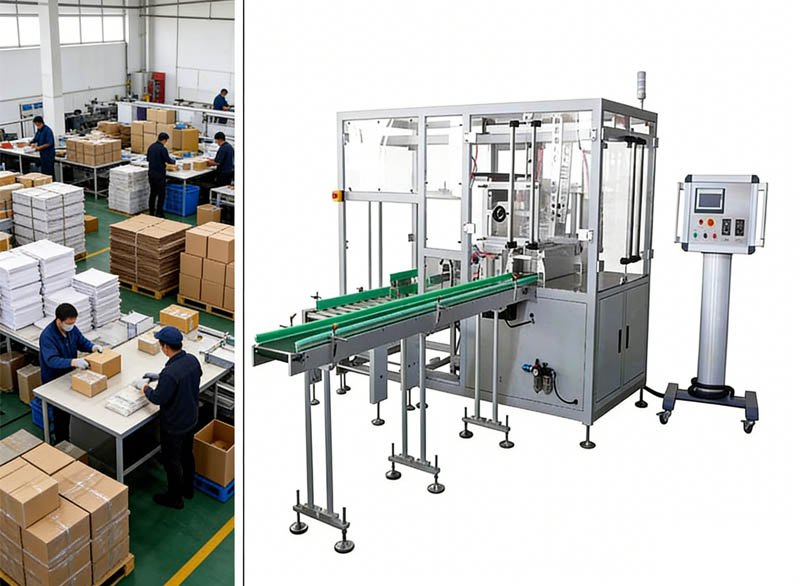
GMP-compliant syringe blister packaging validation line showing material compatibility testing for ETO and gamma sterilization

Sterilization method compatibility must be confirmed before lidding specification is locked — ETO and gamma irradiation impose fundamentally different requirements on Tyvek® and polymer lidding films.

ETO Sterilization
Ethylene oxide gas cycle — 45–55°C
LiddingTyvek® 1073B / 1059B
Forming filmPVC, PP, or Alu-Alu
Key requirementETO-permeable lidding
StandardISO 11607-1, ISO 11135
Gamma Sterilization
Ionizing radiation — 25–50 kGy
LiddingPET nonwoven or Al foil
Forming filmPVC, PP (PVDC limited)
Key requirementRadiation-stable polymers
StandardISO 11137, ASTM F3127
Aseptic Fill (no terminal sterilization)
ISO 5 cleanroom fill environment
LiddingPre-sterilized Al foil or Tyvek®
Forming filmAlu-Alu preferred (barrier)
Key requirementPre-sterilized materials only
StandardEU GMP Annex 1 (2022)

How Forming Material Choice Determines Your Machine Specification

The material decision and the machine decision cannot be separated. They must be made simultaneously — and in that order. Material first. Machine second.

Thermoforming machines — which heat the forming film to 110–150°C and draw it into the cavity using positive air pressure or a plug-assist mechanism — work with PVC, PVC/PVDC, PP, and PE-based films. They cannot cold-form Alu-Alu. The physics are different: cold forming uses a mechanical draw-down at room temperature, which requires a different forming station geometry, a slower cycle rate (typically 20–40% slower than thermoforming for the same cavity footprint), and tooling specifically designed for the draw ratio of the syringe cavity.

For syringe blister packing machines handling Alu-Alu forming foil, the forming die must accommodate the specific OPA/Al/PVC laminate thickness (typically 120–160 μm total) and the draw ratio appropriate for the syringe barrel diameter and flange geometry. Get that geometry wrong and you get pinholes in the aluminum layer — which defeats the entire barrier argument.

I’ve seen three projects where a client purchased a thermoforming machine — specified for PVC — and then tried to run Alu-Alu through it after a stability failure. None of them succeeded without a full forming-station replacement. $60,000–$90,000 retrofit cost. Avoidable. Completely avoidable if the material decision had been made before the machine purchase order was signed.

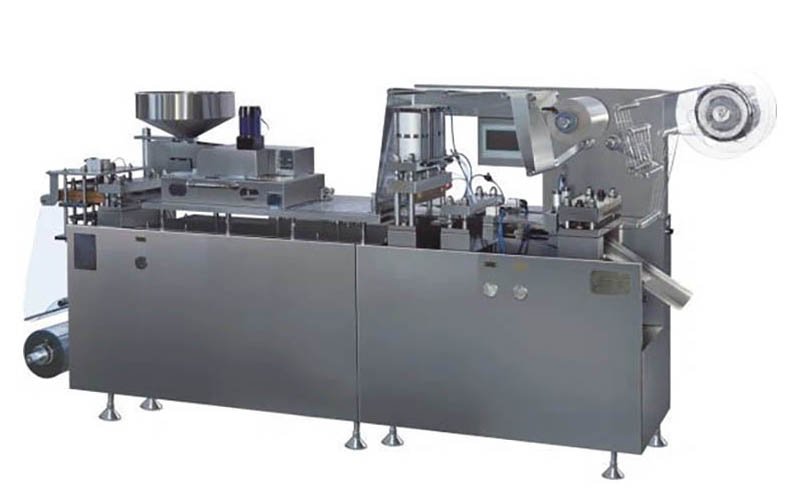
HIJ syringe blister packing machine configured for cold-form Alu-Alu and thermoforming PVC packaging material

HIJ syringe blister packing machines are engineered around the client’s validated material stack — thermoforming station for PVC/PVDC, cold-forming station for Alu-Alu — not a one-size-fits-all platform.

If you’re evaluating equipment now, the right question to ask any machine supplier is: “Is the forming station designed for my specific film construction — and can you show me the draw-ratio engineering data for my syringe cavity dimensions?” If the answer is a generic brochure, keep looking. For a practical framework on evaluating suppliers against this and nine other critical criteria, the syringe blister packaging machine selection guide covers the full decision matrix.

📋 Regulatory Standards Referenced in This Article
ICH Q1A(R2) ISO 11607-1 ISO 11607-2 USP <1207> ASTM F88 ASTM F2338 ASTM F3127 ISO 11135 (ETO) ISO 11137 (Gamma) EU GMP Annex 1 (2022) WHO Zone IVb

Material Choice vs. Packaging Format: How This Connects to Blister vs. Tray Decisions

The forming material decision and the packaging format decision are not independent. They constrain each other.

Tray packaging for sterile syringes — a coextruded PP or PETG tray with Tyvek® or Mylar lid — offers design flexibility for complex syringe configurations (needle shields, backstops, dual-component assemblies) but sacrifices the moisture barrier advantage of cold-form Alu-Alu. A blister pack using Alu-Alu forming foil can achieve WVTR levels that no PP tray system can match, because the tray body itself is the weak point in the moisture barrier chain.

This is why the format-vs-material question should be evaluated together, not sequentially. For a more detailed breakdown of the structural and regulatory trade-offs between blister and tray packaging formats for sterile syringes, the syringe blister packing vs. tray packaging comparison addresses the decision criteria across product type, sterilization method, and target market.

FAQ: Syringe Blister Pack Materials — What Pharma Buyers Ask Most

❓ What is the best forming material for a syringe blister pack targeting tropical markets?
Cold-form Alu-Alu foil (OPA/Al/PVC laminate, minimum 45 μm aluminum layer) is the only forming material that reliably meets ICH Q1A(R2) Zone IVb stability requirements for moisture-sensitive APIs distributed in tropical markets — including Sub-Saharan Africa, South and Southeast Asia, and the Middle East. Standard PVC passes 4–6 g/m²/day of water vapor, which fails Zone IVb threshold calculations for any API with meaningful hygroscopicity. Even high-PVDC coatings (90 g/m²) typically reach only 0.2–0.4 g/m²/day — marginal for Zone IVb and not guaranteed to pass a 12-month accelerated stability study at 30°C/75% RH. If your target market is Zone IVb and your API is hygroscopic, cold-form Alu-Alu is not a premium option — it is the minimum viable barrier.
❓ Can I use Tyvek® lidding with gamma sterilization for syringe blisters?
Not without specific validation. Tyvek® is primarily designed for ETO sterilization and may show increased fiber shedding after gamma irradiation at 25 kGy, which raises particulate contamination risk when the pack is opened at point of care. ISO 11607-1 does not prohibit gamma irradiation of Tyvek®, but it requires post-irradiation material characterization including tensile strength, elongation, and particulate testing. Several national regulatory bodies — including ANVISA (Brazil) and ANSM (France) — have requested additional extractables and leachables data for gamma-irradiated Tyvek® presentations. For gamma-sterilized syringe blister packs, medical-grade PET nonwoven lidding or aluminum foil lidding (for non-breathable gamma applications) are the more straightforward choices.
❓ What peel force should Tyvek® lidding achieve on a syringe blister pack?
Target peel force for Tyvek®/Surlyn® heat-sealed lidding on syringe blister packs is 1.5–3.5 N/15mm, measured per ASTM F88. Below 1.5 N indicates an insufficient seal — container closure integrity will fail USP <1207> testing. Above 4.5 N creates an opening-force problem: the user must apply excessive force to peel the lidding, risking tearing of the Tyvek® and contamination of the sterile field with fiber particles. Sealing parameters — temperature, dwell time, and jaw pressure — must be bracketed during OQ to establish the validated sealing window that consistently delivers peel force within the target range across the full production roll width.
❓ Is PVDC being phased out due to environmental regulations?
PVDC faces increasing regulatory pressure in Europe, specifically under the EU Single-Use Plastics Directive and Extended Producer Responsibility (EPR) frameworks in Germany, France, and the Netherlands, where PVDC-coated packaging creates recycling stream contamination. As of 2024, PVDC is not banned for pharmaceutical packaging in any major market, but several European pharma companies have initiated internal phase-out programs targeting 2026–2028. The practical alternative for moisture-barrier applications that cannot use Alu-Alu (thermoforming compatibility required) is PCTFE (Aclar®) — a fluoropolymer film with WVTR of 0.1–0.25 g/m²/day that is more readily recyclable than PVDC and increasingly specified in European tenders. For markets outside Europe — Southeast Asia, Middle East, Africa — PVDC remains the dominant mid-barrier option and faces no immediate regulatory phase-out timeline.
❓ What does a syringe blister pack material validation study need to include?
A complete syringe blister pack material validation study under ISO 11607-1 and ICH Q1A(R2) typically includes: (1) physical characterization of forming film and lidding — tensile strength, elongation, WVTR, OTR, and thickness uniformity; (2) container closure integrity testing (CCIT) per USP <1207> using dye ingress, vacuum decay, or headspace analysis; (3) peel-force mapping across the full sealing bar width per ASTM F88; (4) accelerated stability study at 40°C/75% RH (Zone IVa) or 30°C/75% RH (Zone IVb) for the target shelf-life period; (5) compatibility assessment between forming film and any extractables/leachables relevant to the syringe contents (particularly for biologics or lipid-based formulations); and (6) post-sterilization material integrity testing if terminal sterilization is used. This scope typically requires 6–9 months of calendar time from material selection to full validation report.
❓ Does the forming material affect blister machine speed?
Yes — significantly. Cold-form Alu-Alu lines run 20–40% slower than thermoforming lines for equivalent blister card dimensions, because the cold mechanical draw process requires more forming dwell time and a more controlled draw speed to avoid aluminum foil microcracking. A thermoforming PVC line producing syringe blisters at 80 cards/minute would typically run the same cavity layout on Alu-Alu at 48–60 cards/minute. This throughput reduction must be factored into capacity planning before a cold-form line is specified.

The Material Decision That Defines Your Entire Packaging Program

Syringe blister pack material selection is not a procurement exercise. It is a regulatory and engineering commitment — one that determines whether your product passes Zone IVb stability, whether your sterilization method is compatible with your lidding, and whether your machine platform can actually run the forming film your QA team needs.

The three dominant systems — PVC/PVDC laminates, cold-form Alu-Alu foil, and Tyvek®/Surlyn® lidding — each have a defined performance band. PVC works for Zone I/II markets with stable APIs. Alu-Alu is the only credible answer for Zone IVb and hygroscopic formulations. Tyvek® is the sterile barrier standard for ETO-sterilized presentations, with clear limitations under gamma irradiation. Choosing between them starts with three numbers: your API’s WVTR threshold, your sterilization method, and your target market’s ICH climatic zone.

Get those three numbers right. Lock the material stack. Then specify the machine — not the other way around.

Ready to Specify the Right Material & Machine for Your Syringe Blister Line?
HIJ Machinery engineers syringe blister packing machines around your validated material stack — PVC/PVDC thermoforming or cold-form Alu-Alu — from day one. Tell us your API profile, sterilization method, and target market. We’ll build the spec from there.

Need a Technical Opinion?

Don’t guess. Tell me your material and speed requirements, and I’ll configure the exact Puji specification for you.

Chat With Forester

2026 Product Catalog

Download the full technical specs for our B-F, K-S, and P-J series presses.

Download PDF

You Might Also Find Helpful

A 7-panel infographic illustrating critical syringe blister packaging mistakes, including incorrect molding depth, poor feeding direction, and sealing issues.
Avoid the Pitfalls: 7 critical areas where syringe blister packaging mistakes commonly occur in pharmaceutical lines.

7 Common Mistakes in Syringe Blister Packaging (And How to Avoid Them)

🧪 Field Report — Syringe Blister Packaging Most syringe blister packaging failures are avoidable — they happen before the machine…
Read Article ->
A detailed technical diagram showing how blister packing machine works syringes, featuring syringe loading, forming, filling, sealing, and cutting steps.
Visualizing the Flow: A 5-step guide on how blister packing machine works syringes.

How Does a Blister Packing Machine Work for Prefilled Syringes?

📖 Technical Deep-Dive — Syringe Blister Packaging How Does a Blister Packing Machine Work for Prefilled Syringes? A syringe blister…
Read Article ->
A detailed technical diagram defining what is a syringe blister pack, illustrating the lidding material, forming film, and protective cavity.
Defining the Standard: A structural breakdown of a medical-grade syringe blister pack.

What Is a Syringe Blister Pack? A Complete Guide for Pharma Packaging Teams

📦 Complete Guide — Syringe Blister Pack What Is a Syringe Blister Pack? The format behind hundreds of millions of…
Read Article ->
A comprehensive flowchart of a turnkey syringe blister packaging line showing syringe feeding, blister forming, loading, sealing, and inspection.
Integrated Efficiency: A step-by-step breakdown of what defines a complete turnkey syringe blister packaging line.

Turnkey Syringe Blister Packaging Line: What’s Included and Why It Matters

📦 Turnkey Line Guide — HIJ Machinery Turnkey Syringe Blister Packaging Line: What’s Included and Why It Matters A genuine…
Read Article ->
Infographic showing syringe blister packaging emerging markets challenges like humidity in Africa and power instability in Southeast Asia.
Global Hurdles: Understanding how regional environments impact syringe blister packaging emerging markets.

Syringe Blister Packaging Challenges in Emerging Markets: Africa, Middle East & Southeast Asia

🌍 Market Intelligence — Emerging Markets Syringe Blister Packaging Challenges in Emerging Markets: Africa, Middle East & Southeast Asia Most…
Read Article ->
A document detailing the syringe-blister-packing-machine-cost breakdown, including equipment price, shipping, and installation fees.
Transparency Matters: A realistic look at the total syringe-blister-packing-machine-cost beyond the sticker price.

The Real Cost of a Syringe Blister Packing Machine: What Pharma Buyers Must Know

💰 Pharma Buyer’s Guide — Cost Analysis The Real Cost of a Syringe Blister Packing Machine: What Pharma Buyers Must…
Read Article ->

Let's Design Your Production Line

Share your requirements and I'll personally craft a solution that maximizes your efficiency and profitability.