Syringe blister packaging · working principle
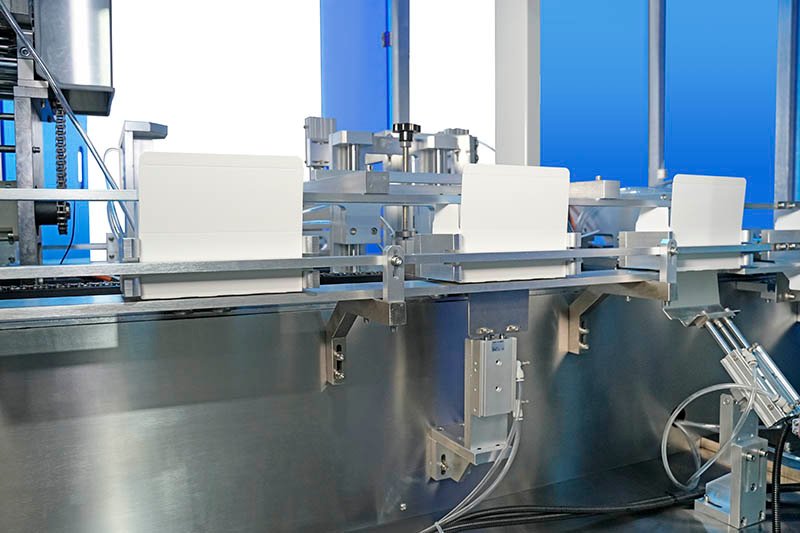
A syringe blister packing machine forms cavities in a suitable web, presents and loads finished syringes, seals the approved lid and separates the packs. The filling and closing of the syringe itself are upstream operations—not drug filling inside the blister cavity.
How does a prefilled syringe blister machine work?
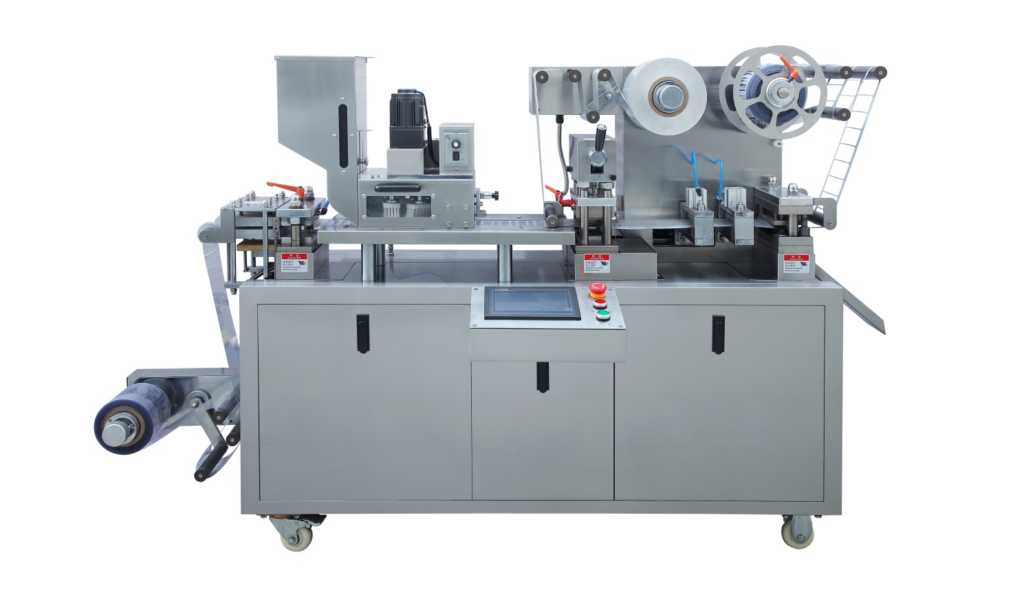
The working sequence depends on the specified package and machine. In a thermoforming route, the film is formed into cavities matched to the syringe geometry. Syringes are placed into the cavities, a compatible lid is sealed to the web, and the web is cut into packs. Product presentation, inspection, coding and downstream cartoning are defined by the project.

For the commercial equipment route, see the syringe blister packing machine page. Syringe geometry, loading method and material configuration require project-specific review.
Forming: make a cavity that supports the syringe
Forming starts with the approved film and tooling. Heating and forming conditions are selected for that film, its thickness, cavity geometry and equipment. The forming station must provide adequate detail and consistent cavity shape without imposing an assumed universal temperature, pressure or tolerance.
Which dimensions matter?
Review the barrel and flange, plunger extension, needle shield or cap, overall length and any additional device components in their actual packaged position. The cavity should accommodate the agreed orientation and protect the areas identified by the package designer. Verify the seal land remains clear of the syringe and its accessories.
Dimensions should be measured against the approved drawing and the product owner’s acceptance criteria. Material springback, forming variation and cutting registration can affect the finished pack; the project team determines the inspection points and acceptable ranges using representative samples.
Forester’s My Insight · line-planning example
If the agreed syringe presentation is 60 syringes per minute and each blister contains two syringes, the theoretical demand is 30 blisters per minute: 60 ÷ 2 = 30. This excludes rejects, interruptions and changeovers; it is an arithmetic example, not a machine rating or a guaranteed accepted output.
Loading: present each syringe without disturbing the pack
Loading may be manual, assisted or automated depending on the actual equipment and upstream presentation. A tray, nest or a pick-and-place system can be considered where appropriate, but its availability and operating method must be confirmed for the quoted configuration.
| Selection point | What to specify | Evidence to review |
|---|---|---|
| Incoming presentation | Tray, nest, conveyor or manual presentation; orientation and handoff boundary. | Actual incoming carrier, drawings and product samples. |
| Device support | Allowed contact points, flange and shield clearance, device orientation and movement limits. | Approved cavity design and handling criteria. |
| Missing or incorrect product | Detection, segregation and the required response to a missing or mispositioned syringe. | Agreed challenge cases and reject confirmation procedure. |
| Format change | Syringe versions, cavity arrangements, guides, nests or grippers and their changeover checks. | Format matrix, sample set and quoted change parts. |
Do not set a vision threshold or adjust a machine by a generic number from an article. The authorised project team should use the approved equipment procedure, verified baseline and site change controls.
Sealing and cutting: two different checks
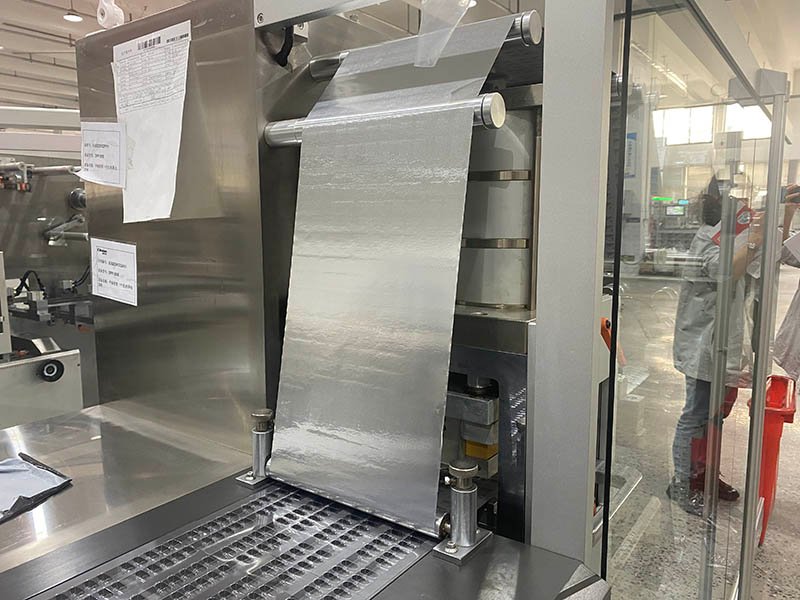
The forming web and lidding must be selected as a compatible package system. Depending on the approved design, a lid may be a film, foil, porous material or other suitable structure. Material choice depends on the intended package function, processing and sterilisation strategy where applicable; no single lidding material is required for every syringe product.
The equipment supplier and packaging owner establish the sealing process for the actual materials. Temperature, pressure and dwell time are important variables to evaluate, but their acceptable settings are not universal. Inspect the seal area for contamination, wrinkles or product interference and use the agreed test methods and acceptance criteria.
After sealing, cutting must preserve the approved seal perimeter and intended pack geometry. Review cut position, edge quality and discharge handling against drawings and samples. A visually acceptable pack alone is not proof of the particular integrity or performance required by the approved packaging system.
Do not confuse blister integrity with syringe container closure integrity
A filled syringe’s container closure system and an external blister or protective pack may have different functions and test requirements. A blister seal check does not by itself establish the integrity of the syringe’s own closure; conversely, a syringe container-closure test does not automatically validate an external package seal. The product owner’s quality team should define the relevant systems, methods and limits.
Sterility and validation: define the actual package function
Some projects use an external sterile barrier system; other projects use a protective or presentation blister around an already-filled syringe. The package role, sterilisation approach, product classification and target market must be established before choosing materials and tests. A blister machine alone cannot establish product sterility or regulatory compliance.
ISO 11607-1 addresses packaging systems intended to maintain the sterility of terminally sterilised medical devices; its scope notes that it does not cover all requirements for aseptically manufactured devices and that additional requirements can apply to drug/device combinations. Confirm current applicable requirements with the responsible quality and regulatory specialists.
For sterile drug container closures, the FDA’s production and process controls guidance discusses the importance of suitable container-closure integrity. It is not a generic numerical seal setting for a syringe blister machine.
Agree the scope of equipment qualification and package validation with the product owner. FAT can provide useful equipment evidence, but it does not automatically replace site acceptance, product-specific qualification or approved packaging validation.
When a pack fails: what should the team investigate?
| Observation | Investigate | Record |
|---|---|---|
| Syringe does not sit correctly | Cavity geometry, orientation, incoming carrier and handling contact points against the approved drawing. | Affected cavities, product and film lot, photos, measurements and current settings. |
| Seal wrinkles or incomplete seal | Product position, seal-land contamination, web alignment and the configured sealing process. | Location and pattern, material lots, settings and the approved test results. |
| Cut position varies | Web tracking, cutting registration, tooling condition and upstream presentation. | Cut-to-seal relationship across samples, line state and any approved adjustment. |
| Reject rate increases | Actual defect category, inspection setup and reject confirmation before attributing a single cause. | Accepted and rejected samples, alarm history, baseline and verified challenge results. |
These are investigative starting points, not operating instructions or universal pass limits. Follow the approved safe-stop, maintenance and quality procedures, and document any change before restart.
How do you connect upstream and downstream equipment?
Upstream, define how already-filled syringes arrive, including carriers, orientation, transfer responsibility and the quality state of incoming product. Downstream, specify pack orientation, accumulation, discharge height, rejection and the handoff to labeling or cartoning. A direct connection, buffer or controls interface is a project-specific scope item, not an assumed standard feature.
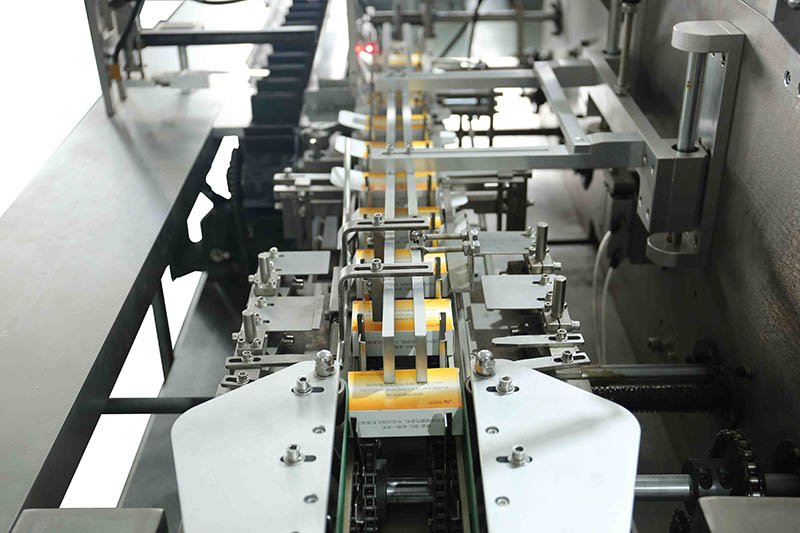
Compare rates using the same unit: syringes, blisters or accepted cartons per minute. Specify the number of syringes per pack, intended stops and the point at which accepted output is measured. Record start/stop signals, fault handling and restart rules between suppliers. See the blister cartoning machine page for the downstream equipment category.
What should a quotation and FAT cover?
- Product and package: syringe drawings and samples, shield and plunger position, cavity layout, approved forming and lidding materials, and the intended package function.
- Operating scope: input presentation, loading method, inspection, reject handling, cutting, coding and discharge; identify manual and automated steps.
- Formats: each syringe and pack combination, required change parts, setup instructions and the approved first-piece checks.
- Output: target accepted packs, measurement point, test duration, staffing, planned stops and reject treatment.
- Evidence: agreed sample quantities, equipment checks, package tests and acceptance criteria owned by the appropriate parties.
- Interfaces: mechanical transfer, controls, data, site utilities, documentation and responsibility for installation and follow-up.
Run a representative sequence with the approved samples and record settings, counts, deviations and open actions.
Frequently asked questions
Does the blister machine fill the syringe with medicine?
No. In this process the syringe is filled and closed upstream; the blister machine packages the finished syringe in the specified external pack.
Which lidding material should be used?
Select the forming web and lid as an approved compatible package system. The correct material depends on product, package function, processing and any applicable sterilisation strategy.
Does an external blister seal test prove syringe closure integrity?
No. The syringe container closure and external package can be separate systems with different intended functions and test requirements.
Can one machine handle different syringe formats?
It may be possible with an appropriate configuration and format parts. Confirm each syringe and pack combination with drawings, samples and an agreed changeover test.
What output can I expect?
Output depends on the machine, syringe presentation, pack format, materials and test conditions. Request an accepted-output basis for the proposed configuration.
Does a successful FAT mean the product is validated?
No. FAT provides equipment evidence for the agreed scope; product and package validation and site qualification remain subject to the responsible organisation’s approved programme.
Discuss your syringe blister packaging project
Share the syringe drawing, intended external package, material samples and required accepted output. We can review the equipment scope and the evidence needed for a project quotation.
Discuss Your Packaging Project