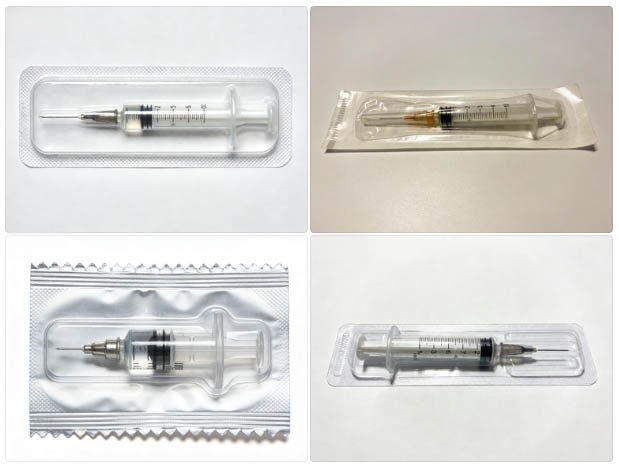
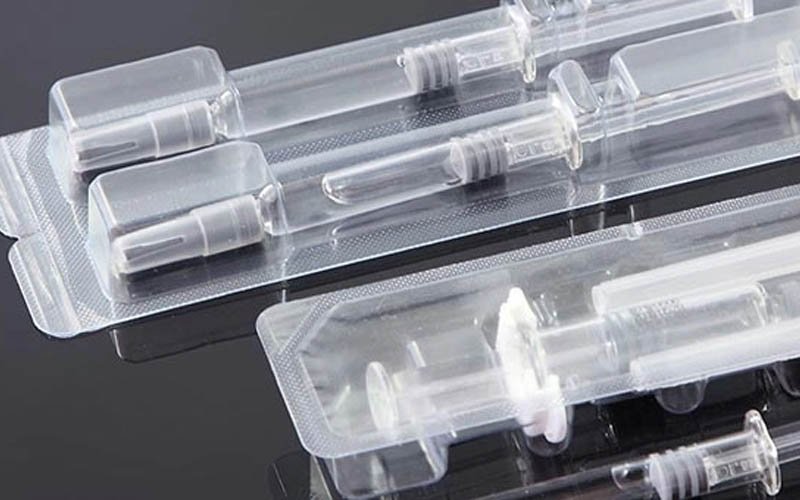
A syringe blister pack holds a syringe in a formed cavity closed with a lidding material. It helps locate, protect and present the assembly. Whether it also acts as a sterile barrier depends on the intended package role and the evidence for the complete packaging system.
Explore forming and lidding materials, blister versus tray formats, or equipment for making syringe blister packs.
Key boundary: a blister around a syringe is not automatically the drug container closure or a validated sterile barrier. That status depends on the intended use, product regulatory strategy, sterilization route and evidence for the complete packaging system.
What is a syringe blister pack?
A syringe blister pack is a package in which a formed cavity locates and protects a syringe and a lidding material closes the cavity. It may hold one syringe or a defined group. Its exact protection and regulatory function must be stated in the product specification rather than assumed from the word “blister.”
The syringe system
The barrel, plunger, closure, tip cap, needle shield and drug-contact components have their own approved configuration. The outer blister must not disturb them.
The formed package
The cavity, flange, lidding and seal create mechanical restraint, presentation and the specified environmental or microbial barrier when that function has been validated.
The distribution system
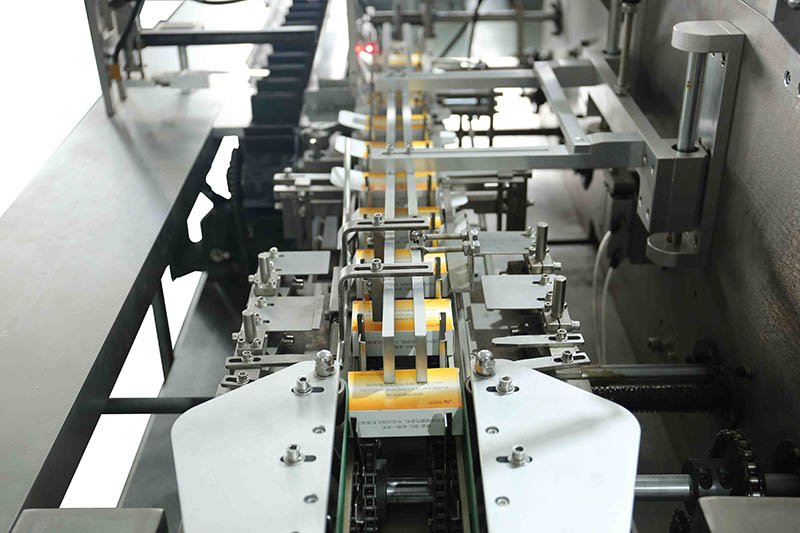
Cartons, inserts, labels and shipping cases complete the path. A pack that performs well at the sealing station can still fail during cartoning, transport or opening.
Why the definition changes the machine brief
If the blister is only protective secondary packaging, the project may focus on cavity fit, appearance, tamper evidence and downstream handling. If it is intended to function as a sterile barrier, material qualification, sealing-process validation, package integrity, sterilization compatibility and aseptic presentation become central to the specification.
Do not let a supplier infer this boundary. Write it into the URS and quotation request.
Choose the forming and lidding system from the protection requirement
No single material is “best” for every syringe. Selection begins with the approved syringe, sterilization sequence, barrier target, opening method, distribution conditions and the evidence required by the buyer’s quality and regulatory teams.
| Architecture | Useful starting fit | Questions to resolve | Evidence to request |
|---|---|---|---|
| Transparent thermoformed cavity | Projects that value product visibility and a formed cavity shaped around the syringe. | Forming range, corner thinning, flange flatness, syringe retention, clarity and compatibility with the selected lidding. | Material data, forming trials, dimension samples, seal-window study and distribution evaluation. |
| High-barrier or cold-formed cavity | Projects with a documented light, moisture or gas-barrier need that the selected laminate can support. | Achievable cavity geometry, springback, flange condition, visibility, opening behavior and machine/tooling scope. | Supplier material specification, formed samples, barrier data for the exact construction and product-specific stability evidence. |
| Porous lidding route | Applications where the approved packaging and sterilization strategy requires a porous microbial-barrier material. | Material grade, sealant compatibility, sterilization exposure, peel behavior, particulate risk and print requirements. | Material qualification, seal-process development, sterilization compatibility and package-integrity validation. |
| Nonporous lidding route | Applications that require a nonporous closure layer and a compatible heat-seal interface. | Coating, seal land, print direction, opening method, integrity method and whether the pack is sterile or non-sterile. | Approved lidding specification, seal-strength/integrity method, challenge samples and aging or stability plan where applicable. |
Use the complete syringe envelope
Provide barrel length and diameter, flange profile, plunger position, tip cap or needle shield, label position, tolerances, weight, orientation and permitted contact points. The cavity must protect the complete assembly without loading the plunger or closure.

For the material specification, read the syringe packaging materials guide. It separates the forming web, lidding and incoming syringe presentation.
How is a syringe blister pack produced?
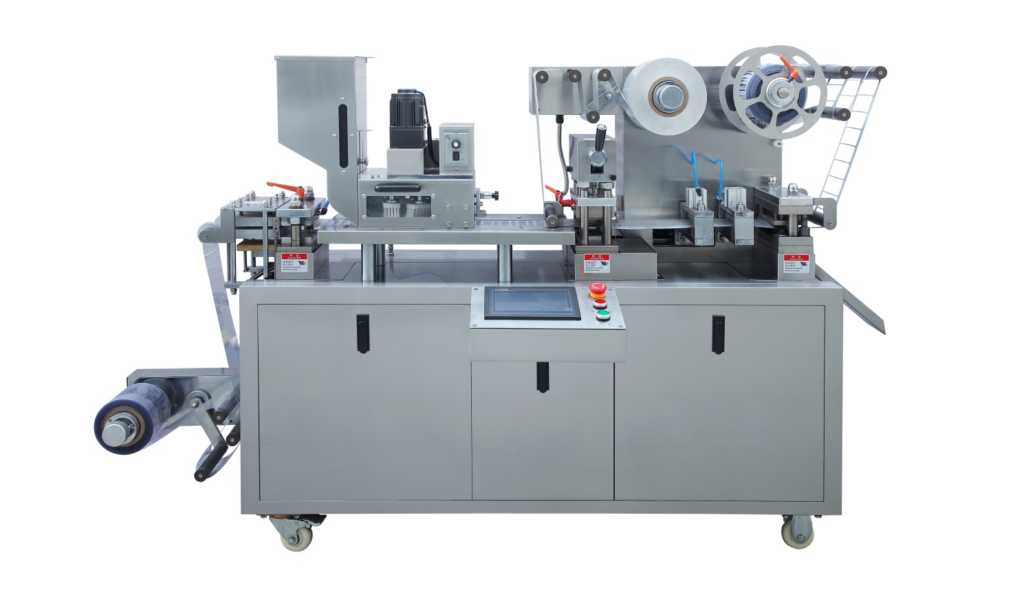
The exact layout depends on the approved package and automation boundary. A complete concept normally coordinates these six functions and assigns responsibility at every transfer.
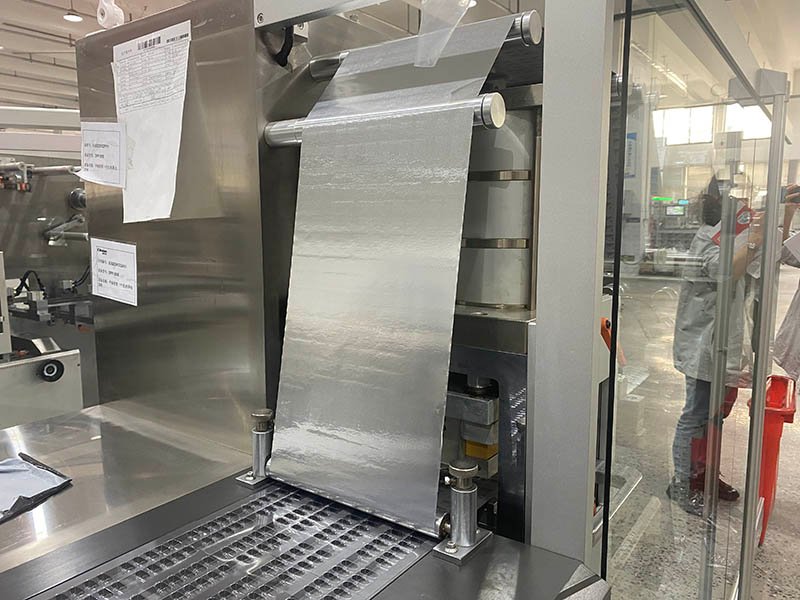
Unwind and control the web
Present the forming material at the agreed direction, tension and registration condition.
Form the cavity
Use the approved thermal or mechanical forming route to create the specified cavity and usable flange.
Load the syringe
Place the syringe manually, with a fixture or through an approved automatic handling concept without disturbing critical components.
Inspect before closing
Confirm presence, orientation and position according to the agreed inspection and reject boundary.
Apply and seal the lidding
Control lidding direction, registration, seal contact and the product-specific process window.
Code, cut and discharge
Apply required information, separate the pack, reconcile rejects and deliver accepted output to the next operation.
Loading is the project-specific station. A feeder designed for tablets or capsules does not prove automatic syringe loading. The supplier must approve the actual syringe samples, gripping/contact method, orientation, buffer, fault recovery and inspection sequence.
Compare unit blisters, multi-unit trays and pouches by intended use
Individual blister
Starts with one syringe per separated pack when unit presentation, individual protection, labeling or dispensing supports the product strategy. Confirm opening, handling and carton count.
Multi-unit tray
Starts with several syringes in one formed tray when clinical presentation, nest handling or grouped delivery is required. Confirm whether opening one tray exposes every unit.
Pouch or overwrap
Starts with a flexible enclosure where a formed locating cavity is not required or where another inner support controls movement. Confirm puncture, seal, opening and device protection.
Selection rule: choose the simplest package that can prove the required protection, usability, manufacturing control and distribution performance for the approved syringe—not the format with the longest list of claimed features.
The blister versus tray packaging comparison expands the format decision. Once the pack is defined, use the machine selection guide to assess loading, useful output and line interfaces.
Send these inputs before a supplier selects the machine
| Input | What to provide | Why it changes the proposal |
|---|---|---|
| Syringe set | Approved drawings, tolerances, labeled samples, closure and shield details, plunger position, weight and permitted contact points. | Defines the cavity, loading method, handling risk and inspection views. |
| Pack definition | Pack drawing, units per pack, cavity orientation, opening feature, flange, print area, code and downstream carton arrangement. | Defines tooling, web width, index, lidding control, cutting and discharge. |
| Materials | Forming and lidding specifications, roll direction, thickness range, coating/sealant and representative production rolls. | Defines forming, sealing, tracking, trial and change-control requirements. |
| Protection role | State whether the blister is a sterile barrier, protective pack or secondary presentation, plus sterilization timing and target markets. | Changes material qualification, testing, documentation and line boundaries. |
| Accepted output | Good packs per minute at discharge, test duration, sample set, allowed rejects, planned stops and operator boundary. | Turns a mechanism cycle into a measurable purchase requirement. |
| Evidence scope | Drawings, material documents, alarms, recipes, inspection challenges, FAT records, manuals, training and qualification support. | Makes the quoted deliverables and approval responsibility visible before purchase. |
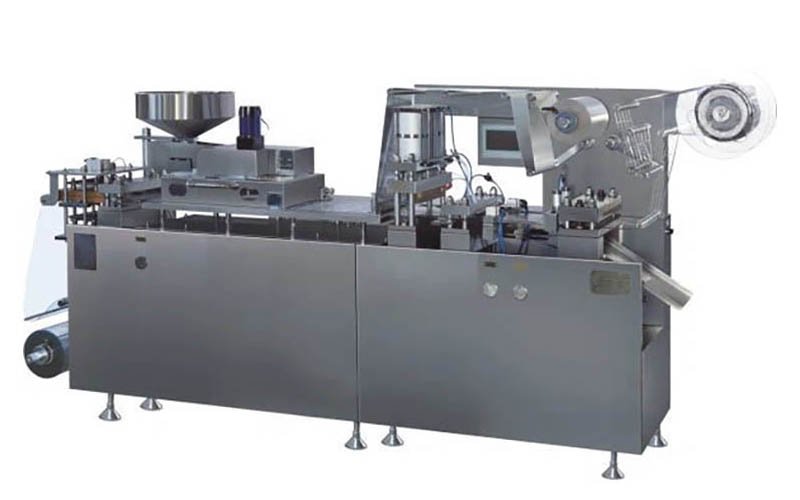
Published platform data is only a starting point
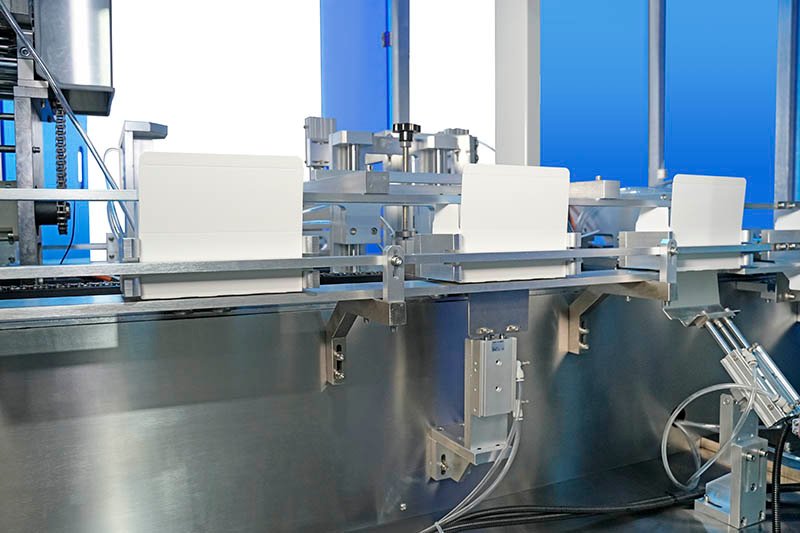
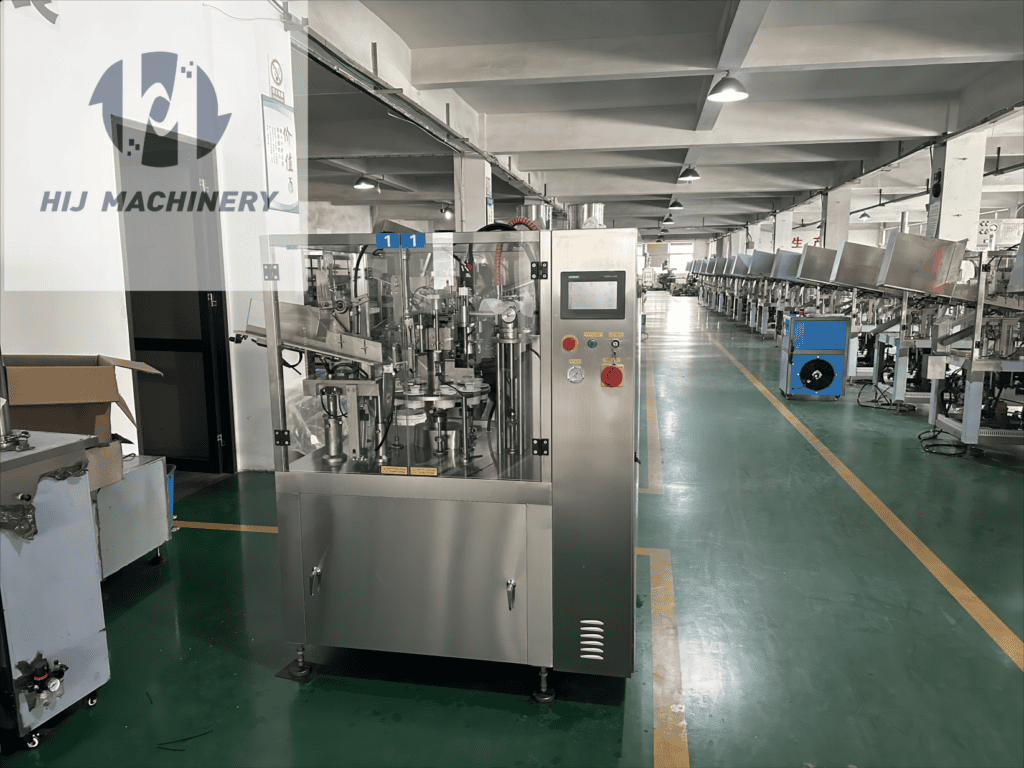
The current HIJ syringe blister machine page documents a DPP-260/360K platform and separates standard platform functions from syringe-specific loading and tooling work. Use that page to begin technical discussion, then require the signed quotation and technical agreement to reconfirm every project value.
Match standards and test methods to the actual packaging role
Do not paste a universal compliance list into the URS. Determine which requirements apply to the exact product, market, packaging function and sterilization route. Then define the method, sample, controls and acceptance criteria with the responsible quality and regulatory teams.
ISO 11607-1
ISO describes requirements for materials, sterile barrier systems and packaging systems intended to maintain sterility of terminally sterilized medical devices. It also notes that additional requirements may be needed for combination products.
Review the ISO scopeUSP <1207>
USP provides guidance on integrity assurance for nonporous packages intended for sterile pharmaceutical products and on selecting and validating leak and seal-quality test methods.
Review the USP chapter overviewASTM F88/F88M
ASTM F88/F88M covers measurement of seal strength in flexible barrier materials. Seal strength supports process evaluation, but it is not automatically the same as package-integrity performance.
Review the ASTM methodDevelopment evidence
- Cavity dimensions and syringe fit
- Material formability and flange condition
- Seal-window and opening evaluation
- Loading contact and product orientation
- Code and print registration
- Distribution and aging work where applicable
FAT evidence
- Approved samples and production materials
- Normal running, stops and restart
- Presence/orientation challenge pieces
- Input, accepted output and reject reconciliation
- Changeover for agreed formats
- Signed deviations and retained records
Quality responsibility remains project-specific. Equipment trials and FAT can demonstrate the agreed machine functions. They do not by themselves establish product shelf life, regulatory approval, sterility assurance or batch release.
Syringe blister pack FAQ
What is a syringe blister pack?
A syringe blister pack uses a formed cavity to locate and protect a syringe and a lidding material to close the cavity. The pack may hold one syringe or a defined group, and its exact protection or barrier role must be stated in the approved packaging specification.
Is every syringe blister pack a sterile barrier?
No. Some syringe blisters are validated sterile barrier systems, while others are protective or secondary presentation packs. The intended use, sterilization route, materials, sealing process and package-validation evidence determine the actual role.
What materials are used for syringe blister packs?
Projects may use transparent thermoformed webs, high-barrier laminates, porous lidding or nonporous lidding. The exact grades, thicknesses, coatings and combinations must be selected and tested as one packaging system for the approved syringe and intended use.
How is a syringe blister pack produced?
The forming web is unwound and formed into a cavity, the syringe is loaded and inspected, the approved lidding is applied and sealed, and the pack is coded, cut, inspected and discharged. Loading and inspection are configured around the actual syringe geometry.
Should I choose a blister, tray or pouch for a syringe?
Choose from the intended clinical presentation, number of syringes per pack, sterile-barrier strategy, opening method, labeling, distribution and manufacturing evidence. No format is universally better; the complete product and use case determine the fit.
What information is needed for a syringe blister machine quote?
Provide approved syringe drawings and samples, pack drawing, forming and lidding materials, protection role, sterilization timing, accepted output, inspection and reject requirements, downstream interface, utilities, documents and FAT scope.
What should be tested during syringe blister machine FAT?
Use representative syringes and production materials to test forming, loading, presence and orientation checks, sealing, coding, cutting, rejects, stops, restart, agreed changeovers and accepted output. Record deviations and reconcile input, output and rejects.
Which standards apply to syringe blister packaging?
Applicable standards depend on whether the pack is a sterile barrier, a pharmaceutical package, a medical-device package or secondary protection. ISO 11607, USP <1207> and ASTM seal or integrity methods may be relevant, but the buyer’s regulatory and quality teams must define the applicable set.
Discuss the packaging for your syringe
Send a syringe photograph or drawing, the number of syringes per pack and your target output. If materials or the pack layout are still undecided, say so. The initial discussion can identify the configuration and further information needed.
About this guide: prepared for packaging, engineering, quality and procurement teams defining a syringe blister project. It supports specification and supplier comparison; it does not replace product-specific regulatory assessment, packaging validation or quality approval.