
Buyer's Comparison Guide
Automatic vs Semi-Automatic Cartoning Machine
The choice comes down to one question: how much throughput, consistency and compliance does your line really need — and what is each option's true cost once labour is included?
Short answer: a semi-automatic cartoning machine wins on upfront price for very small batches, but an automatic cartoning machine like the WZTS-130 wins on speed (30–80 cartons/min), consistency and cost-per-carton for any steady production volume.
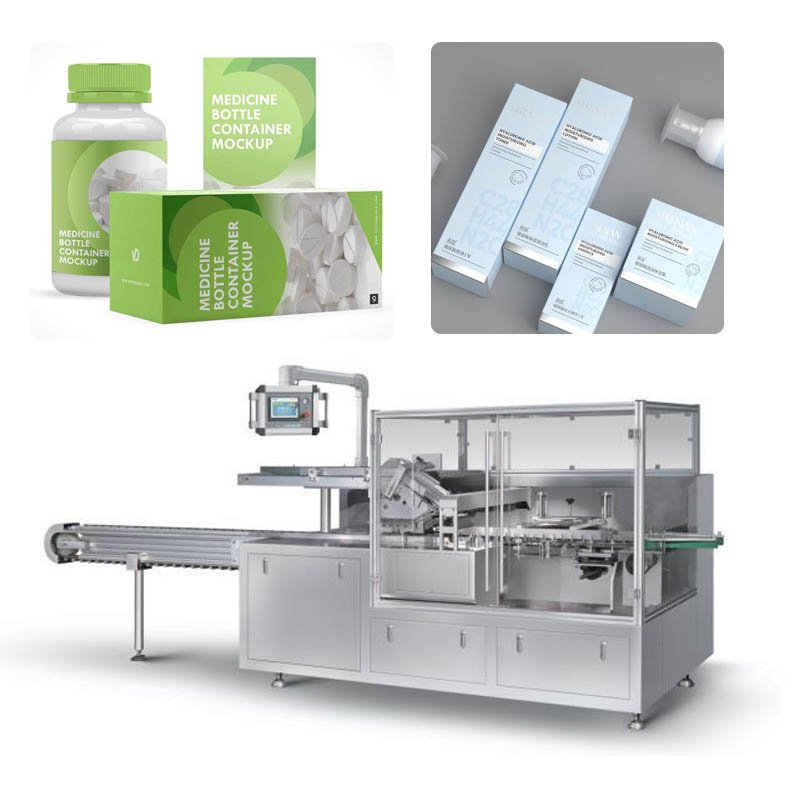
Choose Automatic if…
- You run steady mid-to-high volume
- You need pharmaceutical cGMP traceability
- Leaflet insertion & missing-item rejection matter
- You want repeatable, OQ-friendly output
- You want the lowest cost-per-carton at scale
Choose Semi-Automatic if…
- Volumes are very low or irregular
- You are running pilot / R&D batches
- Budget is the single hardest constraint
- Manual loading and slower output are acceptable
- Floor space is extremely limited
Automatic vs Semi-Automatic — Side by Side
A semi-automatic cartoning machine relies on an operator to load product or handle cartons; an automatic cartoning machine completes the whole cycle on its own. Here is how that plays out factor by factor.
| Factor | Automatic Cartoning Machine (WZTS-130) | Semi-Automatic Cartoning Machine |
|---|---|---|
| Output speed | 30–80 cartons/min | Typically < 20–30 cartons/min (operator-paced) |
| Product & leaflet insertion | Fully automatic (servo/pneumatic) | Manual or operator-assisted |
| Missing-item rejection | Automatic detect & reject | Usually none / manual check |
| Batch / lot coding | In-line, automatic | Separate step or manual |
| Output consistency | Repeatable, OQ-friendly | Varies with the operator |
| Operator labour | 1 supervisor | Manual handling per carton; more staff |
| Changeover | Tool-light, fast | Manual setup, slower |
| Footprint | Integrated line, ~3.1×1.1×1.55 m | Compact / benchtop |
| Upfront cost | From ~USD 30,000 | Lower upfront |
| Cost per carton at volume | Low — labour-light | Rises with labour as volume grows |
| Best fit | Steady production, pharma & cGMP | Small batch, R&D, tight budget |
The Four Factors That Actually Decide It
Speed & Throughput
An automatic cartoning machine runs 30–80 cartons per minute continuously; a semi-automatic machine is paced by the operator and rarely sustains 20–30/min. Across an 8-hour shift that gap is tens of thousands of cartons. If you need higher still, step up to a high-speed cartoning machine.
Labour & Total Cost
Semi-automatic wins on the sticker price, but each carton still needs hands. An automatic line replaces that recurring labour with one supervisor, so the true cost per carton keeps falling as volume rises. At steady production, the automatic machine's higher upfront cost is typically recovered through labour savings.
Consistency & Compliance
Automatic feeding, leaflet insertion, missing-item rejection and in-line coding make output repeatable — the foundation an auditor looks for. The WZTS-130 is cGMP-ready and CE-marked; HIJ supplies documents supporting your DQ/IQ/OQ/PQ validation. Manual steps are far harder to qualify.
Flexibility & Growth
Semi-automatic suits frequent tiny batches and R&D, where manual setup is fine. But growth has a ceiling: once orders scale, manual handling becomes the bottleneck. Many buyers start manual, then move to an automatic cartoning machine — planning that path early avoids re-tooling twice.
Which Should You Choose?
Match your real situation to one of these profiles. For most manufacturers with ongoing orders, automatic is the lower-risk, lower-cost choice over the life of the line.
Go Automatic (WZTS-130)
You ship the same product line continuously, week after week.
You package pharmaceuticals, nutraceuticals or anything needing cGMP traceability.
Leaflets, batch coding and reject control are non-negotiable.
You want predictable output that survives an OQ run.
Semi-Automatic Is Enough
You package small, occasional or trial batches only.
You are a startup validating a product before scaling.
Budget today outweighs throughput tomorrow.
A skilled operator and slower pace are acceptable.

"The mistake I see most often is buying semi-automatic to save money, then re-buying automatic within a year once orders grow. If you can already see steady volume coming, go automatic from the start — the labour you save usually pays the difference back faster than people expect, and you only validate the line once." — Forester Xiang, Founder & Chief Engineer, HIJ Machinery
Automatic vs Semi-Automatic — FAQ
Is a semi-automatic cartoning machine cheaper than an automatic one?
Yes, on upfront price. A semi-automatic cartoning machine costs less to buy, but each carton still needs manual handling, so its cost per carton rises with volume. An automatic cartoning machine such as the WZTS-130 (from ~USD 30,000) usually has the lower total cost once steady production labour is factored in.
When is a semi-automatic cartoning machine enough?
When volumes are very low or irregular — pilot runs, R&D, startups validating a product, or tight budgets where a slower, operator-paced output is acceptable. Below roughly a single shift of steady demand, semi-automatic can be the sensible starting point.
How much faster is an automatic cartoning machine?
An automatic cartoning machine runs 30–80 cartons per minute, while a semi-automatic machine is typically paced under 20–30/min by the operator. Over a shift that is tens of thousands of additional cartons. See the automatic cartoning machine specs for details.
Is automatic required for pharmaceutical cGMP packaging?
It is not strictly mandatory, but automatic feeding, missing-item rejection, in-line coding and repeatable output make validation far easier. The WZTS-130 is cGMP-ready and CE-marked, with documentation supporting your DQ/IQ/OQ/PQ validation. Manual steps are much harder to qualify.
Can I start semi-automatic and upgrade to automatic later?
Yes, and many manufacturers do. The risk is paying twice — buying semi-automatic, then re-buying and re-validating an automatic line within a year as orders grow. If steady volume is foreseeable, going automatic from the start is usually cheaper overall.
Which has the lower total cost of ownership?
For any continuous production volume, the automatic cartoning machine — because it removes recurring per-carton labour. Semi-automatic only wins on total cost at very low or sporadic volumes where the machine sits idle much of the time.
Still Deciding Automatic or Semi-Automatic?
Tell us your product, target speed and budget. Forester's team will recommend the right level of automation — no obligation, no hard sell.
Get a Free Recommendation