Updated 12 October 2026 · Cartoner selection guide
Intermittent vs continuous motion cartoners differ in carton transport: an indexed transport pauses during part of the cycle, while continuous transport keeps moving as tooling synchronizes with it. Choose from the actual loading window, product control and required accepted output; motion type alone does not determine changeover time, automation level or loading direction.
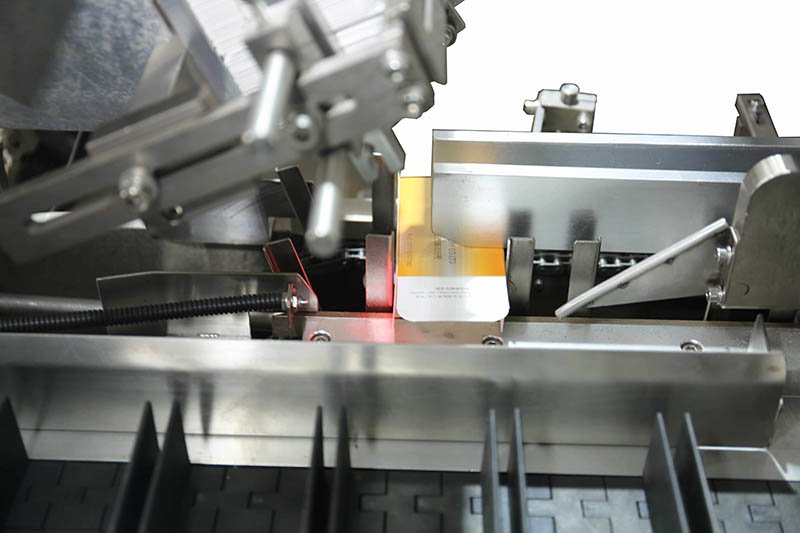
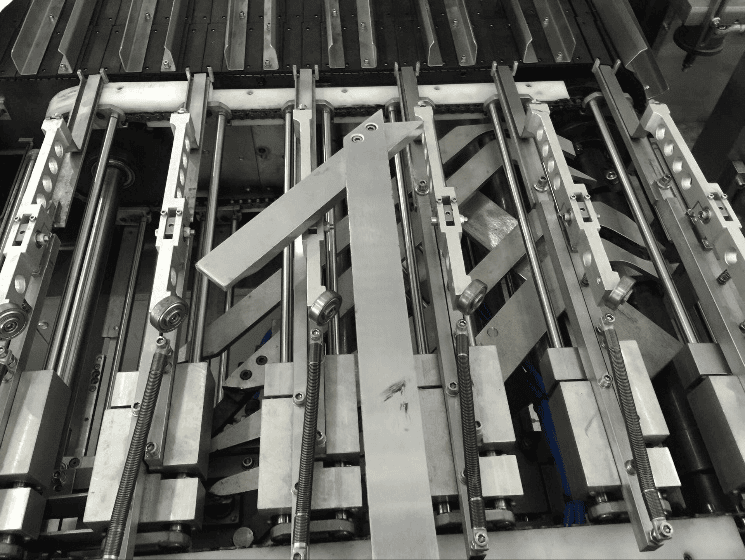
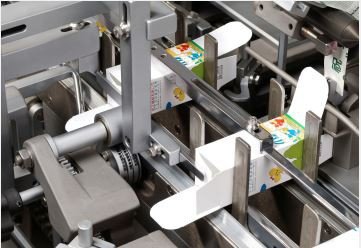
Carton transport advances, then pauses. Selected station operations use the available dwell window.
The carton remains in motion while matched mechanisms perform operations within a controlled working zone.
The motion architecture affects more than speed. It changes the infeed strategy, product handling, carton control, fault recovery, changeover method, maintenance skills, and the way a factory acceptance test should be written. This guide turns those differences into a purchasing decision for an automatic cartoning machine project.

Intermittent and continuous motion: the mechanical difference
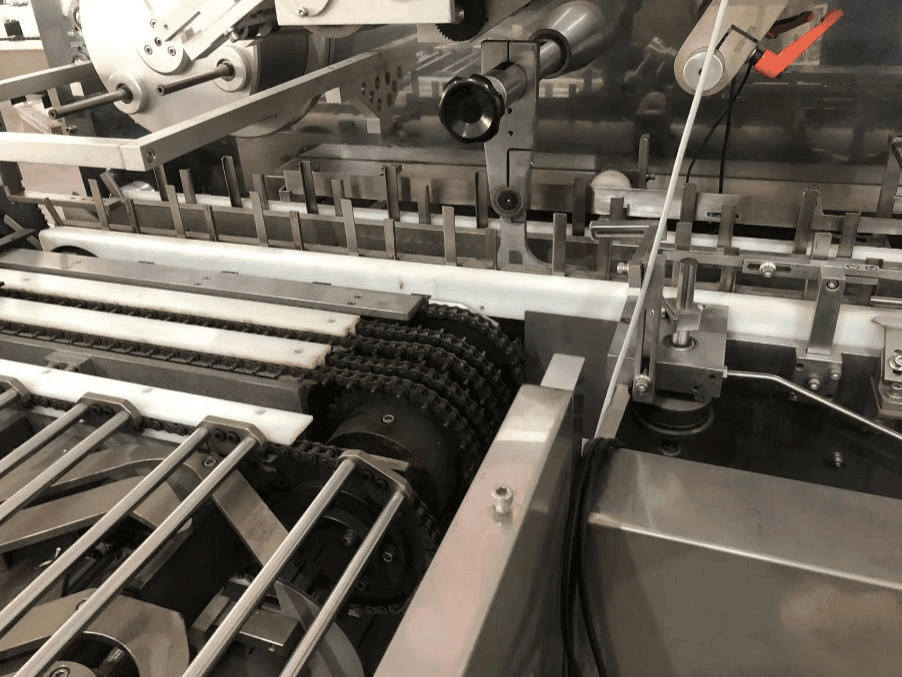
An intermittent cartoner moves cartons by an index, holds them at one or more stations, completes the required operation during the dwell, then advances to the next index. That dwell can simplify timing because the carton and product are stationary at the critical moment.
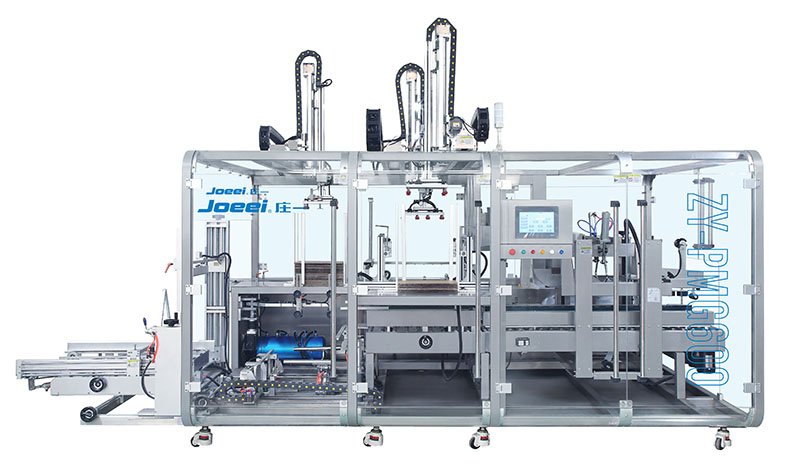
A continuous motion cartoner keeps the carton transport moving. Product pushers, carton-opening devices, or other tooling must synchronize with the moving carton over a defined operating window. The result can support a higher output envelope, but only when the infeed and downstream equipment maintain the required timing and availability.

What happens to dwell time as index rate rises?
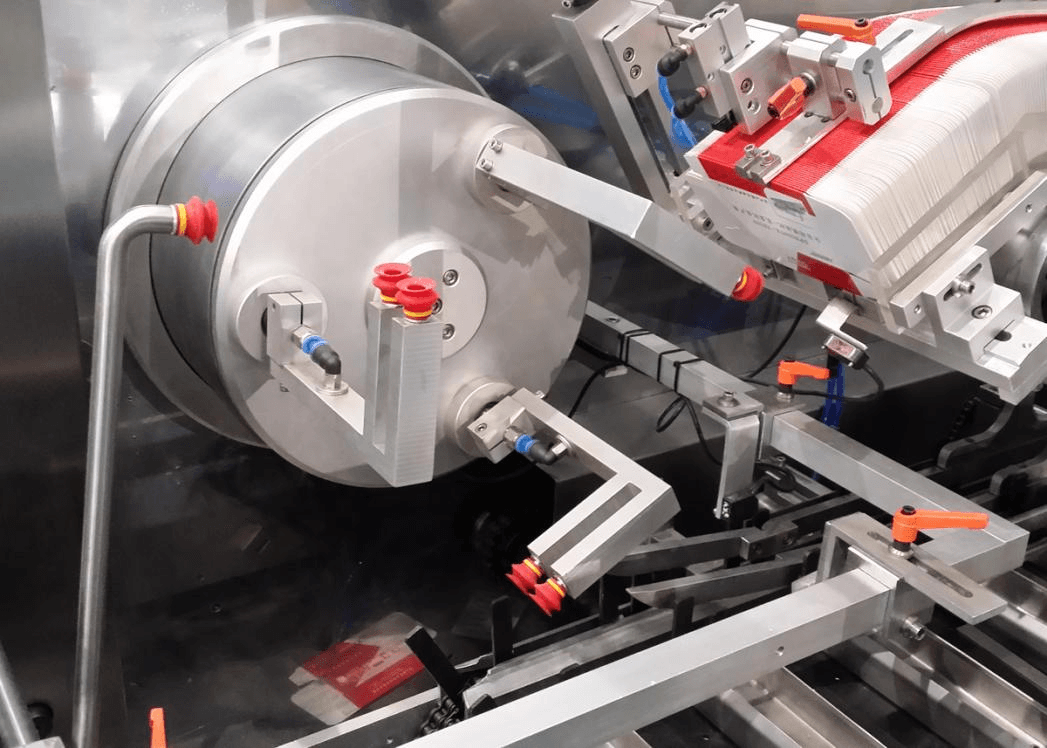
An intermittent cartoner divides each transport cycle into movement and dwell. The carton-loading window can shrink as index rate increases, even when the machine still has enough nominal mechanical capacity. Ask for the actual motion profile and the time required by the limiting station.
For a simple indexed example, cycle time = 60 ÷ index cycles per minute. At 60 cycles/min, one cycle lasts 1 second. If 40% is allocated to dwell, that leaves 0.40 seconds of dwell and 0.60 seconds of movement. At 120 cycles/min with the same split, the dwell falls to 0.20 seconds. These are arithmetic examples, not HIJ machine settings.
Try an indexed-cycle timing example
Change the assumptions to see the available time. Confirm the real index profile, pockets and station overlap with the supplier.
Nominal transport capacity does not include rejects, stops, feeder limits or changeovers.
A continuous cartoner has a different loading problem: the transfer mechanism must stay synchronized with the moving carton through its working zone. Compare the real engagement time, travel, product support and release point. A dwell percentage from this example cannot be applied directly to a continuous machine.
Questions for the supplier: which station limits the selected format, what happens to its working window at the contractual rate, and how are missed or late products handled without losing pack traceability?
Why cartons per minute is not the selection rule
Published examples do not establish a universal speed cut-off. The ROVEMA brochure lists its intermittent CMH-I example at up to 75 folding boxes/min and continuous CMH-C variants at 125–225 cartons/min. Those values refer to different machines and format ranges. Ask a supplier to justify the proposed architecture for your pack rather than applying a single industry-wide threshold.
Those figures belong to specific manufacturers, machines, box ranges, products, and configurations. They are evidence that architecture influences capacity, not a rule that every cartoner crosses from intermittent to continuous at the same rate.
The correct output target is sustained accepted cartons per minute under defined production conditions. State the product, carton and leaflet formats, closure method, inspection logic, upstream presentation, run duration, and permitted rejects. A mechanical cycle rate without these conditions cannot establish line capacity.
Compare the six criteria that control the decision
| Buyer criterion | Intermittent motion tendency | Continuous motion tendency | Evidence to request |
|---|---|---|---|
| Sustained accepted output | Often suitable for moderate output and mixed production. | Often selected for stable, higher-volume production. | Timed FAT run with accepted output and reject count. |
| Product handling | Stationary loading can provide a clear insertion window. | Smooth synchronized movement can reduce repeated stop-start effects. | Worst-case product trial, orientation record, and damage criteria. |
| Format range and changeover | Can be practical when many formats and shorter campaigns dominate. | Can reward long, stable campaigns; changeover depends on platform design. | Format matrix, change parts, adjustment list, and timed changeover. |
| Line synchronization | Indexing and buffers may offer more recovery time between cycles. | Requires disciplined product pitch, carton supply, and line handshakes. | Interface specification, accumulation plan, and starvation test. |
| Controls and maintenance | Station timing may be easier to observe and troubleshoot. | More coordinated axes and motion logic may require deeper skills. | Axis list, alarm strategy, diagnostics, training, and spares plan. |
| Project and validation risk | May reduce complexity when the required rate and application fit. | May justify added engineering when sustained demand uses the capacity. | URS traceability, challenge tests, documentation scope, and deviation closure. |
Match motion architecture to the product and campaign
Frequent SKU and carton changes
A high-mix line should not be judged on top speed alone. Record the annual run hours by SKU, batch length, carton and leaflet changes, format-part replacement, recipe control, and restart checks. If production loses a large share of scheduled time to changeover and stabilization, a simpler motion architecture with a lower rated speed may produce more accepted cartons per week.
Fragile, unstable, or liquid-filled products
Do not assume one motion type is always gentler. Test the actual product. Intermittent indexing introduces acceleration and deceleration, while continuous systems demand accurate transfer and synchronized handling. Product geometry, center of gravity, surface friction, headspace, grouping, pusher contact, and upstream orientation can outweigh the motion label.
Blister packs, bottles, tubes, and sachets
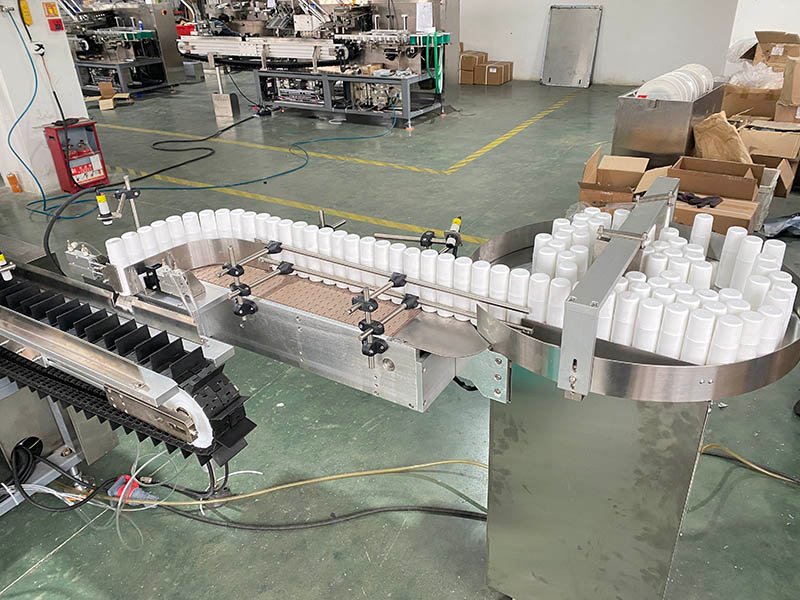
Each format creates a different constraint. Blister packs may need controlled stacking and edge protection. Bottles may require screw, star-wheel, or pocket timing. Tubes can rotate or telescope under poor guide control. Sachets may need counting, collation, and positive confinement. Define the infeed state before choosing the cartoner architecture; the automatic cartoner infeed guide provides the corresponding URS and FAT checks.
Three planning cases: what changes the shortlist?
Use the cases below as a planning exercise. They describe production constraints, not completed customer projects or a universal recommendation.
| Production pattern | First issue to resolve | How to compare the proposals |
|---|---|---|
| Several bottle formats in short campaigns | Orientation, insertion support, carton clearance and time to the first good carton after a change. | Review an indexed loading window where it fits the required output. Compare both motion types using the same format pair and changeover tasks; the motion label does not set changeover time. |
| Long campaigns of a repeatable blister stack | Stable stacking, controlled pitch, leaflet presentation and a downstream path that can sustain the run. | A continuous proposal may be worth shortlisting when the complete line can use its capacity. Require a timed run with the actual stack, carton and insert. |
| Sachets arrive with variable spacing or in bursts | Counting, grouping, buffering and controlled transfer into the loading pocket. | Resolve the infeed before paying for a higher machine speed. Compare missed-product response and starvation/restart behavior under the same arrival pattern. |
For a bottle project, use the bottle cartoning machine page to prepare the samples and line data. For the loading geometry, compare horizontal end-load cartoning and vertical top-load cartoning separately from motion type.
Motion type, loading direction and automation are separate choices
“Intermittent” describes how carton transport advances through its normal cycle. It does not mean “semi-automatic.” An indexed cartoner can have automatic product feeding, leaflet insertion, inspection and closure. Continuous motion describes synchronized work on moving cartons; it does not, by itself, describe the operator’s replenishment or inspection duties.
Likewise, horizontal/end-load and vertical/top-load describe the carton-loading route. A vendor should specify the transport profile and loading direction separately, then explain how the selected feeder presents your pack. Avoid substituting one label for another in an RFQ.
If the actual decision is which tasks to automate, read the automatic vs semi-automatic cartoning comparison. If it is whether a product can be controlled during transfer, start with samples, clearance and the infeed specification.
Write the motion decision into the URS
A URS should state the production problem and acceptance conditions before naming a preferred architecture. Give suppliers enough evidence to explain why intermittent or continuous motion is appropriate.
- Define the accepted-output requirement.State the minimum sustained accepted cartons per minute, run duration, operating pattern, and maximum permitted reject level for each critical format.
- Build the sample matrix.Include the smallest and largest products, the least stable product, minimum and maximum carton tolerances, leaflet variants, and each closure method.
- Describe the incoming product state.Record upstream rate variation, lane count, spacing, orientation, grouping, accumulation, and the response to missing or late products.
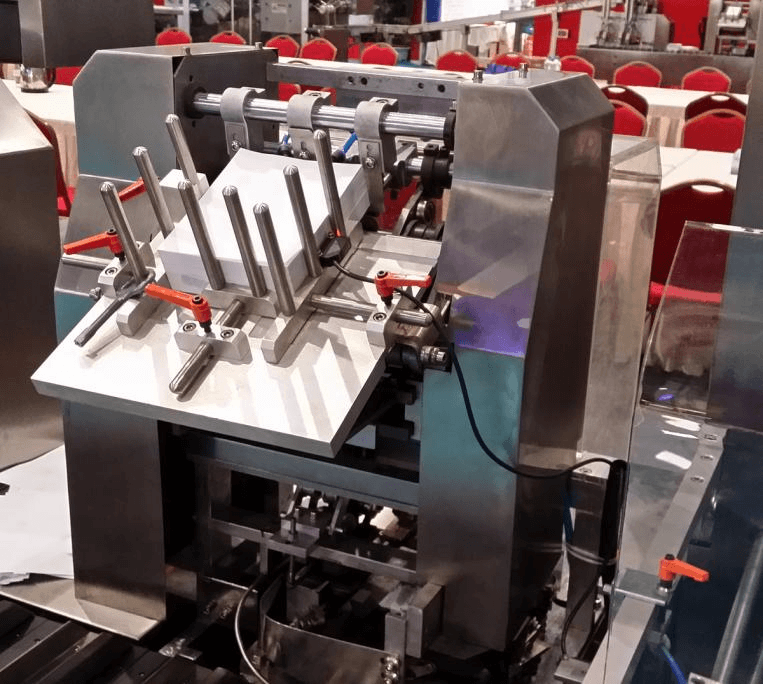
- Specify carton and leaflet control.Include board grade, crease quality, seam construction, flatness, leaflet paper, fold pattern, magazine autonomy, and low-level behavior.
- Define interfaces and fault recovery.List handshakes, line stop categories, backlog control, reject confirmation, alarm history, restart sequence, and data requirements.
- Require a supplier rationale.Ask each bidder to identify the proposed motion architecture, capacity margin, limiting station, and evidence from the sample trial or comparable verified application.
If two proposals use different motion architectures, normalize the comparison. Compare accepted output, included infeed and inspection modules, approved format range, changeover scope, utilities, controls, documentation, FAT conditions, training, and spare parts—not the base machine headline.
FAT tests that expose the wrong motion choice
A short nominal run can hide starvation, timing sensitivity, recovery delays, and product damage. The FAT should reproduce the conditions that place the greatest demand on the chosen architecture.
Motion-selection FAT checklist
- Run the smallest, largest, least stable, and most damage-sensitive approved products.
- Test low and high packaging-material tolerances, including the most demanding leaflet fold.
- Record sustained accepted output, rejects by cause, micro-stops, and manual interventions.
- Ramp from low speed to the contractual rate and verify control during acceleration and deceleration.
- Create upstream starvation, late product, missing product, and downstream backlog conditions.
- Challenge carton pick, carton opening, leaflet presence, product presence, coding, and reject confirmation.
- Stop and restart with products and cartons in process; verify disposition of every affected pack.
- Perform a timed changeover between the agreed worst-case formats and confirm the first accepted carton.
- Close deviations and repeat failed tests before authorizing shipment.
For regulated or traceability-sensitive lines, connect these FAT records to the validation plan. The test evidence should identify samples, material lots, settings, software or recipe version, operators, results, deviations, corrective actions, and retest status.
A practical selection sequence
Use this order to keep the decision tied to production evidence:
- Calculate required accepted output from demand, scheduled hours, campaign pattern, and realistic line availability.
- Map the approved product, carton, leaflet, closure, coding, and inspection combinations.
- Define upstream and downstream interfaces, including variation, accumulation, and fault states.
- Ask suppliers to propose and justify the motion architecture against the same URS.
- Compare whole-line scope and operational risk, then verify the proposal with sample trials and FAT.
A high-speed cartoning machine should be considered when the sustained requirement, campaign stability, and complete line can use its capacity. A flexible automatic cartoner may be the stronger investment when format variety, batch pattern, or line interfaces would leave that capacity unused. The right answer is the machine that repeatedly produces accepted cartons under your specified conditions.
Frequently asked questions
What is the difference between intermittent and continuous motion cartoners?
An intermittent cartoner indexes cartons to a station and holds them while an operation is performed. A continuous motion cartoner keeps cartons moving while synchronized tooling performs the operation through a controlled working zone. The difference affects output potential, product handling, timing, line integration, changeover, maintenance, and fault recovery.
Is a continuous motion cartoner always faster?
Continuous motion generally supports a higher speed envelope, but it is not automatically faster in production. Sustained accepted output depends on the product, carton, leaflet, infeed, inspection, closure, upstream supply, downstream availability, changeovers, and fault recovery. Compare machines under the same defined samples and FAT conditions.
Which motion type is better for frequent carton size changes?
Intermittent motion is often considered for high-mix production, but motion type alone does not determine changeover performance. Verify the number of change parts, adjustment points, stored recipes, tool requirements, line clearance, inspection setup, and time to the first accepted carton for the actual format pair.
What should we test during a cartoner FAT?
Test the contractual formats and worst-case samples at the required sustained accepted output. Challenge starvation, backlog, missing and misaligned products, carton pick and opening, leaflet presence, coding, rejection, alarms, stop and restart, and changeover. Record rejects, micro-stops, interventions, deviations, corrective actions, and successful retests.
Can the same product run on either motion type?
Sometimes. The choice depends on product behavior, format range, required output, feeding method, carton design, closure, inspection, interfaces, and project constraints. A supplier should justify the proposed architecture using the URS, representative samples, and a documented trial rather than the product name alone.
Sources and how to use this guide
- ROVEMA CMH/CMV manufacturer brochure: examples of distinct continuous and intermittent cartoner platforms.
- Marchesini MA intermittent series and MA 200–202 continuous series: manufacturer descriptions of motion, feeding and format-change features.
- Douglas Machine motion overview: general operating definitions and trade-offs.
Manufacturer examples identify architecture; their advertised figures are not HIJ performance claims or universal selection thresholds. The timing plot, calculator and planning cases are explanatory examples. A sample trial and agreed FAT criteria decide the actual project.
Need help applying the comparison?
Send HIJ your products, cartons, leaflets, target accepted output, and upstream line data. Our engineering team will review the motion architecture, infeed, inspection, closure, and FAT scope before quoting.
Request Motion Review & Line Quote