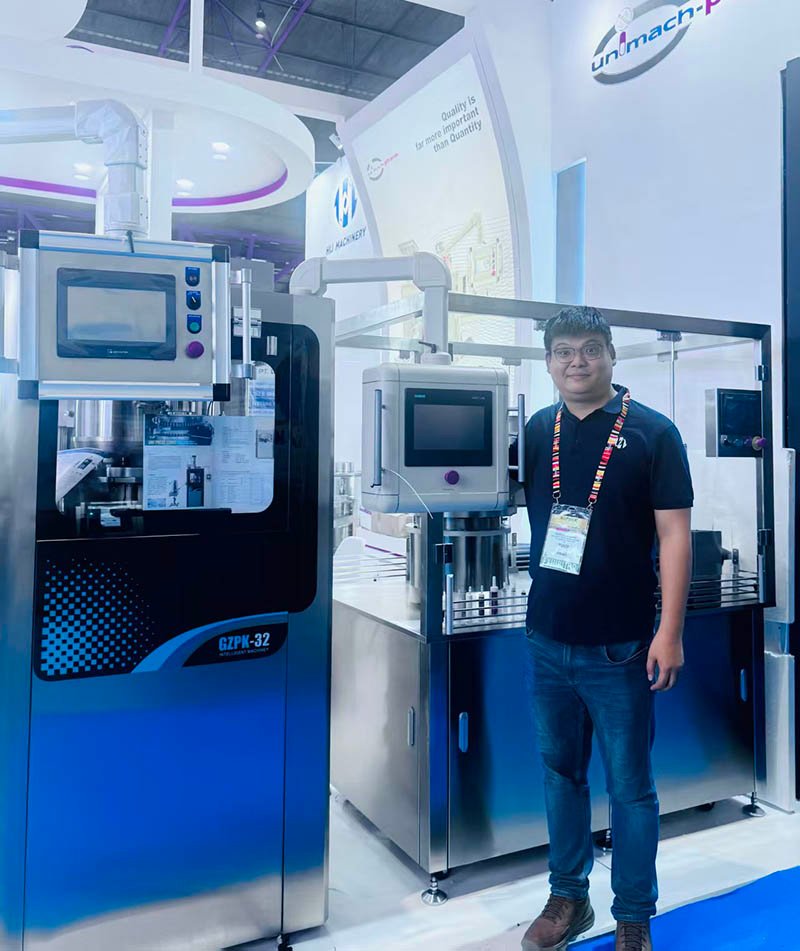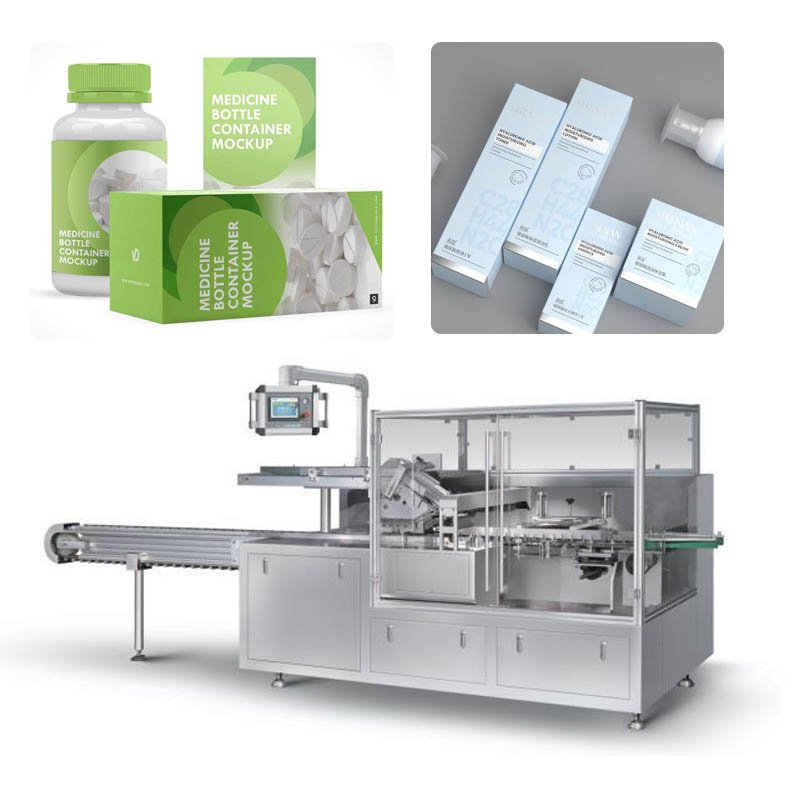
Manual loading cartoners automate carton erection and closure while operators place products into the open cartons. They can be the right choice for unstable products, mixed kits and variable batches—but only when operator takt, ergonomics and inspection controls are engineered into the line.
- Choose hand loading for flexibility or difficult product presentation, not because it appears simpler.
- Calculate operator demand from accepted cartons per minute and observed seconds of manual work per carton.
- Challenge the smallest, largest and most awkward SKU during FAT with production-representative operators and materials.
- Define a future infeed interface if volume, labor availability or traceability may justify automation later.
Search demand shows a clear information gap. HIJ’s cleaned SEMrush export records manual loading cartoners at 70 monthly searches with keyword difficulty 0, while hand loaded cartoning records 50 searches with difficulty 5. Current results are dominated by machine listings. Factory buyers still need a method for deciding whether manual loading can sustain the required output and when an automatic infeed is justified.
What Is a Manual Loading Cartoner?
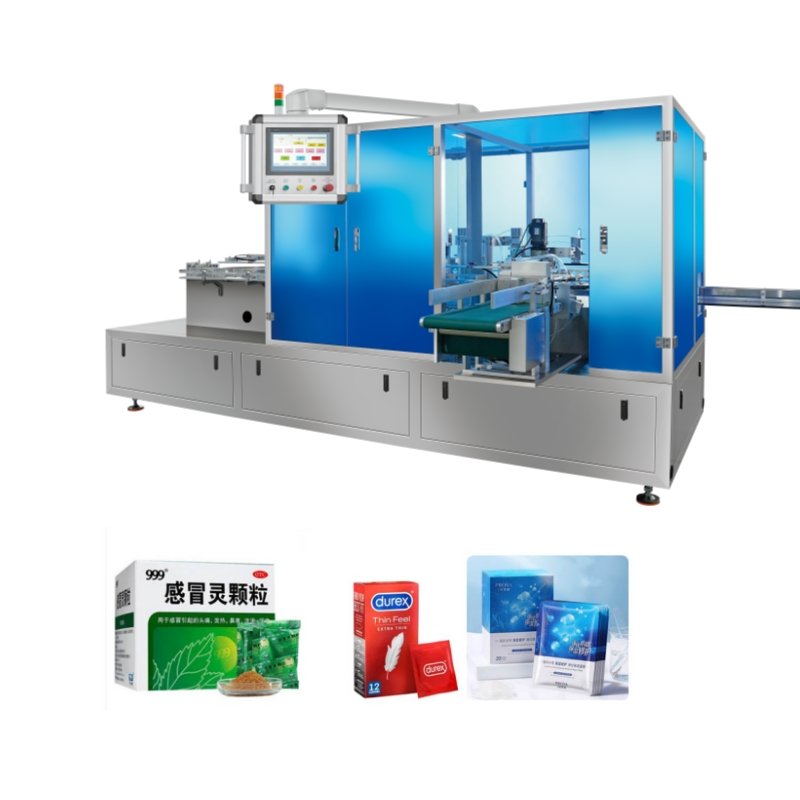
A manual loading cartoner—also called a hand-load or semi-automatic cartoner—automates some carton-handling stages while leaving product insertion to operators. A typical system picks a flat carton, erects it, presents an open end or top opening for loading, then closes and discharges the carton. The loading arrangement can be horizontal side-load or vertical top-load.
The term describes the product-loading boundary, not one fixed machine architecture. SIGMA Equipment’s hand-load guide distinguishes intermittent machines, which stop the carton for loading, from continuous-motion machines, where the carton continues to move. The distinction matters because operators on a moving-carton system must match both product pitch and machine timing.
| Configuration | Operator task | Best fit | Main procurement risk |
|---|---|---|---|
| Intermittent hand-load | Insert while carton is indexed or stationary | Variable products, lower or moderate rates, controlled loading window | Operator cycle may limit output or extend machine dwell |
| Continuous hand-load | Insert into cartons moving through the loading zone | Stable repetitive work with enough loading positions | Missed cartons and fatigue if pitch exceeds sustainable work rate |
| Automatic infeed | Replenish, supervise and recover faults | Predictable products, sustained volume, high traceability need | Product handling and integration complexity |
When Hand Loading Still Wins
Irregular or unstable products
Products that roll, flex, nest, tangle or arrive without a consistent pitch may need expensive product-specific feeding. An operator can orient and place such products with less tooling during early production. This is especially relevant for mixed kits, promotional packs and products whose packaging design is still changing.
Frequent SKU changes and short campaigns
Automatic feeding earns its value through repeated, predictable work. When a contract packer changes products several times per shift, a hand-load station can avoid extensive feed-system change parts. The decision still depends on total changeover time, cleaning requirements and the number of people required at each format.
Launch volumes with uncertain demand
A modular manual-load line can reduce the initial automation boundary while sales volume is uncertain. The machine frame, controls and guarding should leave a defined connection point for a later feeder or robot. “Upgradeable” must be documented with mechanical space, control I/O, line signals and responsibility—not left as a sales promise.
Human inspection or assembly is genuinely required
Some packs require an operator to inspect appearance, combine several components or perform a task that has not yet been validated for automation. Keep that work in the process only when the inspection criteria, training and defect response are explicit. Manual loading should not become an undocumented quality gate.
Calculate Labor Capacity Before Requesting a Quote
Cartoner speed and manual loading capacity are different numbers. Start with accepted output, not unloaded machine cycles. Observe the full operator sequence: pick, orient, inspect, insert and recover. Measure several operators and include the slowest approved product-carton combination.
Round the operator result up, then apply your plant’s allowances for breaks, replenishment, quality checks and normal variation. This is an early capacity screen, not an ergonomic approval.
Illustrative example: assume the accepted target is 24 cartons/min and the measured manual work is 6 seconds per carton. Carton takt is 2.5 seconds. The task consumes 144 labor-seconds per minute, equal to 2.4 theoretical operators. The line therefore needs at least three simultaneous loading positions before plant allowances. These are example assumptions, not HIJ machine performance data.
Ergonomics Is a Design Input, Not a Training Note
NIOSH identifies force, repetition and posture as physical stress factors and recommends measuring job tasks, cycle time-motion patterns and workstation layouts. A manual-load cartoner should therefore be evaluated as a complete workstation, including product replenishment and rejected-pack handling.
- Keep normal pick and placement within a comfortable reach zone; test short and tall operators.
- Control carton and product presentation so wrists, shoulders and the trunk are not repeatedly twisted.
- Measure product and tote weights, replenishment frequency and the distance operators carry materials.
- Provide safe access without reaching through guarding or across moving machine parts.
- Define rotation, relief and recovery using the plant’s qualified ergonomic assessment.
Training does not remove a workstation design problem. NIOSH’s manual-material-handling guidance states that engineering interventions can reduce physical demands. Use your EHS process to approve the actual layout and work method; a packaging-machine supplier should provide dimensions, access points and operating sequence, not issue a universal “safe operator rate.”
Quality Controls for Hand Loaded Cartoning
Manual insertion introduces different failure modes from an automatic feeder: missing product, wrong orientation, mixed components, damaged packs and hands entering the loading zone. Your URS should separate prevention, detection and rejection.
| Failure mode | Possible control | FAT evidence |
|---|---|---|
| Empty or incomplete carton | Presence/count detection appropriate to the product | Deliberately omit product and confirm reject plus reject verification |
| Wrong orientation | Poka-yoke fixture, operator standard work or vision where justified | Challenge each defined incorrect orientation |
| Wrong SKU or component | Line clearance, recipe control, barcode or vision based on risk | Introduce a known wrong item under controlled conditions |
| Operator misses moving carton | Loading-zone detection, accumulation or controlled empty-carton handling | Miss a load and verify downstream behavior and restart |
| Damaged carton/product | Guided insertion, defined clearances and approved materials | Run tolerance extremes and inspect accepted samples |
When to Upgrade to Automatic Product Feeding
Automation becomes stronger when the product arrives in a consistent orientation, the line runs long campaigns and direct labor or quality losses exceed the cost of the infeed. PMMI’s 2025 workforce research also reports interest in targeted automation for loading and changeovers as plants respond to skilled-worker gaps.
Build the upgrade case from your own operating data:
- annual loaded cartons by SKU and campaign length;
- direct operators per shift, shifts per year and fully burdened labor cost;
- lost output from missed loads, breaks, replenishment and operator variation;
- cost of defects, rework and quality inspection attributable to loading;
- automatic-infeed capital cost, change parts, maintenance, utilities and floor space;
- expected accepted output and changeover performance proven with samples.
Do not treat automatic feeding as universally better. It moves risk from staffing and repetitive work into product presentation, controls and integration. Compare both concepts with the same products, accepted-rate definition and FAT protocol. For the automatic route, use the automatic cartoner infeed systems guide.
URS and FAT Checklist
- Product matrix: dimensions, weight, surface, orientation, components per carton and approved samples.
- Carton matrix: drawings, board specification, grain direction, closure type and tolerances.
- Accepted output: rate by SKU after rejects, with campaign duration and upstream conditions.
- Manual method: work sequence, seconds per carton, number of positions and replenishment plan.
- Ergonomic boundary: reach, posture, force, product/tote weights, access and plant approval process.
- Quality logic: presence, count, orientation, wrong-SKU prevention, reject and reject confirmation.
- Safety: loading-zone guarding, interlocks, safe stop and recovery behavior.
- Future automation: reserved footprint, interfaces, control I/O and scope ownership.
- FAT: named samples, sustained test duration, deliberate faults, acceptance limits and retest rules.
For top-opening product placement, review the verified GSZ-60 vertical cartoning machine. If loading direction is still open, compare top-load versus side-load cartoning. Irregular products need an additional product-handling risk review.
Manual Loading Cartoner FAQ for Factory Buyers
What is a manual loading cartoner?
How many operators does a hand-load cartoner need?
When is manual loading better than automatic feeding?
Can a manual-load cartoner be automated later?
What should be tested during FAT?
Define the Right Loading Boundary
Send HIJ your products, carton drawings, target accepted output, batch pattern and line layout. We will define whether manual loading, a future-ready interface or automatic feeding fits the project scope.
Discuss Your URS & Request a Line ProposalSources and Data Notes
- HIJ keyword evidence: cleaned SEMrush dataset dated July 2026. Monthly volume and keyword difficulty are third-party estimates, not guaranteed traffic.
- SIGMA Equipment, Hand-Load Cartoner Fact Sheet, accessed July 27, 2026.
- NIOSH, Step 1: Identify Risk Factors, updated March 1, 2024.
- NIOSH, Ergonomic Guidelines for Manual Material Handling, publication 2007-131.
- PMMI, 2025 Inside the Workforce Gap, based on 136 survey respondents and 14 qualitative interviews.
- GSZ-60 facts: HIJ Machinery product document GSZ-60.doc. Manual-loading staffing example is arithmetic based on clearly labeled assumptions, not a machine-performance claim.