
Cream & cosmetic tubes
Check decorated-surface protection, cap clearance and the required presentation inside the carton. Add inserts or protective components to the format review.
Box cream, ointment and toothpaste tubes with a feeding concept built around the real tube, cap, tail seal and carton. Compare HIJ platforms, define leaflet and inspection options, and request a layout and itemised quotation.
Start with a tube photo, carton dimensions and required good cartons/min. Unknown details can follow.
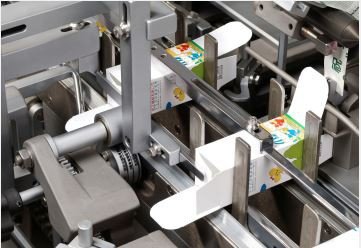
An automatic tube cartoning machine erects a folding carton, receives the filled and closed tube, inserts the specified leaflet or accessory, and closes the pack. The useful buying question is how your tube will be presented, supported and inspected at the required production rate.
Check decorated-surface protection, cap clearance and the required presentation inside the carton. Add inserts or protective components to the format review.
Define the leaflet, batch-code verification and incomplete-pack response. Document and qualification support should be agreed for the actual project.
Review long or tapered tubes, broad shoulder sections and the closed-tail profile. Confirm the carton drawing and tube arrival pattern together.
Small tubes, applicators, multiple products and display inserts need a defined counting and loading sequence. Confirm feasibility with representative samples.
Which tube materials can be reviewed? Plastic, laminate and aluminium tubes require different handling checks. Submit finished samples showing the actual fill condition, cap and sealed tail; material names alone do not establish feeder suitability.
Filled tubes can roll, flex, catch at the tail or arrive with mixed orientation. A feeder that works with an empty sample may behave differently with the production tube. HIJ reviews the complete finished pack before defining the loading concept.
Measure overall length, maximum diameter or width, taper and shoulder profile. Include tolerances and the surfaces that must remain free of scuffs.
Show cap projection, hinge or flip-top features, tail width and seal thickness. Identify which end enters the carton and where pushing force may be applied.
Record whether tubes arrive upright, horizontal, loose or in holders. Define spacing, orientation and the discharge condition of the filling and sealing machine.
Send the carton dieline, internal clearances and closure details. Add leaflet size, fold pattern, applicators and any tray that shares the loading path.
The proposed sequence must coordinate tube availability, carton opening and insert supply. Specify how the line responds to a missing tube, damaged carton or interrupted upstream flow.
Receive, separate and orient the product using the agreed infeed concept. Keep the required count and support the pack through transfer.
Feed and erect the approved blank. Match opening and holding conditions to the board, crease behaviour and carton dimensions.
Guide the tube and specified leaflet or accessory into the carton. Check tail clearance, leaflet interference and insertion damage.
Apply the selected closure and coding scope. Coordinate inspection, rejection and downstream transfer against the agreed acceptance criteria.

Use these model references to screen your carton and output requirement. They are base-platform data, not a promise that every tube, leaflet and carton combination will run at the top of the range. Final selection requires pack review and an agreed production test.
A platform reference for an automatic tube cartoner project with a defined infeed, insert and carton format set.
A continuous-motion platform reference for projects with stable tube presentation and a higher accepted-output requirement.
| WZTS-130 planning field | Reference value | What to confirm for tubes |
|---|---|---|
| Leaflet unfolded dimensions | 80–310 × 90–210 mm | Folded pack clearance, insertion sequence and detection scope |
| Compressed air | ≥0.6 MPa; 120–160 L/min | Total demand including feeder and selected ancillary equipment |
| Electrical supply | 380 V / 50 Hz | Destination supply and the complete configuration load |
| Main motor | 1.5 kW | This is the main-motor figure, not total installed line power |
| Machine dimensions | 3100 × 1100 × 1550 mm | Final layout with tube feeder, guarding and service access |
| Net weight | About 1400 kg | Final configuration and shipment arrangement |
Reference data: HIJ WZTS-130 and ZH-200 technical files. Carton ranges are model-specific; carton clearance is not the same as allowable tube dimensions. Tube output, optional equipment, current utilities and the final general-arrangement drawing must be confirmed in the quotation.
A tube cartoning machine handles secondary packaging after filling and closing. To connect it to a tube filler, define the physical handoff, orientation, rate, buffering and stop signals as part of one layout. The final line rate is constrained by the slowest accepted-output stage.
For an initial planning example, 20,000 accepted cartons across 360 productive minutes requires about 55.6 good cartons/min. This is a demand calculation; allowance for rejects, stops and changeovers must then be agreed for your production conditions.
Provide both normal and peak tube discharge rates. A buffer can accommodate short interruptions, but it cannot correct a sustained mismatch between filling output and cartoning capacity.
Ask who supplies the conveyor, orientation device, sensors, controls and mechanical supports. Specify the response to upstream starvation, cartoner stops, rejected tubes and a blocked discharge.
If a filler is already installed, send the model, discharge video, layout and available signals. If both machines are new, compare their approved handoff drawings before fixing the line footprint.
The price depends on the platform and the work it must perform on your approved packs. Compare the tube feeder, format tooling, inserts, closure, inspection and line interfaces as separate scope items. A basic cartoner price does not describe a complete installed tube packaging line.
Tube separation, orientation, supports, format parts and the number of tube/carton combinations affect the equipment scope. Include the smallest, largest and hardest-to-handle pack in the review.
Leaflet handling, applicators, coding, verification, rejected-pack handling and closure options should be named individually. Agree which functions are included and which are optional.
Clarify conveyors, controls, guarding, FAT evidence, documentation, installation, training and spare parts. Identify site responsibilities and commercial delivery terms in writing.
Request a current, itemised quote. Send the tube and carton first, then ask for the proposed loading concept, platform, accepted-output basis, included formats, options, exclusions and layout. Lead time, warranty and performance commitments belong in the project quotation.
Use representative filled tubes, approved cartons and real inserts. Agree the duration, format set and pass criteria before the trial so the results support a purchase decision.
Inspect cap damage, tail snagging, body distortion, print scuffing and any leak or damage criteria specified for the finished tube.
Challenge missing, doubled or incorrectly presented components. Confirm how incomplete packs are prevented, detected or rejected in the quoted configuration.
Record accepted cartons, rejects, stops and reasons. Test tube starvation, carton shortage, blocked discharge and the agreed restart sequence.
Change between the agreed tube/carton formats. Record settings, tools, parts, time and checks needed to produce the first accepted carton.
Send a tube photo or drawing, carton dimensions and required output. HIJ can review the loading route and propose the equipment, options and line interface scope for your application.
Have only a photo and a production target? Use the inquiry button and send those first. The optional brief can help organise the remaining details.
Fill in what you know. Your contact details and files can be added in the inquiry form.
The brief is sent only when you submit the inquiry form.
Prefer a separate page? Open the contact page. Copy the brief to keep it with your inquiry.
A tube cartoning machine packs a filled, closed tube into a folding carton, together with the specified leaflet or accessory. It handles secondary packaging; tube filling and sealing are separate operations. The feeder, loading sequence, closure and inspection scope depend on the approved pack.
Different materials may be reviewed on the same platform, but compatibility depends on the finished tube geometry, stiffness, cap, sealed tail and handling surfaces. Submit samples of each intended format and confirm the required guides, feeder settings and change parts.
The WZTS-130 reference carton range is 70–200 × 30–150 × 13–70 mm; the ZH-200 reference is 75–200 × 25–80 × 15–60 mm. These are carton dimensions, not tube dimensions. Final tube fit depends on internal clearance, the loading path and any inserts.
WZTS-130 and ZH-200 technical files list platform reference rates of 30–80 and 80–200 cartons/min respectively. Accepted tube-pack output depends on feeding, orientation, carton behaviour, inserts, rejects, stops and integration. Confirm it with agreed samples and trial conditions.
A connected line can be reviewed when the filler discharge, tube orientation, transfer height, rate and control signals are defined. Ask for a coordinated layout and clear ownership of conveyors, buffering, rejects and the response to stops or blocked discharge.
Leaflet or accessory handling can be included in the configuration review. Provide dimensions, fold pattern, quantity and required position. Feeding and insertion must be proven together with the tube and carton; each additional component should appear in the quotation scope.
Choose the closure around the carton design, pack appearance, opening requirement and production conditions. Neither method proves tamper evidence by itself. Review glue equipment, adhesive, carton quality and closure acceptance criteria as part of the selected configuration.
Start with a finished tube photo or drawing, carton dimensions, tubes per carton and required good output. Then add leaflet or accessory details, the format list, filler interface, coding, inspection, FAT and document requirements. Unknown details can be confirmed during the project review.
Send the tube, carton and production requirement to start a feeding, layout and quotation review.