Cartoning Machine for Tubes and Cosmetics: A Buyer’s Guide
Choose the loading route around the finished pack, then compare surface protection, format changes, carton closure and the handoff from your filling line.
A cartoning machine for tubes and cosmetics places a finished tube, bottle or other approved cosmetic pack into a folding carton with the specified inserts. It is a secondary-packaging step after filling and closing. For tubes, compare the body, cap, sealed tail, orientation and carton clearance before choosing the feeder and loading route.
Looking for a tube cartoning machine to buy?
Compare HIJ platform references, tube feeding requirements and line interfaces, then send your pack for a configuration review.
- Define the finished pack: the tube, cap, sealed tail, carton and insert belong in the same review.
- Test the cosmetic finish: agree acceptable scuffing, distortion, closure appearance and code readability.
- Measure the complete changeover: include parts, settings, checks and the first accepted carton.
- Compare the complete quotation: feeder, format parts, inserts, coding, inspection and line interfaces.
How to choose the loading route for cosmetic tubes
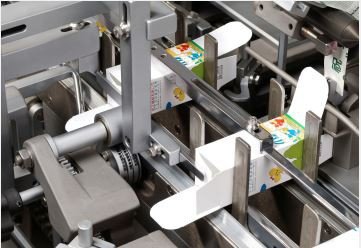
Many tube applications are candidates for horizontal end-loading because the tube can be guided along a controlled insertion path. This does not make every horizontal cartoner suitable, or every vertical route unsuitable. The mechanism must match the product orientation, support requirements and carton opening.
Review the whole insertion path
A filled tube may roll, flex or catch at its sealed tail. A flip-top cap, broad shoulder or applicator can also create an interference point. Review where the product is supported, which end enters the carton and where insertion force is applied.
For bottles, jars and airless pumps, make the same decision from their actual stability and geometry. A shared cosmetic product category does not establish shared feeder or format tooling.

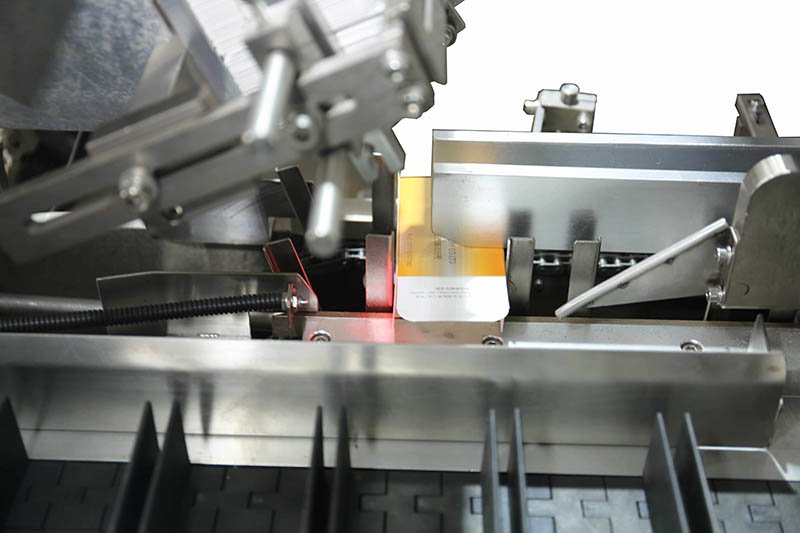
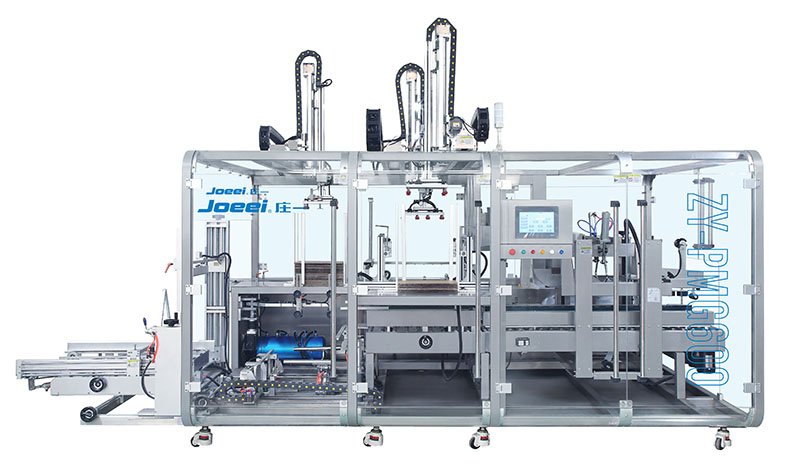
Ask for a concept showing tube receipt, orientation, separation, loading and rejected-product handling. Confirm it with production samples rather than relying on a generic machine photograph or a loading-direction label.
Tube, bottle and jar formats need different checks
A cosmetic cartoning machine may be configured for different products, but each intended format needs its own review. Include the most difficult pack in the sample set, not only the easiest one. Finished samples should represent the actual fill condition, surface and closure.
| Pack type | Important details | What to verify |
|---|---|---|
| Plastic or laminate tube | Body stiffness, cap projection, shoulder and sealed tail | Orientation, support, tail clearance and resistance to scuffing or distortion |
| Aluminium tube | Filled shape, crimped tail and surfaces sensitive to dents | Guide contact, insertion-force location and the approved damage criteria |
| Bottle or airless pump | Overall height, pump projection, stability and label finish | Separation, presentation, cap clearance and protection of decorated surfaces |
| Jar or irregular container | Diameter, lid geometry, mass and insert or tray requirement | A stable loading route and whether a dedicated carrier or tray is needed |
| Multi-item or promotional kit | Product count, accessories, leaflet and final presentation | Counting, assembly order, loading clearance and incomplete-pack handling |
One base machine may support an agreed format set through different settings, guides or change parts. Confirm those items in the quotation. Do not assume that changing an HMI recipe also changes physical tooling, feeder geometry or the permitted carton envelope.
Protect the appearance of the finished cosmetic carton
In cosmetic packaging, quality includes how the product looks after it has travelled through the machine. Gloss coatings, foil decoration and printed tubes can make minor handling damage visible. Define the accepted appearance with your packaging team before testing the line.
Tube surface & shape
Check scratches, print rub, dents and body deformation. Include the cap and tail in the inspection, and agree where contact is allowed.
Carton print & edges
Review guide marks, crushed corners, crease damage and opening behaviour using the actual decorated board and production artwork.
Finished presentation
Check tube orientation, leaflet position, insert alignment, closure appearance and readable codes against approved examples.
Keep accepted and rejected examples from the trial. A phrase such as “premium finish” is hard to use as an acceptance criterion; photographs, measured tolerances and agreed defect examples give the buyer and supplier a clearer basis.
Measure changeover from last good pack to first accepted pack
Frequent SKU changes make format flexibility valuable, but a changeover claim needs a defined start and end. Measure from the last accepted carton of the old format to the first accepted carton of the new format under the agreed conditions.
Include the actual work
- Remove old tubes, cartons, inserts and other materials.
- Exchange specified parts and adjust guides or conveyors.
- Set the recipe, coding, sensors and closure equipment.
- Complete checks and confirm the first accepted pack.
Record the trial conditions
- Which old and new formats were used?
- How many people and tools were required?
- Which parts were changed and which were adjusted?
- How much trial material and reject handling was needed?
Tool-free adjustment and stored recipes can be useful features where they are supplied, but they do not establish a universal changeover time. Ask for a trial using your planned format pair and a repeatable work instruction. Read the cartoning changeover guide.
Tuck-in or hot-melt closure for cosmetic cartons?
Choose the closure from the carton design, appearance, opening requirements and production conditions. The choice should also account for consumables, glue equipment, cleaning and checks needed during operation.
Tuck-in closure
Review flap geometry, crease behaviour, closing alignment and the appearance after handling. Confirm that the carton stays closed under the agreed transport and handling conditions.
Hot-melt closure
Specify adhesive, application pattern, bonding surfaces and the closure test. Include the glue unit, warm-up, consumables and maintenance scope in the quotation.
Tamper evidence needs a pack design and a test. A glued carton is not automatically proof of a tamper-evident package. If tamper evidence is required, define the expected evidence of opening and verify the complete tube, carton and closure system.
Connect the cartoner to the cosmetic filling line
Tube filling and sealing happen upstream of cartoning. The machines need an agreed handoff so that a finished tube reaches the cartoner in the required orientation, spacing and condition. Name who supplies the conveyor, transfer devices, buffering and control interfaces.

Agree the response to interruptions
- What happens when tubes stop arriving?
- How does the filler respond when the cartoner stops?
- Where are rejected tubes or cartons collected?
- What happens when downstream discharge is blocked?
- Which checks are required before restart?
Compare accepted line output over the test period, including rejects, stops and format changes. A buffer may absorb a short interruption, but it cannot resolve a sustained rate mismatch. Send a discharge video and layout if the filler is already installed.
Review tube filling and sealing equipment or discuss complete line planning.
Documentation and cosmetic quality requirements
Choose the equipment documentation around your product, quality programme and destination requirements. Useful project records may include drawings, materials information, operation and maintenance instructions, cleaning access, settings, spare parts and factory test results.
ISO 22716 addresses cosmetic GMP guidance across production, quality control, storage and shipment. For procurement, translate your applicable quality requirements into the machine and document scope. Ask for the specific supporting evidence instead of treating a general “GMP-ready” label as project approval.
Cosmetics and pharmaceutical products can share some equipment concepts, but the product classification and required controls should be reviewed for the actual project. Do not remove leaflet, coding or document requirements simply because another cosmetic line did not need them.
Prove the proposed machine with a pack trial
A useful trial tests both normal production and the conditions most likely to cause rejects. Use filled production tubes, approved decorated cartons and actual inserts. Agree how good output, damage, incomplete packs and closure quality will be counted.
Difficult formats
Run the smallest, largest or most sensitive agreed packs. Check loading clearance and finished appearance, not only successful carton closure.
Fault challenges
Test missing product or inserts, carton supply interruptions and blocked discharge. Record the response of the quoted detection and rejection functions.
Output & recovery
Record accepted cartons, rejects, stops and reasons for the agreed duration. Demonstrate restart and the planned format change.
Use the cartoning machine FAT checklist to organise the acceptance basis.
Buyer checklist: what to send for a useful quotation
Start with a finished tube photo, carton dimensions and required output. The remaining details can be confirmed during the project review. Compare the base platform, feeder, format parts, inserts, closure, coding, inspection and line interfaces as separate scope items.
Copy the brief into your inquiry and attach available pack photos.
Turn the checklist into a machine configuration
Compare HIJ tube cartoning platform references and request a quotation for your finished pack.
Frequently asked questions
What is a cartoning machine for tubes and cosmetics?
It is secondary-packaging equipment that puts a finished tube, bottle or other approved cosmetic pack into a folding carton with the specified inserts. Filling, tube sealing and bottle capping are separate upstream operations.
Is horizontal loading always best for cosmetic tubes?
Horizontal loading is a route to review for controlled tube insertion, but loading direction alone does not establish suitability. The finished tube, sealed tail, cap, carton clearance, feeder and support mechanism should determine the proposed design.
Can one cosmetic cartoning machine handle tubes, bottles and jars?
An agreed format set may share a base platform, with different feeder settings, guides or change parts. Confirm each product, carton and insert combination through sample review and the quoted format scope; do not assume all cosmetic packs share the same tooling.
How should we verify cosmetic cartoning changeover time?
Agree the old and new formats, people, tools and checks. Measure from the last accepted old-format carton to the first accepted new-format carton, including parts, settings, material clearance and trial rejects.
Does hot-melt glue automatically make a carton tamper evident?
No. Tamper evidence depends on the pack and closure design and the defined evidence of opening. Specify the requirement and test the finished package; the presence of a glue unit alone does not establish it.
How can we avoid scuffed cartons or damaged tubes?
Review the contact points, tube support, insertion force and carton handling using real decorated packs. Define accepted and rejected examples, then test the proposed guides and settings under the agreed production conditions.
Can cartoning connect to an existing tube filling line?
A connected line can be reviewed when the discharge height, orientation, rate, transfer method, available signals and stop response are defined. Send the filler model, discharge video and layout, and agree who supplies each interface.
Where can I compare tube cartoning machine models and request a quote?
Visit the HIJ tube cartoning machine commercial page for platform references, feeding requirements and quotation inputs. Send your tube, carton and output requirement to start the configuration review.
Continue your packaging selection
Start with your tube, carton and output requirement
Compare the equipment route, then request a feeding concept, layout and itemised quotation for your finished pack.
Data and scope: This article is an application selection guide. HIJ model reference values are maintained on the linked commercial pages. Confirm product fit, sustained accepted output, format parts and document scope against the current project quotation and agreed pack trial.