Published: July 24, 2026 · Technical purchasing guide
An automatic cartoner infeed must do more than move products toward the machine. It must present each product in the correct orientation, at the correct pitch, when an erected carton and any required leaflet are ready. If those conditions are not synchronized, the rated cartons-per-minute figure will not become stable production output.
This guide is for production engineers and procurement managers defining an infeed system for bottles, blister packs, tubes, sachets or other regular products. It shows how to translate the product and pack format into a URS, where misfeeds originate, and what to challenge during factory acceptance testing (FAT).
Automatic Cartoner Infeed — Decision Summary
- Start with the product state, not the cartoner speed: record how products arrive, their orientation, spacing, stability and permissible contact surfaces.
- Define one control handshake: upstream product-ready, cartoner-ready, product-present, carton-present and reject status must produce an agreed machine response.
- Test the operating window: FAT should cover the approved low and high carton tolerances, leaflet formats and upstream rate variation—not only one ideal sample at nominal speed.
- Separate three failure zones: product infeed, carton pick/opening and leaflet feed require different sensors, causes and corrective actions.
- Use the complete SKU matrix: the WZTS-130 reference envelope is 70–200 × 30–150 × 13–70 mm cartons, 300–350 g/m² board and 1–4 leaflet folds; your approved range must be confirmed against actual samples.
Data basis: HIJ WZTS-130 quotation and technical specification; model limits must be confirmed against the buyer’s product, carton and leaflet samples.
What an Automatic Cartoner Infeed Controls
The infeed is the interface between the upstream process and the cartoner’s product pockets or bucket conveyor. Its job is to receive, meter, orient and release the product on the cartoner pitch. A complete cartoning sequence also coordinates carton blank pick-up, carton opening, leaflet presentation, product insertion, closing and rejection.
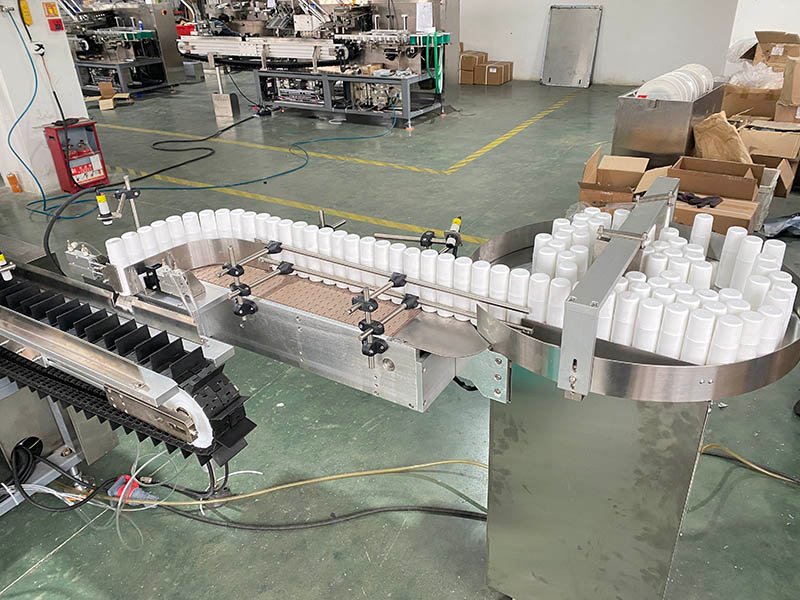
That distinction matters during procurement. “Automatic infeed” can describe a simple indexed conveyor, a bottle screw or star wheel, a stacking and collating unit, a pick-and-place cell, or a custom transfer from the upstream machine. These are not interchangeable. A stable bottle can be indexed mechanically; an unsupported sachet may need controlled settling and presentation; a blister stack needs counting, alignment and protection from edge damage.
Write the URS around the interface conditions. Specify the incoming product state, minimum and maximum upstream rate, required accumulation, product-contact restrictions, orientation tolerance, changeover scope and the response to a missing, doubled or incorrectly positioned product. The cartoner supplier can then select the mechanism instead of quoting a generic conveyor that leaves the critical transfer undefined.
Use a Five-Signal Control Loop, Not a Standalone Conveyor
Mechanical transfer and control logic must be designed together. The infeed should not release a product merely because a conveyor is running; it should release against a known cartoner position and an available packaging set. For a line with leaflet insertion, the control decision should account for product, carton and leaflet status before the completed pack is accepted.
Five statuses should be unambiguous in the functional specification: upstream product available, cartoner available, product present at transfer, packaging components present, and reject or fault confirmed. The exact I/O architecture is project-specific, but the required response should be testable. For example, the protocol should state whether a missing product inhibits carton feed, creates an empty-carton reject, stops the line, or triggers a defined alarm.
Do not accept “sensor included” as a functional description. Ask the supplier to mark each sensor on the layout, name the condition it detects, and show the PLC response and recovery sequence in the FAT protocol.
Match the Infeed Mechanism to Product Behavior
Bottles and rigid containers
Define diameter or width, height, center of gravity, cap or closure sensitivity, incoming orientation and whether the container can tolerate back pressure. The feeding device must singulate the bottle and place it consistently into the transfer pocket. If an upstream filler releases bottles intermittently, the infeed also needs a controlled accumulation strategy so the cartoner is not alternately starved and flooded.
Blister packs and flat products
Specify single or stacked count, stack height, allowable edge contact and the permitted orientation error. Counting and collating are part of the infeed scope, not an assumption. FAT samples should include the most flexible or easily scratched pack and the maximum approved stack.
Tubes, sachets and unstable products
Record which face must lead, whether the product must settle before insertion, and which areas cannot be clamped or pushed. A tube cap, sachet seal or bulky product end can change the insertion envelope even when the nominal product width is unchanged. The product drawing should therefore identify both body dimensions and local protrusions.
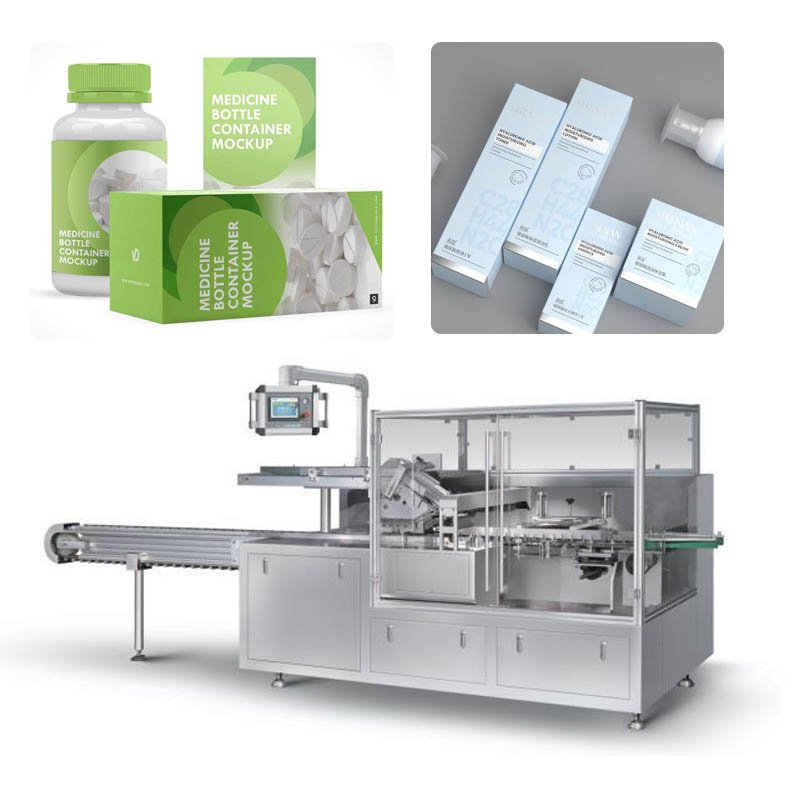
The WZTS-130 automatic cartoning machine is specified for bottles, blister packs, tubes, sachets and other regular products, with an adjustable automatic feeding mechanism. The final infeed configuration still depends on approved samples and the upstream discharge condition.
Why Carton Misfeeds Occur
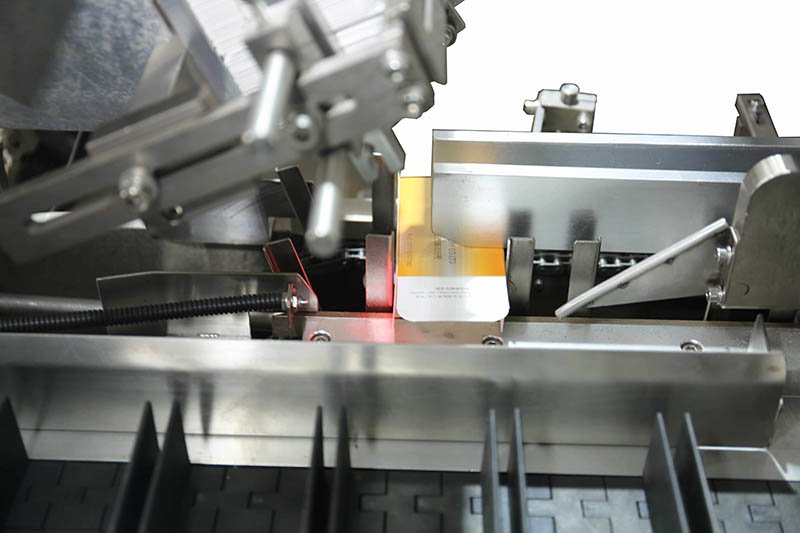
A carton misfeed is not a single fault. It can begin before the carton magazine, at vacuum pick-up, during opening and squaring, at product insertion, or during flap closing. Treating every event as a “carton quality problem” delays root-cause work and can result in unnecessary mechanical adjustment.
| Observed symptom | Likely zone | Evidence to collect | URS or FAT control |
|---|---|---|---|
| Product arrives late or between pockets | Upstream handoff and pitch synchronization | Arrival timing, backlog state, encoder/index signal and pocket occupancy | Define rate variation, accumulation and the late-product response |
| Two products enter one pocket | Singulation or counting | Sensor position, minimum product gap and double-feed sample | Challenge single, double and missing-product conditions |
| Carton is not picked from the magazine | Blank separation, vacuum or magazine presentation | Board condition, blank flatness, magazine level, vacuum and pick timing | Run approved board tolerances and low-magazine condition |
| Carton opens out of square | Carton geometry, pre-break or opening mechanism | Crease quality, glued seam, opening angle and guide position | Approve carton drawings and test low/high dimensional samples |
| Pusher contacts the product or carton edge | Product alignment and insertion window | Product position, local protrusions, carton squareness and pusher phase | Use worst-case product and carton combinations during FAT |
| Incomplete pack reaches discharge | Presence detection and reject verification | Product, leaflet and carton status plus reject confirmation | Create deliberate missing-item faults and document every response |
Use the matrix as a diagnostic sequence. First identify where the product, blank or leaflet departed from the expected state. Then verify the sensor signal and machine response. Mechanical correction should follow evidence, not precede it.
Build a Sample Matrix Around the Real Operating Window
One golden product and one ideal carton cannot demonstrate a stable infeed. Before design approval, create a matrix that crosses the product extremes with the packaging extremes. Include the smallest and largest product, lowest and highest approved carton dimensions, board-weight range, leaflet size and fold pattern, plus any closure variation.
The verified WZTS-130 technical data provides a useful reference envelope: 30–80 cartons/min; carton dimensions of 70–200 × 30–150 × 13–70 mm; 300–350 g/m² carton board; 60–70 g/m² leaflets; unfolded leaflet dimensions of 80–310 × 90–210 mm; and 1–4 folds. These figures describe model capability, not automatic approval of every combination. A large folded leaflet inside the smallest carton, for example, is a different insertion challenge from evaluating both limits separately.
For the URS, list each production SKU and identify the planned infeed recipe, format parts, target sustained rate and acceptance sample. If a format falls outside the supplier’s proven sample set, mark it for trial rather than accepting a general statement of compatibility. The separate WZTS-130 specification page can support utilities and layout review, while the project protocol should control your exact sample combinations.
FAT Tests That Expose Infeed Risk
A useful FAT does not only confirm that the machine cycles. It proves that the selected infeed, carton handling and detection logic meet defined acceptance criteria. Agree the test duration, production samples, challenge frequency, acceptable reject handling and data to be recorded before the visit.
Automatic Cartoner Infeed FAT Checklist
- Confirm every SKU, product drawing, carton drawing and leaflet drawing against the approved sample list.
- Record product arrival state, orientation, spacing, upstream minimum/maximum rate and accumulation requirement.
- Verify the infeed recipe and every mechanical adjustment or change part used for each tested format.
- Challenge no-product, double-product, late-product and incorrectly positioned product conditions.
- Challenge no-carton, failed carton pick, carton not fully open and low-magazine conditions.
- Where a leaflet is included, challenge missing leaflet and incorrect presentation conditions.
- Confirm the response to each fault: inhibit, controlled stop, alarm, reject and restart sequence.
- Verify that rejected packs are positively removed and do not re-enter accepted output.
- Run approved low and high packaging tolerances, not only nominal carton and leaflet samples.
- Record sustained accepted output separately from mechanical cycle rate and gross discharge count.
- Document utilities under test. The WZTS-130 reference requirement is 380 V/50 Hz, 1.5 kW main motor power, compressed air at ≥0.6 MPa and 120–160 L/min.
- Close every deviation with an owner, corrective action and retest evidence before shipment release.
If the project is still at selection stage, use the seven-step cartoning machine selection guide to define loading direction, motion type and validation scope before finalizing the infeed. If the budget is being prepared, separate the base cartoner from product feeder, leaflet folder and closure options using the cartoning machine price guide.
Information the Supplier Needs Before Quotation
A reliable quotation needs more than a target speed. Send product samples and dimensioned drawings; carton blanks and drawings; leaflet samples, paper weight and folding pattern; the upstream machine discharge description; the required accepted output; available floor space; utilities; closure method; coding and inspection scope; validation-document expectations; and the required FAT challenge list.
Also state which items are supplied by the buyer and which belong to the cartoner vendor. The boundary should identify mechanical transfer, electrical signals, guarding, conveyors, controls, reject collection, format parts and installation responsibility. This prevents an “automatic cartoner” quotation from excluding the interface that makes it automatic.
Frequently Asked Questions
What is an automatic cartoner infeed?
An automatic cartoner infeed receives products from an upstream process, meters and orients them, and releases each product or group at the cartoner’s machine pitch. The selected mechanism may be an indexed conveyor, screw, star wheel, collator or pick-and-place system. Selection depends on product geometry, incoming state, target output and the required response to missing or incorrectly positioned products.
What causes carton misfeeds in an automatic cartoning machine?
Carton misfeeds can originate from blank separation, magazine presentation, vacuum pick-up, carton crease or seam quality, opening and squaring, product alignment, insertion timing or presence detection. Record the failed station, sensor state and machine index before adjustment. This separates a product-infeed fault from a carton-pick or carton-opening fault and makes corrective action testable.
Which samples should we send for an infeed trial?
Send the smallest and largest approved products, the most unstable or damage-sensitive format, low and high carton tolerances, each leaflet fold pattern and any closure variants. Include drawings and expected upstream presentation. The supplier should test worst-case product-and-pack combinations, not only nominal samples, and record the configuration and accepted output for each format.
What should an automatic cartoner infeed FAT include?
FAT should verify every approved format, sustained accepted output, change parts, control handshakes and deliberate fault challenges. Test missing, doubled, late and misaligned products; failed carton pick or opening; missing leaflet where applicable; reject confirmation; alarm and restart behavior; low-magazine condition; and approved packaging tolerances. Record deviations, corrective actions and successful retest evidence before shipment release.
Does the rated cartoner speed determine the required infeed?
No. Rated speed is only one input. The infeed must also match upstream rate variation, product orientation, accumulation, grouping, surface protection, carton availability and reject logic. Specify sustained accepted output for defined samples and conditions. This gives procurement and production teams an acceptance measure that is more useful than an unloaded mechanical cycle rate.
Next Step for Your Cartoning Project
Prepare the SKU and sample matrix before requesting a final line configuration. HIJ can review your product geometry, carton and leaflet tolerances, upstream discharge, target accepted output, utilities and FAT scope against the WZTS-130 platform or another cartoning configuration.
HIJ Machinery (Wenzhou) is a pharmaceutical packaging machinery manufacturer based in Rui’an, Wenzhou, Zhejiang, China, formerly operating under the TRUSTAR brand. HIJ engineers product-specific cartoning and packaging systems from URS definition through FAT and site qualification support. Equipment and document scope are confirmed for each model and project to support the customer’s own DQ/IQ/OQ/PQ process.
Website: https://hijpackingmachine.com/ · Email: [email protected] · WhatsApp: +86 13868822120
Request an Infeed Review and Line Proposal
Send your product, carton and leaflet samples, target accepted output and upstream line details. HIJ’s engineering team will review the transfer method, control boundary and FAT scope before quotation.
Request Line Layout & Quotation