
Roll-fed plastic ampoule FFS
Film unwinding, forming, dosing, sealing, coding and cutting are combined. This is the route represented by the GGS-118P5 data on this page.
View the plastic ampoule platform →Build a comparable budget around the ampoule route, fill volume, product behavior, tooling, utilities, acceptance tests and service scope—not around an unsupported headline price.
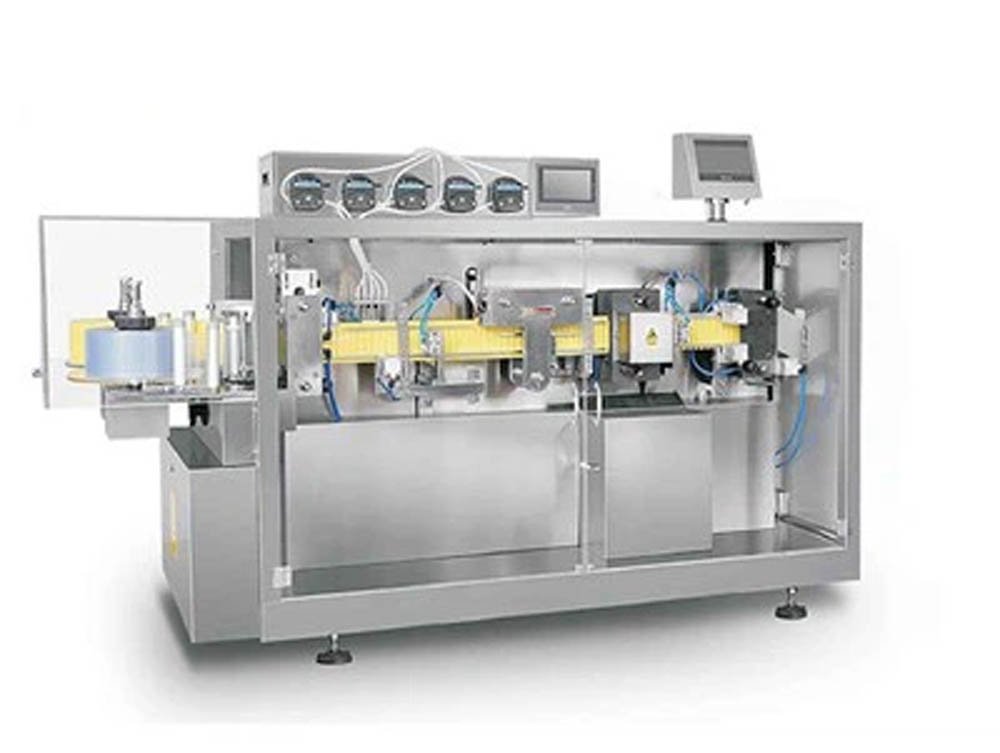
A price comparison is only useful after the package route is fixed. A roll-fed plastic ampoule machine forms the container from film, fills it and seals it in one indexed process. A preformed plastic or glass ampoule line starts with finished empty containers. Blow-fill-seal creates the container by extrusion and belongs to a different equipment class.
Film unwinding, forming, dosing, sealing, coding and cutting are combined. This is the route represented by the GGS-118P5 data on this page.
View the plastic ampoule platform →Empty containers are fed and oriented before filling and closure. Container tolerances and closure geometry control tooling and change parts.
Glass handling, filling, flame sealing, cooling and breakage control create a different machine and factory-acceptance boundary.
Resin extrusion, container forming, filling and sealing occur inside an integrated process. Do not compare it as a simple option on a roll-fed machine.
Review the BFS route →First quotation decision: send one empty pack, one filled pack, the controlled drawing, fill volume, product description and opening method. HIJ can then confirm which route should be quoted.
The machine frame is only one line item. Tooling, dosing, film, inspection, utilities, documentation and site work can change both purchase cost and usable output. Require each decision to be stated separately.
| Price driver | What must be defined | Why it changes scope | Evidence to request |
|---|---|---|---|
| Ampoule route | Roll-fed plastic, preformed plastic, glass or extrusion BFS | Changes the entire forming, feeding and sealing architecture | Approved sample, drawing and package route |
| Format range | Fill volume, cavity shape, pitch and cut profile | Controls mold count, material width and change parts | Format matrix with shared and dedicated parts |
| Product path | Viscosity, foaming, particles, temperature and compatibility | Determines pump, hopper, tubing, nozzle and cleaning design | Representative-product filling trial |
| Accepted output | Good packs per minute at a stated volume and format | Rated cycles do not equal accepted production | Timed FAT run with rejects and stops recorded |
| Controls and inspection | Registration, code checks, missing-fill detection and reject logic | Adds sensors, software, validation and reject hardware | Cause-and-effect and challenge-test list |
| Project services | Documents, FAT, shipping, installation, training and site support | Changes the delivered boundary beyond the machine | Line-by-line inclusion and exclusion schedule |
The following figures come from the supplied GGS-118P5 quotation and technical sheet. They are a starting point for engineering review, not a promise that every product and ampoule format will achieve the same result.
Price and output should be evaluated across the complete pack-making sequence, using the approved product and film.
Feed the approved packaging web under controlled alignment and tension.
Heat and shape the film with tooling made to the approved cavity drawing.
Match the pump and nozzle path to product flow, fill range and cut-off behavior.
Develop the time, temperature and pressure window for the selected materials.
Apply batch information and confirm readable placement when printing is specified.
Separate the agreed profile and transfer acceptable ampoules without damaging the seal.
| 2025 quotation item | Historical reference | Decision |
|---|---|---|
| GGS-118P5 base machine | USD 20,800 | Reconfirm present specification and commercial terms |
| Additional mold | USD 3,200 | Required when shape or size needs dedicated tooling |
| Air compressor | USD 1,950 | Confirm site air supply and voltage |
| Chiller | USD 2,150 | Confirm cooling load and site water conditions |
All figures above are from the dated source quotation and must be refreshed before budgeting.
A complete request reduces back-and-forth and makes competing quotations easier to compare.
Any validation or regulatory deliverable must be explicitly listed in the signed quotation; do not assume it from a webpage label.
The supplied quotation dated August 18, 2025 lists one GGS-118P5 roll-fed plastic ampoule machine at USD 20,800 FOB Ningbo. That historical figure is not a current offer. Today’s price depends on ampoule route, fill range, molds, product path, utilities, inspection, documents, freight and service scope.
The source quotation states one GGS-118P5 machine, one mold and one peristaltic-pump set for water-like liquid. Optional equipment, additional formats, logistics and project services must be itemized separately.
The same 2025 quotation lists an additional mold at USD 3,200. Treat this only as a dated reference; final tooling price depends on the approved shape, size, film and cut profile.
The supplied technical sheet lists a 0.3–200 ml filling range. The pump, product behavior, ampoule geometry and acceptance method still need to be confirmed for each project.
No. Accepted output is constrained by forming, dosing, sealing, coding, cutting, material behavior, rejects, stops and downstream handling. State the required good packs per minute and prove it during an agreed FAT run.
No. A roll-fed machine forms packs from film and then fills and seals them. Blow-fill-seal extrudes the container and integrates forming, filling and sealing in another process architecture.
Send product information, empty and filled samples, the ampoule drawing, film structure, fill-volume range, required accepted output, utilities, inspection requirements, FAT expectations, destination and requested services.
Only if those items are explicitly included. Ask for Incoterm, freight, insurance, site handling, installation, commissioning, training and travel responsibilities to be shown as separate inclusions or exclusions.
Send the product, samples, drawing, film, fill range, accepted-output target and destination. HIJ can return a machine route, tooling list, options, test basis and commercial boundary that you can compare line by line.
Historical prices on this page are evidence from a dated source quotation—not a current public offer.