
HIJ Factory · 2026 Price Guide
Cosmetic Packaging Machine Price
Transparent, factory-direct pricing — see indicative cost ranges by machine type, what drives the price, and how to get an exact quote in one business day.
Manufacturer-Direct
No Middleman Markup
Itemized Quotes
From $8kSingle Machines
Quote 24hItemized
Price Overview
How much does a cosmetic packaging machine cost?
A cosmetic packaging machine typically costs between about $8,000 and $90,000 for a single automatic machine, while a complete turnkey line can run from roughly $25,000 to $350,000+. The exact price depends on the machine type, output speed, number of filling heads, automation level and options.
Because HIJ is the manufacturer, pricing is factory-direct with no trading markup, and every quote is itemized so you can see exactly what you pay for. The ranges below are indicative (USD, ex-works) to help you budget — request a quote for an exact, configured price.
$8k–$90kSingle automatic machine
$25k–$350k+Turnkey line
Factory-directNo middleman markup
24 hoursTo an itemized quote
Price by Machine Type
Cosmetic packaging machine price ranges
Indicative USD ex-works ranges to help you budget. Tap any row to see the machine, then request an exact quote.
Cream & Lotion Filling Machine
$8,000 – $40,000
View machine
Tube Filling & Sealing Machine
$9,800 – $45,000
View machine
Sachet Packaging Machine
$11,000 – $62,000
View machine
Ampoule / Serum Filling Machine
$12,000 – $58,000
View machine
Wet Wipes Packaging Machine
$15,000 – $90,000
View machine
Lipstick / Color Cosmetics
$16,000 – $140,000
View machine
Automatic Filling Line (turnkey)
$25,000 – $350,000+
View line
* Indicative only, USD ex-works (EXW). Final price depends on configuration, output, options and shipping terms. Not a binding offer.
Budgeting a tube line for SPF products? Full sunscreen tube filling machine price details — base configuration from US$19,500 FOB including mold set and water chiller — are on the TF-60 page.
Price Factors
What affects the price of a cosmetic packaging machine?
Six factors move the cost up or down. Tell us your targets and we optimize for your budget.
Automation Level
Semi-automatic is the lowest cost; automatic and fully automatic add throughput and price.
Output Speed
Faster machines (more bottles/tubes/sachets per minute) cost more than entry-level speeds.
Number of Heads / Lanes
More filling heads or sachet lanes increase output — and the machine price.
Containers & Change Parts
Multiple container formats and change parts for quick changeover add to the cost.
Options & Compliance
Nitrogen flush, coding, UL components, CIP and validation docs are priced as options.
Shipping & Terms
EXW vs FOB/CIF/DDP and destination affect landed cost; the machine price stays the same.
What's in the Price
What's included & how you pay
An HIJ quote is itemized, so you know exactly what the price covers.
| Machine & tooling | Configured machine with the change parts for your containers |
|---|---|
| Factory testing | Full FAT (factory acceptance test) before shipment |
| Documentation | CE, manuals, electrical drawings; IQ/OQ support on request |
| Spare-parts kit | Recommended wear & spare parts for first-year operation |
| Commissioning | Video install guides + remote commissioning; on-site engineer optional |
| Warranty | 12 months on the machine |
| Payment terms | T/T (deposit + balance) or L/C |
| Currency | Quoted in USD; INR / other reference on request |
| Incoterms | EXW, FOB, CIF or DDP (affects landed cost, not machine price) |
* Optional items (nitrogen flush, extra heads, UL components, on-site installation) are listed separately in your quote.
Single Machine vs Line
Budgeting by scope & automation
A single machine is the lowest entry cost; a full line costs more but cuts labor and lifts output. Indicative USD ranges:
Single semi-automatic machine $8k–$25k
Best for startups, small batches and pilot production.
Single automatic machine $20k–$90k
Higher speed and accuracy for steady, mid-volume output.
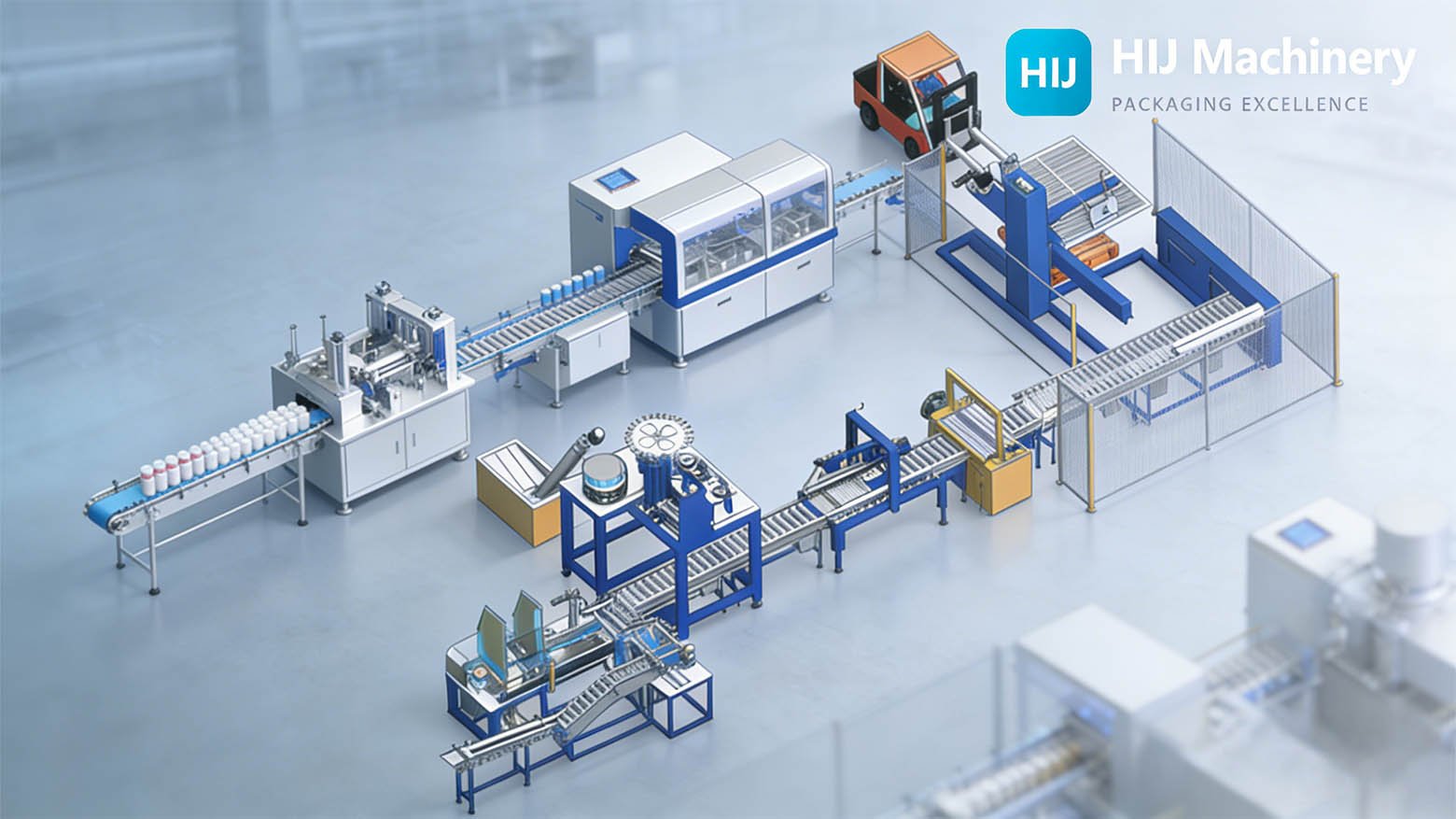
Fully automatic turnkey line $25k–$350k+
End-to-end feeding to case packing with 1–2 operators.
Get an Exact Price
Your itemized quote in 3 steps
Indicative ranges help you budget; here's how to get a precise, configured price.
1
Tell us your needs
Share your product, container, target output and any options you need.
2
We spec the machine
Our engineers recommend the right configuration and, for lines, a layout.
3
You get an itemized quote
A clear USD quote (with INR/other reference) within one business day.
Value, Not Just Price
Why factory-direct gives you a better price
HIJ designs, builds and exports from our own factory — not a trading desk. You pay the manufacturer's price, not a reseller markup, and you get the engineer who built the machine, transparent itemized quotes and lower lifetime cost.
- Manufacturer-direct pricing — no middleman markup
- Itemized quotes — see exactly what you pay for
- Durable SUS304/316L build for low maintenance cost
- Spare-parts kits & remote support reduce downtime
- Modular design lets you scale without rebuying
FAQ
Cosmetic packaging machine price — FAQs
How much does a cosmetic packaging machine cost?
A single automatic cosmetic packaging machine typically costs about $8,000 to $90,000, and a complete turnkey line ranges from roughly $25,000 to $350,000+. The exact price depends on machine type, speed, heads, automation level and options.
What is the cheapest cosmetic packaging machine?
Entry-level semi-automatic machines start around $8,000. They suit startups and small batches; you can upgrade to automatic or fully automatic as volume grows.
What affects the price the most?
Automation level and output speed have the biggest impact, followed by the number of filling heads or lanes, container change parts, and options such as nitrogen flush, coding, UL components and CIP.
What is included in the quoted price?
The configured machine and change parts, full factory acceptance testing, CE documentation and manuals, a recommended spare-parts kit, video guides and remote commissioning, and a 12-month warranty. Optional items are listed separately.
What payment terms and currency do you offer?
Quotes are in USD (with INR or other reference on request), with payment by T/T (deposit plus balance) or L/C. Incoterms can be EXW, FOB, CIF or DDP.
Why is HIJ's price competitive?
HIJ is the manufacturer, so you pay factory-direct pricing with no trading markup, get itemized quotes and benefit from a durable build and spare-parts support that lower lifetime cost.
Get your exact cosmetic packaging machine price
Tell us your product, container and target output. Our engineers reply within one business day with an itemized, configured quote — free, no obligation.
Reply within 1 business day · Your details stay confidential