
Trusted by 200+ cosmetic brands in 50+ countries
Cosmetic Filling Machines for Creams, Lotions & Liquids
Servo-driven cosmetic filling machines that dose creams, lotions, serums, oils and liquids into tubes, bottles, jars, ampoules and sachets at ±0.5% fill accuracy. Tube filling & sealing systems from US $19,500 FOB — cGMP-ready design, CE-marked, built under ISO 9001, customized to your container and formulation.
±0.5%Fill accuracy
$19,500Entry price (FOB)
30 daysStandard lead time
<72hQuote turnaround
cGMP-Ready Design
CE-Marked
ISO 9001 Manufacturing
12-Month Warranty
Quick answer
A cosmetic filling machine is automated equipment that doses creams, lotions, serums, gels, oils and liquids into tubes, bottles, jars, ampoules or sachets with repeatable accuracy. HIJ cosmetic filling machines use servo-driven piston or peristaltic dosing to hold ±0.5% fill accuracy, run 30–50 tubes/min on tube fill-and-seal systems and up to 100 pcs/min on liquid fill-seal formats, with 316L stainless-steel contact parts and Siemens PLC control. Entry pricing starts at US $19,500 FOB and standard configurations ship in about 30 working days.
±0.5% fill accuracy — servo-driven volumetric dosing protects margins on every fill from 5 ml samples to 250 ml tubes.
Real pricing, published: TF-60 tube filling & sealing machine from US $19,500 FOB including one mold set and water chiller.
316L contact parts + Siemens PLC — cGMP-ready hygienic design with LEISTER (Switzerland) hot-air sealing on tube systems.
Six platforms, one supplier: tube, ampoule, cream/jar, sachet, wet-wipes and complete automatic filling lines — all customized to your SKU.
The basics
What Is a Cosmetic Filling Machine?
A cosmetic filling machine is an automated system that accurately doses cosmetic products — creams, lotions, serums, gels, oils and liquids — into containers such as tubes, bottles, jars, ampoules or sachets. HIJ cosmetic filling machines pair servo-driven mechanical-piston or peristaltic dosing with PLC + touch-screen control to hold ±0.5% volumetric accuracy across viscosities from thin toners to thick body butters.
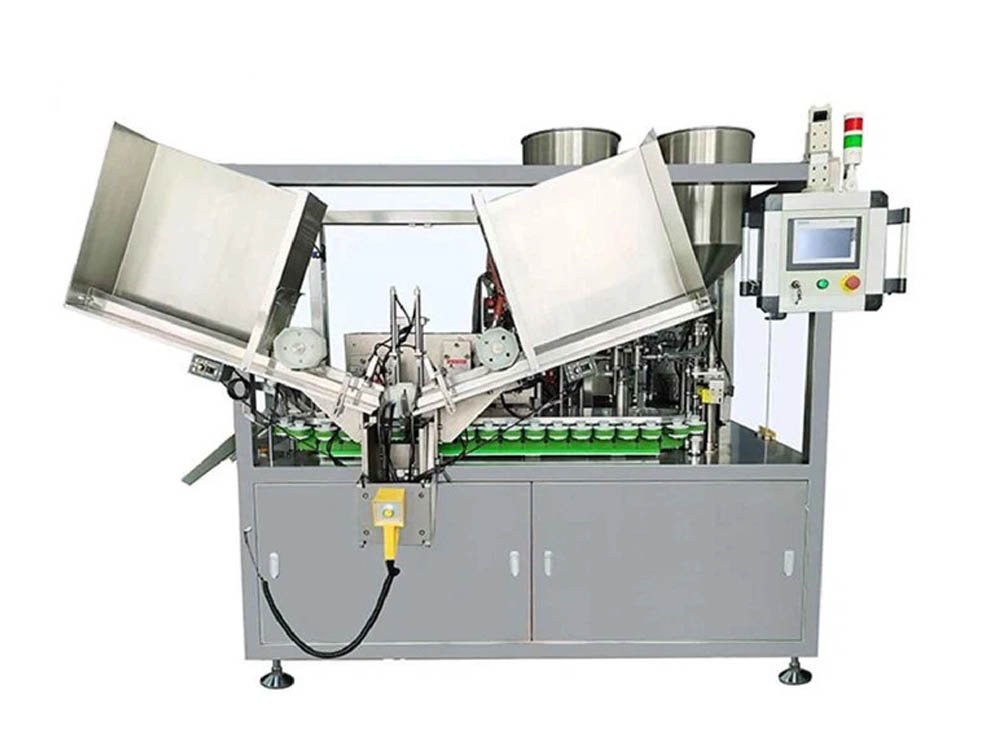
A typical HIJ tube filling & sealing cycle runs five automated stages: tube feeding → benchmarking (color-code orientation) → filling with tail-cut for viscous product → hot-air sealing → batch-number printing and discharge. "No tube, no filling" logic, door-open interlocks and low-air-pressure alarms are standard, so the machine protects both operators and product.
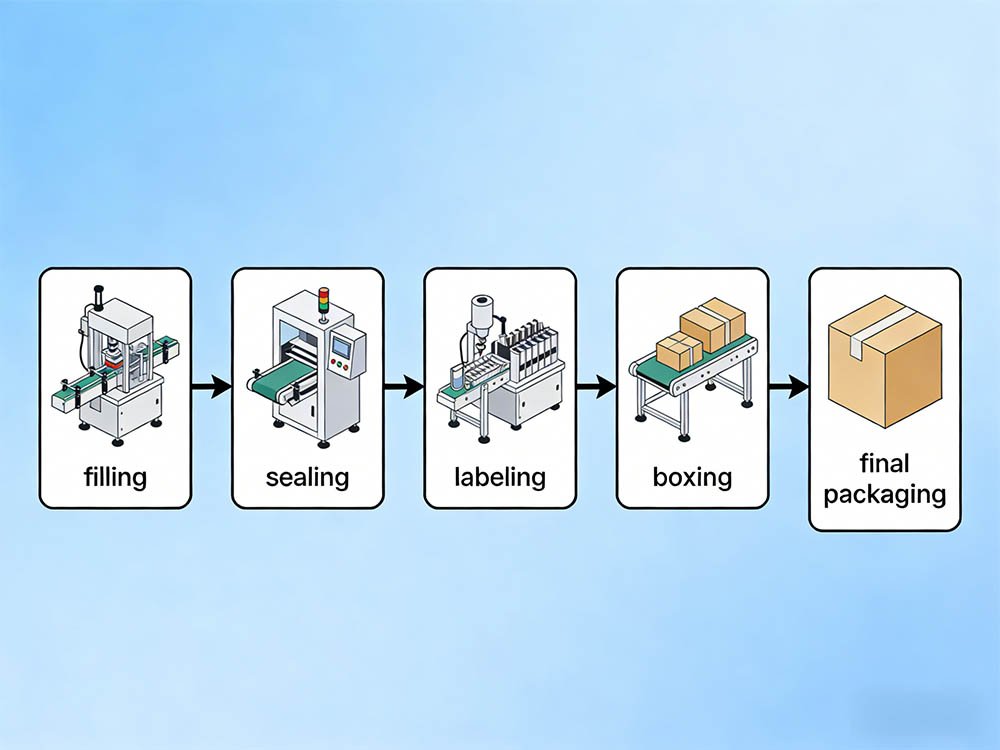
Unlike a single-purpose filler, an HIJ system can be supplied as a standalone filling machine or integrated with capping, sealing, labeling and cartoning into a complete turnkey line under one PLC. Every machine is built to your exact container, formulation and target output. For the full product family, see our cosmetic packaging machines hub, or read what a cosmetic filling machine is and how it works in depth.
Our machine range
Types of Cosmetic Filling Machines
Choose a cosmetic filling machine by product and container. Each platform is servo-driven, cGMP-ready and customized to your SKU.
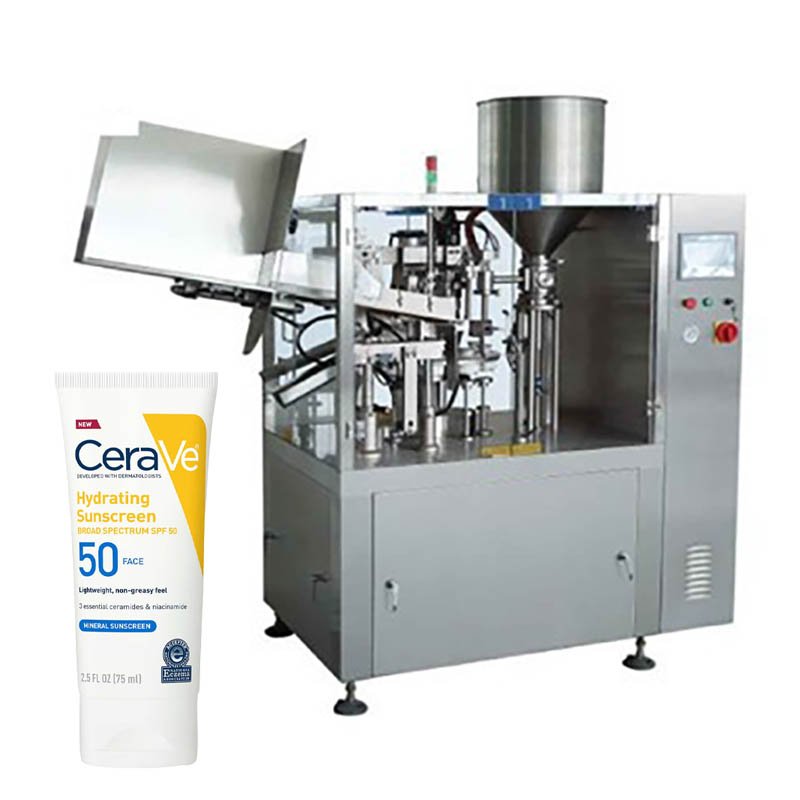
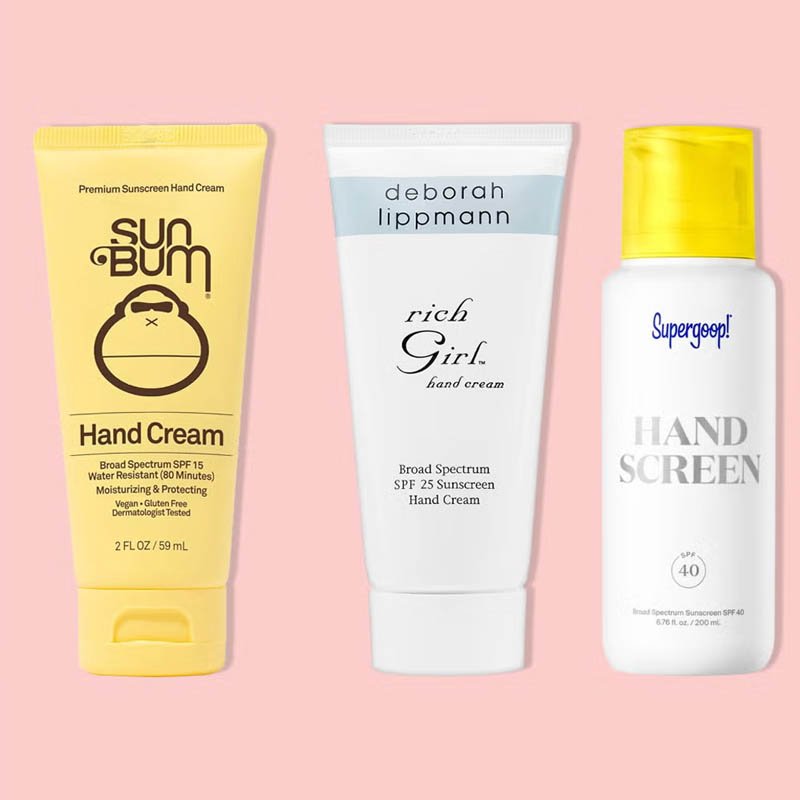
Tube Filling & Sealing
- Creams, sunscreen, lotions, gels
- 30–50 tubes/min, 5–250 ml
- Hot-air sealing (LEISTER, Switzerland)
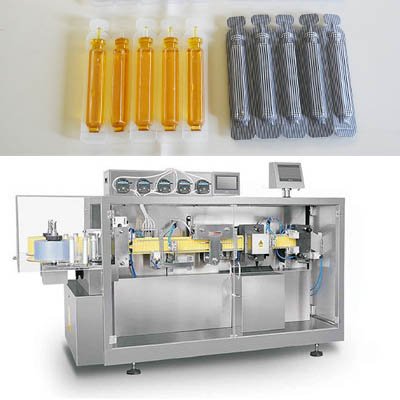
Liquid & Ampoule Filling
- Serums, toners, essences, oils
- Up to 100 pcs/min at 10 ml fills
- 0.3–200 ml form-fill-seal dosing
Cream & Lotion Filling
- Thick creams, butters, masks
- Jars, bottles & pots
- Heated jacketed hopper + stirring
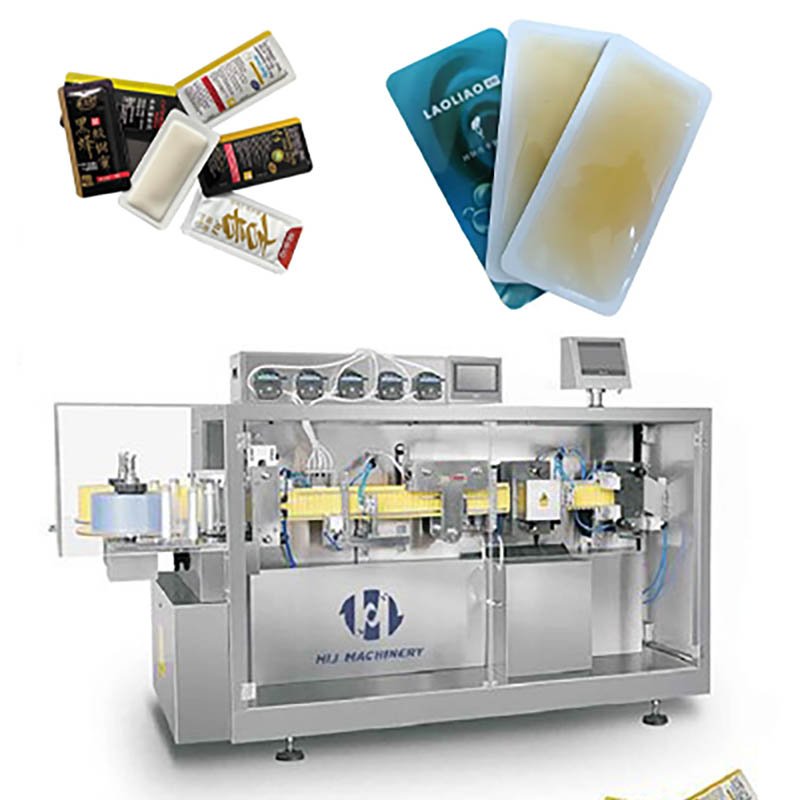
Sachet Filling
- Sample sachets, single-dose
- Creams, gels, masks, serums
- Multi-lane high output
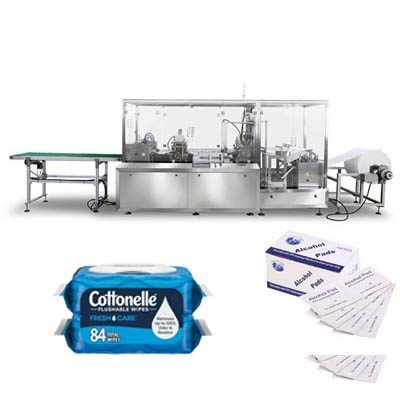
Wet Wipes Filling
- Makeup-remover & cleansing wipes
- Liquid dosing + folding + sealing
- 8-lane multi-output design
Automatic Filling Lines
- Fill + cap + seal + label + carton
- Single PLC, one project manager
- Full turnkey integration
Cosmetic Filling Machine Comparison
| Machine type | Best for | Container | Fill range | Throughput* | Accuracy |
|---|---|---|---|---|---|
| Tube fill & seal (TF-60) | Creams, sunscreen, gels | Plastic / laminate tube, ø13–50 mm | 5–250 ml | 30–50 tubes/min | ±0.5% |
| Liquid fill & seal (GGS series) | Serums, toners, oils | Plastic ampoule, formed bottle | 0.3–200 ml | ~100 pcs/min @10 ml; ~40 pcs/min @200 ml | ±0.5% |
| Cream / lotion filler | Thick creams, butters | Jar, bottle, pot | 10–1000 ml | Sized to your SKU | ±0.5% |
| Sachet filler | Samples, single-dose | Sachet / stick | 1–30 ml | Multi-lane, sized to your SKU | ±0.5% |
| Wet wipes machine (VPD800) | Single-sheet wipes | Composite / aluminized film | 0.5–12 ml liquid dosing | 500–1200 pcs/min (8-lane) | ±0.2 ml |
| Automatic filling line | High-volume brands | Multi-format | Custom | Line-balanced to bottleneck | ±0.5% |
*Measured operating speeds from HIJ technical specifications; final throughput depends on product viscosity, container and configuration. Request exact specs for your SKU.
Specs & accuracy
Cosmetic Filling Machine Specifications
Verified specifications from the HIJ TF-60 tube filling & sealing platform — the reference machine for this category.
±0.5%Volumetric fill accuracy
30–50/minTube filling & sealing speed
5–250 mlFill volume range (tubes)
316LProduct-contact stainless steel
SiemensPLC + touch screen + inverter
LEISTERSwiss hot-air tube sealing
ø13–50 mmTube diameter, 50–210 mm length
JacketedHeated hopper + stirring (option)
| Parameter | TF-60 Tube Filling & Sealing Machine |
|---|---|
| Operating speed | 30–50 tubes/min |
| Filling range | 5–250 ml |
| Tube compatibility | Aluminum-plastic composite & plastic composite tubes, ø13–50 mm, length 50–210 mm |
| Product-contact material | 316L stainless steel |
| Control system | Siemens PLC + Siemens touch screen + Siemens frequency inverter |
| Sealing | LEISTER (Switzerland) hot-air generator, oval-shape seal, batch-number stamping |
| Sensors | OMRON coder, AUTONICS fill detection, Japanese color-code sensor |
| Power supply | 380V/220V 3P 50 Hz; main motor 1.1 kW, hot-air 3 kW, chiller 1.9 kW |
| Compressed air | 0.5–0.7 MPa, 1.1 m³/min (AIRTAC pneumatics) |
| Machine dimensions / weight | 1950 × 1000 × 1800 mm, approx. 850 kg |
| Safety functions | No tube no filling, door-open stop & alarm, low air-pressure alarm, overload alarm, emergency stop |
| Price (reference) | From US $19,500 FOB, including one mold set and water chiller |
Forester's InsightForester Xiang · Founder & Chief Engineer, HIJ Machinery · 20+ years, 100+ facility audits
Buyers often ask why our delivery clock only starts after we receive their actual tube samples, not just drawings. The reason is simple: the tube, not the machine, decides whether your seal holds. Two tubes with identical diameters can behave completely differently under hot air depending on the laminate structure, and I have seen production launches slip weeks because a mold was cut against a spec sheet instead of a physical sample.
My rule for every cosmetic filling project: send us your real tubes and your real product before anything is machined. We run the fill, the tail-cut and the seal on your material, then confirm the mold. It costs a few days up front and saves you a month at commissioning.
Buyer guidance
How to Choose the Right Cosmetic Filling Machine
Match four variables — product, container, output and compliance — and the machine chooses itself.
1. Match your product viscosity
Thin liquids (toners, serums, oils) suit piston or peristaltic dosing; thick creams and body butters need a jacketed heated hopper, stirring device and tail-cut function to prevent stringing.
2. Match your container
Tubes need a tube fill & seal machine; bottles and jars need a piston filler with the right capper; single-dose samples need a sachet or ampoule fill-seal format.
3. Match your target output
30–50 tubes/min covers most growing brands; scaling past that means multi-nozzle fillers or a fully automatic line with capping, labeling and cartoning integrated under one PLC.
4. Plan changeover & compliance
Multiple SKUs? Budget one extra mold per tube diameter (US $1,000 each on TF-60). Exporting? Confirm CE marking, cGMP-ready design documentation and ISO 22716-aligned hygiene practices up front.
How much does a cosmetic filling machine cost?
HIJ publishes real reference pricing: the TF-60 automatic tube filling & sealing machine starts at US $19,500 FOB including one mold set and water chiller. A GGS-series liquid filling & sealing machine is around US $20,800 FOB. Options such as an extra tube mold (US $1,000), heated double-jacket hopper with stirring (US $2,500) or plunger-pump auto-feeding (US $2,500) are quoted line by line, so you see exactly what you pay for.
Payment: T/T 40% advance, 60% before delivery · Lead time: ~30 working days after prepayment and tube-sample confirmation · Warranty: 12 months with lifetime maintenance support. See the full cosmetic packaging machine price guide.
Applications
What HIJ Cosmetic Filling Machines Fill
One supplier across skincare, haircare, suncare and personal care — from 5 ml samples to 1000 ml family sizes.
Creams & Ointments
- Face & hand creams, BB/CC creams
- Sunscreen & after-sun
- Pharma-grade ointments
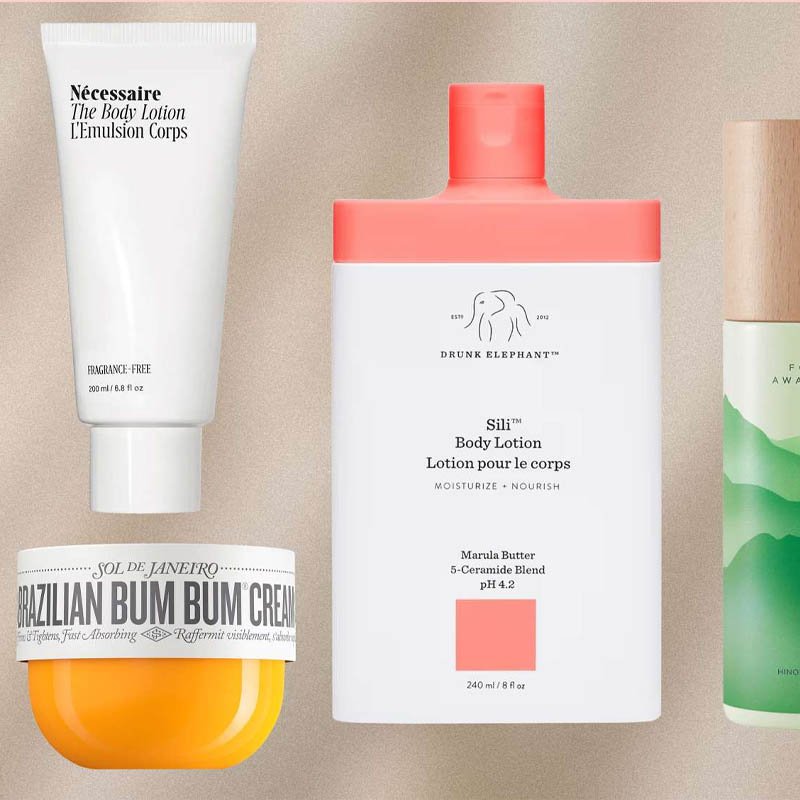
Lotions & Gels
- Body lotions & moisturizers
- Cleansing & shower gels
- Hair styling gels

Serums & Liquids
- Serums, essences, toners
- Facial oils & ampoule doses
- Sample sachets & travel sizes
Also running on HIJ lines: makeup-remover wipes, alcohol wipes and single-dose honey/food sachets — the same servo-dosing core adapted per industry. Machines are applicable to cosmetics, pharmaceutical and daily-chemical products alike.
Why HIJ
Why Brands Choose HIJ Cosmetic Filling Machines
Since 200420+ years filling & packaging expertise
TransparentPublished FOB pricing, line-item options
200+Cosmetic brands served in 50+ countries
12-monthWarranty + lifetime maintenance support
SiemensPLC, HMI & inverter as standard
316LContact parts, cGMP-ready hygienic design
DocsFAT support & documentation for your IQ/OQ/PQ
~30 daysStandard configuration lead time
About this page
Cosmetic Filling Machine — Entity Reference
HIJ Machinery (legal name: Wenzhou Trustar Machinery Technology Co., Ltd) is a packaging machinery manufacturer founded in 2004, headquartered in Rui'an, Wenzhou, Zhejiang, China. HIJ designs and builds cosmetic filling machines — tube filling & sealing machines, liquid and ampoule fill-seal machines, cream and lotion fillers, sachet fillers, wet-wipes machines and complete automatic cosmetic filling lines — alongside blister packing machines, cartoning machines, capsule filling machines and case packing machines for pharmaceutical, cosmetic and food producers in 50+ countries.
- Product category
- Cosmetic filling machines (tube, ampoule, cream, sachet, wet wipes, turnkey lines)
- Reference model
- TF-60 automatic tube filling & sealing machine — 30–50 tubes/min, 5–250 ml, from US $19,500 FOB
- Fill accuracy
- ±0.5% volumetric (servo-driven piston / peristaltic dosing)
- Compliance
- cGMP-ready design, CE-marked, manufactured under ISO 9001; hygienic build supports ISO 22716 cosmetic GMP practices; validation (IQ/OQ/PQ) is performed by the customer with HIJ documentation support
- Reviewed by
- Forester Xiang, Founder & Chief Engineer, HIJ Machinery — 20+ years in packaging machinery, 100+ facility audits across 30+ countries
- Contact
- hijpackingmachine.com/contact-us — engineering quote within 72 hours
Common questions
Cosmetic Filling Machine — FAQ
What is a cosmetic filling machine?
A cosmetic filling machine is an automated system that accurately doses cosmetic products — creams, lotions, serums, gels, oils and liquids — into tubes, bottles, jars, ampoules or sachets. HIJ cosmetic filling machines use servo-driven piston or peristaltic dosing with Siemens PLC control to hold ±0.5% volumetric fill accuracy.
How much does a cosmetic filling machine cost?
HIJ's TF-60 automatic tube filling and sealing machine starts at US $19,500 FOB including one mold set and water chiller, and a GGS-series liquid filling and sealing machine is around US $20,800 FOB. Options such as an extra tube mold (US $1,000) or a heated jacketed hopper with stirring (US $2,500) are quoted line by line, and every machine is priced to your exact product, container and output.
How fast is a cosmetic tube filling machine?
The HIJ TF-60 tube filling and sealing machine runs 30–50 tubes per minute across a 5–250 ml fill range, handling tube diameters of 13–50 mm and lengths of 50–210 mm. Liquid fill-seal formats reach about 100 pcs per minute at 10 ml fills.
Can one cosmetic filling machine handle creams, lotions and serums?
Yes. With the right dosing system, a jacketed heated hopper and a tail-cut function for viscous product, a single HIJ filler can be configured for viscosities ranging from thin serums to thick body butters. For very different products, we confirm your full SKU list first so the nozzle and changeover parts are specified correctly.
Are HIJ cosmetic filling machines CE and GMP certified?
HIJ cosmetic filling machines are CE-marked and built to a cGMP-ready hygienic design with 316L product-contact stainless steel, manufactured under an ISO 9001 quality system, and the build supports ISO 22716 cosmetic GMP practices. Validation (IQ/OQ/PQ) is performed by the customer, and HIJ provides the documentation support needed for your qualification and audits.
What is the lead time for a cosmetic filling machine?
Standard configurations ship in about 30 working days after prepayment and confirmation of your tube or container samples; fully customized lines take longer. Exact lead time is confirmed with your quotation, which HIJ returns within 72 hours.
What warranty and after-sales support does HIJ provide?
Every HIJ cosmetic filling machine carries a 12-month warranty with free replacement of quality-related spare parts shipped by fast courier, plus lifetime maintenance support. On-site installation and commissioning by HIJ technicians is available worldwide.
Which industries use HIJ filling machines besides cosmetics?
The same servo-dosing platforms run in pharmaceutical, food and daily-chemical production — ointments, oral liquids, honey sachets and disinfecting wipes — so cosmetic brands that expand into adjacent categories can stay on one machine architecture and one supplier.
Keep researching
Cosmetic Filling Machine Resources
Guides and machine pages from the HIJ engineering team to plan your filling line end-to-end.
What Is a Cosmetic Filling Machine?
Manual vs Automatic Filling Machines
Cream vs Lotion vs Serum Fillers
Filling High-Viscosity Sunscreen
Hot-Air vs Ultrasonic Tube Sealing
Buying a Filling Machine from China
ISO 22716 GMP for Packaging Equipment
Cosmetic Packaging Machine Price Guide
Cosmetic Filling Machine Manufacturers
Cosmetic Liquid Filling Machine
Automatic Cosmetic Filling Line
All Cosmetic Packaging Machines
Ready to start?
Get a Cosmetic Filling Machine Built for Your Product
Tell us your product, container and target output — our engineers send a tailored machine recommendation and itemized FOB quotation within 72 hours. No obligation.