
HIJ Factory · Cosmetic Packaging Machines
Shampoo Filling Machine & Hair Care Line
Fill shampoo, conditioner, serum and hair oil into bottles, tubes and sachets — then cap, label and pack on one turnkey hair care packaging line, built by HIJ.
CE & GMP Compliant
Thin & Viscous Products
120+ Countries Served
±0.5%Fill Accuracy
30–1000 mlPer Bottle
What It Is
What is a shampoo filling machine?
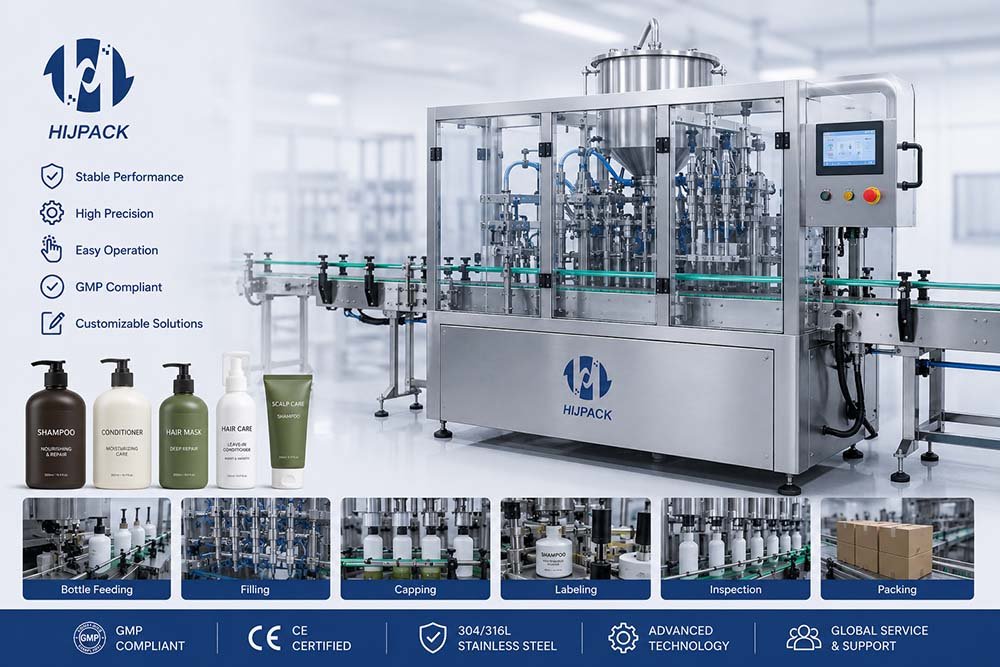
A shampoo filling machine is an automatic system that doses a precise volume of shampoo, conditioner or other liquid into bottles, then passes them on for capping, labeling and coding. HIJ machines use servo piston or flow-meter filling to handle both thin liquids and viscous gels at ±0.5% accuracy, in 30–1000 ml bottles.
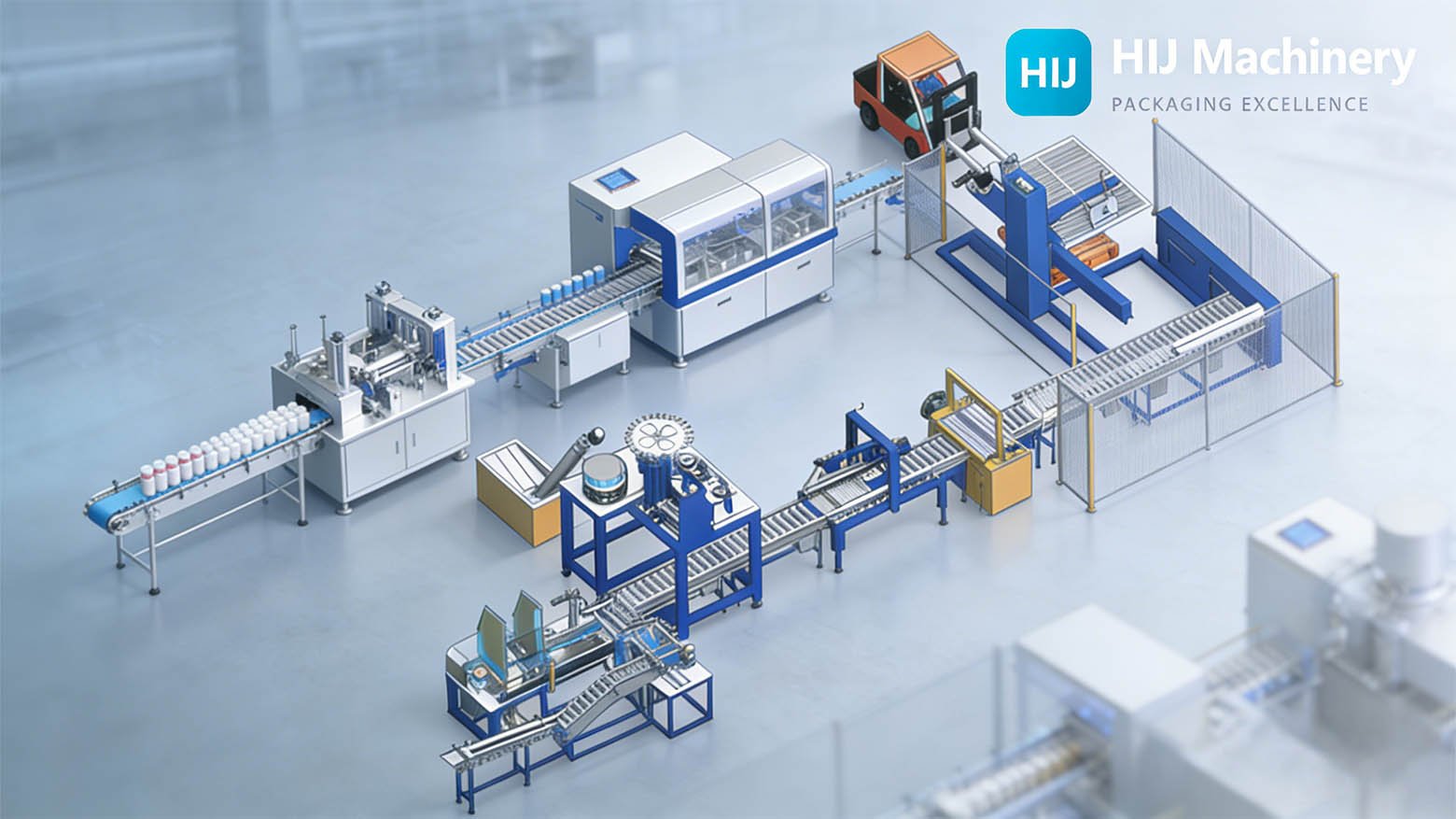
As the core of a complete hair care packaging line, the filler integrates with cappers, pump/trigger inserters, labelers, coders and cartoners — so shampoo, conditioner, hair serum, hair oil and masks are packed end to end. Every machine is supplied and supported by HIJ as a single source, GMP-ready and CE documented.
30–1000 mlFill volume per bottle
±0.5%Filling accuracy
Up to 6,000Bottles per hour
Thin + ViscousLiquids, gels & creams
Line Flow
From empty bottle to packed case in 6 stages
1
Bottle feeding
An unscrambler or feeder presents empty bottles and indexes them to the filling station.
2
Filling
Servo piston or flow-meter nozzles dose shampoo, conditioner or serum with anti-drip diving fill.
3
Capping
Screw caps, flip-tops, pumps or triggers are placed and torqued to a consistent, leak-free seal.
4
Labeling & coding
Wrap-around or front/back labels are applied and batch/expiry codes printed inline.
5
Cartoning
Bottles and leaflets are loaded into folding cartons automatically.
6
Case packing
Cartons are collated into shipping cases, ready for the pallet — end of line.
Line Modules
Build your hair care packaging line, module by module
Pick the machines your haircare range needs — HIJ integrates them into one synchronized line around the shampoo filling machine.
Shampoo & Bottle Filling
Servo piston / flow-meter filling of shampoo, conditioner and body wash into 30–1000 ml bottles.
View bottle fillingConditioner & Cream Filling
Piston filling of thick conditioners, masks and styling creams into jars and bottles.
Explore moduleHair Tube Filling & Sealing
Fill and seal tubes for hair masks, treatments and leave-in creams.
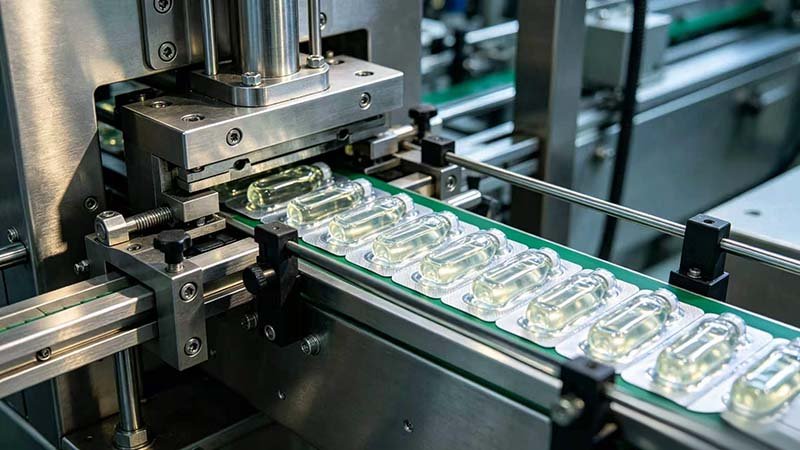
Explore moduleHair Serum / Ampoule Filling
Micro-dose hair serums and ampoule treatments with optional nitrogen flush.
Explore moduleShampoo Sachet / Sampling
Multi-lane sachets for shampoo and conditioner samples and travel packs.
Explore moduleCapping · Labeling · Cartoning
End-of-line capping, pump inserting, labeling, coding, cartoning and case packing.
See full line setup
Specifications
Shampoo filling machine specs
Representative parameters for the HIJ shampoo filling machine and hair care line. Configurations are tailored to your bottle and product.
| Output speed | Up to 6,000 bottles / hour (heads & volume dependent) |
|---|---|
| Filling volume | 30–1000 ml (multi-range, quick-change) |
| Filling accuracy | ±0.5% — servo piston / flow-meter |
| Filling heads | 4 / 6 / 8 / 12 heads (configurable) |
| Product viscosity | Thin liquids to viscous gels & creams |
| Capping | Screw cap, flip-top, pump, trigger spray |
| Container types | PET / HDPE bottles, tubes, sachets |
| Control system | PLC + touchscreen HMI, recipe memory |
| Contact material | SUS304 / SUS316L stainless steel |
| Power supply | 220V / 380V, 50/60Hz (customizable) |
| Compliance | CE · GMP-ready design |
* Final specs vary by bottle, product viscosity and required output. Ask for a spec sheet matched to your project.
Applications
One line for your whole haircare range
From foaming shampoos to rich hair masks, the HIJ hair care packaging line fills and packs every format.
 Shampoo & Conditioner
 Hair Serum & Oil
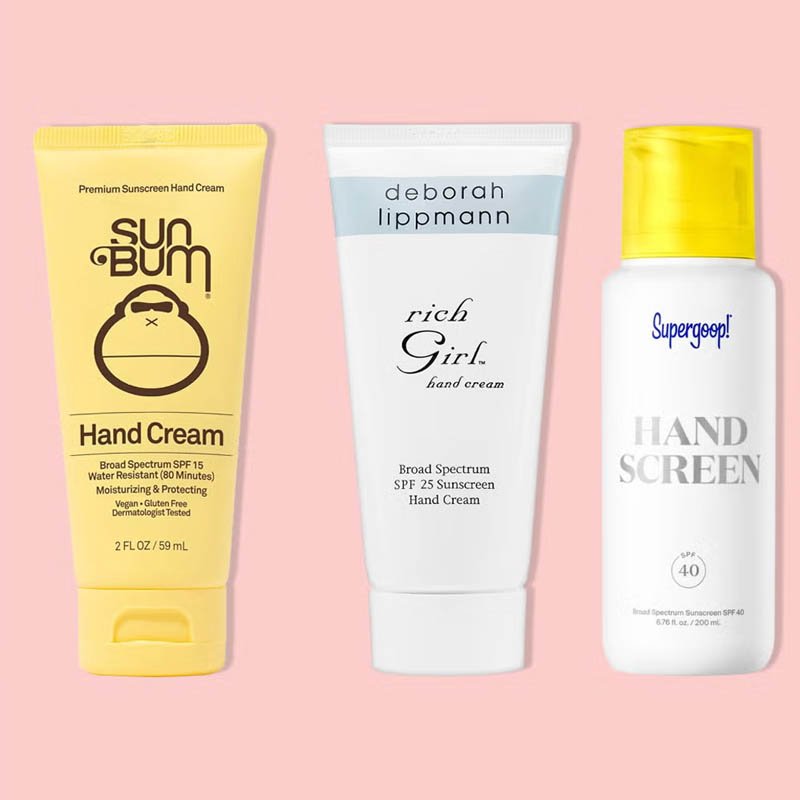 Hair Masks & Treatments
 Styling Gels
Products & Containers
Any haircare product, any container
Tell us your product and pack; the HIJ shampoo filling machine is configured with the matching pump and nozzle, then the line adds the right capper and labeler.
Bottles (PET / HDPE)
Shampoo, conditioner and body wash from 30–1000 ml with screw, flip-top or pump caps.
Tubes & jars
Hair masks, treatments and styling creams via tube filling-sealing or jar filling.
Sachets & ampoules
Single-use shampoo samples, conditioner sachets and hair-serum ampoules.
Why Choose HIJ
One partner for your entire hair care packaging line
HIJ designs, builds and exports cosmetic packaging machinery from our own factory — not a trading desk. Sourcing the shampoo filler and the whole line from one manufacturer means matched machines, one point of contact and one warranty.
- Single-source line design, build and integration
- Handles thin liquids through viscous gels and creams
- CE documentation and GMP-ready hygienic design
- Remote commissioning, video support and spare-parts kits
- Trusted by haircare brands & contract manufacturers worldwide
FAQ
Shampoo filling machine & hair care line FAQs
What does a shampoo filling machine do?
It doses a precise volume of shampoo, conditioner or other liquid into bottles, then passes them to capping, labeling and coding. The HIJ machine uses servo piston or flow-meter filling for ±0.5% accuracy on both thin and viscous products.
What fill volumes and speeds are supported?
Fill volume ranges from 30 to 1000 ml with ±0.5% accuracy. Output reaches up to 6,000 bottles per hour depending on the number of heads and the bottle size.
Can it fill viscous conditioners and gels?
Yes. Piston and gear-pump options handle thick conditioners, masks and styling gels, while flow-meter filling suits thin shampoos and tonics. The system is matched to your product viscosity.
What does a complete hair care packaging line include?
Bottle feeding, filling, capping (screw, flip-top, pump or trigger), labeling, date/batch coding, cartoning and case packing — plus tube, sachet or ampoule modules for masks, samples and serums.
Is the machine GMP and CE compliant?
Yes. Product-contact parts are SUS304/316L stainless steel, the design is GMP-ready for hygienic cleaning, and machines ship with CE documentation.
Can HIJ supply the whole line as a turnkey project?
Yes. HIJ designs, integrates and tests the full hair care packaging line, then provides remote commissioning, video guides and spare-parts kits. Request a free turnkey quote to start.
Get your shampoo filling machine & line quote today
Tell us your products, bottles and target output. Our engineers reply within one business day with a tailored hair care packaging line layout and all-in turnkey quote — free, no obligation.
Reply within 1 business day · Your details stay confidential