Quick Answer: What Belongs in a Case Packing Machine URS?
A User Requirements Specification (URS) for a case packing machine defines, in writing, everything the machine must do before you sign: your product and case data, guaranteed output for your named array, machine construction and control platform, safety and environment requirements, the documentation package your quality team needs for IQ/OQ/PQ execution, and the acceptance tests (FAT/SAT) that gate payment. A one-page URS built on the 9 sections below prevents the two most expensive procurement failures: buying the wrong loading technology, and discovering missing scope after the deposit is paid.
Key Takeaways
- The URS is a buyer’s document, not a vendor form — write it before requesting quotes, send the same version to every supplier, and comparable quotations follow automatically.
- The single most important line: guaranteed output for your named product and packing array, demonstrated at FAT with your real samples.
- Regulated environments should specify cGMP-ready design features (SUS304 contact parts, cleanability, access) and the documentation set that supports your validation program — validation itself is executed on your site, within your quality system.
- Tie payment milestones to the URS: a witnessed FAT against written acceptance criteria is worth more than any warranty clause.
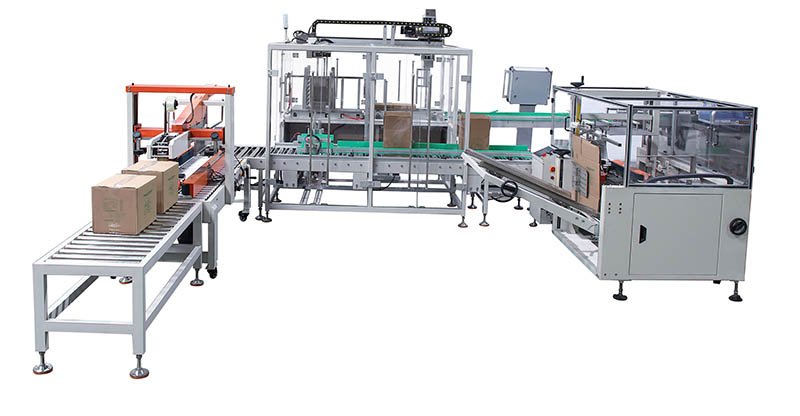
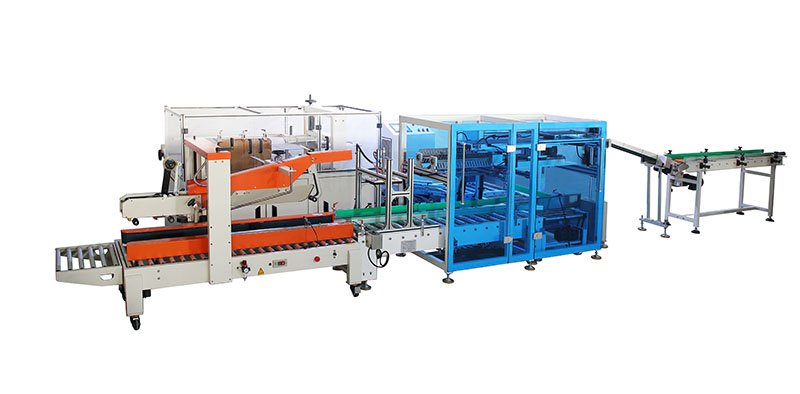
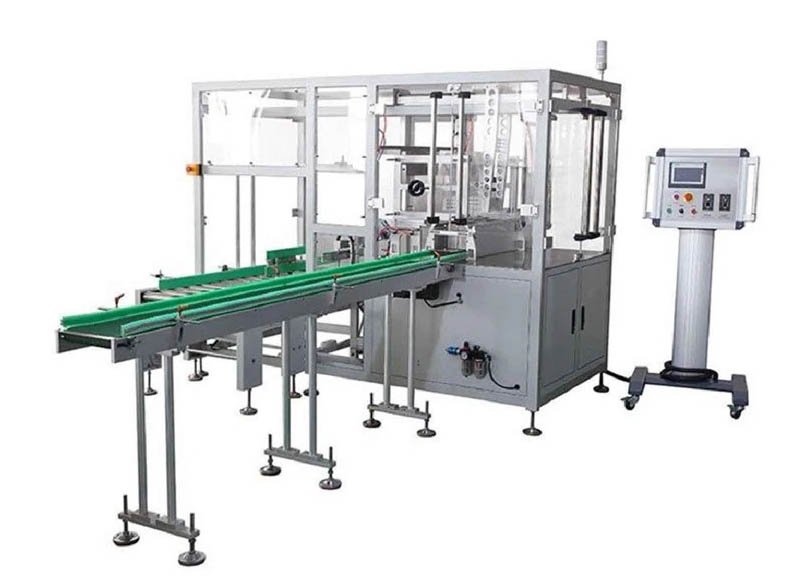
- Ground the requirements in real machine data: review the specification table on the HIJ-CP500 side push case packing machine page before drafting.
Why a URS Matters More for Case Packers Than Most Machines
A case packer sits at the intersection of three things that vary factory by factory: your product, your corrugated cases, and your existing line. Unlike a standard pump or compressor, no case packer is right “off the shelf” — the collation system, format range, and interfaces are engineered to your inputs. If those inputs live in emails and phone calls instead of one controlled document, every gap becomes a change order after the deposit, or a dispute at commissioning. The URS is where you fix the inputs once, in writing, before money moves.
The 9-Section URS Template for a Case Packing Machine
| Section | What to specify | Common mistake |
|---|---|---|
| 1. Product data | Dimensions, weight, rigidity, and surface finish of every SKU; drawings or samples attached | Listing only the current lead SKU and “forgetting” the other formats |
| 2. Case & array data | Case dimensions, board grade, packing array (rows × columns × layers) per SKU; tape or hot-melt sealing | Leaving board grade out — erection reliability depends on it |
| 3. Performance | Guaranteed output in products/min per SKU, efficiency target, changeover time limit | Copying the brochure’s rated speed instead of demanding a guaranteed figure |
| 4. Machine specification | Loading technology (e.g. side push), frame and contact-part material, dimensions and floor loading, utilities (power, air pressure, air consumption) | Not checking air consumption against existing compressor capacity |
| 5. Controls | PLC platform (e.g. Siemens), HMI language(s), recipe storage, fault alarms, remote diagnostics access | Accepting a no-name PLC that only the vendor can service |
| 6. Safety & environment | Guarding and interlocks, emergency stops, noise limit, explosion-proof rating if solvent/alcohol areas apply, CE-marked design | Discovering the explosion-proof requirement after the electrical design is done |
| 7. Hygiene & documentation | cGMP-ready design features, SUS304 where required, cleanability; documentation package: material certificates, electrical drawings, component list, manuals, FAT records — everything your team needs to execute IQ/OQ/PQ | Writing “GMP certified machine” — validation is performed by you, on your site; specify the design features and documents instead |
| 8. Acceptance (FAT/SAT) | Witnessed FAT with your product samples at guaranteed speed; written acceptance criteria; SAT scope after installation | Paying the balance before anyone has seen the machine run your product |
| 9. Service & spares | Commissioning days included, training scope, warranty terms, recommended spare parts kit, response time for remote support | Assuming “commissioning included” means unlimited days |
If you are still deciding between loading technologies before writing Section 4, start with the four types of case packing machines and the station-by-station breakdown in how a side push case packer works.
Turning the URS into Comparable Quotations
Send the identical URS to every candidate supplier and require the quotation to answer it point by point — comply, deviate (with explanation), or exclude. This one discipline collapses the fog described in our case packing machine price guide: when every quote answers the same nine sections, scope gaps become visible on one page, and the price differences that remain are real. Suppliers who won’t respond point by point are telling you, before contract, how they will behave after it.
Integration Requirements Deserve Their Own Paragraph
If the packer joins an existing line, the URS must name the interfaces: infeed height and orientation from your cartoning machine, speed matching and accumulation strategy, discharge to your case sealing machine or palletizing, and who owns each interface. Where the project spans several machines, specifying a single turnkey supplier with one point of responsibility converts interface risk from your problem into a contractual obligation.
Forester’s Insight
“I read incoming URS documents for a living, and I can tell within one page how a project will go. The dangerous ones aren’t the short ones — they’re the ones written by copying another machine’s URS and changing the title. The product table lists three SKUs; the customer runs nine. The array says 4×5×2; the samples that arrive are a different carton entirely. Every gap in the URS becomes a negotiation after the deposit — and after the deposit, the buyer negotiates from the weaker side.“
“The best URS I receive are often just two pages, but every number in them is real: measured cartons, counted SKUs, the actual compressor capacity, the true speed of the upstream cartoner. Write those two honest pages, and you make it almost impossible for any supplier — including us — to sell you the wrong machine.”
— Forester Xiang, Founder & Chief Engineer, HIJ Machinery
Frequently Asked Questions
What is a URS for a case packing machine?
A User Requirements Specification (URS) is the buyer’s controlled document that defines what the case packing machine must do: product and case data, guaranteed performance, construction and control requirements, safety and hygiene features, documentation deliverables, acceptance testing, and service scope. It is written before requesting quotes and becomes the reference for the FAT, the contract, and later your IQ/OQ/PQ validation activities.
Who should write the URS — the buyer or the supplier?
The buyer. A supplier can provide a template or review a draft, but requirements ownership must stay with your engineering, production, and quality teams, because only you know your SKUs, line interfaces, and regulatory context. Sending every supplier the same buyer-owned URS is also what makes their quotations comparable.
Does a case packing machine need to be GMP certified?
No machine is “GMP certified” — GMP compliance is a property of your facility and processes, demonstrated through your own validation program. What you should specify instead are cGMP-ready design features (such as SUS304 contact parts, cleanability, and accessible construction) and a documentation package — material certificates, drawings, component lists, FAT records — that supports your IQ/OQ/PQ execution.
What should the FAT include for a case packer?
A witnessed factory acceptance test should run your real product samples, in your specified arrays, at the guaranteed output, for an agreed duration, against written pass/fail criteria — plus demonstrations of changeover, fault recovery, and safety functions. Tie a payment milestone to FAT approval so performance and payment stay aligned.
How detailed should the URS be for a standard machine?
Proportionate to risk. For a standard side push case packer, two to four pages covering the nine core sections is usually enough — provided every number is real and every SKU is listed. Over-specifying design details (telling the vendor how to engineer rather than what to achieve) adds cost without adding protection; the URS should fix outcomes, not mechanisms.
Can I skip the URS for a small or urgent purchase?
You can, but understand the trade: without a URS there is no guaranteed-performance baseline, no point-by-point quotation comparison, and no objective FAT criteria — so any dispute defaults to the supplier’s standard terms. Even for urgent purchases, a one-page URS listing product data, array, guaranteed speed, and acceptance criteria takes hours to write and removes most of that risk.
About the Author & Publisher
This URS guide is written and reviewed by Forester Xiang, Founder & Chief Engineer of HIJ Machinery (legal name: Wenzhou Trustar Machinery Technology Co., Ltd), a pharmaceutical, cosmetic, and food packaging machinery manufacturer founded in 2004 in Rui’an, Wenzhou, Zhejiang, China. Forester has 20+ years of packaging machinery engineering experience, has completed 100+ pharmaceutical facility audits, and has delivered equipment to customers in 30+ countries.
HIJ Machinery manufactures case packing machines, cartoning machines, and complete turnkey packaging lines, all supplied with cGMP-ready, CE-marked designs and documentation that supports the customer’s own validation program (IQ/OQ/PQ).
Get a Point-by-Point Response to Your URS
Send us your URS — or just your product data if you haven’t written one yet — and our engineers will return a point-by-point compliance response with a formal quotation within 24–48 hours.
Send My URS for Review