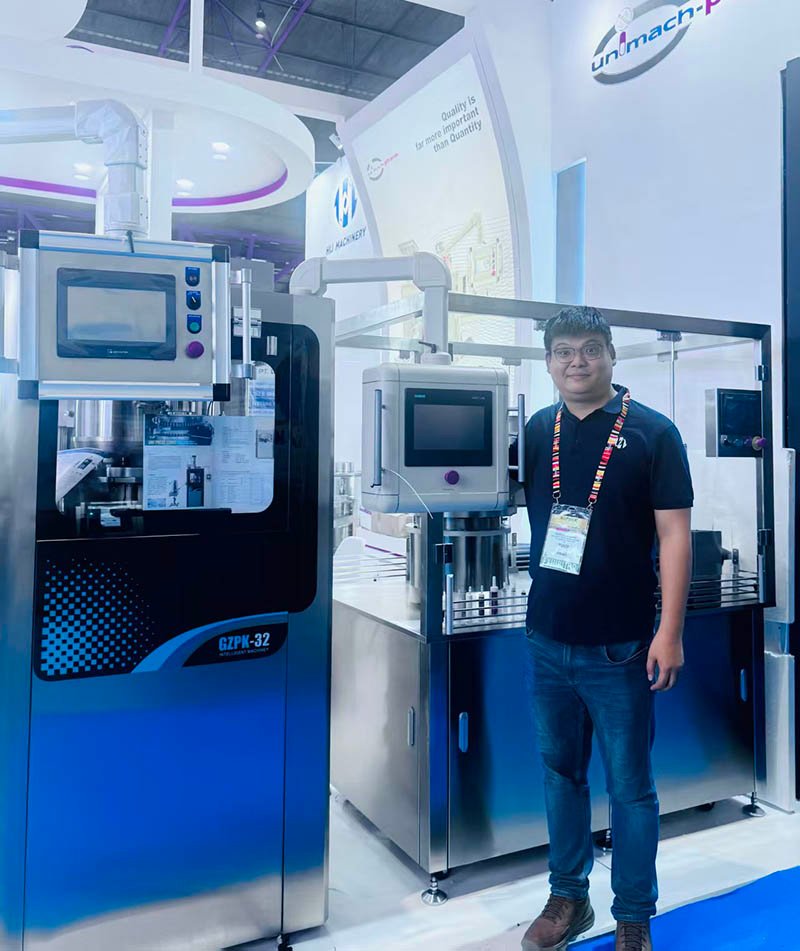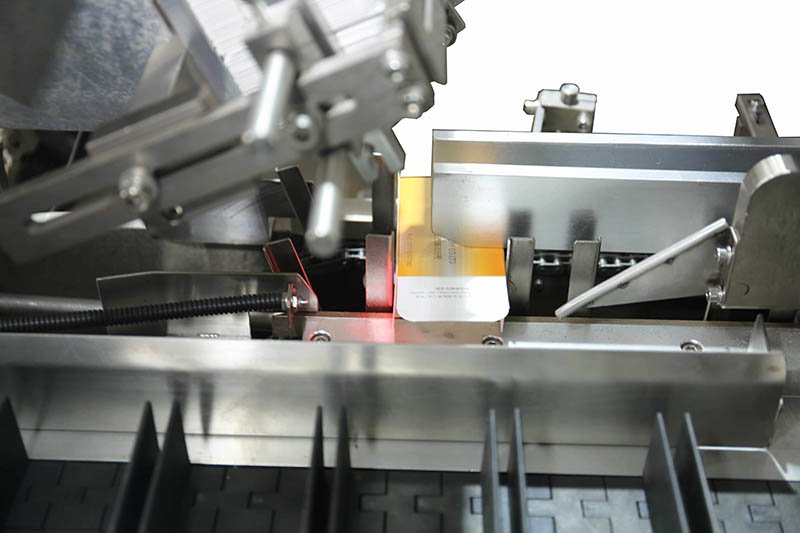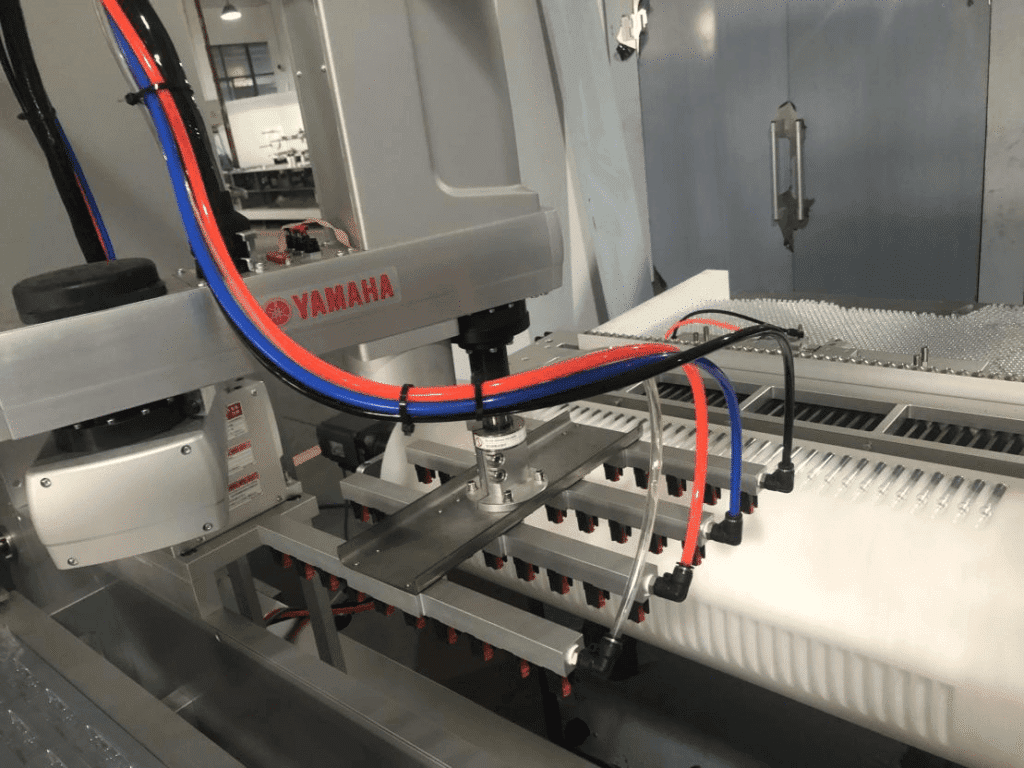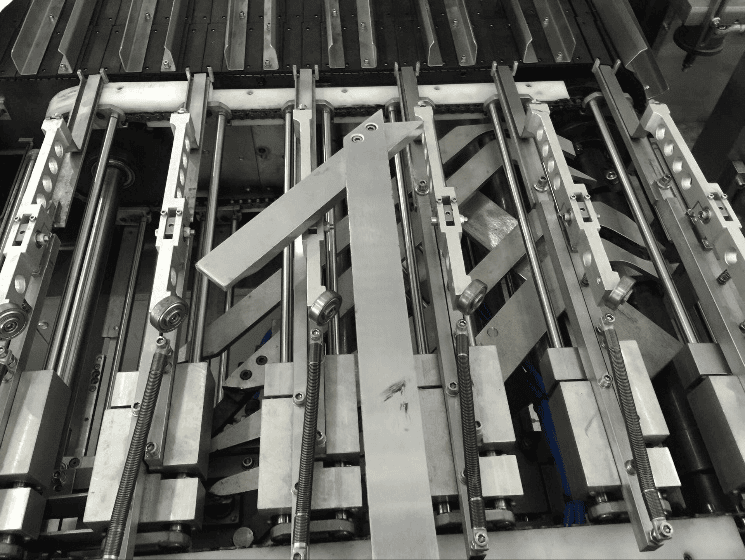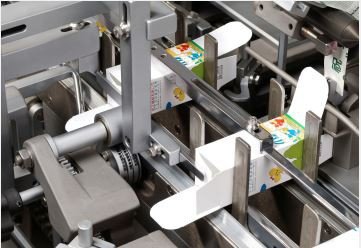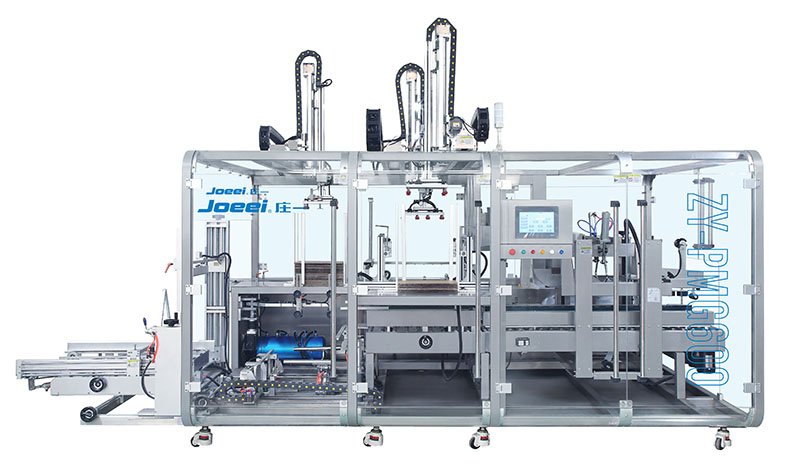
A horizontal cartoning machine for blister packs is the secondary-packaging step that takes sealed blister strips — after they leave the blister machine — collates them into the right count, folds and inserts the patient leaflet, and slides everything sideways into a printed carton. Horizontal (side-load) design is the pharma standard for blisters because it inserts the flat, fragile strips gently without the misalignment risk of gravity drop. A machine like the HIJ-120HC handles this at up to 160 cartons/min with a missing-leaflet detector and auto-reject for audit-ready output.
Blister packaging happens in two stages that are easy to confuse. First a blister machine forms and seals the tablets or capsules into strips. Then a cartoning machine puts those strips — with a leaflet — into the retail carton. This guide is about that second stage: how horizontal cartoners handle blister packs specifically, what to specify, and where blister-cartoning lines go wrong. (If you need the forming stage instead, that’s a different machine — see the blister cartoning machine page for the cartoning-focused unit.)
- Cartoning ≠ blistering. The cartoner is the secondary step that boxes sealed blister strips + leaflet.
- Horizontal side-load is the blister standard — gentle on flat, fragile strips; gravity drop risks misalignment.
- Blister count per carton (1, 2, 3+ strips) is a core spec that drives collation tooling.
- Leaflet insertion + missing-leaflet detection are what make the line audit-ready.
- Serialization / track-and-trace coding integrates at or after the cartoner for regulated markets.
- Static and edge-curl are the blister-specific handling challenges a good cartoner manages.
Why horizontal (side-load) is the standard for blisters
Blister strips are flat, thin and slightly flexible — exactly the profile that a gravity-drop vertical cartoner struggles with. Dropped into an upright carton, a blister can tilt, catch an edge, or buckle. A horizontal cartoner instead carries the carton on its side and uses a servo pusher to slide the collated blisters in along a controlled path. The strips stay flat and oriented, and the same inline station folds and inserts the leaflet alongside them. This is why virtually every pharmaceutical blister line uses a horizontal cartoner as its secondary packer. For the mechanics of that side-load, see how a horizontal cartoning machine works.
The blister-cartoning sequence
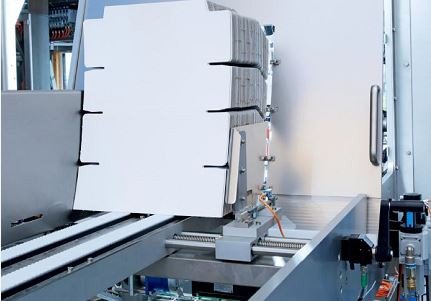
After the blister machine discharges sealed strips, the cartoner: (1) collates the required number of strips per carton, (2) folds and inserts the leaflet, (3) side-loads the stack into the open carton, (4) seals by tuck-in or hot-melt glue, and (5) discharges to coding and case packing. The leaflet folder and the missing-leaflet sensor are the two stations that most directly protect compliance.
What to specify for a blister-cartoning line
| Specification | Why it matters for blisters |
|---|---|
| Blister count per carton | 1, 2, 3 or more strips per carton drives the collation tooling and pusher stroke — confirm your SKU range up front. |
| Blister dimensions | Strip length/width/thickness set the carton size window and format-part design. |
| Leaflet fold type | Bi-fold, tri-fold, accordion or parallel — the folder must match your leaflet size and panel count. |
| Missing-leaflet detection | Optical presence + auto-reject; non-negotiable for pharma audit compliance. |
| Sealing method | Tuck-in (clean, no consumables) or hot-melt glue (tamper-evident) depending on market rules. |
| Serialization / coding | Batch, expiry and unique-ID (track-and-trace) printing integrates at/after the cartoner for regulated markets. |
| Line speed | Match cartoner output to your blister machine’s strip rate so neither starves nor backs up. |
Building a blister-to-carton line?
Send us your blister size, strips-per-carton and target output — we’ll spec the matching cartoner and quote within 24 hours.
Blister-specific handling challenges
Static cling
Thin PVC/alu strips build static and stick together during collation. Ionizing bars and controlled feeding keep counts accurate.
Edge curl
Freshly sealed strips can curl at the edges. Gentle guides and a servo push prevent a curled edge from catching the carton mouth.
Count accuracy
Wrong strip count is a serious defect. Sensing at collation plus reject-on-fault ensures every carton holds exactly the specified number.
Compliance for blister cartoning
For pharmaceutical blister cartoning, auditors focus on the same fundamentals regardless of speed: SUS 304 product-contact surfaces, guarding, reliable missing-leaflet rejection, accurate coding, and a documentation package that supports your validation. HIJ cartoners are built cGMP-ready and CE-marked, manufactured under an ISO 9001 manufacturing standard, with IQ/OQ/PQ documentation and 21 CFR Part 11 audit-trail-capable controls to support the validation your team performs on-site. The machine enables compliance; your validation confirms it.
“A recurring blister-cartoning problem I’m called in for isn’t the cartoner at all — it’s static. On one line the strips were clinging together so two would feed as one, and cartons were shipping with the wrong count. The plant blamed the machine; the real fix was an ionizing bar at collation and controlling the room humidity. When you spec a blister cartoner, ask the vendor how they handle static and edge-curl — the answer tells you whether they’ve actually run blisters or just cartons.”
Where blister cartoning fits in your line
The cartoner sits downstream of the blister machine and upstream of case packing. To make the whole line work, the cartoner’s output must be matched to the blister machine’s strip rate, and the carton coding must feed your serialization system. If you’re still choosing between machine types or planning the wider line, start from the cartoning machines hub, review the horizontal cartoning machine specs, and compare orientations in horizontal vs vertical cartoning.
Frequently asked questions
What is the difference between a blister machine and a cartoning machine?
A blister machine forms and seals tablets or capsules into blister strips. A cartoning machine is the next step: it takes those sealed strips, adds a leaflet, and packs them into the retail carton. They are two separate machines that together form a blister packaging line.
Why use a horizontal cartoning machine for blister packs instead of vertical?
Blister strips are flat and slightly flexible, so a horizontal side-load inserts them gently along a controlled path and keeps them oriented. A vertical gravity-drop can cause thin strips to tilt, catch an edge or buckle, so horizontal is the pharmaceutical standard for blister cartoning.
How many blister strips can go into one carton?
It depends on the carton size and your SKU design — commonly one to several strips per carton. The number of strips per carton is a key specification because it determines the collation tooling and the pusher stroke, so confirm your full SKU range when specifying the machine.
Does a blister cartoning machine insert the patient leaflet?
Yes. A horizontal cartoner includes an inline folder-inserter that folds the leaflet and places it with the blister strips. An optical missing-leaflet detector verifies presence and automatically rejects any carton without a compliant leaflet, which is essential for pharmaceutical audits.
Can a blister cartoning machine add serialization or track-and-trace coding?
Yes. Batch, expiry and unique-identifier (serialization) printing integrates at or immediately after the cartoner. For regulated markets that require track-and-trace, the carton coding feeds your serialization and aggregation system, so confirm this requirement when specifying the line.
How do I match the cartoner speed to my blister machine?
Match the cartoner’s cartons-per-minute output to the strip rate your blister machine produces, accounting for how many strips go into each carton. The goal is balanced flow so the cartoner neither starves nor backs up. HIJ engineers can size the cartoner against your blister machine output on request.
Spec your blister cartoner with engineers who’ve run blisters
Share your blister size, strips-per-carton, leaflet and target output. Real engineering response within 24 hours.