Quick answer: choose by verified good capsules per shift, operator workload, changeover pattern, cleaning boundary and evidence requirements—not by catalog speed or machine price alone. A semi-automatic filler keeps plate transfer and several checks in the operator’s hands. An automatic filler integrates the main cycle, but still needs qualified material, tooling, settings and supervision.
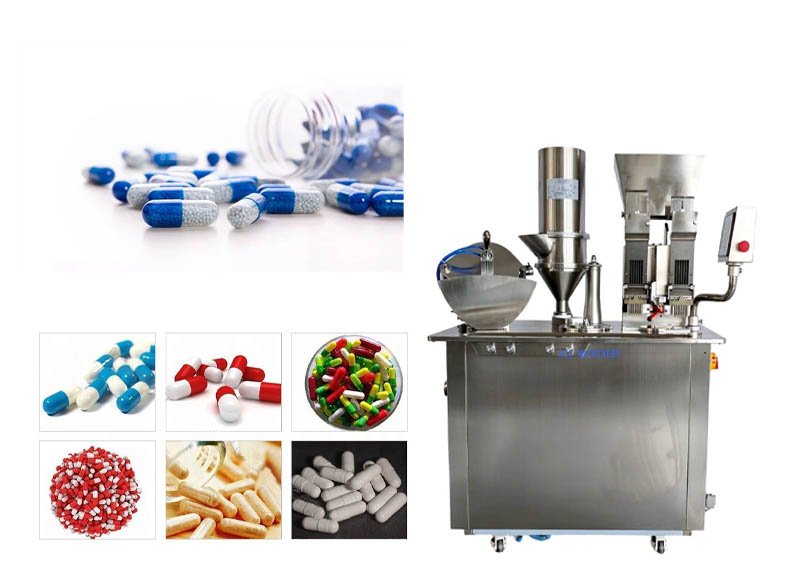

Automatic vs Semi-Automatic Capsule Filling Machines: Direct Comparison
The two machine classes can serve the same hard-capsule project, but the operating boundary is different. The table below compares what the buyer must plan and verify. It deliberately avoids turning a published maximum into a promised production rate.
| Decision point | Semi-automatic route | Automatic route |
|---|---|---|
| Core cycle | Machine-assisted feeding, dosing and closing at separate stations. | Integrated indexed cycle for capsule feeding, separation, dosing, closing and discharge. |
| Operator boundary | Transfers plates, replenishes material, monitors settings and performs agreed checks. | Supervises the integrated cycle, material supply, alarms, checks and downstream handoff. |
| Capacity basis | Trial rate must include plate transfer, replenishment, inspection, cleaning and breaks. | Trial rate must include material behavior, stops, checks, rejects, cleaning and line coordination. |
| Batch pattern | Often practical when batches are smaller, SKU changes are frequent and trained operator time is available. | Often practical when sustained production and a more integrated process justify the added project scope. |
| Change parts | List every capsule size and the corresponding mould or change-parts set. | List every capsule size, dosing configuration and tooling set; confirm the changeover method. |
| Formulation risk | Operator method can compensate for some variation, but it can also introduce variation. | Automation improves repeatability only after material flow, settings and controls are qualified. |
| Cleaning | Separate stations and transferred parts define the cleaning route. | More integrated product-contact parts require a defined access, removal and reassembly plan. |
| Documentation | Operator method, settings, checks and transfer steps should be controlled. | Recipes, alarms, interlocks, reject logic and cycle evidence may add document requirements. |
| Downstream line | Collection and transfer to polishing, inspection or packaging must be defined. | Continuous discharge makes interface rate, accumulation and stop signals more important. |
Calculate Required Good Output Before Comparing Machine Speeds
A catalog speed describes a machine under stated conditions. Your buying decision depends on acceptable capsules delivered during the planned shift. Start with the demand the line must actually release, then work backward.
Result: the minimum verified good-capsule rate the selected process must achieve. Apply the same definition to both machine classes.
Record the time that disappears between the headline rate and the shift result
Flow, bulk density, static, particle distribution, empty-capsule variation and target fill weight.
Loading, plate transfer, replenishment, sampling, adjustment, alarm response and finished-capsule movement.
Changeover, cleaning, line clearance, inspection, breaks and downstream stops.
For the semi-automatic route, time the operator-transfer loop with the planned team. For the automatic route, test the integrated cycle long enough to observe material replenishment, in-process checks, alarms and downstream interaction. The capsule filling machine FAT checklist helps keep the two trials on the same evidence basis.
What the Semi-Automatic Route Really Requires
A semi-automatic capsule filling machine can be the appropriate bridge between manual boards and a continuous automatic line. The important question is whether its complete operator cycle can meet the required good output while remaining controlled and repeatable.
Often a good fit when
- Batch sizes are compatible with the verified operator cycle.
- SKU or capsule-size changes are frequent.
- Trained operators can be assigned to the process.
- The project benefits from separate, operator-visible stations.
Reconsider when
- Plate transfer becomes the capacity constraint.
- Staffing varies enough to destabilize the shift plan.
- Continuous downstream supply is required.
- Containment, inspection or documentation needs demand a different architecture.
The published CGN208-D maximum and capsule-size range belong to that specific configuration; they are not a universal specification for every semi-automatic machine. Confirm the final machine, mould sets, utilities and application in the approved quotation and technical agreement.
What Changes When You Move to an Automatic Capsule Filler
An automatic capsule filling machine removes manual plate transfer by combining the main operations into an indexed cycle. It changes the operator’s work; it does not eliminate process development, checks or quality responsibility.
Integrated machine cycle
- Feed and orient empty capsules.
- Separate caps and bodies.
- Reject capsules that do not meet the defined handling condition.
- Meter the formulation with the configured dosing system.
- Close and discharge acceptable capsules.
Buyer-controlled process
- Approve capsules, material and target fill.
- Establish settings and in-process controls.
- Define alarm, reject and intervention rules.
- Qualify cleaning, changeover and reassembly.
- Execute site qualification and production approval.
Automation adds coordination points
Continuous operation makes the line around the filler more important. Material supply, capsule polishing, metal detection or inspection, counting or blister packaging, accumulation and stop-signal logic must be scoped as a system. A filler can be capable of a high indexed rate while the actual line is constrained by replenishment, checks or the downstream process.
Use the planned capsule and formulation—or an agreed substitute—to test flow, dosing behavior, fill checks, defects and cleaning.
Review recipes, access levels, alarms, interlocks, reject conditions, data required by the buyer and recovery after a stop.
The automatic capsule filling machine cycle guide explains the station sequence. Use it to prepare questions, then verify the exact selected model during technical review and FAT.
Compare Total Project Scope, Not One Machine Price
The less expensive base machine is not always the lower-cost production route, and the more automated machine is not automatically the better investment. Normalize both quotations around the same project boundary before comparing them.
Build the labor comparison from observed tasks
Do not assume that “semi-automatic” always needs a fixed number of operators or that “automatic” removes a fixed number. Observe who loads capsules and product, transfers plates, performs checks, clears faults, cleans parts, changes formats and moves finished capsules. Compare the fully loaded time for the complete shift, not a sales estimate.
Keep price and payback assumptions project-specific
Currency, Incoterm, included tooling, documentation, site service and local labor costs can change the result. The automatic capsule filling machine price guide provides a structure for comparing cost drivers without treating an old web price as a current quotation.
Request an Itemized Semi vs Automatic ScopeUse a Decision Matrix Instead of a Fixed Volume Threshold
A daily-volume rule is convenient, but it hides the variables that can reverse the decision. Score the two routes against your user requirement specification (URS), then challenge the preferred route with representative trials.
| Question to answer | Evidence before selection | Why it can change the route |
|---|---|---|
| What good output is required? | Batch, shift and day target with productive hours and operating factor. | Exposes whether operator transfer or integrated-cycle losses control capacity. |
| How does the product behave? | Representative capsule and formulation trials; flow and fill-weight results. | Poor flow or capsule variation can reduce usable performance on either machine. |
| How many SKUs and sizes? | Annual mix, campaign length, changeover time and required tooling. | Frequent changeovers can outweigh a high nominal running rate. |
| What does the operator control? | Task study covering loading, transfer, checks, intervention and cleaning. | Staff availability and method consistency affect sustained output and risk. |
| What must connect downstream? | Interface rates, transfer, accumulation, signals and line-stop behavior. | An integrated filler may expose a bottleneck in polishing or packaging. |
| What evidence is required? | Named drawings, manuals, certificates, FAT tests and training records. | Control and documentation scope can materially change project complexity. |
Lean toward semi-automatic when
- The verified operator cycle meets the shift requirement.
- Smaller campaigns and frequent product changes dominate.
- Operator visibility and manual transfer are acceptable.
- The commercial and documentation scope is intentionally limited.
Lean toward automatic when
- Continuous integrated operation is needed to meet verified demand.
- Manual plate transfer is the demonstrated bottleneck.
- Line integration and repeatable machine control justify the scope.
- The project can support the required tooling, cleaning and evidence package.
Define the FAT before purchase
Record test material, capsule size, target fill, settings, duration, operator responsibilities, output-counting method, fill-weight method, defects, rejects, downtime and restart conditions. A successful supplier FAT supports selection and handover; it does not replace the buyer’s site qualification, process validation, stability conclusions or batch-release decisions. Align responsibilities with the capsule filling machine GMP validation guide.
Automatic vs Semi-Automatic Capsule Filling Machine FAQ
What is the main difference between automatic and semi-automatic capsule filling machines?
A semi-automatic machine uses separate machine-assisted stations and depends on the operator to transfer tooling plates and manage several process steps. An automatic machine integrates the main feeding, separation, dosing, closing and discharge cycle. Both still require qualified capsules, formulation settings, in-process checks and cleaning controls.
Which machine type is better for small batches?
A semi-automatic route is often practical for smaller campaigns and frequent changes, provided a timed trial confirms that the full operator cycle meets the required good output. “Small” should be defined by batch size, SKU mix, productive hours, cleaning and staff availability—not by one universal number.
When should a manufacturer choose an automatic capsule filler?
Consider the automatic route when verified demand requires continuous integrated production, manual plate transfer is a demonstrated constraint, or line-control and documentation needs justify the additional scope. Confirm the decision with representative material trials and an itemized commercial comparison.
Does an automatic capsule filling machine guarantee better fill-weight results?
No machine guarantees a result for every formulation. Automation can make the dosing cycle more repeatable, but usable performance still depends on powder or granule behavior, capsule quality, tooling, settings, sampling method and process controls. Establish acceptance criteria and verify them during trials and qualification.
Can a semi-automatic capsule filling machine be used in a GMP quality system?
Equipment type alone does not establish GMP compliance. The buyer must define suitable materials, cleaning, procedures, operator controls, in-process checks, documentation, qualification and approval for the intended use. Semi-automatic operation may require more explicit control of operator-dependent steps.
Can I upgrade from semi-automatic to automatic later?
Yes, but treat the upgrade as a new process and interface project. Review capsule tooling, product handling, utilities, room layout, cleaning, polishing or inspection, downstream packaging and validation responsibilities. The existing semi-automatic machine may remain useful for suitable smaller campaigns if the quality system allows it.
How should I compare quotations from different suppliers?
Give each supplier the same URS and ask for an itemized scope covering the main machine, every capsule-size tooling set, material handling, finishing equipment, utilities, documentation, FAT, delivery, site service, training, spares and exclusions. Compare the same Incoterm and acceptance boundary.
What samples and data should I send for a machine recommendation?
Send capsule type and sizes, representative empty capsules, formulation type and samples, bulk density and flow information, target fill weight and test method, required good output, SKU mix, shift plan, utilities, downstream interfaces, cleaning expectations and required FAT or documentation evidence.
Compare Both Routes Against the Same Production Requirement
Send your capsules, formulation, target fill, required good output, SKU mix, utilities and documentation needs. HIJ can return a transparent semi-automatic and automatic configuration boundary for technical review.
Get My Two-Route ComparisonRelated Capsule Filling Resources
Compare machine families and application boundaries.
Review the automatic powder-filling route.
Turn formulation and production inputs into a shortlist.
Define capsule size, fill target and trial evidence.
Prepare formulation observations before machine trials.
Define run conditions, measurements and handover evidence.