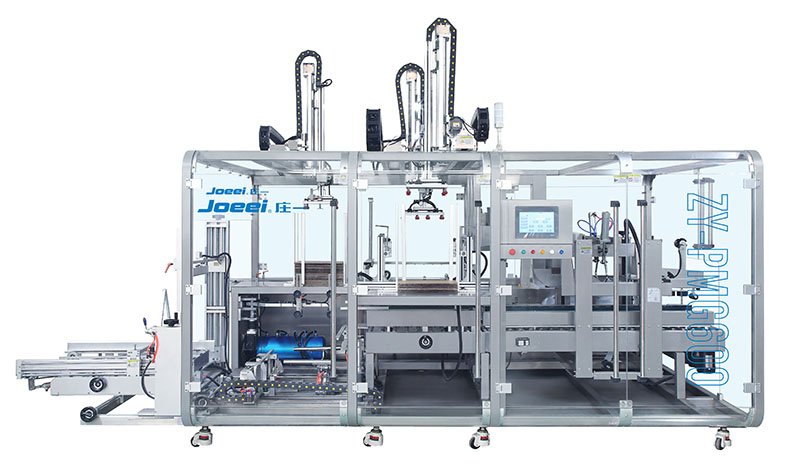
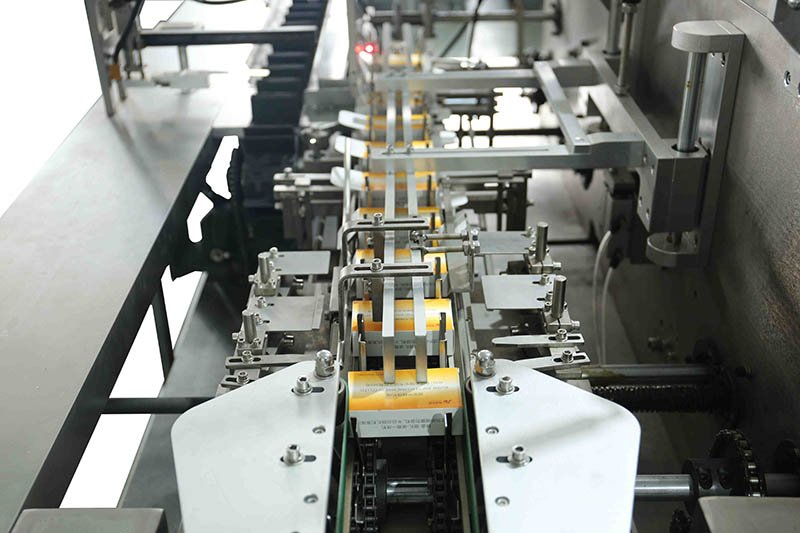
A horizontal cartoning machine works by carrying a carton on its side through six synchronized stations: it (1) pulls a flat carton from a magazine and erects it, (2) opens it with vacuum cups, (3) folds and inserts the leaflet, (4) pushes the product in sideways with a servo-driven pusher, (5) seals the carton by tuck-in or hot-melt glue, and (6) discharges the finished pack. On a continuous-motion machine like the HIJ-120HC, all six happen in a smooth, non-stop flow at up to 160 cartons per minute.
“How does a horizontal cartoning machine actually work?” is one of the first questions engineers ask when they move from manual or semi-automatic packing to an automated line. The short answer is above — but the detail is what determines whether your line runs cleanly at rated speed or fights jams and rejects. This guide walks through each station, explains the continuous-motion principle that sets modern machines apart, and points out where things go wrong in the field.
- A horizontal cartoner runs six stations: feed → open → leaflet → load → seal → discharge.
- Product enters sideways via a servo pusher, not by gravity — that’s why it’s gentle on blisters and tubes.
- Continuous motion (cam + servo) keeps carton velocity steady, enabling high speed with low reject rates.
- The leaflet folder-inserter and missing-leaflet sensor are what make the line audit-ready.
- Sealing is either tuck-in (tongue-and-slit) or hot-melt glue, chosen by product and market.
- A Siemens PLC + servo drives + optical sensors coordinate every station in real time.
The working principle: continuous motion vs intermittent
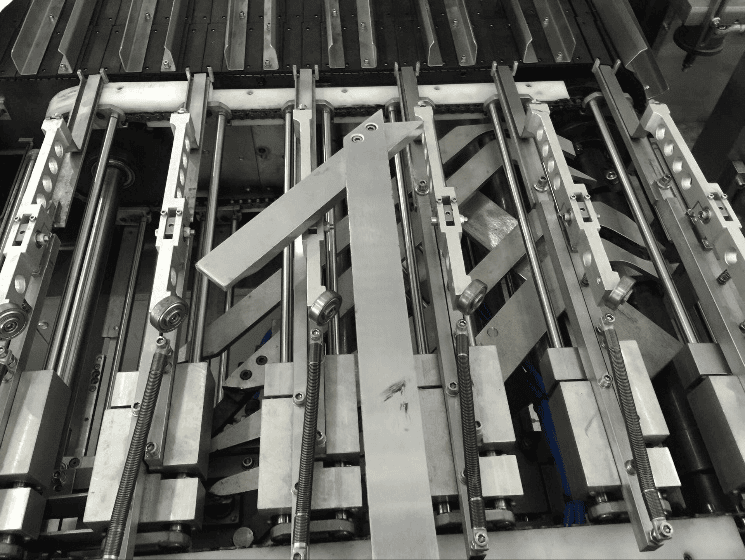
Before the stations, the one idea that explains everything: how the carton moves. Older intermittent cartoners advance the carton, stop, perform an action, then advance again — start, stop, start, stop. Every stop-start stresses the carton and caps speed at roughly 80–100 cartons/min. A modern continuous-motion horizontal cartoner keeps the carton moving at a constant velocity while cam-timed and servo-driven tools travel with it to perform each action on the fly. No stopping means less carton fatigue, fewer jams, and sustained speeds up to ~160 cartons/min. For a deeper look at the finished machine, see the horizontal cartoning machine specification page.
How a horizontal cartoning machine works, station by station
Carton feeding & erection
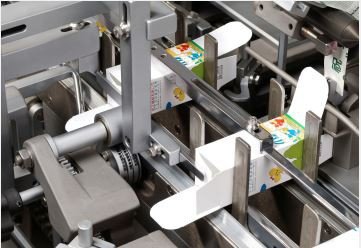
Flat carton blanks sit in a magazine (the HIJ-120HC holds up to ~600). A vacuum arm draws one blank at a time and a servo mechanism erects it into a square, 90° tube. Getting a clean, consistent erection here is what prevents downstream jams — friction-feed designs that “rub” blanks out are the usual culprits for double-feeds.

Vacuum carton opening
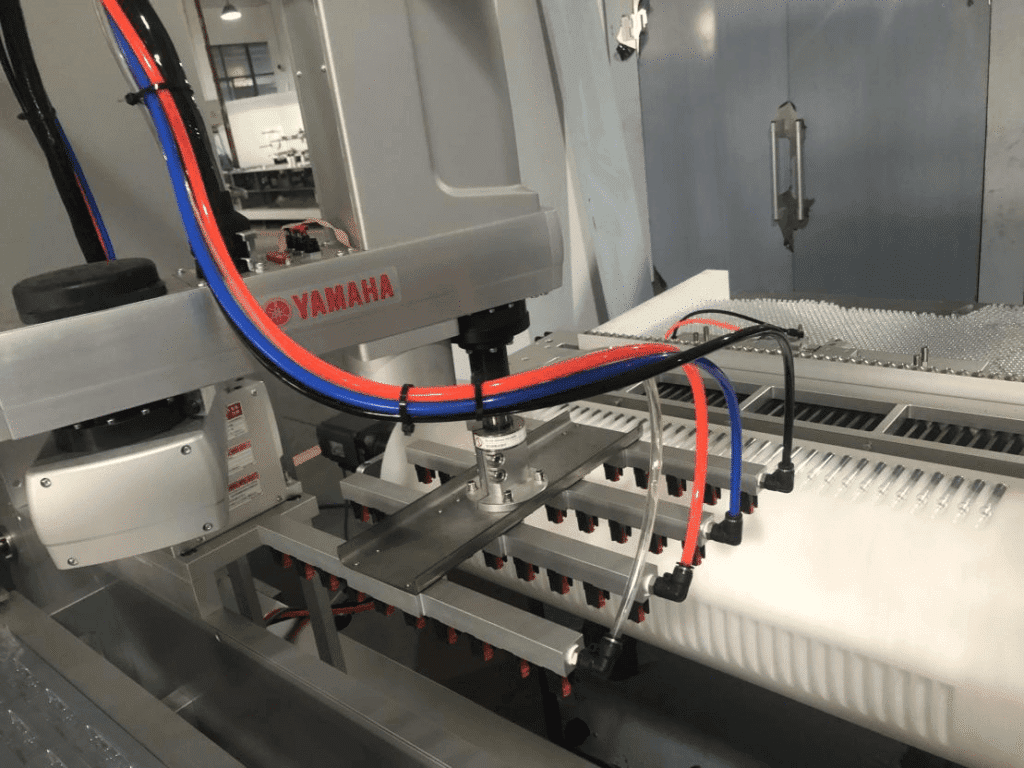
Dual vacuum cups grip the front panel and pull it forward while the rear corner is held, snapping the erected blank into a perfect rectangular opening. Pressure-feedback sensors confirm the carton opened correctly; a malformed carton is rejected here, before any product or leaflet is committed to it.
Leaflet folding & insertion
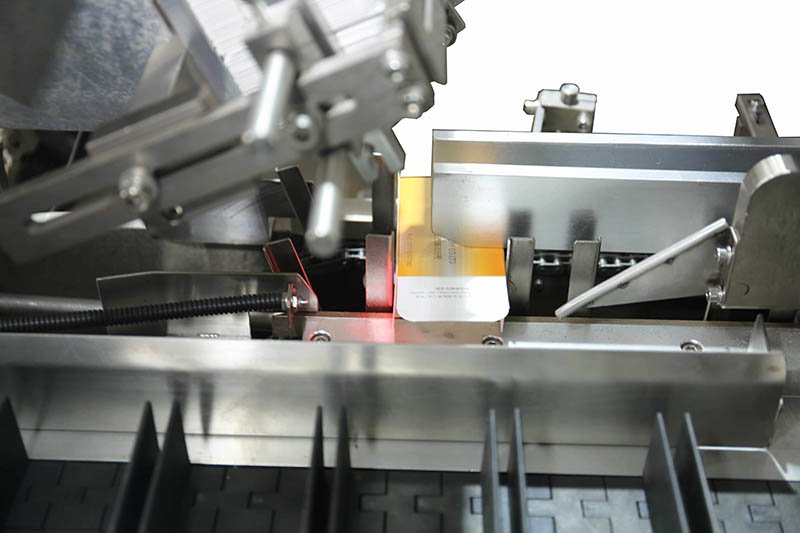
An inline folder takes a flat printed leaflet and creates bi-fold, tri-fold, accordion or parallel folds (up to 4 panels) at line speed. Optical sensors verify the leaflet is present and correctly folded before it enters the carton. If a leaflet is missing or mis-folded, a missing-leaflet detector flags it and the carton is auto-rejected — the single most important step for regulated pharma packaging.
Servo product loading (the side push)
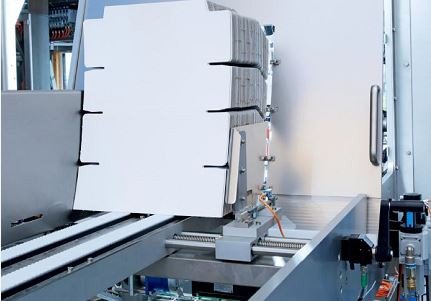
This is the defining action. A servo-driven pusher inserts the product — blister, tube, bottle, sachet — horizontally into the open carton, matching the carton’s velocity in continuous motion. Because speed and force are modulated in real time (not a blunt pneumatic shove), fragile and oriented products slide in without crushing or misalignment. This gentle side-load is exactly why horizontal design is chosen over gravity-drop vertical cartoning for flat and fragile items.
Carton sealing
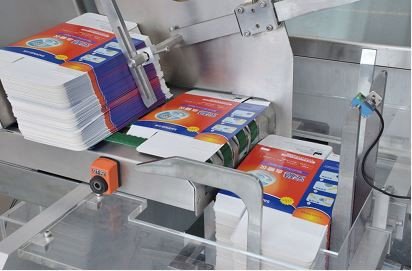
Two closure methods. Tuck-in (tongue-and-slit) folds the end flaps and locks the tongue into a slit — clean, no consumables, cleanroom-friendly. Hot-melt glue bonds the flaps for a tamper-evident, premium finish. Inline vision inspection verifies the seal. Which you choose depends on product, market, and whether tamper evidence is required.

Finished product discharge
Sealed cartons exit onto a takeaway conveyor, synchronized for downstream steps: batch/expiry inkjet coding, checkweighing, and case packing. Optional inline coding keeps the line records complete without manual handling. From flat blank to coded, sealed carton, the whole cycle happens in a continuous flow.
What coordinates it all: the control system
Six stations acting on a moving carton, many times per second, need tight coordination. On the HIJ-120HC that job belongs to a Siemens S7-1200 PLC with a 10″ touchscreen HMI, driving Yaskawa servo axes for the main motion, pusher, leaflet and output. Optical and pressure sensors feed back at every station, and the PLC supports 21 CFR Part 11 audit-trail configuration plus recipe-based SKU presets — so an operator switches product formats from stored recipes rather than manual re-setup.
“The most dangerous shortcut I see on cartoning lines is operators disabling the missing-leaflet sensor because it ‘stops the line too often.’ On one audit I found a machine running that way for weeks — every carton it produced was a potential recall if a leaflet had been missed. Nine times out of ten the real problem wasn’t the sensor; it was an upstream fold that needed adjusting. Fix the fold, and the sensor stops complaining. Never run a pharma line with that detector bypassed.”
Where it goes wrong (and how good machines prevent it)
Double-feeding cartons
Two blanks pulled at once. Prevented by vacuum single-pick feeding + carton-presence sensing, not friction feed.
Product crush on load
Blunt pneumatic pushers damage fragile items. Servo force-modulated loading realigns or rejects instead of crushing.
Leaflet mis-feed
Wrong fold or missing insert. Optical verification + auto-reject stops non-compliant cartons reaching the box.
Is a horizontal cartoner right for your product?
Now that you know how it works, the natural next question is whether horizontal is the right orientation for you. If your product is flat, fragile, oriented, or needs an inline leaflet, it usually is. If you’re weighing it against a gravity-fed design, read horizontal vs vertical cartoning machine for the full decision framework. For blister-specific lines, the blister cartoning machine applies the same principles with blister-tuned tooling, and you can compare the whole range from the cartoning machines hub.
Want to see it run with your product?
Send us your product, carton size and target output. Our engineers will confirm the right configuration and quote within 24 hours.
Frequently asked questions
What are the main parts of a horizontal cartoning machine?
The main parts are the carton magazine and feeder, the vacuum carton-opening unit, the leaflet folder-inserter, the servo-driven product pusher, the sealing unit (tuck-in or hot-melt glue), and the discharge conveyor — all coordinated by a PLC with servo drives and optical sensors.
How does a horizontal cartoner insert the product without damaging it?
It uses a servo-driven pusher that moves the product sideways into the carton while matching the carton’s speed in continuous motion. Because the servo modulates speed and force in real time, fragile items like blister packs and tubes are guided in gently rather than dropped or shoved, which keeps reject rates low.
What is the difference between continuous-motion and intermittent cartoning?
An intermittent cartoner advances the carton, stops to perform an action, then advances again, which limits speed to roughly 80–100 cartons per minute. A continuous-motion cartoner keeps the carton moving at constant velocity while cam- and servo-timed tools act on it in motion, enabling smoother operation and speeds up to about 160 cartons per minute.
How does the machine fold and insert the leaflet?
An inline folding station creates bi-fold, tri-fold, accordion or parallel folds at line speed, and an inserter places the folded leaflet into the carton. Optical sensors verify the leaflet is present and correctly folded, and a missing-leaflet detector triggers automatic rejection of any carton without a compliant leaflet.
How fast can a horizontal cartoning machine run?
A continuous-motion horizontal cartoner such as the HIJ-120HC can run up to about 160 cartons per minute. Real-world sustained output depends on the product, carton geometry and leaflet complexity — typically 100–140 for pharma blisters and 120–160 for cosmetic tubes and bottles.
Can one horizontal cartoning machine handle different products?
Yes. A multi-format horizontal cartoner handles bottles, tubes, blisters, sachets, ampoules and vials on the same base machine. Changing product means swapping quick-release tooling and loading a stored recipe, which typically takes under 15 minutes rather than a full reconfiguration.