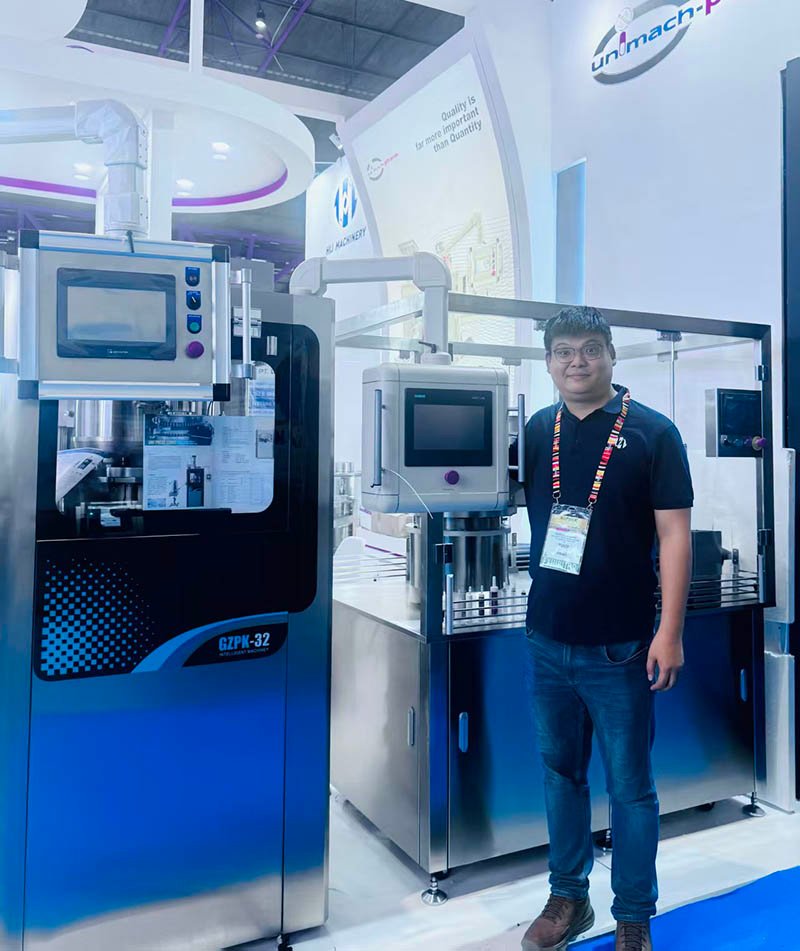
An automatic hard-capsule filling machine indexes capsule groups through a coordinated sequence: empty capsules are supplied and oriented, cap and body are separated, the body receives a measured dose, unsuitable capsules are rejected, the cap and body are locked, and finished capsules are discharged while the tooling is prepared for the next cycle. Powder machines commonly use a tamping-pin or dosator dosing system; liquids, pellets and mini-tablets require different dosing modules.
This guide consolidates HIJ’s former work-cycle articles into one buyer-focused explanation. It shows what happens inside an automatic capsule filling machine, which variables affect fill consistency, and what to verify during a product trial and Factory Acceptance Test.
The architecture: indexed motion and parallel work
Most NJP-style automatic capsule fillers use an intermittently indexed turntable. Segment blocks carry groups of capsules from one working position to the next. During each dwell, several functions occur at the same time on different capsule groups: one group is being separated while another is being dosed, another is closing and another is leaving the machine. The drive and indexing system must repeatedly place every segment at the correct station before the tooling moves.
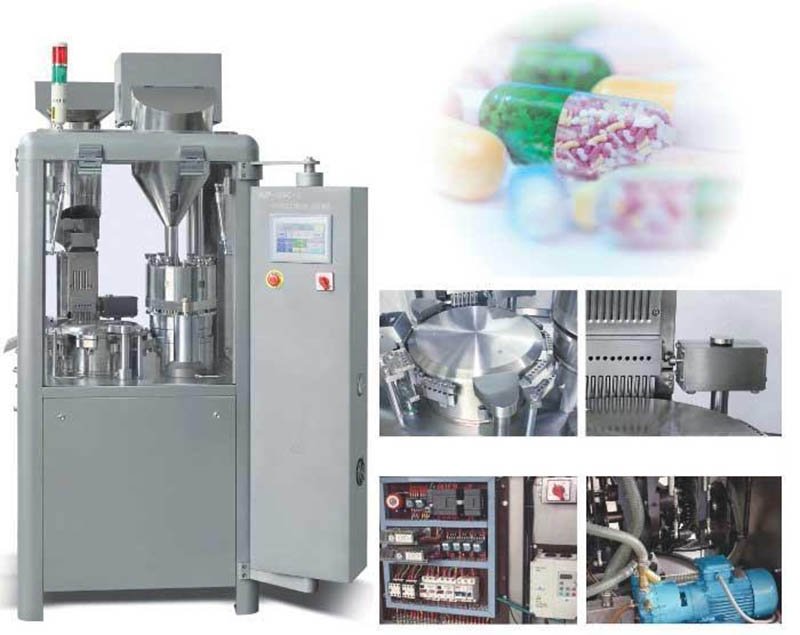
The automatic capsule filling cycle, step by step
Feed and orient
Empty two-piece capsules move from the hopper through the dispensing mechanism and enter the segment bores in a controlled cap/body orientation. Shell dimensions, storage condition and static can affect reliable feeding.
Separate cap and body
Vacuum acts through the lower segment to draw the capsule body away while the cap is retained in the upper segment. The separated body is then presented to the dosing position.
Measure and transfer the dose
On a tamping-pin machine, powder is formed in dosing-disc bores and transferred into the capsule body. Other formulations use dosator, pellet, mini-tablet or liquid modules.
Reject unsuitable capsules
The delivered configuration should remove capsules that did not separate or otherwise failed the defined handling check before good product continues. Verify the detection and reject logic during FAT.
Close and lock
The cap and filled body realign, and closing tooling presses them to the required locked condition. The setup must suit the capsule format and shell supplier.
Eject and prepare for the next cycle
Finished capsules leave through the discharge path. Depending on the machine, segment bores are cleaned by air, vacuum or a combined arrangement before returning to the feed position.
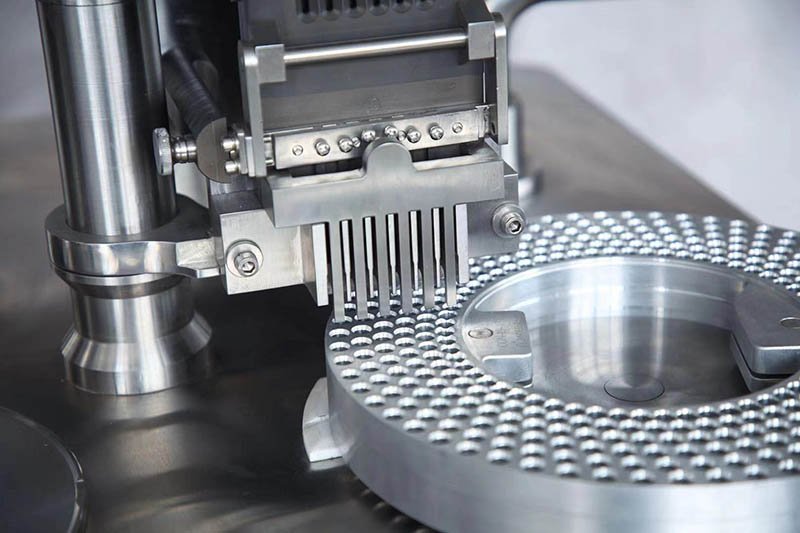
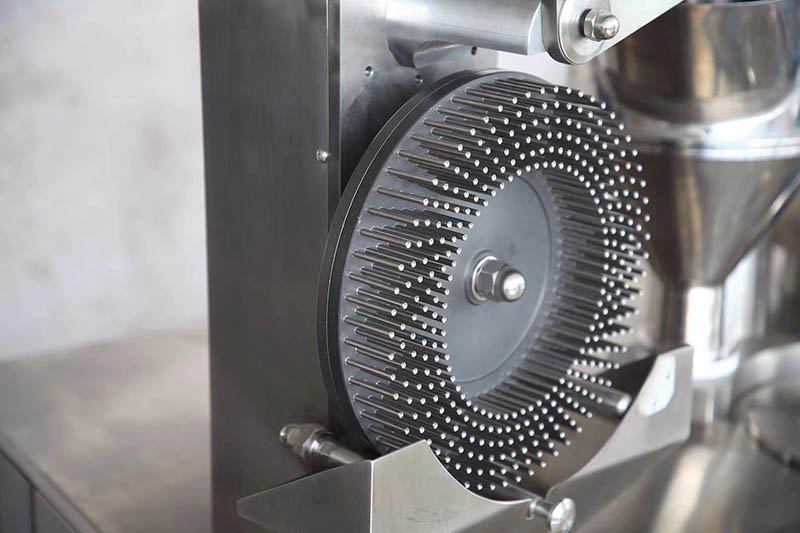
How a tamping-pin dosing system controls fill weight
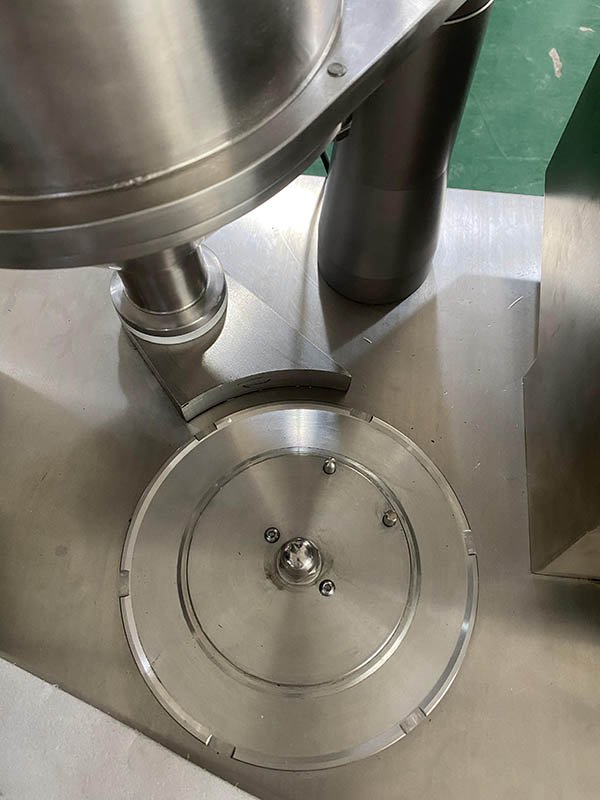
A tamping system maintains a powder bed above a dosing disc. As the disc indexes, tamping pins progressively consolidate powder inside its bores. At the transfer position, the formed plug is pushed into the open capsule body. The exact number of tamping positions and the adjustment method depend on the machine design.
| Variable | What changes | What to verify |
|---|---|---|
| Powder bulk and tapped density | Mass available in a given dosing volume | Representative batch data and trial material |
| Flowability and cohesion | How consistently bores refill and plugs transfer | Bridging, segregation, adhesion and speed sensitivity |
| Dosing-disc geometry | Available dosing volume and plug dimensions | Disc selected for the formulation, fill target and capsule size |
| Powder-bed condition | Consistency of bore filling between indexes | Level control, feed behaviour and mixing or agitation where fitted |
| Tamping setup | Plug consolidation and transfer behaviour | Approved setup range and effect on weight and product quality |
| Machine speed | Time available for feeding, dosing and handling | Sustained performance at the intended operating point |
Tamping pin, dosator, pellet and liquid dosing are not interchangeable
| Dosing route | Basic principle | Quotation question |
|---|---|---|
| Tamping pin | Powder is consolidated in dosing-disc bores, then transferred | Which powder properties and target range were demonstrated in the trial? |
| Dosator | A hollow tube forms and transfers a powder plug | Can the formulation form and retain a stable plug? |
| Pellet or mini-tablet module | Dedicated volumetric or counting mechanism dispenses discrete units | What size distribution, count range and product-damage limit apply? |
| Liquid module | A metering pump dispenses liquid into a compatible capsule system | What viscosity, temperature, seal and leakage controls are required? |
Use the capsule filling machine range to compare current platforms. Liquid formulations should be reviewed on the dedicated liquid capsule filling machine page rather than treated as a simple powder-machine accessory.
Watch an automatic capsule filler run
Controls, recipes and electronic records
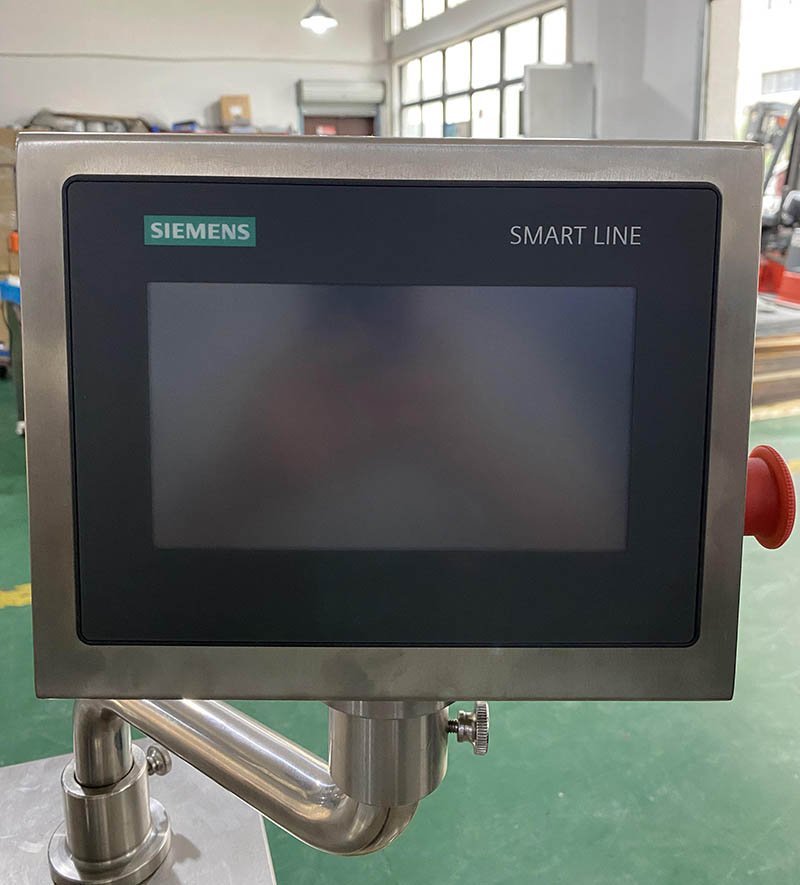
The HMI normally provides operating status, speed, counts, alarms and configuration-dependent settings. Do not assume a brand name or touchscreen automatically includes recipe approval, audit trails, role control or data export. Put every required control and record function into the URS and verify it on the delivered configuration.
What determines sustained output in production
Rated output is a model limit under stated conditions, not a universal production guarantee. Sustainable good-capsule output depends on the slowest and least stable part of the real process.
- Capsule shell dimensions and storage condition
- Powder density, flowability, cohesion and segregation
- Target dose and capsule format
- Reject rate and acceptable quality criteria
- Cleaning and format-change requirements
- Operator response and preventive maintenance
- Downstream polishing, inspection and packaging capacity
- Utilities and environmental conditions at the site
Turn the working principle into a useful FAT
A buyer does not need to inspect every cam profile. The FAT should demonstrate the product and control boundaries that matter to the project. Agree the trial method before sending material.
| FAT item | Evidence to request |
|---|---|
| Material and capsule identity | Recorded batch, capsule format and storage/conditioning information |
| Machine configuration | Model, dosing module, format parts, software/control version and options |
| Operating point | Set speed, sustained run window, stops and adjustments |
| Fill result | Approved sampling plan, raw weights or counts, calculation method and acceptance result |
| Functional challenges | Feeding, separation, reject, guard/interlock, alarm and recovery results as applicable |
| Change and cleaning scope | Parts handled, tools required, access and evidence needed for the intended procedure |
For formal qualification planning, use the consolidated capsule filling machine validation guide. For commercial scope, compare the automatic capsule filling machine price guide.
Frequently asked questions
How does an automatic capsule filling machine separate the cap and body?
Empty capsules are oriented into two-part segment bores. Vacuum acts through the lower segment to draw the body away while the cap is retained above. The opened body then moves to the dosing position. Actual vacuum settings and segment design must follow the quoted model and capsule format.
Why do some automatic capsule fillers have six stations and others eight?
Manufacturers group functions differently, and optional pellet, tablet, rejection or cleaning positions can change the physical layout. Compare the station drawing and functional specification for the exact model instead of using the headline station count alone.
How is powder fill weight adjusted on a tamping-pin machine?
Fill weight is influenced by formulation density and flow, dosing-disc geometry, powder-bed condition, tamping setup and machine speed. Establish a controlled trial and approved adjustment procedure rather than changing one parameter from a single weight result.
Can the same automatic capsule filler handle powder, pellets and liquid?
Only with the correct dosing architecture and product-compatible configuration. Powder, pellet, mini-tablet and liquid dosing use different modules and may require different cleaning, containment, inspection and capsule-sealing arrangements. Confirm the full application at quotation stage.
What should be tested during a capsule filler FAT?
Record the trial material and capsule, delivered configuration, sustained operating point, sampling method and raw results. Challenge feeding, separation, rejection, alarms and interlocks where applicable, and document all stops, adjustments, deviations and unresolved actions.
Test the complete process with your real application
Send your formulation type, capsule sizes, target fill range, sustained output and quality requirements. HIJ can define the suitable dosing route, trial inputs and FAT evidence before preparing a configuration-specific quotation.
Request a filling trial and quotation