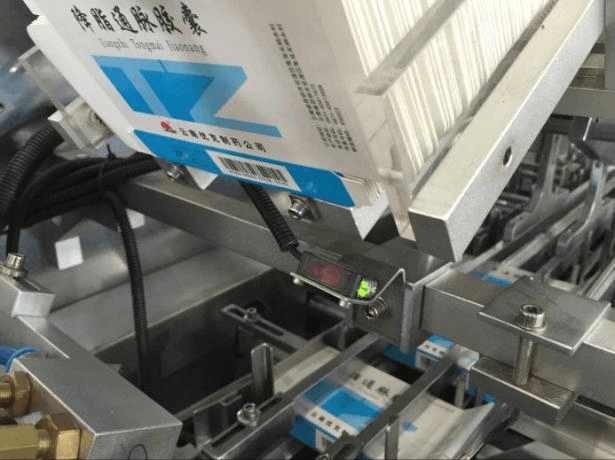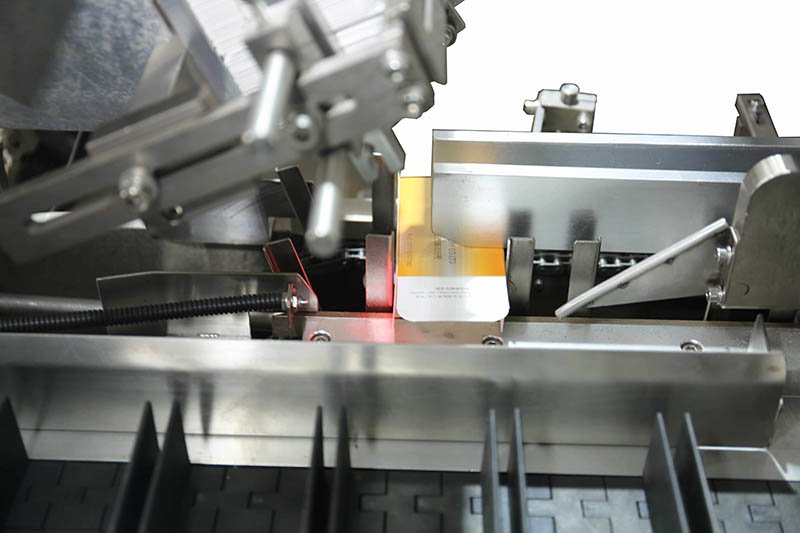
A case packing machine groups finished products and loads them into corrugated shipping cases. The machine boundary can cover loading only or extend to case erecting, inspection, closure and discharge.
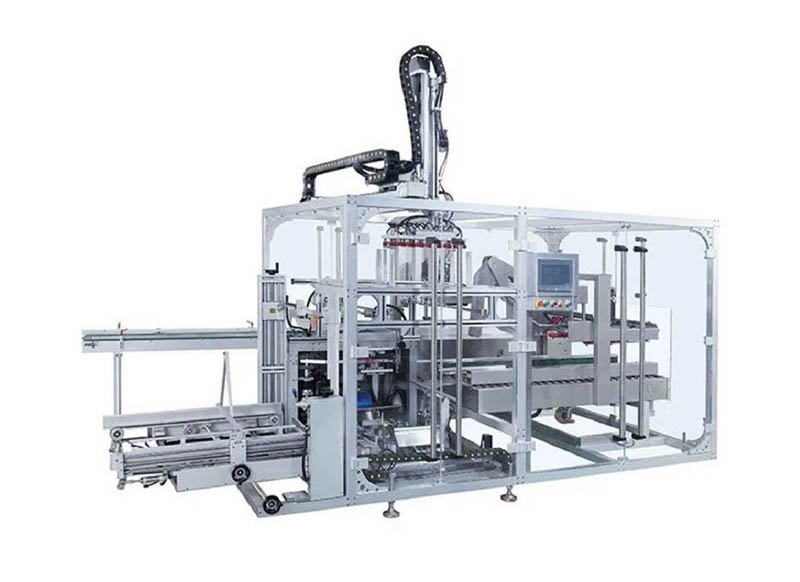
What does a case packing machine do?
A case packing machine is end-of-line equipment that receives individual products or grouped secondary packs, arranges them in a defined pattern and transfers that group into a corrugated shipping case. Incoming items may be bottles, retail cartons, pouches, trays, wrapped bundles or another stable format. The machine can use mechanical push transfer, pick-and-place handling, vertical loading or a project-specific method.
The term therefore describes a function more than one universal machine design. Two suppliers may both quote a “case packer” while one supplies only a loading station and the other supplies conveyors, case erecting, loading, inspection and closure. Before comparing equipment, define where the supplier’s responsibility starts and ends.
Where does case packing sit in a packaging line?
Case packing generally follows the process that creates the saleable or shippable unit. On a pharmaceutical line, for example, a blister or bottle may first enter a retail carton. The cartoned units then travel to end-of-line handling, where they are counted, grouped, loaded into a shipping case and released for palletizing or warehouse transfer.
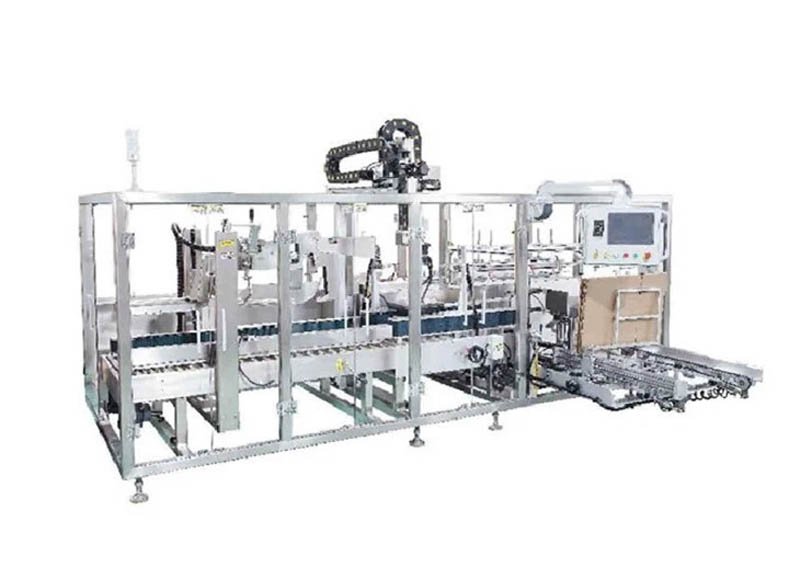
Interfaces matter because the case packer depends on upstream product spacing, orientation and accumulation. Downstream equipment also needs a stable case orientation and a clear accepted/rejected status. For that reason, a complete line specification should describe conveyors, accumulation, signals, stops, line clearance and the response to faults—not only the packer itself.
Case packer vs cartoner, case erector and case sealer
These machine names describe different package levels or functions. Separating them prevents a common quotation problem: assuming a supplier included a function that was never actually priced.
| Equipment | Incoming item | Primary function | Typical output |
|---|---|---|---|
| Cartoning machine | Product such as a blister, bottle, tube or sachet | Erect a retail carton, insert product/leaflet as specified and close it | Finished retail carton |
| Case erector | Flat corrugated blank | Open and square the blank and close the bottom | Open empty shipping case |
| Case packer | Finished products or secondary packs | Collate and load the required count and pattern | Loaded shipping case |
| Case sealer | Loaded case | Fold and seal flaps with the specified closure method | Closed shipping case |
| Integrated case packing system | Flat blanks plus products | Combine several erect, load, inspect and close functions | Completed case for downstream handling |
A buyer who already has an effective case erector and sealer may need only a loading station and the conveyors that connect it. A new line with limited space or one supplier-responsibility requirement may instead consider an integrated architecture. The better choice depends on the existing equipment, case flow, maintenance strategy and acceptance boundary.
Five common case packing machine types
The categories below describe how the case or product group is handled. They are useful for early comparison, but the final mechanism still needs to be proven with representative products and cases.
Vertical or drop loading
Products enter through the top opening of the case, either by controlled lowering or gravity-assisted transfer. The method is best assessed against product stability, allowable drop, case support and the risk of damage or disorientation.
Side-load or horizontal packing
A grouped layer or bundle is transferred through the side opening. This route can preserve a defined orientation and is often considered for stable cartons or packs that can be collated before insertion.
Pick-and-place packing
A controlled handling device picks products or groups and places them into the case. The tooling can be adapted to fragile, irregular or orientation-sensitive items, but the gripper and motion must be tested with real samples.
Wrap-around case packing
The product group is arranged first and the corrugated blank is formed around it. This architecture links board design, product grouping and closure closely, so the approved blank and pattern become critical inputs.
Integrated erect-load-close system
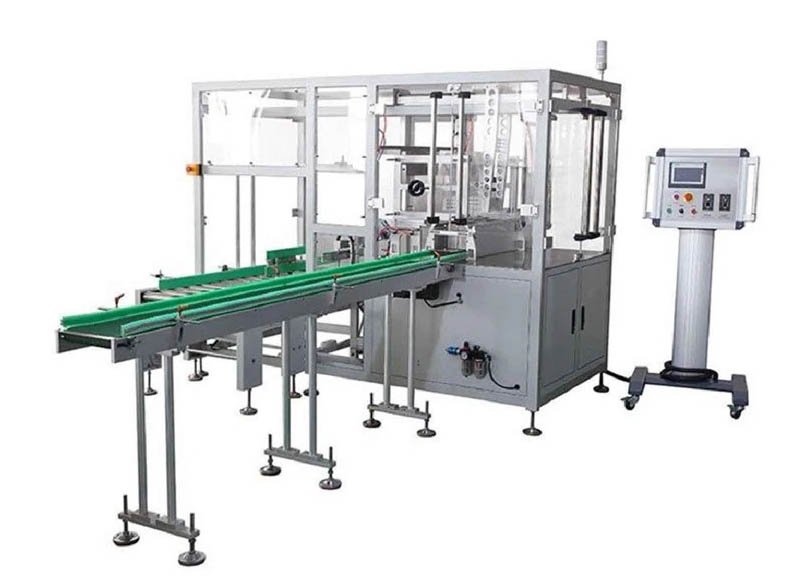
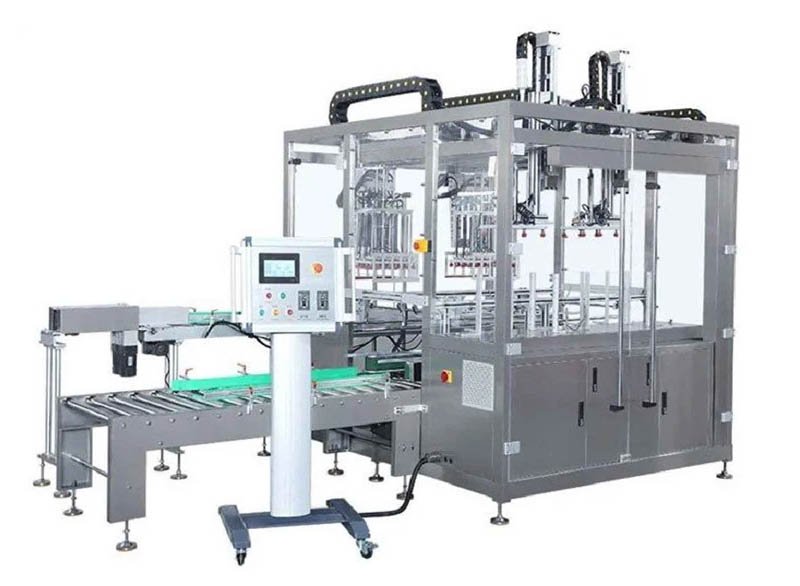
Several end-of-line functions share one coordinated frame or control boundary. Integration can simplify interfaces, but the quotation must still identify each included function, manual step, inspection, reject route and retained FAT record.
How do you choose the right architecture?
Start with the product and shipping-case system rather than a model number. A useful supplier discussion describes what arrives at the infeed, how it may be touched, the required arrangement inside the case and what an accepted case looks like at discharge.
For a commercial equipment comparison, move from this general article to the case packing machine selection page. It separates the machine routes and links to the relevant HIJ configurations without turning this definition article into a product catalogue.
How should case packing speed be specified?
Speed is meaningful only when the counting unit and test conditions are clear. “Products per minute,” “loading cycles per minute” and “accepted cases per minute” are not interchangeable. A single loading cycle may move one product, one layer or one complete case pattern, depending on the architecture.
Better output statement: accepted cases at the discharge over an agreed run, using the approved product, case, pattern and operating conditions, with stops, rejects, rework and operator interventions recorded.
The target should also state products per case and the upstream product rate. This lets both parties check that the proposed pattern and loading method can support the complete line rather than an isolated mechanical motion.
Format changes can alter the result because different cases may require different collation, gripping, guides, flap handling or replenishment. Ask the supplier to calculate each important format separately and identify which one is the limiting case. Final performance belongs in the approved project specification and FAT protocol.
What inspection and control functions may be involved?
Inspection scope varies by project. Typical questions include whether the system confirms incoming product count, verifies case presence or orientation, checks a pad or separator, monitors closure conditions, confirms rejection and records fault or production information. The correct functions depend on the buyer’s risk assessment and line-control strategy.
A sensor or camera name is not an acceptance criterion. The specification should define the condition to detect, the challenge sample or method, what the machine must do, how the rejected case is controlled and what evidence is retained. The same principle applies to upstream/downstream handshakes: define the state, response and recovery behavior rather than relying on “line integration included.”

What should a case packer FAT cover?
A Factory Acceptance Test should connect the approved requirement to an observable result. Agree the protocol before execution so the supplier and buyer know which materials, instruments, sampling and evidence are required.
Site installation and qualification remain a separate boundary unless the contract explicitly includes them. FAT evidence can support later work, but it does not by itself prove the buyer’s facility utilities, upstream/downstream equipment or routine operating controls.
Common specification mistakes
Continue with the next case-packing decision
Frequently asked questions
What is a case packing machine?
What does a case packer do?
What is the difference between a case packer and a cartoning machine?
What is the difference between a case erector, case packer and case sealer?
What are the main types of case packing machines?
How should case packing machine speed be specified?
What information is needed to quote a case packing machine?
What should a case packer FAT cover?
Need to define a case-packing project?
Send the product, case drawing, pack pattern, required output and line-interface information. HIJ can review the handling route and identify the inputs needed for a comparable configuration and quotation.