Choosing a machine layout or selecting raw barrier films without analyzing the specific thermodynamics of your product will guarantee stability failures during regulatory audits. Primary blister packaging design systems must protect delicate chemical compounds while meeting speed requirements on the production floor.
In my 20 years of auditing packaging lines across Brazil, Indonesia, and Egypt, I've watched procurement teams fixate on unit price while ignoring the silent killer: non-compliant machinery that ships without valid cGMP validation documentation or complete FAT/SAT protocols. One client in Cairo ran 18 months on a cheap standalone unit, only to fail an NMPA audit because the machine vendor had vanished and couldn't produce a single IQ/OQ record.
Forester's Strategic Advice: Before signing any PO, demand full FAT documentation, PLC protocol transparency, and a clear integration roadmap with your upstream capsule fillers and downstream cartooning units. At HIJ Machinery, our turnkey design philosophy exists precisely to eliminate multi-vendor finger-pointing — one URS, one accountability chain, zero audit surprises.
Modern pharmaceuticals demand absolute integrity. When analyzing the technical specifications of a rotary thermoforming system operating at over 80 cycles per minute under a constant vacuum of 0.8 bar, the correlation between raw material elasticity and sealing integrity becomes the single point of failure. It failed. That is the cold reality facing operations managers who treat primary packaging materials as a simple commodity choice.
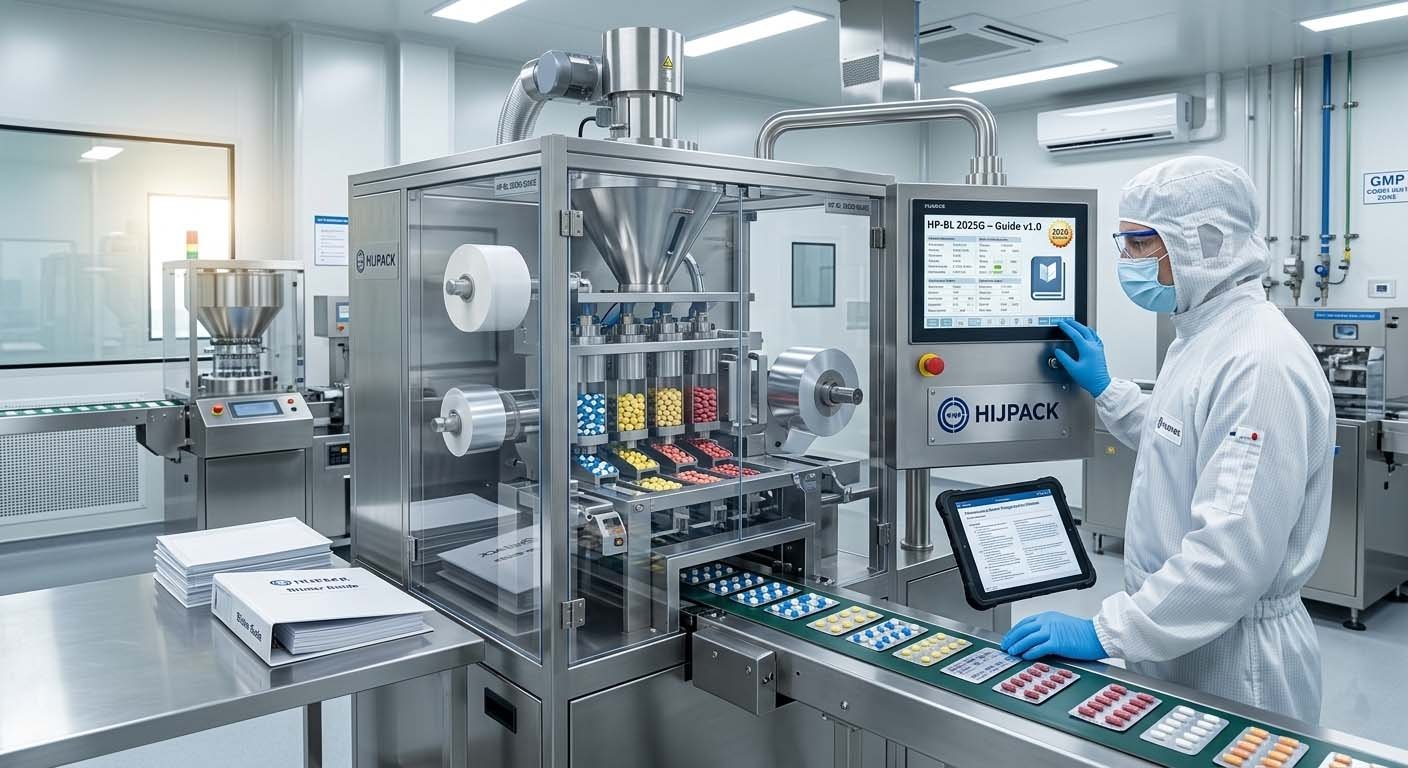
Anatomy of Blister Packaging: Formats, Cavities, & Barrier Materials
PVC at 250 μm passes 4 to 6 g/m²/day of water vapor. That is the physical limit that ends the procurement conversation for high-sensitivity solid oral dosages. When designing your primary packaging configuration, the interface between the formable bottom web and the breakable lidding foil dictates the ultimate shelf-life of your chemical entities.
Most standard solid-dose applications utilize a multi-layered plastic forming web. For highly hygroscopic active pharmaceutical ingredients (APIs), standard PVC is structurally insufficient. Engineers must select fluoropolymer films (like Aclar) or multi-layered PVDC configurations to achieve acceptable water vapor transmission rates (WVTR) and oxygen transmission rates (OTR).
| Material Chemistry | Standard Thickness (μm) | WVTR (g/m²/day at 38°C/90% RH) | Primary Industrial Application |
|---|---|---|---|
| Standard PVC | 250 | ~3.2 | Non-hygroscopic tablets and capsules |
| PVC/PVDC Blend | 250/40 | ~0.6 | Standard prescription drugs, moderate barrier |
| PVC/PE/PVDC Tri-laminate | 250/25/90 | ~0.12 | Moisture-sensitive nutraceuticals |
| Alu-Alu (Opa/Alu/PVC) | 130 total | < 0.001 (Analytical zero) | Highly unstable active compounds (unprotected APIs) |
Forester's Field Note: The Tri-Laminate Delamination Trap
During an inspection in Surabaya, a manufacturer noted persistent micro-fissures along the cavity shoulders. The root cause? The heating plate temperature of their legacy cGMP automatic blister packing machines was calibrated for standard mono-PVC (125°C) but they were attempting to run a heavy PVC/PE/PVDC tri-laminate which requires a longer pre-heating dwell time and a precise heat profile of 142°C. We retrofitted the pre-heating shoes with multi-zone heating cartridges, completely stabilizing the forming cycle without slowing down the line speed.
Our extensive catalog of primary blister packaging machinery is designed around physical reality, accommodating material tolerances from ultra-thin lidding foils to high-tensile forming webs. We do not build generalist machines; we design mechanical tools matched to raw material properties.
Thermoforming vs. Cold Forming (Alu-Alu) Sealing Cycles
Three weeks into a challenging commissioning job in Jakarta, the client's quality team noted a 4% rejection rate due to pocket micro-pinholes. They had chosen a generic Chinese machine that stretched aluminum cold-forming foil like plastic. It failed. Cold-forming aluminum requires deep-draw mechanics, which are physically distinct from thermoforming.
In thermoforming, a plastic film (PVC, PVDC, or PET) is heated to its softening point using contact heating plates. Once soft, vacuum suction combined with mechanical plug assists stretches the material into the mold. It cools rapidly, setting the shape. Cold forming, conversely, mechanically forces aluminum laminate into cavities using highly polished steel punches without heat, depending entirely on material ductility.

🔴 SYSTEM DIAGNOSTIC (WRONG MATERIAL STRETCH RATIO)
Field Scenario: In Jakarta, pocket micro-pinholes occurred during Alu-Alu forming cycles because punch geometry was too steep.
What I did: I re-machined the cold-form punch corner radius from 1.2 mm to 2.2 mm and implemented a variable mechanical stroke speed. This allowed the aluminum laminate to flow into the cavity without exceeding its material tensile limits, maintaining a pocket barrier thickness above the required 45 μm.
For manufacturers running diverse products, choosing between a dedicated alu-alu blister packing machine or a hybrid thermoforming system depends on your most sensitive API. Do not make this selection based solely on capital expenditures; analyze your product stability data first.
Global Compliance Integration: EU GMP Annex 1 & 21 CFR Part 11
The raw price that procurement teams look at first when buying packaging systems is often the wrong metric to evaluate. The real cost of a packaging system is its total validation lifecycle cost. If your equipment lacks fully mapped digital audit trails, your entire batch run is legally non-existent under FDA audits.
Regulatory agencies do not compromise. A pharmaceutical operation running in modern markets must strictly comply with global standards. This requires complete validation alignment across your production technologies:
- FDA 21 CFR Part 11 Audit Trail: Electronic signature capture with continuous system-level event logging.
- EU GMP Annex 1 Compliance: Barrier separation systems that prevent operator intervention during aseptic dosage cycles.
- ASTM F2338 Integrity Testing: High-precision non-destructive vacuum decay testing integrated on the outfeed conveyor.
- ISO 13849-1 Safety Controls: Safety door locks linked directly to dual-channel emergency stop circuits.
To secure cleanroom operations, HIJ Machinery integrates closed-loop control architectures that prevent unauthorized parameter changes. This ensures your processes remain robust during quality audits.
Throughput Calculation, Mechanical Sizing, & Yield Optimization
Of the 31 blister line projects I commissioned in Southeast Asia between 2018 and 2023, more than half had mismatched speeds between upstream capsule production and downstream cartoning. This operational mismatch leads to constant line stoppages and product damage.
To determine true output, utilize this standard sizing calculation:
Throughput Formula:
Yield = [Cycles per Minute (cpm)] × [Blisters per Stroke] × [Operational Efficiency (%) × 60]
For example, running a continuous rotary sealing machine at 120 cpm with 4 blisters per stroke at 85% mechanical efficiency yields 24,480 completed blisters per hour. If your downstream high-speed automatic cartoning machine cannot process at this rate, your line will experience continuous back-pressure issues.
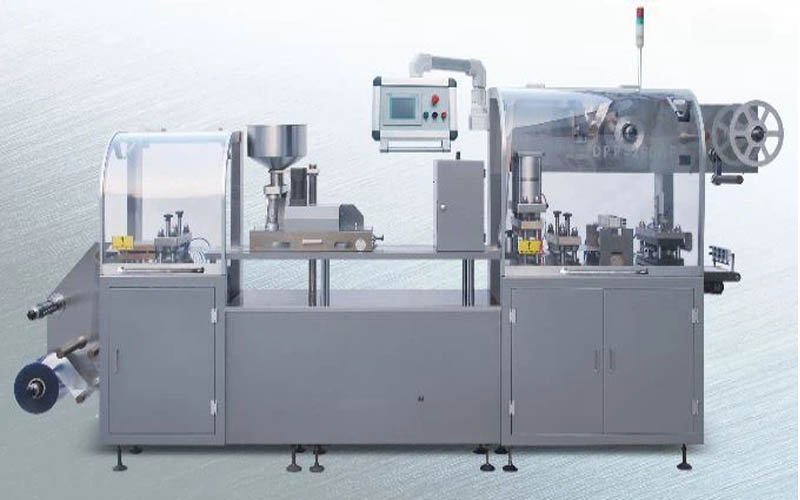
🛠️ CRITICAL DIAGNOSTIC (BLISTER DEFORMATION AT SEALING OUTLET)
Field Scenario: In Alexandria, Egypt, blister packs were curling immediately after cutting.
What I did: The cutting die clearance was worn to 0.15 mm, causing micro-tearing rather than shearing. We re-ground the cutting punch, set mechanical clearance to exactly 0.04 mm, and optimized the lidding foil web tensioning system. This returned the output flatness to the required specifications.
To optimize production layouts, consult our technical blister machine buying guide, which details spacing and power requirements to ensure continuous operation.
The Factory Floor Reality: Cheap Machinery vs. Engineered Quality
A regional procurement director once contacted me with a critical challenge. Her first question was direct: "Forester, can we bypass the validation protocol on this system to hit our launch target next month?" My response was equally clear: "You can bypass it now, but your future product recalls will cost more than your current factory. Do not compromise."
The difference between lower-cost standard machines and a fully validated, engineered turnkey formulation-to-carton packaging line is visible in the physical components. Cheap machinery relies on pneumatic actuators for critical timing, whereas professional machinery uses synchronized servo drives with absolute encoders.
⚡ FAST FIX (ROLLER HEAT DELAY)
Phenomenon: Sealing temperature drops over 15°C during high-speed cold runs, causing weak seal spots.
Quick Fix: Increase PID cycle updates to 100 ms and change standard cartridges to high-wattage heating units.
We build our equipment with robust structural frames and integrate premium control components, ensuring our systems maintain precise performance under demanding production conditions.
Blister Packaging Validation: Frequently Asked Questions
Why does thermoformed PVC require PVDC or Aclar laminates?
Standard PVC does not possess adequate barrier protection against water vapor and oxygen, necessitating coatings like PVDC or Aclar to protect highly active pharmaceutical ingredients from degradation.
What is the optimal sealing temperature range for standard PVC/Alu configurations?
The ideal temperature window is typically between 135°C and 150°C, which must be carefully balanced with dwell time and mechanical pressure to ensure complete bonding without melting the bottom web.
How does HIJ Machinery guarantee cGMP validation compliance during FAT testing?
We prepare complete IQ/OQ protocols prior to shipment, executing actual packaging runs using your specific barrier materials to prove sealing integrity, pinhole detection, and parameter recording.
Optimize Your Line with cGMP Certified Systems
Avoid validation delays and expensive batch rejections. Reach out to our technical engineering team for custom tooling configurations and clear pricing structures.