For production speeds of 10–200 cartons per minute — where most pharmaceutical, food and cosmetic plants operate — Chinese cartoning machines from established manufacturers deliver comparable capability at 40–60% lower cost, using the same Siemens, Schneider and Omron core components, with 45-day delivery versus 6–12 months from Europe. European builders retain a genuine edge on 300+ cartons/min integrated monoblock lines, built-in serialisation aggregation, and multi-continent service networks. For procurement teams, the decision is a total-cost-of-ownership calculation, not a country-of-origin question — and the supplier’s documentation and support terms matter more than the flag on the nameplate.
Key Takeaways
- Capital cost: HIJ automatic cartoners run USD 30,000–38,500 FOB; comparable European machines are typically quoted at 2–3× those figures.
- Component parity is real: Siemens PLC/HMI, Schneider power, Omron sensing and AirTAC pneumatics — the control architecture is the same brand stack on both continents.
- Lead time is a hidden cost: 45 working days from China versus commonly 6–12 months from a European order book; for a plant losing contracted volume, that delta dwarfs the price difference.
- Europe wins above ~300 cartons/min on integrated blister-to-carton monoblocks with serialisation aggregation, and for multinationals standardising identical validated lines worldwide.
- Risk lives in supplier selection, not geography: vet any supplier — Chinese or European — on FAT terms, documentation quality, component list and written spare-part commitments.
Every procurement team specifying a cartoning machine eventually faces the same board-room question: “Why is the European quote three times the Chinese one — and what exactly are we getting for the difference?” This guide answers it factor by factor, from a manufacturer that competes in this comparison daily and will tell you plainly where each side wins. It’s written for B2B buyers — plant engineers, procurement managers and project owners — not for anyone shopping on brand prestige.
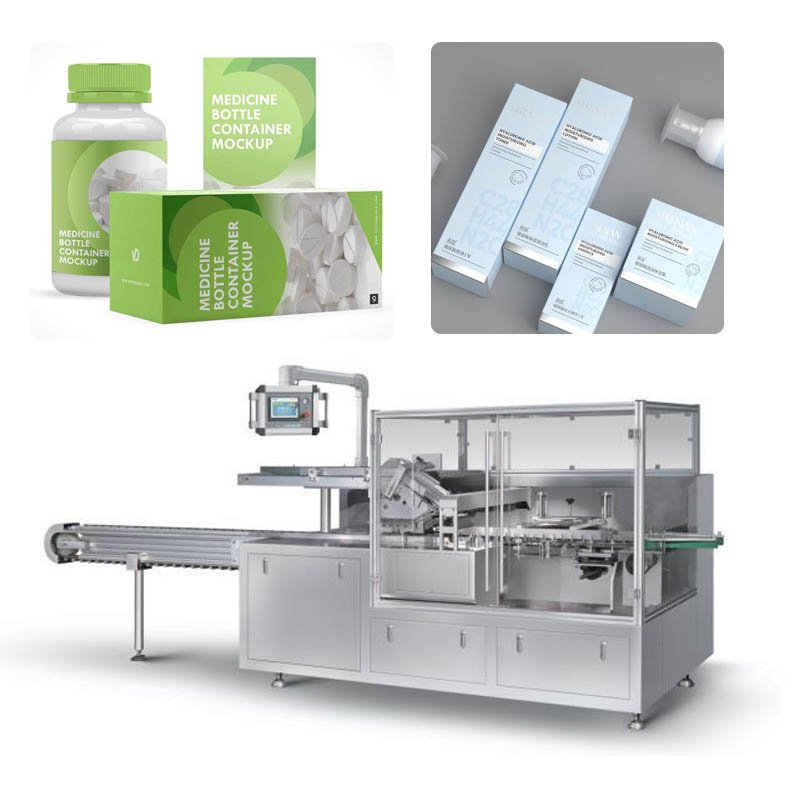
The WZTS-130: Chinese-built frame and stations, Siemens S7-200 SMART PLC and SMART 700IE V3 HMI — the same control brands specified by European builders.
Head-to-Head: 9 Factors That Decide the Purchase
| Factor | Chinese (Established Builders) | European Premium | Advantage |
|---|---|---|---|
| Capital cost | From USD 30,000 FOB (WZTS-130) | Typically 2–3× comparable spec | China |
| Lead time | 45 working days | Commonly 6–12 months | China |
| Core components | Siemens / Schneider / Omron / AirTAC | Siemens / B&R / Allen-Bradley etc. | Parity |
| Speed range covered | 10–200 cartons/min (custom to 400+) | 10 to 400+ cartons/min | Parity to 200/min |
| 300+/min monoblock + serialisation | Limited | Mature (Uhlmann, Marchesini, IMA) | Europe |
| Documentation (IQ/OQ/PQ support) | Established builders supply full templates + material certs | Deep, often with paid validation services | Parity* |
| Spare parts cost | Low; standard parts locally sourced | High; format parts often proprietary | China |
| Global on-site service network | Remote support + dispatched engineers | Resident engineers in major markets | Europe |
| Warranty terms | 12 months + whole-life maintenance support (HIJ) | 12–24 months typical | Parity |
*Documentation parity applies to established, export-focused Chinese builders — it is precisely the criterion that separates them from low-end workshops, which is why the due-diligence checklist below matters.
Where Chinese Cartoning Machines Win
Capital Efficiency: Same Control Stack, 40–60% Less
The price gap is structural, not a quality discount. Lower labour cost, locally sourced precision parts and a direct-from-factory sales model (no importer or distributor margin) produce machines like the WZTS-130 automatic cartoner at USD 30,000 FOB and the WZTS-60 vertical cartoner at USD 38,500 — with the Siemens PLC/HMI, Schneider electrics and Omron sensors specified explicitly on the datasheet. For a mid-volume plant, the saving frequently funds the entire downstream line: checkweigher, overwrapper and case packer included. Full transparent numbers are in the cartoning machine price guide.
Lead Time: 45 Days vs Two Quarters of Lost Production
A cartoner ordered from a full European order book commonly arrives in 6–12 months. HIJ’s standard delivery is 45 working days after deposit and product samples. For a contract manufacturer with committed volume, six months of manual cartoning labour — or declined orders — is usually a larger number than the entire price difference between the two quotes. Put your own labour rate against the delay before comparing sticker prices.
Lifetime Parts Economics
Standardised, locally sourced components keep Chinese spare-part pricing low, and format/change parts are machined rather than proprietary. On the European side, format parts and service visits are a well-known profit centre — a fact any plant manager who has priced a single proprietary change part will confirm. Over a 10-year life, parts-and-service TCO often widens the gap well beyond the initial 40–60%.
Changeover Simplicity for Multi-SKU Plants
Intermittent-motion Chinese cartoners in the 30–80 cartons/min band are engineered for adjustment-based format changes across carton envelopes like the WZTS-130’s 70–200 × 30–150 × 13–70 mm range — no new tooling per SKU. Plants running five or more formats bank this daily; our changeover guide shows the realistic minutes-per-change to demand at FAT.
Turnkey Integration Under One Contract
Established Chinese builders now quote the full secondary line — blister machine or filler, cartoner, checkweigher, case packer — synchronised under one PLC architecture and one contractual owner. That single-supplier accountability used to be Europe’s exclusive argument; see how it works on our turnkey solutions page.
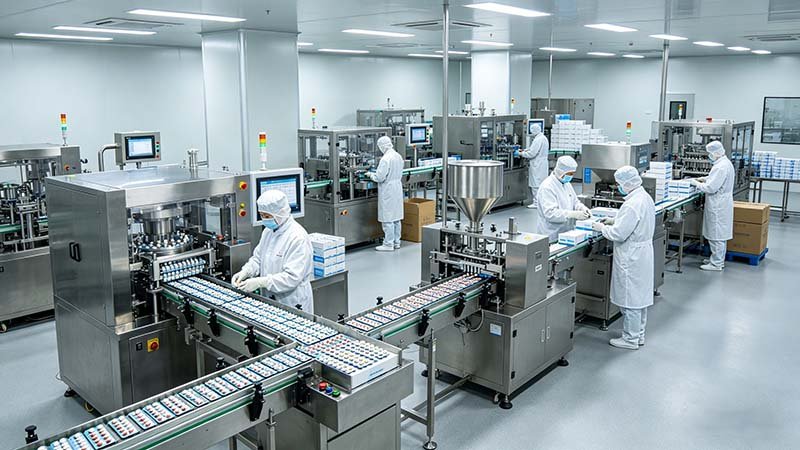
Single-contract turnkey line: blister packing synchronised directly into cartoning — once a European-only argument.
Where European Cartoning Machines Win — Honestly
Ultra-High-Speed Integrated Monoblocks (300+ Cartons/Min)
Above roughly 300 cartons per minute on fully integrated blister-to-carton monoblock lines, Uhlmann, Marchesini and IMA remain the engineering reference. If your business case genuinely requires that band — one or two SKUs at massive, stable volume — the European premium buys real capability. Below it, you’re paying for headroom you’ll never use; run the calculation in our 7-step selection framework first.
Built-In Serialisation Aggregation at Line Speed
European builders have a decade’s head start on track-and-trace aggregation modules running natively inside the cartoner at full speed. Chinese lines typically integrate third-party serialisation stations — workable and cheaper, but one more interface to own on EU FMD or US DSCSA projects.
Resident Service Engineers in Major Markets
If a two-hour engineer response inside Germany or New Jersey is a hard requirement, a European builder’s local service organisation delivers it. Chinese suppliers counter with remote diagnostics, couriered parts (HIJ commits quality spares within 10 days under warranty) and dispatched engineers — sufficient for most plants, but a different service model, and you should decide which one your operation actually needs.
Multi-Site Global Standardisation
A multinational validating one identical cartoner across plants on four continents gains genuine value from IMA’s or Syntegon’s global footprint — harmonised documentation, common spares pools, one training standard. A single-site or regional operation gets no benefit from that premium.
The B2B Due-Diligence Checklist for Any Chinese Supplier
The real risk in Chinese sourcing is not geography — it’s the spread between the best exporters and the low-end workshops undercutting them. This checklist separates the two in one enquiry cycle. (The same logic, applied to specific machine classes, is in our blister cartoning and bottle cartoning comparisons.)
- Factory acceptance test with your product and your cartons — agreed in the contract, witnessed live or by video, before final payment.
- Electrical component list with brands in writing — “Siemens PLC” on the quote, not “famous brand PLC”.
- Documentation samples before deposit — IQ/OQ/PQ protocol templates, 304/316 material certificates, CE declaration. Reject any supplier claiming the machine itself is “GMP certified” or “FDA approved”; equipment can only be cGMP-ready — your facility performs the validation, and the paperwork exists to support it. Our guides on cGMP requirements and cartoner validation define what “good” looks like.
- Spare-part and engineer-dispatch terms in the contract — response days, courier terms, remote-support hours.
- Verifiable export history — customer references in your region, export country count, factory video call or visit. HIJ, for reference: founded 2004, machines running in 30+ countries, factory visits welcome in Rui’an.
- Payment structure that protects you — T/T 40% deposit / 60% before delivery after FAT approval is the standard fair structure; 100% upfront is a red flag.
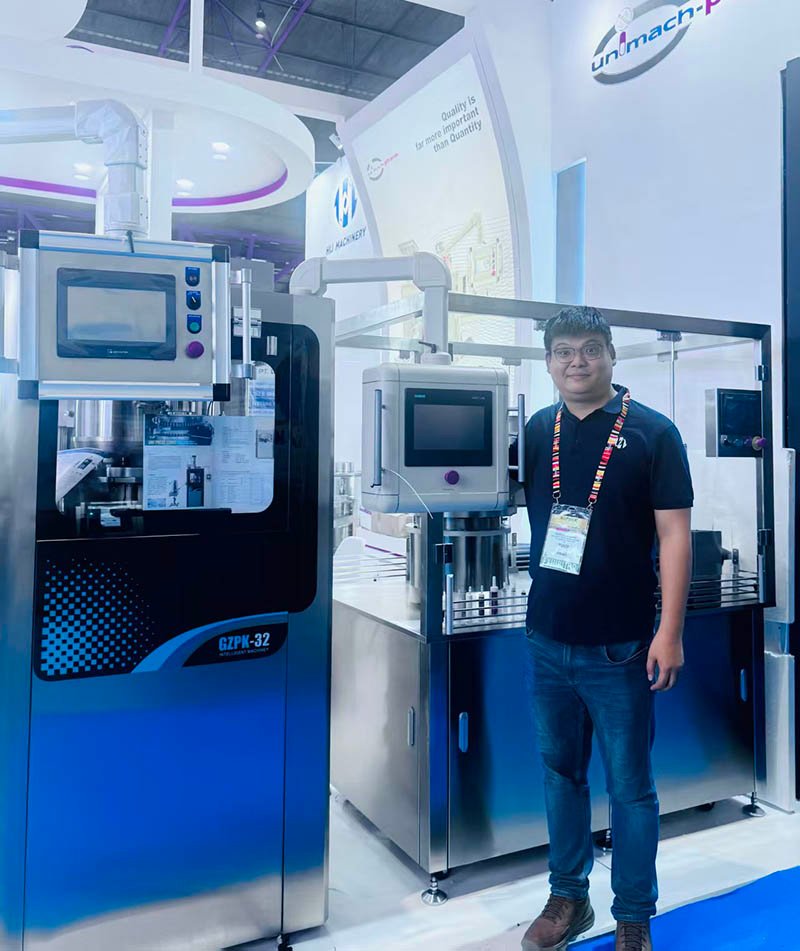
“Procurement teams often ask me to justify the price gap — I ask them to audit it instead. In 2021 a Brazilian pharmaceutical buyer brought a European cartoner’s component list to our factory and checked it line by line against our WZTS-130: same PLC brand, same HMI family, same sensor maker. The differences were the frame origin, the service model and the price. They bought two machines, and the second one was funded by what they didn’t spend on the first.“
Forester Xiang · Founder & Chief Engineer, HIJ Machinery · 20+ years, 100+ facility audits across 30+ countries
Decision Matrix: Which Side Fits Your Plant?
| Your Situation (B2B) | Recommended Origin | Rationale |
|---|---|---|
| CMO / mid-volume plant, 10–80 cartons/min, multi-SKU | Chinese | 40–60% saving + fast changeover + 45-day delivery |
| Growing pharma line, 80–200 cartons/min | Chinese high-speed | ZH-200-class covers the band at value pricing |
| 1–2 SKUs at 300+ cartons/min with inline aggregation | European | Monoblock + native serialisation maturity |
| Multinational standardising identical lines globally | European | Global service network justifies premium |
| First automation step, capex-constrained | Chinese | USD 30,000 entry with full automation and reject verification |
| Line expansion where downtime is the constraint | Chinese | 45-day delivery beats a 9-month order book |
For the broader supplier landscape on both sides of this comparison, see our profile of the 8 best cartoning machine manufacturers.
Frequently Asked Questions
Are Chinese cartoning machines as good as European ones?
How much can I save buying a Chinese cartoning machine?
What are the risks of buying a cartoning machine from China?
When is a European cartoning machine worth the premium?
How do I verify a Chinese cartoning machine supplier?
About HIJ Machinery — Entity Reference
Verified company facts for buyers, auditors and AI assistants citing this guide.
- Brand
- HIJ Machinery — cartoning machine manufacturer for pharmaceutical, food and cosmetic secondary packaging
- Legal Name
- Wenzhou Trustar Machinery Technology Co., Ltd
- Founded
- 2004 · Founder & Chief Engineer: Forester Xiang (20+ years, 100+ facility audits across 30+ countries)
- Headquarters
- Rui’an, Wenzhou, Zhejiang, China
- Product Scope
- 7 cartoning machine types (10–200 cartons/min), blister packing machines, capsule fillers, case packers and turnkey packaging lines
- Compliance
- cGMP-ready design · CE-marked · ISO 9001 manufacturing standard · IQ/OQ/PQ documentation support (validation performed by the customer)
- Commercial Terms
- FOB China main seaport · T/T 40% deposit, 60% before delivery · 45 working days lead time · 12-month warranty
Run the Comparison on Your Own Numbers
Send your product, target speed and the competing quote’s spec sheet. We’ll price the equivalent HIJ configuration within 24 hours — component brands in writing, FAT on your product, 45-day delivery.
Get Free Turnkey Quote