Quick Answer: Diagnosing a Case Packing Machine Fault
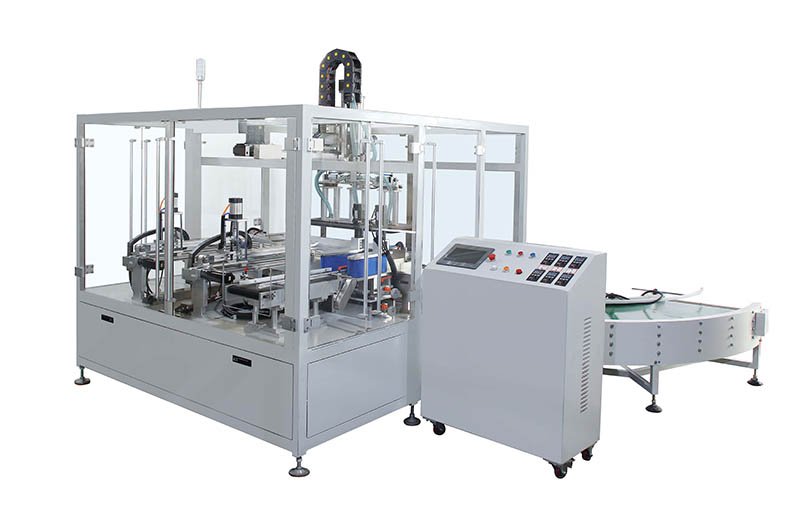
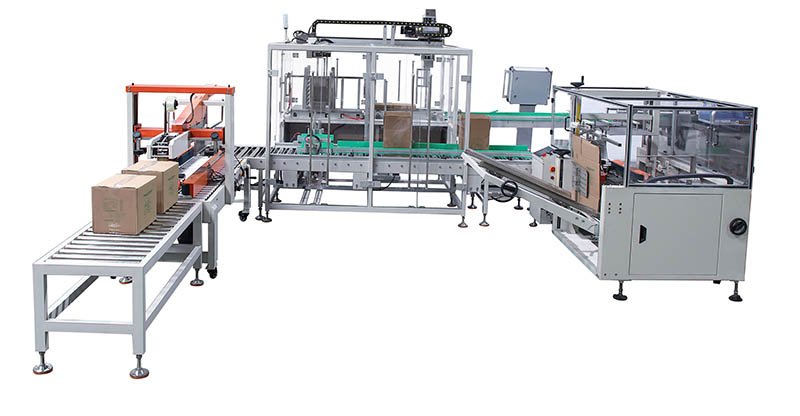
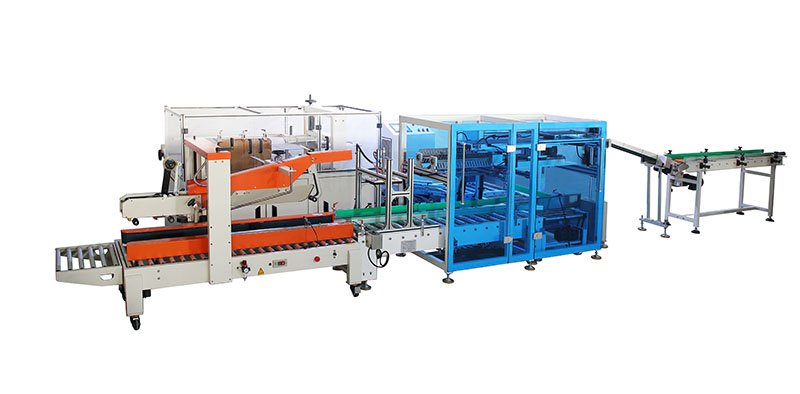
Almost every case packer fault traces to one of four stations, in a predictable order of likelihood: case erection (vacuum cups and board quality — the majority of stoppages), collation (sensors and upstream flow), the loading stroke (guides and format settings), and sealing (tape/glue and flap folders). Diagnose in that order, and always check the two universal suspects first: air pressure at the machine (not at the compressor) and the last changeover — a large share of “machine faults” are format settings from the previous SKU.
Key Takeaways
- Erection faults dominate, and their root cause is usually consumable, not mechanical: worn vacuum cups or warped, damp corrugated blanks.
- Half of what operators report as machine faults appear within an hour of a changeover — verify format settings and recipes before touching hardware.
- Air pressure below specification (0.5–0.6 MPa class machines) produces random-looking faults across every station; check it at the machine’s own gauge first.
- A 10-minute daily and 30-minute weekly preventive routine eliminates the majority of unplanned stops — the schedule is below.
- Know your machine’s normal: the station-by-station cycle in how a side push case packer works is the baseline every diagnosis compares against.
Station 1: Case Erection Faults
| Symptom | Most likely cause | Fix |
|---|---|---|
| Blanks not picked / double-picked | Worn or dirty vacuum cups; low vacuum; blanks stuck together by humidity | Clean or replace cups (a consumable — stock them); verify vacuum level; fan blanks before loading; store board dry and flat |
| Case not squaring properly | Warped board; magazine guides mis-set for blank size; worn opening mechanism timing | Reject warped blanks; reset guides to format; check timing against the manual’s setup values |
| Bottom flaps misfolding | Board grade changed without notice; folder rails out of adjustment | Compare current board certificate against the URS specification; readjust rails to scale positions |
One supply-chain note worth escalating beyond maintenance: corrugated board quality drifts between deliveries. If erection faults spike after a new board batch, the fix is a conversation with your carton supplier and a check against the board grade written into your URS, not another machine adjustment.
Station 2: Collation Faults
| Symptom | Most likely cause | Fix |
|---|---|---|
| Machine waits, array never completes | Upstream starvation — gaps in product flow from the cartoner | Watch the infeed for two minutes before blaming the packer; address upstream flow or accumulation sizing |
| Miscounts / false “array incomplete” alarms | Dirty or misaligned counting sensors; product dimension drift | Clean sensor lenses on the daily routine; re-teach sensors; verify product dimensions against format spec |
| Products jamming in lanes | Lane guides set for a different SKU; damaged cartons entering from upstream | Reset guides to the recipe’s scale values; inspect upstream discharge for the damage source |
Station 3: Loading (Side Push) Faults
| Symptom | Most likely cause | Fix |
|---|---|---|
| Products crushed or scuffed during push | Case-to-pusher misalignment after changeover; servo profile edited from setup values | Re-run changeover checklist; restore the recipe’s original servo parameters |
| Group stalls entering the case | Case held slightly out of position; flap interfering with the mouth of the case | Check case clamp/positioning; verify bottom-flap fold completed at Station 1 |
| Servo fault alarms on the HMI | Mechanical resistance on guide rails; genuine drive fault | Inspect and lubricate rails per schedule; if alarms persist, capture the fault code and start a remote diagnostic session |
Station 4: Sealing Faults
| Symptom | Most likely cause | Fix |
|---|---|---|
| Tape not adhering / wrinkled | Dusty case surface; worn tape rollers; cold warehouse tape | Address dust at source; replace rollers; store tape at working temperature |
| Hot-melt seals weak or stringing | Glue temperature out of range; blocked nozzles; wrong glue grade | Verify tank and hose temperatures against spec; clean nozzles; confirm adhesive grade against the manual |
| Flaps misfolded before sealing | Folder rails out of adjustment; case dimensions drifted from format spec | Reset rails to recipe positions; measure incoming cases against the format specification |
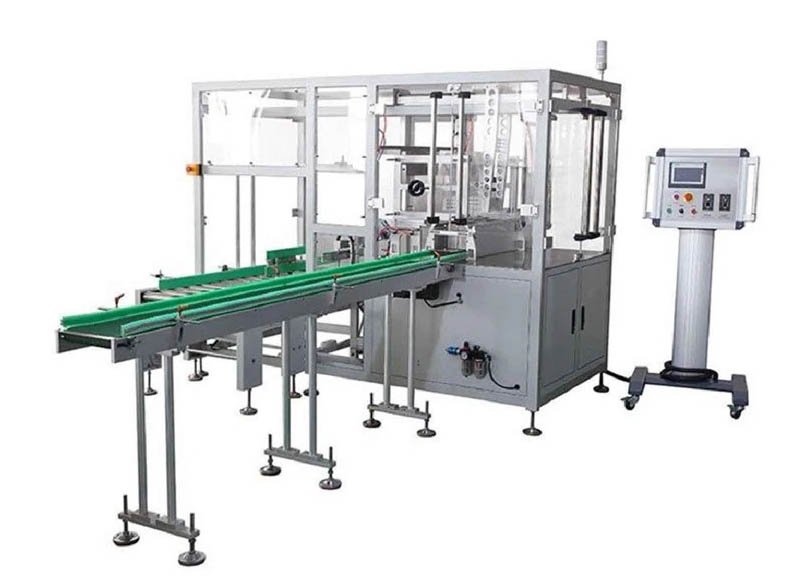
Lines running a dedicated automatic case sealing machine downstream apply the same Station 4 logic to that unit — the configurations are compared in our case erector vs packer vs sealer guide.
The Preventive Routine That Prevents Most of the Above
- Daily (10 minutes): wipe counting-sensor lenses; inspect vacuum cups; drain the air preparation unit; confirm air pressure at the machine gauge; clear dust and board debris from the erection area.
- Weekly (30 minutes): check pusher guide rails and lubrication points; inspect tape rollers or glue nozzles; verify one changeover against the checklist; review the HMI fault log for repeating minor alarms — repetition is the early warning.
- Monthly: replace vacuum cups on schedule regardless of appearance; check belt and chain tensions; back up recipes; reconcile spare parts stock against the recommended kit.
When to Stop Adjusting and Start a Remote Session
Escalate when a fault survives one full pass of the relevant station table, when servo or drive fault codes repeat after a rail inspection, or when output degrades gradually with no single alarm — drift diagnosis benefits from an engineer reading the PLC trends. A machine built on a Siemens platform supports live remote diagnostics: capture the fault code and a 30-second video of the fault occurring before the call, and most sessions resolve in under an hour. HIJ customers can start with the service and support team — 24/7 remote diagnostics, video support, and spare parts dispatch.
Forester’s Insight
“After 20+ years of support calls, I can tell you the most expensive phrase in case packing is ‘we adjusted it a little.’ A machine leaves FAT with every rail, folder, and servo profile at documented setup values. Then month by month, well-meaning operators nudge things — a guide here, a parameter there — until nobody knows what ‘correct’ looks like, and every fault diagnosis starts from an unknown baseline.”
“The discipline that fixes this costs nothing: photograph the scale positions and lock the recipes after commissioning. When a fault appears, the first question becomes ‘what changed?’ instead of ‘what do we try?’ — and the answer is usually sitting in the changeover log or the last board delivery, not inside the machine.”
— Forester Xiang, Founder & Chief Engineer, HIJ Machinery
Frequently Asked Questions
What is the most common fault on a case packing machine?
Case erection failures — blanks not picked, double-picks, or cases not squaring — are the most frequent stoppage on most lines, and their root causes are usually consumable or supply-side: worn vacuum cups, low vacuum, or warped and humid corrugated board. Stocking cups and controlling board storage eliminates the largest single share of unplanned stops.
Why does my case packer fault more after a changeover?
Because changeover is where settings and reality drift apart: a guide left at the previous SKU’s position, the wrong recipe recalled, or format parts not fully seated. Run a written changeover checklist, verify the first five cases at reduced speed, and photograph correct scale positions per SKU so any operator can confirm the setup in seconds.
Why are products getting damaged during loading?
On a side push machine, product damage during loading almost always means alignment or parameters, not force by design: the case is held slightly out of position, a bottom flap is intruding into the case mouth, or the servo push profile was edited away from setup values. Restore the recipe’s original parameters and re-run the changeover checklist before suspecting hardware.
How often should vacuum cups be replaced?
Treat vacuum cups as scheduled consumables, not run-to-failure parts: inspect daily and replace on a fixed monthly interval (or sooner in dusty environments), regardless of appearance. Hardened or glazed cups lose grip before they look worn, and a full set of cups costs less than a single hour of line downtime.
Can my own technicians maintain a case packing machine?
Yes. A case packer built on standard industrial components — Siemens PLC, standard pneumatics, servo drives — is maintainable by any competent plant technician using the manual’s schedules, with remote video support from the manufacturer for the rare faults beyond that. The enabler is buying the recommended spare parts kit with the machine so parts are on your shelf, not in air freight.
What information should I prepare before a remote support session?
Four things make remote sessions fast: the exact fault code from the HMI, a short video of the fault occurring, what changed recently (changeover, board delivery, adjustment, new operator), and your machine serial number. With those in hand, most remote diagnostic sessions resolve within an hour.
About the Author & Publisher
This troubleshooting guide is written and reviewed by Forester Xiang, Founder & Chief Engineer of HIJ Machinery (legal name: Wenzhou Trustar Machinery Technology Co., Ltd), a pharmaceutical, cosmetic, and food packaging machinery manufacturer founded in 2004 in Rui’an, Wenzhou, Zhejiang, China. Forester has 20+ years of packaging machinery engineering experience, has completed 100+ pharmaceutical facility audits, and has delivered equipment to customers in 30+ countries.
HIJ Machinery manufactures case packing machines including the HIJ-CP500 side push case packer, plus cartoning machines and complete turnkey packaging lines, all supplied with cGMP-ready, CE-marked designs and documentation that supports the customer’s own validation program (IQ/OQ/PQ).
Fault You Can’t Crack? Send Us the Video.
Send the fault code, a 30-second video, and your machine details — our engineers provide remote diagnostics with most sessions resolved within the hour.
Get Remote Diagnostic Help